
Featured Valve Solutions: Engineered For Critical Pipeline Integrity
Directly sourced from our in-house casting foundry, rubber vulcanization center, and CNC machining plant. Zero intermediary markup, guaranteed metallurgical traceability, and 100% shell-and-seat hydrostatic pressure verification.
-
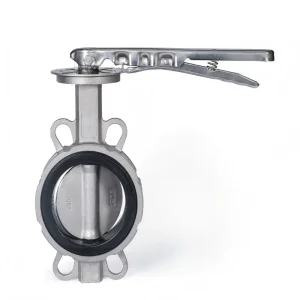 Wholesale Stainless Steel Butterfly Valve - Durable & Corrosion-Resistant Suppliers, ManufacturerView Specifications
-
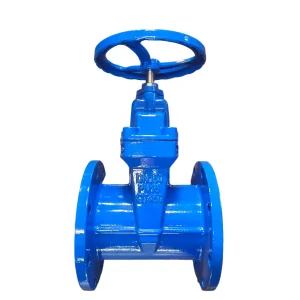 Wholesale High-Quality Gate Valve for Reliable Flow Control Manufacturer, FactoriesView Specifications
-
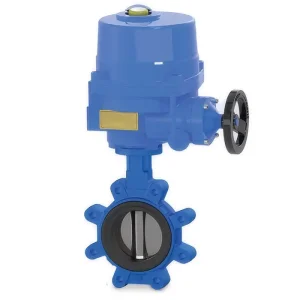 High-Quality Electrical butterfly valve Supplier, ManufacturerView Specifications
-
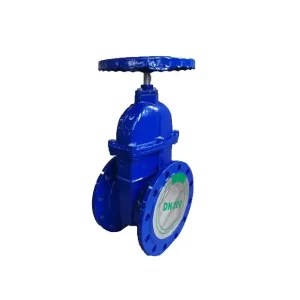 CE Certification German Standard Elastic Seat Gate Valve Manufacturers, ManufacturerView Specifications
-
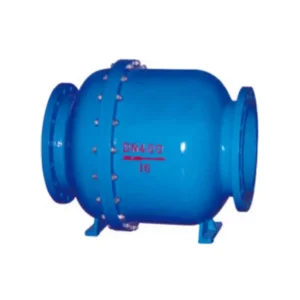 CE Certification Micro-Resistance Ball Check Valve Manufacturers, FactoriesView Specifications
-
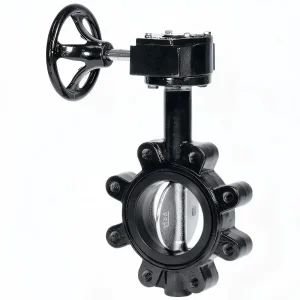 CE Certification Gear Operated Butterfly Valve - Durable & Reliable Supplier Supplier, FactoryView Specifications
-
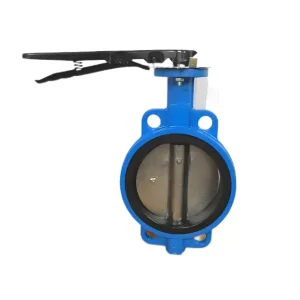 Wholesale Low - Pressure Wafer Type Butterfly Valve Supplier, ManufacturersView Specifications
-
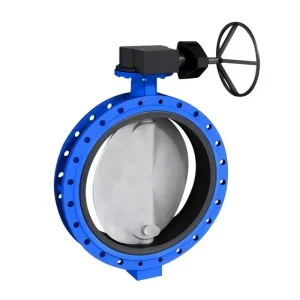 Wholesale High-Quality U Section Butterfly Valve for Reliable Flow Control Suppliers, ManufacturerView Specifications
Evaluating Enterprise Demand for High-Integrity Ball and Globe Valves
Engineering procurement directors across LNG processing, offshore petrochemicals, subsea mining, municipal desalination, and district thermal power navigate stringent total-cost-of-ownership (TCO) matrices.
Industrial Ball Valve Dynamics
Ball valves provide unmatched rapid 90-degree shut-off capability with virtually zero flow restriction in full-bore architecture. In modern automated processing, floating and trunnion-mounted ball valves are the premier choice for emergency shutdown systems (ESD), hydro-transport, and high-pressure gas distribution.
- Bi-directional Zero-Leakage: Resilient soft seats (PTFE, PEEK, Devlon) and Stellite-overlaid metal-to-metal seating.
- Cavity Relief Mechanisms: Self-relieving and double-piston effect (DPE) seat designs preventing overpressure risks.
- Low Breakaway Torque: Electroless nickel plating (ENP) and diamond-like carbon (DLC) stems minimizing actuator dimensions.
Globe Valve Flow Modulation
Unlike rotary valves designed primarily for bulk isolation, globe valves utilize an S-shaped internal flow geometry and perpendicular disc movement that make them the industrial benchmark for severe throttling, steam pressure reduction, and thermal fluid balance.
- Exceptional Linear Flow Control: Parabolic, perforated, and multi-stage anti-cavitation trim profiles.
- High-Temperature Stem Containment: Flexible graphite chevron packing backed by Belleville live-loaded gland systems.
- In-Line Trim Replaceability: Bolted bonnet and pressure-seal bonnet topologies enabling field overhaul without pipe extraction.
Supply Chain Risk Mitigation
Tier-1 EPC enterprises enforce rigorous vendor approval lists (AVL). Procurement risks stem primarily from sub-tier foundry porosity, counterfeit raw metals, and defective elastomeric vulcanization.
- Foundry-to-Assembly Integration: Elimination of sub-contractor casting variances via single-roof foundries.
- Elastomer Chemical Formulation: Direct in-house compounding ensuring exact cross-link density in EPDM and NBR seals.
- Total Material Traceability: EN 10204 Type 3.1 chemical and mechanical inspection documentation per heat lot.
Technical Architecture: Ball Valves vs. Globe Valves vs. Quarter-Turn Rotary
Selection criteria based on ISO 5208 leak rates, pressure-drop coefficients (Cv), fugitive emission classes (ISO 15848-1), and mechanical lifetime cycles under cyclic thermal shock.
| Evaluation Parameter | High-Pressure Ball Valve (API 6D / API 608) | Regulating Globe Valve (BS 1873 / API 623) | Resilient Seated Butterfly Valve | Elastic Seat Gate Valve (DIN / AWWA) |
|---|---|---|---|---|
| Primary Hydrodynamic Function | Rapid on/off block service, ESD, diversion, pigging pipelines. | Micro and macro throttling, high-differential pressure regulation. | Bulk isolation, large diameter throttling, space-constrained loops. | Full-bore undisturbed linear transmission, zero turbulence. |
| Internal Pressure Loss (Delta P) | Extremely Low (Approaching equivalent pipe length in full-port). | High (Directional flow bends generate elevated head loss). | Low to Moderate (Centralized disc creates minimal flow obstruction). | Negligible (Full-bore straight conduit with zero flow restriction). |
| Shut-Off Leakage Integrity | API 598 / ISO 5208 Rate A (Bubble-tight soft seat) or Class V/VI metal. | ANSI FCI 70-2 Class IV, V, or VI depending on hardened trim plug design. | Zero-leakage bi-directional bubble-tight shut-off (Rate A). | Drop-tight shut-off via vulcanized EPDM/NBR wedge encapsulation. |
| Actuation & Stroke Speed | Quarter-turn (90° rotation), 1 to 5 seconds with pneumatic actuators. | Multi-turn rising stem, slow travel preventing hydrodynamic surge. | Quarter-turn, high torque compatibility with worm gears or motors. | Multi-turn non-rising or rising stem, gradual operation. |
| Severe Media Suitability | Ideal for hydrocarbons, viscous slurries, cryogenic fluids (-196°C). | Superior for superheated steam, boiler feed, ammonia, vacuum lines. | Municipal potable water, chilled water loops, abrasive slurries, seawater. | Underground distribution mains, raw sewage, potable water loops. |
| Standard Manufacturing Boundaries | Class 150 to Class 2500; Size: 1/2" to 48"; Forged or Cast bodies. | Class 150 to Class 4500; Size: 1/2" to 24"; High-alloy steel castings. | PN6 to PN25, Class 150; Size: 2" to 80"; Ductile iron to Ni-Al-Bronze. | PN10 to PN25; Size: 2" to 48"; Ductile iron EN-GJS-450/500 grades. |
Systemic Engineering Frameworks for Global Industrial Infrastructure
Tailored metallurgical selections and seal topologies designed to resist cavitation, galvanic marine corrosion, hydrogen embrittlement, and abrasive slurry erosion.
Potable Water & Municipal Distribution
Large-scale water supply requires microbiological inertness and corrosion prevention. Our WRAS-approved 4020G and 4325L butterfly valves, paired with resilient seat gate valves, deliver certified lead-free, non-toxic fluid transmission.
Key Standards: BS EN 1092-2, WRAS Reg 4, DIN 3352 F4/F5, AWWA C509.
Marine, Offshore & Desalination
Seawater piping networks suffer rapid pitting from high chloride concentrations. We produce nickel-aluminum bronze (C95800 / Cu3) butterfly and check valves featuring pinless disc stems that isolate metal substrates from galvanic attack.
Key Standards: ASTM B148, ISO 5752 series, DNV-GL marine class type approvals.
Thermal Power & Steam Systems
Superheated steam networks demand zero thermal distortion under severe operating gradients. Our high-temperature, high-pressure power station globe valves feature chrome-moly bodies (WC6, WC9) and satellite hardfacing to withstand thermal fatigue.
Key Standards: ASME B16.34, API 623, EN 13709, IBR boiler regulations.
Chemical Processing & Corrosive Service
When handling volatile inorganic acids and halogen compounds, metal valves can experience rapid chemical degradation. Our PTFE-lined stainless steel valves and ceramic disc options deliver total chemical isolation without heavy metal contamination.
Key Standards: ISO 15848-1 Fugitive Emissions Class AH, API 607 Fire Safe.
Commercial HVAC & Fire Protection Networks
High-rise institutional buildings require energy-efficient variable flow regulation. We manufacture FM/UL-aligned grooved butterfly valves and dual-plate silent check valves designed to eliminate hydraulic water hammer during pump shut-off cycles.
Key Standards: UL 1091, FM 1112/1113, EN 12334, MSS-SP-67.
Vertical Manufacturing: The In-House Foundry and Rubber Compounding Advantage
Most commercial valve vendors act as external assemblers, purchasing iron castings and rubber boots from fragmented third-party sources. Our group’s integrated manufacturing model eliminates third-party quality variance.
1. Controlled Metallurgy Foundry
Operating since 1996 (Tianjin Donglian Valve Factory), our foundry utilizes medium-frequency induction furnaces equipped with optical emission spectrometers. Every molten charge of ductile iron (QT450-10, GGG40, GGG50) undergoes strict metallographic nodularity verification before casting pour-off.
2. Precision Rubber Vulcanization
Operating since 1987 (Tianjin Dongfang Rubber Factory), our dedicated polymers plant prepares raw EPDM, NBR, Viton, and Silicone formulations. We control compression set rates, elongation percentages, and hardness tolerances (Shore A 65-75) to prevent seal delamination and cold flow.
3. Multi-Axis CNC Finishing
Dimensional tolerances directly dictate dynamic stem seal longevity. Our machining facilities utilize horizontal machining centers (HMC) and CNC turning cells to finish valve disc spherical radiuses, O-ring groove profiles, and flange serration pitches with micro-inch accuracy.
4. 100% Hydrostatic Shell & Seat QA
No valve leaves our facility under statistical batch sampling alone. Every single valve is mounted onto computer-monitored automated test benches and subjected to hydrostatic shell testing at 1.5x design pressure and bi-directional seat leakage testing at 1.1x working pressure per ISO 5208.
Technology Roadmap: Smart Actuation, Fugitive Emissions, and Hydrogen Service
As industrial energy systems transition to green hydrogen, carbon capture (CCUS), and low-carbon heat recovery, valve design is evolving beyond traditional mechanical isolation.
Ultra-Low Emission Packing Systems
Universal implementation of ISO 15848-1 and API 641 fugitive emission standards across all quarter-turn and linear stems. Integration of cup-and-cone graphite rings to achieve sub-50 ppm methane leakage performance.
IoT-Enabled Smart Valve Health Monitoring
Direct embedding of piezo-electric acoustic emission sensors and Hall-effect angle transducers within the mounting bracket. Real-time telemetry detects seat weeping, packing friction degradation, and cavitation inception before pipeline failure.
Cryogenic & Liquid Hydrogen (LH2) Compatibility
R&D on austenitic 316L, Hastelloy C276, and Monel K500 trims engineered to endure cyclic exposure down to -253°C without brittle intergranular cracking. High-integrity extended bonnet column topologies isolating stem seals from freezing zones.
Green Foundry Carbon Footprint Neutralization
Transition of cupola melting to 100% renewable electric arc and clean-power induction systems. Closed-loop sand reclamation achieving 96% reuse, reducing embedded lifecycle carbon in every ton of finished valve body casting.
International Trade Compliance, Engineering Dossiers & Protective Logistics
Managing project risk requires end-to-end documentation: material inspection test reports (MTR), third-party witness inspection protocols (TPI), and robust export crating designed for intermodal transport.
Documentary Package & Mill Certificates
All export orders are delivered with complete QA/QC dossiers, including EN 10204 3.1 material test certificates, spectral alloy analysis, Charpy V-notch impact test data, rubber vulcanization cure curves, and hydrostatic pressure recording charts.
Third-Party Inspection Integration
We regularly collaborate with international inspection agencies including SGS, Bureau Veritas, TÜV Rheinland, DNV, and Lloyd’s Register to execute customer-mandated Inspection and Test Plans (ITP), witness hold-point testing, and verify dimensional drawings.
Port Proximity & Barrier Crating
Located within Dongli District, Tianjin, our factory is situated close to the Xingang international deep-water maritime terminal. Valves are packed in sealed anti-static barrier wraps with desiccant packs, then secured inside ISPM-15 heat-treated plywood crates.
Specialized Heavy-Duty & Marine Valve Manufacturing Solutions
Engineered for severe duty environments: fire suppression loops, high-pressure metal sealing, rapid dual-plate backflow interception, and marine seawater isolation.
-
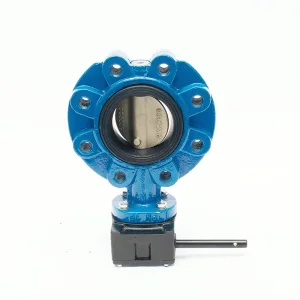 High-Quality Marine Centric Lug type manual operated butterfly valve Manufacturers, FactoryView Specifications
-
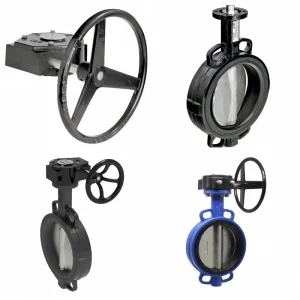 CE Certification WRAS Approved High-Performance Butterfly Valve 4020G Manufacturer, FactoriesView Specifications
-
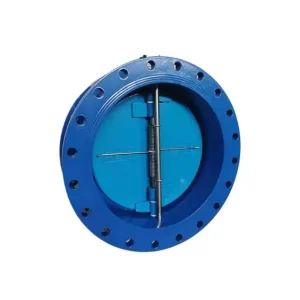 Wholesale Dual Plate Flange Type Check Valve Factories, FactoryView Specifications
-
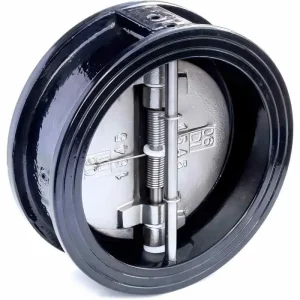 High-Quality High-Quality Wafer Check Valve for Secure Fluid Control Suppliers, FactoriesView Specifications
-
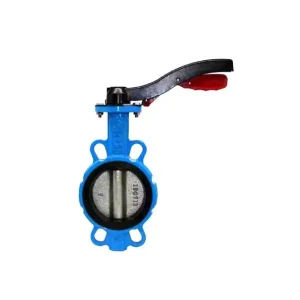 CE Certification Duplex Type Pinless Butterfly Valve Factories, FactoryView Specifications
-
 Wholesale Wafer Butterfly Valve - Durable & Efficient Flow Control Solution Suppliers, FactoryView Specifications
-
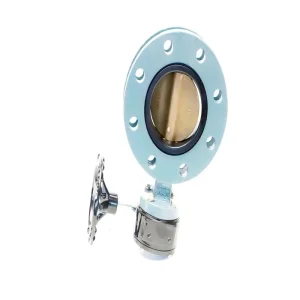 Wholesale CE/ISO/DIN/BS High Pressure Metal Seal Hard Seal Butterfly Valve Manufacturers, ManufacturerView Specifications
-
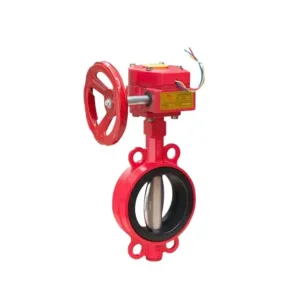 Wholesale Fire-Fighting Wafer Signal Butterfly Valve Supplier, FactoryView Specifications
Procurement & Technical FAQ: Ball, Globe & Industrial Valve Manufacturing
Direct engineering answers addressing critical procurement questions regarding metallurgy, elastomeric lifespans, certification cross-recognition, and OEM custom design tolerances.
What operational criteria determine the selection between a High-Pressure Ball Valve and a Regulating Globe Valve? ▼
The choice depends on the primary hydrodynamic requirement. A Ball Valve is a quarter-turn (90°) rotary device optimized for rapid isolation, low flow resistance, and bi-directional shut-off. In full-bore configuration, the ball valve's flow opening matches the pipeline diameter, minimizing head loss. This makes it ideal for ESD valves, hydrocarbons, slurries, and piggable systems.
In contrast, a Globe Valve utilizes a linear plug or disc moving perpendicular to the seat ring along an S-shaped flow path. While this geometry creates an inherent pressure drop, it provides precise throttling control and resistance to wire drawing and cavitation. Globe valves are standard for steam, boiler feed water, high-temperature isolation, and vacuum applications.
How does in-house rubber compounding improve resilient seat valve reliability? ▼
In resilient-seated butterfly and gate valves, seal failure almost always begins with the elastomer seat, rather than the metal body. Common failure modes include compression set loss, excessive swelling from media incompatibility, or hardening and tearing from poor cross-linking.
Because our group owns Tianjin Dongfang Rubber Factory (operating since 1987), we formulate and vulcanize raw polymers in-house. We adjust carbon black dispersion, vulcanizing agents, and anti-aging compounds to match customer media conditions:
- EPDM: Formulated for hot water, potable municipal systems, and mild alkalis (temperatures: -20°C to +130°C).
- NBR (Nitrile): Formulated for oils, fuels, hydrocarbons, and compressed air systems (-10°C to +90°C).
- Viton (FKM): High-temperature stability and resistance to aggressive chemical solvents (-20°C to +200°C).
Which international testing standards govern your factory's production? ▼
Our testing program complies with both European and American industry standards:
- Pressure & Leakage Testing: ISO 5208, EN 12266-1, and API 598 shell (1.5x PN) and seat (1.1x PN) criteria. Resilient seated models achieve zero allowable leakage (Rate A).
- Flange Drilling & Dimensions: EN 1092-1/2 (PN10, PN16, PN25), ASME B16.5 / B16.47 Class 150/300, BS 10 Tables D/E, and JIS B2220 10K/16K.
- Face-to-Face Standards: EN 558-1 series, ISO 5752, ASME B16.10, and DIN 3202 (F4, F5 series for gate valves).
- Drinking Water Approvals: WRAS (Water Regulations Approval Scheme) approval for models including 4020G, 4020L, 4325G, and 4325L.
What are the key technical advantages of Pinless Disc Butterfly Valves? ▼
Traditional butterfly valves use taper pins or through-bolts driven across the disc hub to anchor the drive stem. Over time, these pins introduce leak paths, cause galvanic corrosion, and can loosen under high-frequency pipeline vibration.
Our Pinless Disc Butterfly Valves feature an internal polygonal, keyed, or spline drive entirely enclosed inside the disc hub. The stem never penetrates into the active fluid stream, completely isolating the shaft from wet service. This design lowers operating torque, eliminates pin shearing risks, and simplifies seat and disc replacement during scheduled maintenance.
Can Tianjin Top Automation Equipment supply custom OEM valve dimensions and private labelling? ▼
Yes. With an in-house pattern shop, iron foundry, and precision CNC machine cells, we support OEM partners and valve brands globally. Capabilities include:
- Custom corporate branding cast directly onto the body shell or stamped on stainless steel nameplates.
- Specific paint systems: 250-micron fusion-bonded epoxy (FBE) electrostatic coating, high-durability marine polyurethanes, or customer-specified RAL colors.
- Custom top-flange configurations complying with ISO 5211 for direct-mount electric, pneumatic, or hydraulic actuators.
- Specialized metallurgy: Cast steel (WCB), Stainless Steel (CF8, CF8M, CF3M), Duplex (2205, 2507), and Aluminum Bronze (C95400, C95800).
Ready to Finalize Your Engineering Valve Schedule?
Connect directly with our engineering sales team. Receive comprehensive 2D/3D CAD step files, formal compliance declarations, and competitive factory-direct quotes within 24 hours.
