
High-Performance Pipeline Valve Solutions
Direct from our specialized manufacturing base: precision engineered check, butterfly, and process flow control valves verified through 100% shell and hydrostatic seat tests.
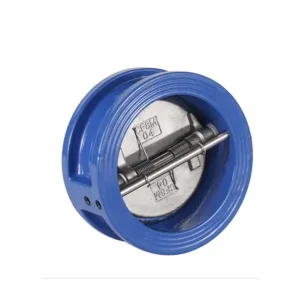
High-Quality High - Performance Dual Plate Wafer Check Valve for High - Flow Pipeline Systems Manufacturer, Factory
Explore Specifications →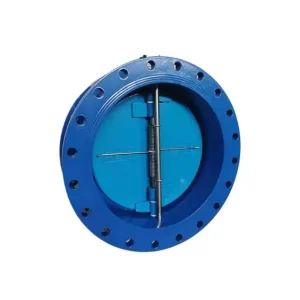
Wholesale Dual Plate Flange Type Check Valve Factories, Factory
Explore Specifications →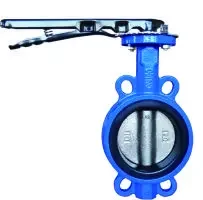
Wholesale Wafer Butterfly Valve - Durable & Efficient Flow Control Solution Suppliers, Factory
Explore Specifications →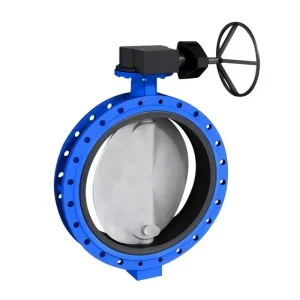
Wholesale High-Quality U Section Butterfly Valve for Reliable Flow Control Suppliers, Manufacturer
Explore Specifications →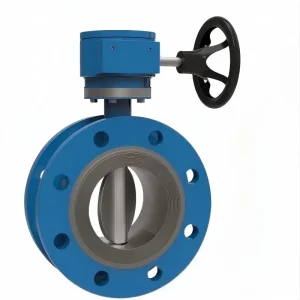
High-Quality Flange Type Butterfly Valve - Durable and Efficient Flow Control Supplier, Manufacturer
Explore Specifications →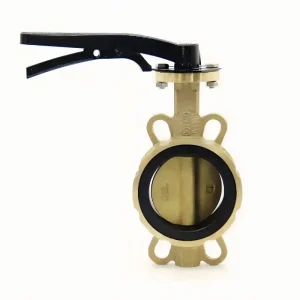
High-Quality Aluminum Bronze Butterfly Valve - Durable & Corrosion Resistant Suppliers, Manufacturer
Explore Specifications →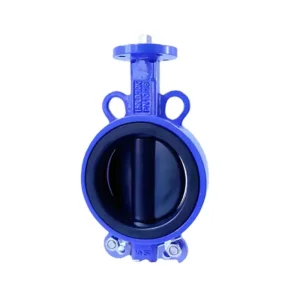
Wholesale Halar Lined Pinless Butterfly Valve Supplier, Manufacturer
Explore Specifications →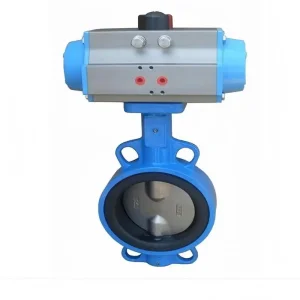
High-Quality Pneumatic Butterfly Valve - Efficient Flow Control Solution Suppliers, Factories
Explore Specifications →Technological Evolution: ANSI Ductile Iron Globe Valves in Heavy Industry
Why modern fluid infrastructure is migrating from conventional grey cast iron to nodular ductile iron globe valves engineered to ASME/ANSI standards.
Microstructural Superiority
By inoculating the molten iron bath with magnesium and cerium, carbon precipitates as spherical graphite nodules rather than sharp graphite flakes. This metallurgical shift per ASTM A536 (Grade 65-45-12) eliminates internal stress concentration nodes, increasing tensile strength from 200 MPa (Class 126 Grey Iron) up to 450–500 MPa, with an elongation factor reaching 12% to 18%.
- Eliminates catastrophic brittle cleavage fractures
- Yield strength rated at ≥310 MPa under thermal shocks
- Superior acoustic damping and energy dispersion
Cavitation & Differential Control
Globe valves operating under ASME B16.34 Class 150 and Class 300 criteria handle steep pressure differentials ($\Delta P$). The contoured plug disc distributes kinetic shear energy evenly over the seat interface, mitigating localized low-pressure zones that collapse vapor bubbles and inflict micro-jet cavitation pitting.
- Linear vs. Equal Percentage disc trim contouring
- Stellite Gr. 6 hardfaced seat overlays for steam service
- Zero chattering under intermediate throttled flow conditions
Fugitive Emission Containment
Equipped with an Outside Screw & Yoke (OS&Y) rising stem and integrated backseat bushing, ductile iron globe valves prevent packing gland blowout and streamline repackaging under operating pressure. Pre-formed flexible graphite rings combined with braided carbon fiber end-rings comply with ISO 15848-1 Class B fugitive emission criteria.
- Burnished stems with surface finish Ra ≤ 0.4 μm
- Precision live-loaded Belleville disc spring assemblies
- Guaranteed seal integrity under thermal cycling
International Dimensional & Testing Harmonization
Comprehensive cross-reference for EPC mechanical engineers, QA/QC inspectors, and global procurement departments specifying ANSI Class 125, Class 150, and PN16/25 valve schedules.
| Component Part | ANSI / ASTM Specification | DIN / EN Standard Equivalent | Inspection Criteria & Function |
|---|---|---|---|
| Pressure Body & Bonnet | ASTM A536 Grade 65-45-12 / 60-40-18 | EN-GJS-400-15 / EN-JS1030 | 1.5× Design Pressure Shell Test (API 598/ISO 5208) |
| Disc (Plug / Throttling) | ASTM A351 CF8M / ASTM A276 316 / 410 | 1.4408 / X5CrNiMo17-12-2 | Precision CNC profile; bubble-tight or metal-to-metal lap |
| Seat Ring Trim | Stellite Gr. 6 Overlay / SS 316 Faced | CoCr-A / Alloy Hardfaced | Zero micro-fissuring under liquid penetrant exam (PT) |
| Stem (OS&Y Rising) | ASTM A276 Type 410 / 304 / 316 / Monel | 1.4006 / 1.4301 / 1.4401 | Anti-blowout collar with backseat shut-off testing |
| Bonnet Gasket | SS304/316 Flexible Graphite Spiral Wound | Graphite filled 1.4301 grooved metal | Class 150/300 controlled compression tongue-and-groove |
| Gland Packing | Die-formed Expanded Graphite + Carbon Fiber | Pure exfoliated mineral graphite rings | Meets ISO 15848-1 fugitive emission leak thresholds |
| Flange Geometry & F-to-F | ASME B16.5 / B16.42 Class 150, B16.10 | EN 1092-2 PN10/PN16/PN25, EN 558 Series 1 | Flat Face (FF) or Raised Face (RF) 125-250 AARH finish |
Vertical Integration: From Foundry to Hydro-Testing in Tianjin
Eliminating supply chain fragmentation through unified in-house casting, rubber elastomer vulcanization, high-precision machining, and automated QA laboratories.
Integrated Foundry & Metallurgical Control
Established through our core heritage of Tianjin Donglian Valve Factory (operating continuously since 1996), our automated green-sand and lost-foam casting lines utilize medium-frequency induction electric melting furnaces. Every ladle of ductile iron undergoes direct-reading optical emission spectrometry (OES) analysis before pouring.
Mechanical test bars are poured from the identical heat lot to verify tensile yield, impact toughness, and nodularity (≥85% Type I & II nodular graphite morphology per ASTM A247). This in-house metallurgical sovereignty prevents porosity rejections, eliminates wall thickness non-conformances, and guarantees compliance with EN 10204 3.1 Material Test Reports (MTR).
Elastomer Formulation Mastery Since 1987
Through our group enterprise, Tianjin Dongfang Rubber Factory (established in 1987), we compound, mill, and vulcanize our proprietary elastomeric seat materials on the same industrial campus. While metallic globe valves utilize stellite trim, our broader valve portfolio (including resilient seated gate, check, and WRAS-approved butterfly valves) relies heavily on internal rubber formulations.
By controlling rubber polymer purity (EPDM, NBR, Viton, and PTFE composites), we regulate Mooney viscosity, compression set resistance, and cross-linking density. This eliminates premature seat degradation, blistering in chlorine-treated water, or swelling when exposed to petrochemical hydrocarbons.
Global Market Drivers & Mission-Critical Duty Environments
Analyzing capital expenditure allocations, regulatory decarbonization mandates, and localized deployment of ductile iron globe valves.
District Energy & High-Pressure Steam
In municipal district heating grids across Northern Europe, North America, and Northeast Asia, ANSI Class 150/300 ductile iron globe valves regulate saturated steam and superheated water at temperatures up to 350°C. Their superior ductility absorbs water-hammer shockwaves that cause structural shattering in grey iron casings.
HVAC Hydronic Systems & Data Centers
Modern hyperscale computing campuses demand round-the-clock chilled water reliability. Ductile iron globe valves offer micrometer-calibrated balancing discs for precise chilled water loop regulation, maintaining thermal equilibrium without hydraulic turbulence or system hum.
Potable Water & Desalination Feed
Approved with non-toxic fusion bonded epoxy coatings and compliant with WRAS criteria, our valves serve high-lift pump discharge stations, reverse osmosis pretreatment feedlines, and raw water distribution mains where zero heavy-metal leaching is required.
Frequently Asked Technical & Procurement Questions
Detailed technical answers to common queries raised by mechanical consulting engineers, utility authorities, and procurement managers.
What is the primary difference between Ductile Iron (ASTM A536) and Cast Iron (ASTM A126) for globe valve bodies?
The fundamental distinction lies in graphite microstructure and tensile ductile properties. Grey cast iron (ASTM A126 Class B) features sharp, planar graphite flakes that induce internal stress concentrations, resulting in brittle mechanical behavior with negligible elongation (<1%) and tensile strength limited to roughly 200 MPa. Ductile iron (ASTM A536 Grade 65-45-12), treated with magnesium nodulizers, features spheroidal graphite that halts micro-crack propagation. This yields tensile strengths ≥450 MPa, yield strengths ≥310 MPa, and elongation rates exceeding 12%, making ductile iron far more resilient against mechanical vibration, water-hammer events, and extreme cyclic thermal shocks.
Can an ANSI Ductile Iron Globe Valve be safely used for continuous throttling service?
Yes. Globe valves are intrinsically engineered for continuous throttling, unlike gate valves (which suffer high-velocity seat scour and vibration if partially opened) or standard rubber-seated butterfly valves (which experience localized disc flutter and elastomer erosion). The flow path in a globe valve brings the fluid into coaxial alignment with the seat opening. When fitted with a contoured parabolic plug or needle-type disc and stellite hardfaced seat overlays, our ductile iron globe valves maintain exceptional control linearity across 20% to 80% open-stem travel without wire-drawing erosion.
How does Tianjin Top Valve prevent stem leakage under variable thermal conditions?
We integrate an Outside Screw & Yoke (OS&Y) rising stem architecture featuring micro-machined and burnished 410 or 316 stainless steel stems with surface finishes polished to Ra ≤ 0.4 μm. The stuffing box is loaded with high-purity, die-formed flexible graphite sealing rings bounded by braided carbon fiber anti-extrusion rings. Furthermore, an integral precision-machined conical backseat bush isolates the packing box from pipeline pressure when the valve is in the fully opened position, allowing safe repacking without taking the pipeline out of service.
Which pressure ratings and flange standards are available for international export?
Our ductile iron globe valves are manufactured with flange geometry conforming strictly to ASME B16.42 Class 150 and Class 300, ASME B16.5, and dual-drilled EN 1092-2 (PN10, PN16, PN25). Face-to-face dimensions comply with ASME B16.10, EN 558 Series 1, and DIN 3202 F1. Flange facings can be supplied in Flat Face (FF) for compatibility with vulnerable mating flanges, or Raised Face (RF) with phonographic concentric serrations (125–250 AARH finish) to guarantee optimal gasket seating stresses.
What testing procedures are conducted before export dispatch from the factory?
Every valve manufactured in our facility undergoes 100% individual pressure testing in accordance with API 598 and ISO 5208 standards prior to protective packaging. This protocol includes a hydrostatic shell test executed at 1.5 times the cold working pressure (CWP), a high-pressure hydrostatic seat closure test at 1.1 times CWP, a backseat test at 1.1 times CWP, and a low-pressure pneumatic air seat test conducted at 0.6 MPa (80 psi). Material heat batches are certified via optical emission spectrometry and EN 10204 3.1 inspection certification.
How does vertical supply chain integration reduce lead times and total cost of ownership (TCO)?
Because Tianjin Top Valve maintains its own foundational foundry (Tianjin Donglian Valve Factory, est. 1996) and dedicated rubber manufacturing base (Tianjin Dongfang Rubber Factory, est. 1987), we eliminate intermediary contractor markups, foundry scrap delays, and external scheduling bottlenecks. Raw sand-casting, disc machining, internal elastomer compounding, painting, assembly, and test operations happen within a unified quality loop. This lowers standard manufacturing lead times by 25% to 40% and ensures 100% interchangeable spare parts availability over the asset lifecycle.
What surface coatings are applied to prevent external atmospheric and subterranean corrosion?
Bodies and bonnets undergo automated shot blasting to Sa 2.5 profile depth per ISO 8501-1 to remove mill scale, oxidation, and sand residues. Subsequently, an electrostatic fusion bonded epoxy (FBE) powder or high-build polyurethane coating is applied to a minimum dry film thickness (DFT) of 250 μm (tested per holiday detector up to 3 kV). This coating provides complete dielectric barrier insulation, resisting salt-spray marine atmospheres, acidic soil corrosion in buried water networks, and aggressive industrial fumes.
Can your ANSI Ductile Iron Globe Valves be automated with electric or pneumatic actuation?
Yes. All bonnets can be supplied with standardized actuator mounting top flanges complying with ISO 5211 (such as F07, F10, F14 patterns). Because globe valves utilize linear multi-turn stems, our factory supplies either factory-fitted bevel gearboxes, intelligent electric multi-turn actuators (supporting Modbus, Profibus, or 4-20mA HART analog signals), or pneumatic diaphragm/cylinder linear operators with smart positioners for rapid safety shutdown or precise continuous modulation.
Heavy-Duty Process & Utility Valves
Complementary flow control systems: resilient gate valves, WRAS-approved sanitary valves, specialized globe valves, and chemical-duty butterfly valves.
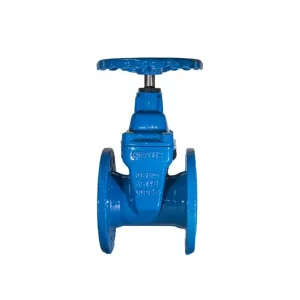
Wholesale Anti - Abrasion Elastic Seat Gate Valve with Reinforced Seat Suppliers, Supplier
Explore Specifications →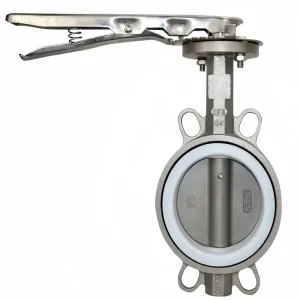
CE Certification PTFE Lined Stainless Steel Butterfly Valve Manufacturer, Factory
Explore Specifications →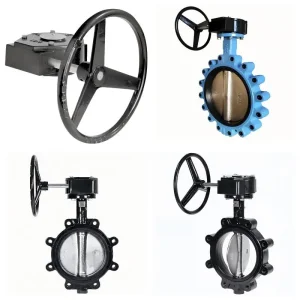
Wholesale WRAS Approved Lug Type Butterfly Valve 4325G Supplier, Factories
Explore Specifications →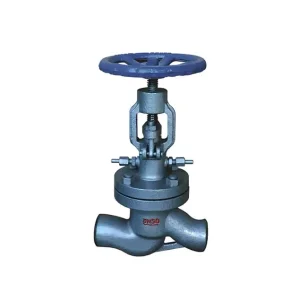
High-Quality Water Seal Globe Valve with Quick - Closing Feature Manufacturers, Manufacturer
Explore Specifications →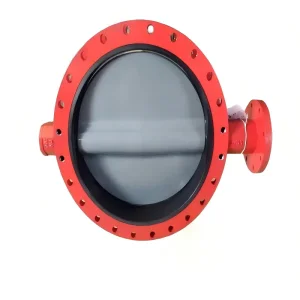
Wholesale Ceramic Disc Wafer Butterfly Valve - Durable & Efficient Design Supplier, Factories
Explore Specifications →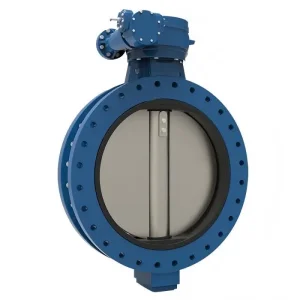
CE Certification Flanged Butterfly Valve - Durable & Efficient Flow Control Suppliers, Supplier
Explore Specifications →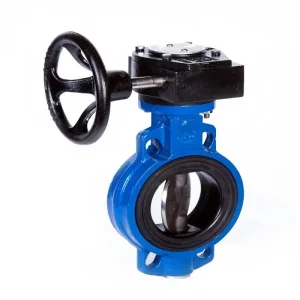
High-Quality Wafer Butterfly Valve – worm gear rubber lined butterfly valve Manufacturer, Factories
Explore Specifications →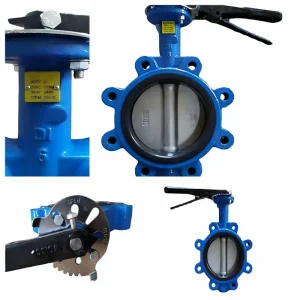
High-Quality WRAS Approved Butterfly Valve Lug Type 4325L Manufacturer, Factories
Explore Specifications →Request Direct Technical Datasheets & Foundry Audits
Connect directly with our valve engineering teams in Tianjin for customized valve sizing, Cv flow calculations, CAD dimensional drawings, and complete project bidding proposals.
