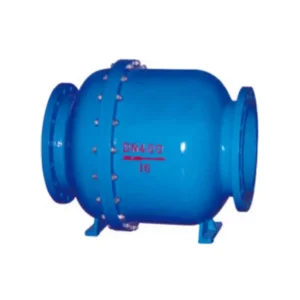
High-Integrity Valve Solutions · Batch 01
Explore our foundational series featuring certified resilient seating, advanced lining chemistry, and heavy-duty worm gear actuation.
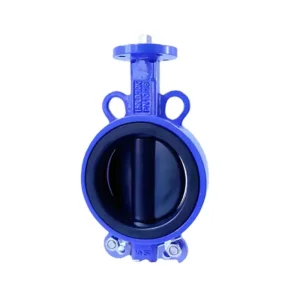
Wholesale Halar Lined Pinless Butterfly Valve Supplier, Manufacturer
Explore Specification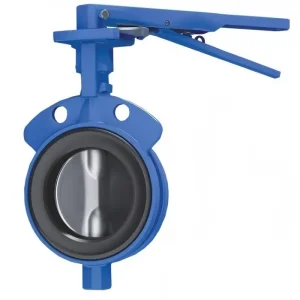
High-Quality EPDM Lining Butterfly Valve - Durable & Corrosion Resistant Suppliers, Manufacturers
Explore Specification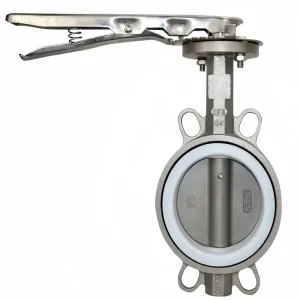
CE Certification PTFE Lined Stainless Steel Butterfly Valve Manufacturer, Factory
Explore Specification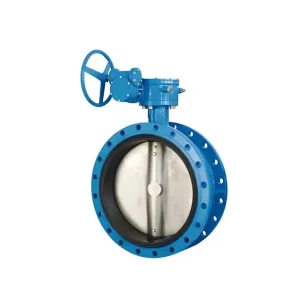
Wholesale Low - Torque Flange Type Butterfly Valve Supplier, Factory
Explore Specification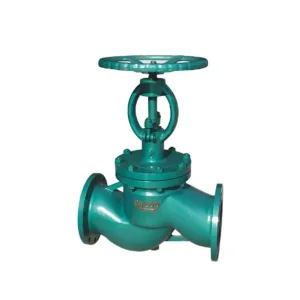
High-Quality High - Temperature - Vacuum Isolation Globe Valve for Vacuum Heat Suppliers, Factory
Explore Specification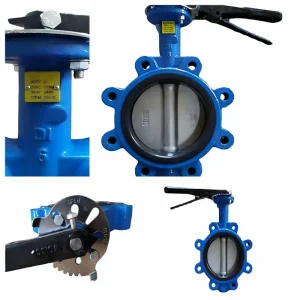
High-Quality WRAS Approved Butterfly Valve Lug Type 4325L Manufacturer, Factories
Explore Specification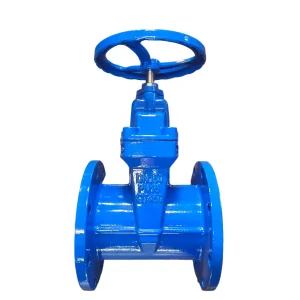
Wholesale High-Quality Gate Valve for Reliable Flow Control Manufacturer, Factories
Explore Specification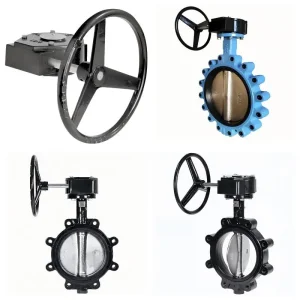
Wholesale WRAS Approved Lug Type Butterfly Valve 4325G Supplier, Factories
Explore SpecificationThe Macro Landscape of WRAS Butterfly Valves with Worm Gear Operators
Analyzing high-reliability drinking water distribution, hydraulic anti-surge mechanics, and modern industrial compliance.
In modern industrial and municipal fluid handling, the specification of a CE-certified, WRAS-approved butterfly valve with a worm gear operator is no longer just a regulatory checkbox; it is the cornerstone of hydraulic stability and public health compliance. Across the European Union, the United Kingdom, and the Middle East, water authorities and EPC conglomerates have systematically phased out rapid quarter-turn lever valves in pipeline nominal diameters of DN150 (6") and above. The fundamental driver is transient fluid mechanics: instantaneous closure creates severe water hammer (pressure surge waves), which compromises pipe bell-and-spigot joints, damages booster pumps, and induces structural cavitation fatigue.
A precision-machined worm gear operator converts high mechanical torque through multi-revolution handwheels, typically requiring between 9 to 32 revolutions to move the disc from 0° (fully closed) to 90° (fully open). This mathematically engineered dwell time decelerates moving water columns gradually, dissipating kinetic energy safely throughout the hydraulic grid. Simultaneously, internal gear self-locking ratios (leveraging irreversibility angles in phosphor bronze or ductile iron worm wheels paired with hardened carbon/alloy steel worms) eliminate back-driving caused by fluid hydrodynamic dynamic torque on asymmetrical disc profiles.
Why WRAS (Water Regulations Advisory Scheme) is the Gold Standard
The UK Water Regulations Advisory Scheme (WRAS) approval provides exhaustive verification that non-metallic components in contact with potable water do not impart odor, flavor, color, or toxic leachates into the distribution network. Compliance with BS 6920 mandates stringent testing regimes covering extraction of metals, cytotoxicity, aquatic organism toxicity, and the promotion of micro-organism growth (biofilm development). In models such as our 4020G, 4020L, 4325G, and 4325L, the critical sealing interface is our proprietary EPDM compound formulated and vulcanised in-house at Tianjin Dongfang Rubber Factory (operating continuously since 1987). By maintaining zero toxic heavy-metal accelerators (such as zinc oxide or thiazoles) during curing, our resilient seats ensure zero contamination over extended service lives spanning 25+ years.
Information Gain Fact: Unlike valve assemblers who source third-party rubber seats, our in-house control over EPDM polymer chain cross-linking densities produces compression set values below 18% under continuous 70°C hot water exposure, completely mitigating long-term relaxation leaks across thermal cycling regimes.
Precision Anatomy: Body, Disc, Seal & Worm Gearbox
Vertical manufacturing architecture designed to eliminate supply chain variances and optimize hydraulic efficiency.
In-House Ductile Iron Foundry
Cast in our own metallurgical facility operating since 1996. Bodies are poured using EN-GJS-450-10 or EN-GJS-500-7 nodular iron with strict spheroidization ratios above 90%, delivering tensile strength >450 MPa and exceptional impact resistance.
Hydrodynamic Disc Geometry
Machined via high-precision CNC equipment to achieve polished spherical disc edges. Available in SS304, SS316, marine-grade Aluminum Bronze (C95800), and Halar/PTFE encapsulated alloys to minimize turbulent drag and optimize flow coefficient (Kv).
Zero-Leakage Resilient Seats
Moulded from WRAS-approved EPDM, high-grade NBR, and pure PTFE. Incorporates integrated O-ring body profile beads eliminating the requirement for separate flange gaskets during installation between EN 1092-2 PN10/PN16 or ASME Class 150 flanges.
IP67/IP68 Heavy-Duty Worm Gear
Die-cast ductile iron housing enclosing precision ground worm shafts and high-strength aluminum bronze gears. Features external mechanical limit stops for ±5° travel adjustment, high-visibility yellow pointer, and standard ISO 5211 top flange compatibility.
Technical Matrix: Body Style & Actuation Configuration
A comprehensive engineering comparison to guide procurement teams and consulting engineers in pipeline specification.
| Configuration Type | Body Material Options | Seat Compounding | Actuation Mechanism | Working Pressure | Key Industry Best Fit |
|---|---|---|---|---|---|
| Wafer Type 4020G | Ductile Iron EN-GJS-450-10 | WRAS Approved EPDM | Heavy-Duty Worm Gearbox | PN10 / PN16 / Class 150 | Compact municipal pump rooms & district HVAC circuits |
| Lugged Type 4325G | Ductile Iron / Carbon Steel | WRAS Approved EPDM / NBR | Worm Gear with Chainwheel Option | PN16 / PN25 | Dead-end pipeline isolation & continuous pump discharge headers |
| Double Flanged (U-Section) | EN-GJS-500-7 / Marine WCB | Vulcanised Hard Backed EPDM | Declutchable Worm Gearbox | PN10 / PN16 / PN25 | Direct burial installations & large-diameter municipal distribution |
| PTFE-Lined Chemical Series | Ductile Iron with SS316 Core | Virgin PTFE over Silicone Cushion | IP68 Submersible Worm Gear | PN10 / PN16 | Desalination brine discharge & corrosive chemical treatment lines |
| Marine Aluminum Bronze | Ni-Al Bronze (C95800 / ASTM B148) | NBR / High-Fluoro FKM | Marine Bronze Worm Operator | PN16 / Class 150 | Offshore platforms, ballast systems, and marine seawater pipelines |
Pinless vs. Through-Pin Disc Drive Dynamics
A decisive engineering differentiator in Tianjin Top Valve's product architecture is our advanced pinless disc connection technology (as seen in our 4325 and Halar-lined series). Traditional butterfly valves utilize cross-pins or taper-pins drilled directly through the disc hub into the drive stem. Over decades of operation under pulsating flow, high shear stress causes pin deformation, galvanic corrosion, and micro-leakage channels along the pin holes. Our pinless architecture employs high-precision CNC broached polygon, square, or splined drive engagements located entirely within the dry disc socket. The stem never contacts line fluids, completely isolating drive metallurgy from potable water chemistry and eliminating internal leakage paths.
Technological Roadmap & Next-Generation Smart Valve Systems
Transitioning from mechanical isolation devices to digitally-integrated flow intelligence nodes.
Smart IoT Gearbox Telemetry
Integrating contactless magnetic Hall-effect angle transducers within the worm gearbox housing. Provides real-time position output (4-20mA / Modbus RTU / LoRaWAN) directly to municipal SCADA centers without requiring bulky external electrical actuators.
EPDM Nano-Composite Vulcanisation
Deploying silane-modified nano-silica reinforcing agents in our Dongfang Rubber production lines. Dramatically reduces frictional torque by 22%, decreases micro-wear during dry commissioning runs, and yields zero polymer degradation up to 110°C continuous.
Decarbonised Coating Chemistry
Thermal fusion bonded epoxy (FBE) powder coatings exceeding 250 µm thickness applied strictly via fluidized bed or electrostatic induction. Fully certified to WRAS and EN 14901 standards, providing 100% pinhole-free dielectric barrier protection against stray currents.
2025–2035 Engineering Milestone: Digital Twin Lifecycle Modeling
Tianjin Top Valve is deploying hydrodynamic CFD boundary modeling and Finite Element Analysis (FEA) on disc stress distribution across partial-throttle conditions. By simulating cavitation index (sigma values) for worm gear throttled operations, our engineers provide customers with exact operating angle limits to avoid localized vapor cavity collapse and prolong butterfly valve operational life beyond 30 years.
Localized Engineering Applications & Case Scenarios
Demonstrating high-load reliability across diverse municipal, marine, and process pipeline networks.
Municipal Potable Pumping Headers
Location/Standard: UK Water Framework Directive & BS EN 593.
Challenge: 16-bar discharge manifolds subject to sudden power outages and high water hammer risk.
Solution: DN400 Lug Type 4325G with heavy-duty self-locking worm gearbox and WRAS certified EPDM seats. Eliminated reverse backflow slamming and protected high-capacity centrifugal pumps.
High-Rise Chilled Water (HVAC)
Location/Standard: GCC / Middle East District Cooling Networks.
Challenge: Continuous condensation, ambient 50°C temperatures, and high thermal differential stresses.
Solution: Epoxy-coated DN600 Wafer Type 4020G butterfly valves equipped with IP67 enclosed worm gear operators. Guaranteed bi-directional zero-bubble isolation across 6°C chilled water loops.
Desalination Reverse Osmosis (RO)
Location/Standard: Seawater Intake & Pre-Treatment Facilities.
Challenge: Aggressive chloride pitting and high galvanic potential from hypersaline brine.
Solution: Nickel-Aluminum Bronze C95800 discs paired with pinless duplex stainless steel shafts and PTFE-lined bodies. Delivered maintenance-free operation across a 5-year inspection cycle.
Verified Quality Systems & Testing Protocols
Integrated ISO 9001, ISO 14001, ISO 45001, and CE PED European Pressure Equipment Directive testing routines.
Every single butterfly valve manufactured at our Tianjin facility is subjected to rigorous hydrostatic and pneumatic testing before protective packaging and dispatch. Unlike sample-audit commercial models, our testing methodology conforms strictly to EN 12266-1 Rate A (Zero Bubble Leakage) and ISO 5208 standards:
1. Hydrostatic Shell Testing
1.5 times the nominal working pressure (e.g., 24 bar for PN16 valves) applied with disc partially open for a minimum of 180 seconds. Verifies absolute casting integrity, wall thickness uniformity, and absence of porosity or micro-cracking.
2. High-Pressure Seat Testing
1.1 times the nominal working pressure (e.g., 17.6 bar for PN16 valves) applied sequentially to both faces of the closed disc. Zero drops, zero bubbles allowed across the WRAS-approved EPDM sealing lip throughout the hold duration.
3. Gearbox Torque Verification
Full 0°-90° mechanical cycling under full differential pressure to record breakaway torque, running torque, and seating torque. Ensures operators do not exceed 250 N rim-pull force on the handwheel as per EN 12570 human factor standards.
Frequently Asked Questions (FAQ) for Engineering Buyers
Authoritative technical clarifications addressing valve procurement, standards compliance, and operation mechanics.
What specific standards define CE Certification and WRAS compliance for butterfly valves?
Why is a worm gear operator preferred over a lever handle on butterfly valves above DN150?
What is the difference between Wafer, Lug, and Double-Flanged butterfly valves?
Lug type (e.g., 4325G, 4325L): Features threaded tapped lugs around the perimeter matching pipeline flanges. Allows downstream pipe removal while holding upstream pressure (dead-end isolation service).
Double-Flanged: Features standard integral flanges on both faces with standard face-to-face dimensions (ISO 5752 series 13 or 14); optimal for large diameters, direct burial, and severe piping stress environments.
How does Tianjin Top Valve guarantee rubber seat longevity in drinking water?
Can these worm gearboxes be submerged or installed outdoors without degradation?
What flange standards are compatible with your butterfly valve range?
- European & International: EN 1092-1 / EN 1092-2 PN10, PN16, PN25
- British: BS 4504 / BS 10 Table D and Table E
- American: ASME/ANSI B16.1 Class 125, ASME B16.5 Class 150
- Japanese / Asian: JIS B2220 / JIS B2239 10K, 16K
What is a "pinless" disc design, and why is it superior in corrosive or potable applications?
How can EPC contractors schedule a factory audit or request EN 10204 Type 3.1 certification?
Engineering Specification or Project Quotation?
Connect directly with our valve engineering division. Receive full 2D CAD drawings, 3D STEP models, certified material datasheets, and competitive factory-direct pricing within 24 hours.
High-Integrity Valve Solutions · Batch 02
Complete flow control portfolio including metal-seated butterfly, fire-safe ball, and resilient non-return check valves.
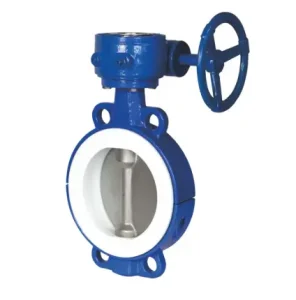
Wholesale PTFE Lined Butterfly Valve - Durable & Corrosion Resistant Manufacturers, Manufacturer
Explore Specification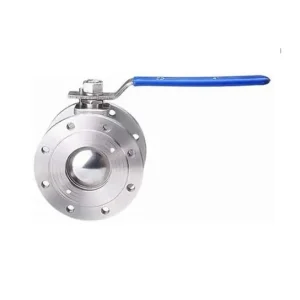
Wholesale Stainless Steel Ultra - Thin Ball Valve with Fire - Safe Design Supplier, Factories
Explore Specification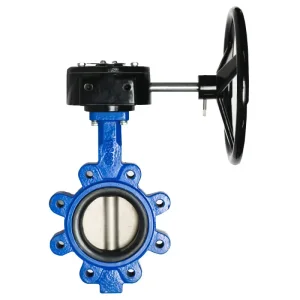
High-Quality Lug type Butterfly valve Suppliers, Manufacturers
Explore Specification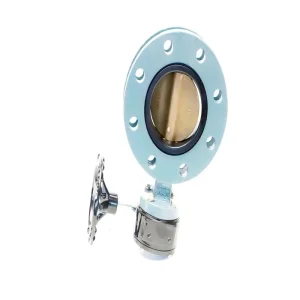
Wholesale CE/ISO/DIN/BS High Pressure Metal Seal Hard Seal Butterfly Valve Manufacturers, Manufacturer
Explore Specification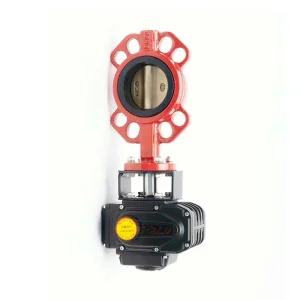
High-Quality Actuator Wafer Butterfly Valve Supplier, Manufacturers
Explore Specification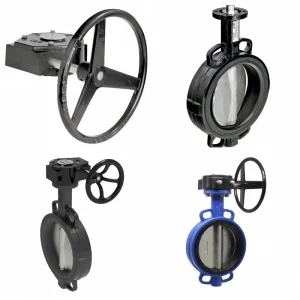
CE Certification WRAS Approved High-Performance Butterfly Valve 4020G Manufacturer, Factories
Explore Specification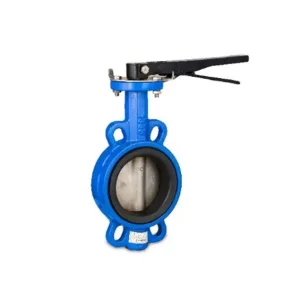
High-Quality Rubber Lined Pinless Butterfly Valve Supplier, Factories
Explore Specification