
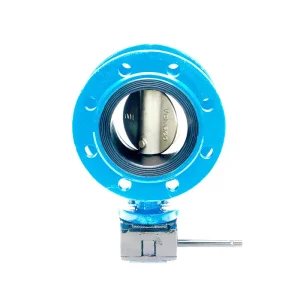
Primary Engineering Inventory
Precision Water Pipeline Valves & Engineered Flow Solutions
High-performance flow-control assets fabricated from ductile iron (EN-GJS-450-10 / 500-7) and duplex stainless steels, certified under CE pressure directives for critical civil and marine pipelines.
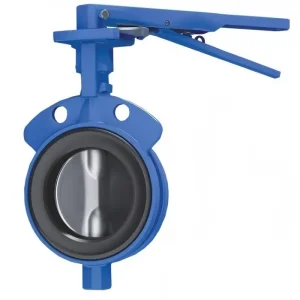
EPDM Lining Butterfly Valve - Durable & Corrosion Resistant
Request Engineering Datasheet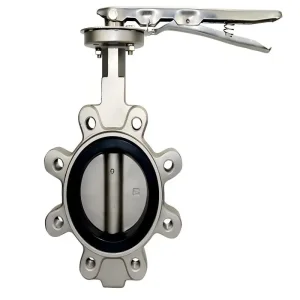
LUG Stainless Steel Butterfly Valve - Durable & Reliable
Request Engineering Datasheet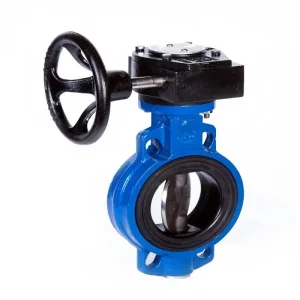
Wafer Butterfly Valve – Worm Gear Rubber Lined
Request Engineering Datasheet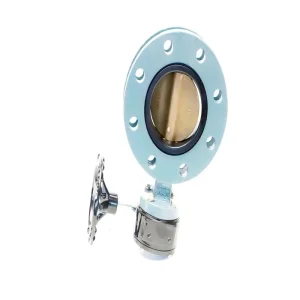
CE/ISO/DIN/BS High Pressure Metal Seal Butterfly Valve
Request Engineering Datasheet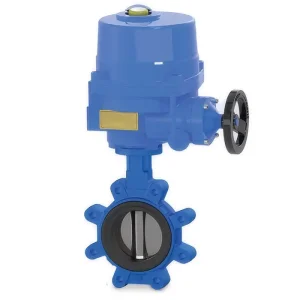
Automated Electrical Modulating Butterfly Valve
Request Engineering Datasheet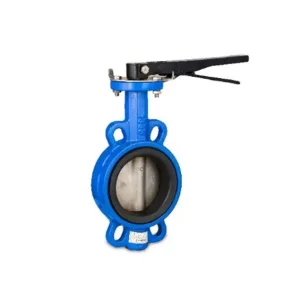
High-Integrity Rubber Lined Pinless Butterfly Valve
Request Engineering Datasheet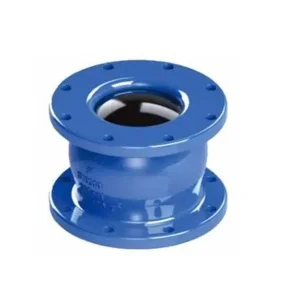
Silent Non-Slam Check Valve for Water Transmission
Request Engineering Datasheet
Technical Whitepaper: Core Engineering
Water Pipeline Gate Valve & Swing Check Valve Technology Evolution
Modern hydraulic transmission requires absolute bubble-tight shut-off, minimized head loss, and hydraulic dampening mechanisms capable of preventing destructive water hammer across decades of non-stop municipal and industrial operation.
100%
Bi-Directional Sealing
250 µm
Min. FBE Coating Depth
EN 1074
European Water Standard
<0.05s
Rapid Non-Slam Response
Full-Bore Resilient Seat Gate Valves
Traditional metal-seated wedge gate valves suffered catastrophic particulate entrapment, seat scoring, and deposit build-up in the body recess. Modern CE-certified water pipeline gate valves employ vulcanized ductile iron wedges coated in potable-certified EPDM (WRAS / DVGW compliant). With a smooth, straight-through cylindrical bore free of seat pockets, debris flushes clean during closure, achieving zero leakage under differential pressures up to PN25.
- Non-rising (NRS) or Rising Stem (OS&Y) configurations
- Rolled 420/431/316 stainless steel stem threads
- Replaceable O-ring stem seals under line pressure
Hydraulically Damped Swing Check Valves
Uncontrolled reverse flow following sudden pump de-energization creates extreme acoustic and pressure shockwaves known as water hammer (Joukowsky surge pressures exceeding 40 bar). Our CE-marked swing check valves integrate an oblique seating plane (shortened disc travel angle from 75° to 45°), external counterweights, and adjustable oil-dashpot hydraulic damping devices. This guarantees rapid initial closure followed by smooth secondary seating.
- Adjustable counterweight for custom cracking pressure
- Internal ductile iron disc encapsulated in EPDM or NBR
- Anti-cavitation bronze or stainless steel renewable seat rings
Advanced Metallurgical Integrity & FBE
Buried underground pipelines and submerged transmission lines face aggressive soil galvanic currents and biological sulfate-reducing bacteria. We employ electrostatic fluidised bed or spray application of thermally cured Fusion-Bonded Epoxy (FBE) to GSK high-adhesion specifications. With a uniform dry film thickness surpassing 250 µm and zero-defect spark testing at 3 kV, corrosive pitting is completely eliminated across a 50-year design life.
- High tensile EN-GJS-500-7 body casting standard
- Pinhole-free dielectric insulation barrier verified
- WRAS, ACS, and NSF-61 certified non-toxic coatings
Information Gain: Critical Sizing & Dynamic Torque Metrics
Unlike standard commercial distributors, Tianjin Top Valve engineers compute dynamic fluid resistance coefficients (Cv/Kv values), Reynolds numbers, and disc acceleration kinetics directly from customer pipeline schematics. By factoring in line deceleration velocities (dv/dt), our engineering team calculates the precise counterweight moment required to close check valve discs before flow reversal strikes zero velocity, neutralizing slamming impacts entirely.
EPC & Utility Procurement Criteria
Global Standards Compliance Matrix: European & International Demands
Procurement teams for major international infrastructure projects across Europe, the Middle East, Southeast Asia, and the Americas demand harmonized compliance spanning pressure equipment safety, hygienic purity, and dimensional interchangeability.
| Standard Ref. | Governing Directive / Scope | Top Valve Production Parameter | Verification & Test Protocol |
|---|---|---|---|
| PED 2014/68/EU | Pressure Equipment Directive (CE Marking) | Category III / Module H Full Quality Assurance | 100% Hydrostatic Shell (1.5x PN) & Seat (1.1x PN) |
| EN 1074-1 / EN 1074-2 | Valves for Water Supply: Isolation (Gate) | Bi-directional zero-leakage rate A (EN 12266-1) | 2,500 continuous mechanical endurance cycles |
| EN 1074-3 | Valves for Water Supply: Check Valves | Low pressure crack & dynamic closure behavior | Reverse-flow shut-off test down to 0.1 bar differential |
| EN 558 Series 14/15 | Face-to-Face Dimensions (DIN 3202 F4 / F5) | Interchangeable global pipeline drop-in fit | CNC multi-axis precision coordinate inspection (CMM) |
| EN 1092-2 / BS 4504 | Flange Drilling Specifications (PN10/16/25) | Flat Face (FF) / Raised Face (RF) with serrations | Flange parallelism and pitch circle runout <0.15mm |
| BS 5163 / AWWA C509/C515 | British & American Waterworks Standards | Ductile iron resilient wedge gate valve patterns | Tensile yield testing, elongation minimum 10% guarantee |
Potable Water Hygiene
Toxic chemical leaching or organic bacterial growth is unacceptable. All synthetic elastomer compounds (EPDM) molded in our in-house rubber facility undergo cytotoxic, microbial, and organoleptic testing matching WRAS, DVGW W270, and ACS requirements.
Actuation Readiness
Both our gate valves and check valves feature standardized ISO 5210 / ISO 5211 direct mounting flanges. Systems can integrate electric multi-turn actuators (AUMA, Rotork), pneumatic double-acting cylinders, or limit-switch monitoring blocks with zero stem modifications.
Traceability & MTRs
Every pressure boundary casting carries an indelible heat-cast batch stamp. Mill Test Certificates complying with EN 10204 3.1 accompany every shipping crate, documenting optical emission spectrometry chemical analyses and Brinell hardness testing.
Extended Lifecycle
Through rolled stainless steel stems, low-friction POM thrust collars, and anti-friction bronze drive nuts, opening torque is reduced by up to 35% compared to conventional casting rough threads, directly decreasing actuator sizing costs for engineering clients.
Smart Manufacturing 4.0 Infrastructure
China Factory 4.0: Supply Chain Resilience, Vertical Integration & Cost Efficiency
Supply chain volatility, foundry casting porosity, and third-party elastomer degradation represent significant risks in global valve procurement. Tianjin Top Valve mitigates these threats through comprehensive on-campus vertical integration.
Foundry Autonomy Since 1996
Operating our own dedicated iron and steel foundry (Tianjin Donglian Valve Factory) enables uncompromised metallurgical surveillance. Molten ductile iron is sampled continuously via direct-reading spectrometers to guarantee nodularity exceeding 85% (Grade 2 ISO 1083). We completely eliminate sub-contracted casting defects, air cavities, and micro-shrinkage fractures.
- Automated resin sand molding line for crisp dimensional tolerances
- In-house spheroidization inoculation control
- Complete batch chemical and Charpy V-notch impact verification
Proprietary Rubber Compounding (1987)
The heart of any resilient gate valve or swing check valve is its elastomer compound. Rather than purchasing commoditized third-party seals, our group has operated Tianjin Dongfang Rubber Factory since 1987. We synthesize and vulcanize our own proprietary EPDM, NBR, and Viton formulations with low compression set (<18% after 1,000 hrs at 70°C) and supreme tear resistance.
- Computer-controlled internal mixer Banbury systems
- Ozone resistance chamber test (50 pphm @ 40°C, zero cracking)
- Direct high-pressure rubber-to-metal bonding processes
CNC Machining & Automated Testing
Our 23,000 m² modern manufacturing hub utilizes twin-spindle horizontal CNC machining centers, automated electrostatic powder coating lines, and computerized hydrostatic test benches. Multi-station test rigs verify every single valve shell at 1.5x PN and seat at 1.1x PN with optical pressure drop transducers, generating unalterable digital inspection reports automatically.
- 100% shell & high/low pressure seat leak verification
- Automated holiday detector testing across 100% of epoxy coating
- Immediate port proximity (Tianjin Xingang Port) reducing transit costs
Real-World Applications
Engineering Application Scenarios & Operational Dynamics
From deep subterranean utility chambers to high-salinity reverse osmosis desalination headers, our gate and check valves are customized for harsh environment resilience.
🏙️
Municipal Potable Transmission Mains
In long-distance water transmission lines (DN300 to DN1600), minimizing hydraulic friction is essential to reducing life-cycle pump energy expenditures. Resilient seat gate valves provide uninterrupted laminar flow with virtually zero head loss (Kv value equal to continuous pipe). Combined with slow-closing swing check valves at booster stations, municipal distribution networks are safeguarded against pipeline ruptures caused by pump shutdown water hammer.
🌊
Seawater Desalination & RO Headers
Chloride-rich seawater environments cause catastrophic crevice corrosion in standard ductile irons. For desalination intake lines, high-pressure membrane feed pumps, and brine discharge channels, our swing check and gate valves are manufactured in Duplex 2205, Super Duplex 2507, or Aluminum Bronze (C95800) with Monel trim, guaranteeing absolute chemical passivity against aggressive saline solutions.
🏗️
Deep Burial Underground Distribution
Urban infrastructure projects demand gate valves engineered for direct soil burial without expensive concrete valve pits. Our non-rising stem (NRS) elastic seat gate valves are engineered with square operating nuts, telescopic extension spindles, road surface boxes, and multi-layered grease seals, ensuring zero water ingress and maintenance-free operation across 30+ years of burial.
⚡
High-Lift Pumping Stations
Deep-well discharge and high-lift booster configurations subject non-return valves to massive dynamic backpressures. Our dual-eccentric swing check valves feature an external lever, balanced counterweight, and hydraulic dashpot dampening cylinder with bypass needle valve control, allowing field operators to adjust closing speed across deceleration curves precisely.
🏢
District Energy & Large-Scale HVAC
Centralized district cooling and heating water loops experience continuous thermal cycling between 4°C and 95°C. Resilient EPDM wedge formulas maintain full elasticity without hardening or thermal plastic flow, eliminating seasonal seal deterioration and preventing expensive chilled water losses in mission-critical data center cooling systems.
🏭
Industrial Wastewater & Slurry Transport
Wastewater handling requires self-cleaning valve geometries that prevent ragging, stringy solids entrapment, and grit scouring. Our free-flow swing check valves with resilient soft seals and straight-bore resilient gate valves enable unrestricted solids passage, while internal high-build polyurethane or anti-abrasive rubber linings protect metal bodies against severe abrasion.
Technical & Procurement FAQ
Frequently Asked Questions: Specifications & Ordering
Direct engineering answers to technical queries encountered by utility directors, EPC hydraulic modelers, and international procurement managers.
What specific criteria does CE Certification mandate for water pipeline gate and check valves?
CE Certification on industrial water valves is governed primarily by the Pressure Equipment Directive (PED) 2014/68/EU. Depending on the nominal diameter (DN) and maximum allowable pressure (PS), valves fall under Category I, II, or III. For large infrastructure projects, Tianjin Top Valve qualifies under Module H (Full Quality Assurance), certified by an authorized European Notified Body.
This mandates verified material traceability back to the melt furnace (EN 10204 3.1 certification), strictly validated non-destructive testing (NDT), wall thickness compliance per EN 12516, and hydrostatic pressure testing according to EN 12266-1 (Shell test at 1.5 × PN rating and Seat leakage test at 1.1 × PN rating with Rate A bubble-tight results).
Why is a resilient seated gate valve preferred over a traditional metal-seated wedge gate valve in water distribution?
Traditional metal-seated gate valves rely on a body recess or groove at the bottom of the bore to seat the cast wedge. Over time, sand, iron rust, and sediment accumulate in this pocket, preventing the wedge from seating completely and causing severe leakage. Forcing the handwheel damages the bronze or brass faces permanently.
In contrast, resilient seated gate valves feature a totally unobstructed, cylindrical flat bore without a bottom pocket. The ductile iron wedge is fully encapsulated in thick, vulcanized EPDM rubber. As the wedge descends, the elastomer absorbs tiny sand grains and compresses elastoplastically against the epoxy-coated iron body walls, establishing an absolute bubble-tight seal. When reopened, the rubber returns to its original molded form, and sediment is naturally carried downstream by the flow.
How does the counterweight and hydraulic damper on a swing check valve prevent water hammer?
When a pipeline pump trips, flow reverses almost instantaneously. If a check valve disc is left to close purely under gravity or fluid backpressure, it slams against the body seat after the water column has already reversed, triggering extreme pressure surge waves (water hammer). This shockwave can rupture pipe joints, fracture pumps, and crack fittings.
A counterweight with an external hydraulic damping cylinder solves this by breaking the closure cycle into two controlled stages:
1. Rapid Early Travel (85–90%): The counterweight pulls the disc down swiftly as forward flow velocity approaches zero, eliminating reverse velocity build-up.
2. Cushioned Seating (Last 10–15%): An oil dashpot or hydraulic damper engages, slowing down final contact to a gentle, silent closure over 1 to 5 adjustable seconds. This completely eliminates valve slam and surge spikes.
What are the key advantages of sourcing directly from a vertically integrated manufacturer with an in-house rubber factory?
In waterworks valves, over 80% of premature field failures stem from elastomer degradation—including compression set fatigue, delamination from metal cores, micro-cracking from ozone/chlorine exposure, or microbiological degradation. Trading companies and standard assemblers outsource rubber seats to third-party workshops, making raw polymer traceability impossible to control.
Because Tianjin Top Valve operates its own rubber production plant (Tianjin Dongfang Rubber Factory, established 1987), we control the exact carbon black formulation, antioxidant additives, vulcanizing agents, and curing dwell times. Every rubber wedge undergoes strict rheometer testing, tensile modulus verification, and compression set monitoring. This guarantees that our resilient seats remain pliable, tear-resistant, and chemically stable throughout their 50-year service life.
What flange standards and face-to-face dimensions can Tianjin Top Valve supply for international replacement projects?
We supply gate and swing check valves tailored to global flange drillings and laying dimensions, including:
• European Standard: EN 1092-2 PN10, PN16, and PN25 with face-to-face dimensions to EN 558 Series 14 (DIN 3202 F4 short pattern) and Series 15 (DIN 3202 F5 long pattern).
• British Standard: BS 5163 Type A and Type B, BS 4504 flange drilling.
• American Standard: ANSI / ASME B16.1 Class 125/150, AWWA C509 / AWWA C515 with face-to-face dimensions to ASME B16.10.
• Australian & Japanese Standards: AS 4087 Class 16/21 and JIS B2239 10K/16K on project demand.
Comprehensive Catalog Selection
Engineered Specialty Valves: Non-Return, Globe & Fluid Diversion
Explore our certified industrial valves configured for power station headers, chemical transmission lines, municipal pumping sumps, and automated flow networks.
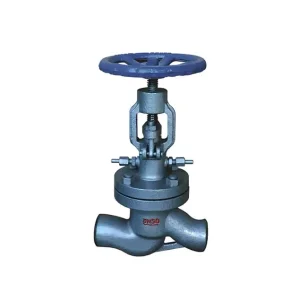
Water Seal Globe Valve with Quick-Closing Feature
Request Engineering Datasheet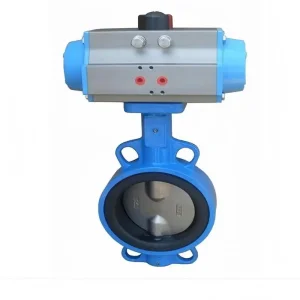
Pneumatic Actuated Rapid Butterfly Control Valve
Request Engineering Datasheet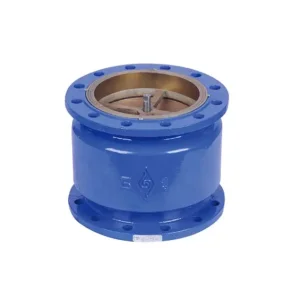
CE Certification Energy-Saving Silencer Check Valve
Request Engineering Datasheet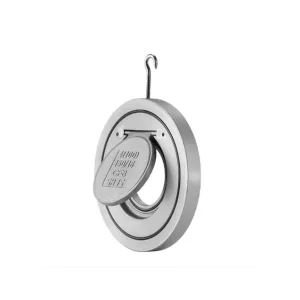
Stainless Steel Single Disc Wafer Check Valve
Request Engineering Datasheet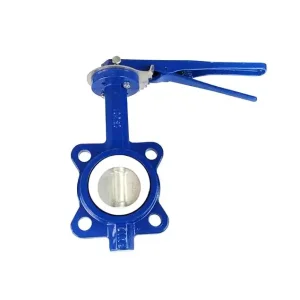
High-Chemical PTFE Lined Pinless Butterfly Valve
Request Engineering Datasheet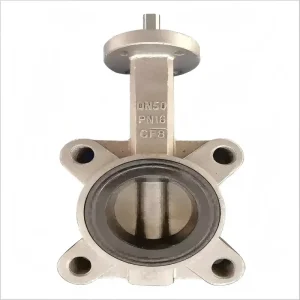
Semi-Lug Ductile Iron Industrial Butterfly Valve
Request Engineering Datasheet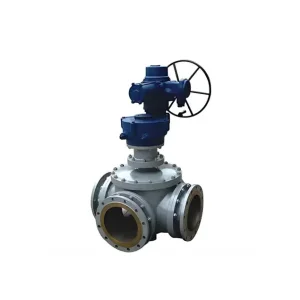
Quick-Opening Three-Way Flange Ball Valve
Request Engineering Datasheet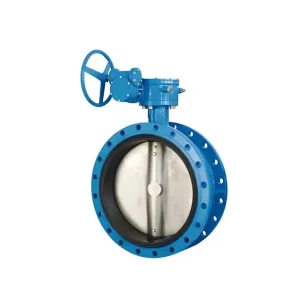
Energy-Saving Low-Torque Flange Type Butterfly Valve
Request Engineering Datasheet
Direct OEM / EPC Engineering Partnership
Specify Your Project Fluid Parameters with Tianjin Top Valve
Connect directly with our senior application engineers in Tianjin. From hydraulic surge calculations and actuator sizing to project-specific CE/PED certification packages, our foundry, machine shop, and rubber vulcanization plants stand ready to support your municipal waterworks and industrial piping tenders.
