
Certified Industrial Valve Range for Severe Thermal & Process Systems
Direct from Tianjin Top Valve's group foundry and CNC precision machining center. All components conform to international PED (CE) pressure standards and rigorous hydro-pneumatic protocols.
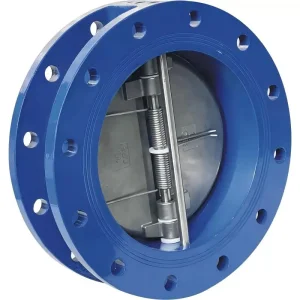
CE Certification Dual Plate Check Valve, Reliable Backflow Prevention Device Suppliers, Manufacturer
Explore Product Details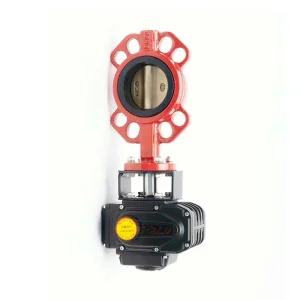
Wholesale Ceramic Disc Wafer Butterfly Valve - Durable & Efficient Design Supplier, Factories
Explore Product Details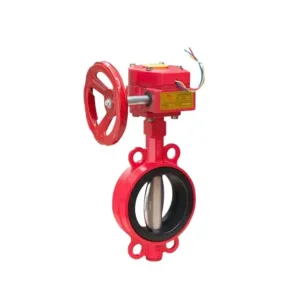
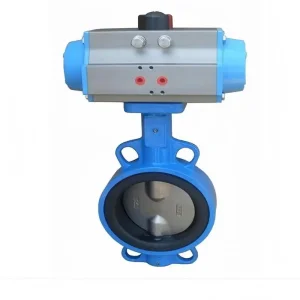
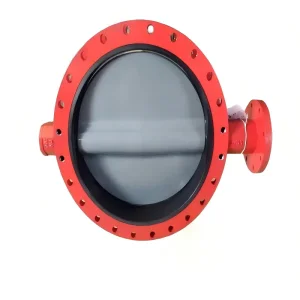
High-Quality Pneumatic Butterfly Valve - Efficient Flow Control Solution Suppliers, Factories
Explore Product Details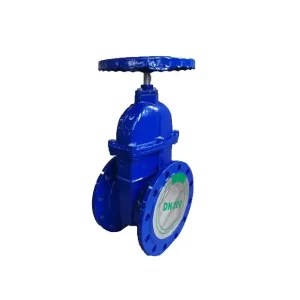
CE Certification German Standard Elastic Seat Gate Valve Manufacturers, Manufacturer
Explore Product Details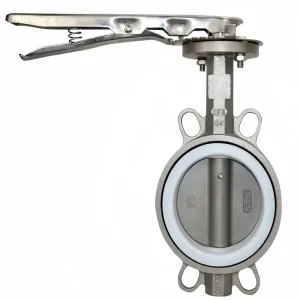
CE Certification PTFE Lined Stainless Steel Butterfly Valve Manufacturer, Factory
Explore Product Details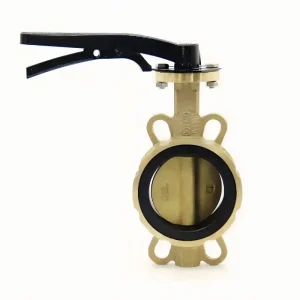
High-Quality Aluminum Bronze Butterfly Valve - Durable & Corrosion Resistant Suppliers, Manufacturer
Explore Product DetailsThe Mechanics of High-Temperature Vacuum Isolation Globe Valves
In modern vacuum heat treatment (VHT), low-pressure carburizing (LPC), and vacuum hot-press sintering, atmospheric ingress is catastrophic. Top Valve's CE-certified vacuum isolation globe valve is engineered specifically to isolate vacuum furnace chambers from roughing lines, diffusion pumps, and high-temperature inert gas backfills.
Hermetic Multi-Ply Bellows Barrier
Traditional globe valves rely on braided graphite or virgin PTFE stem packings that permit micro-channel gas migration under sub-atmospheric negative pressures. Our vacuum heat globe valves incorporate hydroformed multi-ply Inconel 625 or SS316Ti metal bellows.
This creates an impenetrable metallic boundary between the moving valve stem and process vacuum, preventing atmospheric oxygen or moisture contamination across 100,000+ mechanical strokes.
Differential Pressure Bi-Directional Seat
Vacuum furnace operation switches dynamically from extreme negative roughing conditions (10⁻³ to 10⁻⁵ mbar) to intense positive inert gas quench phases (up to 20 bar barometric gas purging). Our valve disc utilizes a Stellite Gr. 6 hardfaced conical plug matched to an induction-hardened seat.
The geometric sealing angle ensures self-centering closure with zero leakage regardless of whether pressure is exerted from the furnace side or the vacuum manifold.
Low-Outgassing Cavity Metallurgy
Under elevated furnace temperatures up to 650°C, internal valve surface desorption can spoil furnace dew points. Top Valve minimizes outgassing rates through electrolytic polishing and electropolished cavity finishing, achieving Ra ≤ 0.4 µm.
Castings produced in our Tianjin foundry undergo vacuum degassing and argon-oxygen decarburization (AOD) to eliminate microscopic gas pockets and volatile inclusions within the body microstructure.
| Performance Parameter | Standard Commercial Globe Valve | CE Vacuum Isolation Globe Valve (Top Valve) | Operational Impact on Heat Treatment |
|---|---|---|---|
| Stem Sealing Mechanism | Flexible graphite or PTFE chevron compression rings | Dual-barrier: Multi-ply Inconel/316Ti bellows + secondary graphite safety packing | Eliminates atmospheric oxygen leakage; prevents work-piece discolouration and decarburization. |
| Helium Leak Testing Standard | Typically not tested under sub-atmospheric vacuum | 100% Helium mass spectrometry tested to < 1×10⁻⁷ mbar·L/s (EN 1779 / ASTM E498) | Guarantees deep vacuum retention during sensitive diffusion and brazing soak phases. |
| Internal Surface Finish | Standard rough casting (Ra 6.3 - 12.5 µm) | Precision CNC machined & electropolished (Ra ≤ 0.4 µm) | Reduces moisture outgassing kinetics; shortens roughing pump-down cycles by up to 28%. |
| Thermal Shock Resilience | Prone to galling; stem binding under thermal shifts | Symmetric body architecture with high-temp Stellite overlay & guided trim | Permits violent gas-quenching cycles (from 600°C down to ambient in seconds) without seizing. |
| European Regulatory Conformity | Basic general manufacturing standards | CE Certified via Pressure Equipment Directive (PED 2014/68/EU Module H) | Enables turnkey CE-marking integration for furnace OEMs exporting to EU markets. |
Localized Deployment Scenarios in Modern Thermal Processing
From aerospace titanium alloy treatment to wafer-scale semiconductor fabrication, our CE-certified vacuum isolation valves serve as critical pressure and vacuum boundaries.
Aerospace Vacuum Carburizing & Quenching
Critical landing gear components and jet engine turbine discs demand immaculate surface purity. Installed on vacuum heat treat furnace forelines, our valves withstand frequent 20-bar nitrogen gas-quench backfills while maintaining instant isolation integrity against oil-diffusion vacuum systems.
Semiconductor Annealing & Thermal LPCVD
In low-pressure chemical vapor deposition and silicon wafer thermal oxide drive-in furnaces, unthrottled turbulence damages delicate silicon lattices. Top Valve’s parabolic plug profiles provide stable throttling during chamber pre-evacuation alongside bubble-tight shutoff.
CSP Molten-Salt Vacuum Envelope Insulation
In Concentrated Solar Power (CSP) facilities, parabolic trough receiver tubes rely on high-vacuum annular jackets to insulate 550°C heat transfer fluids. Our bellows-sealed valves ensure continuous vacuum containment, preventing thermal convective loss across decade-long solar field lifetimes.
Hot Isostatic Pressing (HIP) & Sintering
Advanced structural ceramics and 3D printed additive manufacturing parts require HIP consolidation under extreme temperature and pressure transitions. Our cast alloy steel (ASTM A217 WC6/WC9) isolation globe valves reliably guard mechanical roots blowers against high-velocity abrasive particulate back-streaming.
China Factory Supply Chain Resilience: Full In-House Vertical Integration
Unlike valve brand-assemblers who outsource casting, machining, and sealing to disparate third parties, Tianjin Top Automation Equipment Co., Ltd. operates an integrated engineering ecosystem built over three decades.
Dedicated In-House Foundry
Operating since 1996 (Tianjin Donglian Valve Factory), our foundry pours ductile iron, carbon steel, CF8M stainless steel, and bronze alloys under continuous optical emission spectroscopy (OES) monitoring to ensure chemical and pressure containment integrity.
Proprietary Elastomer Compounding
Backed by Tianjin Dongfang Rubber Factory (operating since 1987), we compound, formulate, and vulcanize specialty EPDM, FKM, and fluorosilicone seals in-house. This guarantees tight control over compression sets, outgassing factors, and chemical resistance.
5-Axis CNC Precision Center
Sealing faces, stem tapers, and bellows housings are machined on multi-axis Japanese CNC horizontal centers to micron tolerances. Concentricity errors are kept under 0.015 mm, eliminating uneven packing wear and micro-gap leakage paths.
Tianjin Port Logistics Hub
Situated in Wuxia Industrial Park, Dongli District, our factory is only 45 minutes from Tianjin Port (Northern China's largest container shipping terminal). This grants overseas clients expedited container dispatch, streamlined customs declarations, and reliable transit schedules.
Technical Roadmap: Next-Generation Vacuum Control Systems
As semiconductor thermal budgets tighten and clean aerospace vacuum processes require smart automation, our R&D roadmap focuses on three pivotal developmental frontiers.
Advanced Micro-Plasma Stellite Cladding
Deployment of robotic micro-plasma powder cladding on all vacuum globe disc edges. This provides dense, pore-free cobalt alloy coatings that resist micro-welding and mechanical spalling under high vacuum bakeout conditions exceeding 500°C.
Conformal-Cooled 3D Printed Valve Bodies
Selective Laser Melting (SLM) additive manufacturing of internal cooling jackets inside the globe valve bonnet. By circulating chilled deionized water directly around the stem bellows, the metal bellows assembly remains below 150°C even when the furnace core reaches 1,200°C.
Digital Fiber-Bragg Vacuum Telemetry
Integration of Fiber Bragg Grating (FBG) optical strain and temperature sensors directly into the bellows convolution matrix. This yields real-time structural health monitoring, providing early predictive alerts before fatigue failure can compromise furnace vacuum levels.
Global Commercial Landscape: Mitigating Batch Loss in High-Value Metallurgy
The worldwide vacuum thermal processing equipment market is expanding rapidly, driven by electric vehicle gear carburizing, medical implant sintering, and advanced aerospace additive manufacturing.
The Economics of Zero Failure
A single batch of aerospace-grade single-crystal turbine blades processed in a vacuum heat furnace can exceed $250,000 in raw material and machining value. A valve vacuum leak during the critical diffusion window causes irreversible oxidation, turning an entire load into scrap metal.
Investing in factory-certified CE vacuum isolation globe valves eliminates this systemic financial risk, ensuring rapid ROI through eliminated downtime and guaranteed yield consistency.
OEM Scalability & Standardization
Furnace builders and EPC engineering firms face escalating pressure to reduce lead times. Because Top Valve manages group casting, machining, and cleanroom assembly in Tianjin, OEM partners secure standardized dimensional designs with rapid global delivery.
Standardized DIN, EN 1092-1, and ASME Class 150/300 face-to-face dimensions allow drop-in interchangeability across multinational manufacturing footprints.
Fugitive Emission & Decarbonization Pressures
Industrial thermal facilities in North America and the European Union must conform to strict environmental mandates regarding industrial gas loss and fugitive volatile emissions (ISO 15848-1 Class AH). Top Valve's dual-seal bellows containment ensures zero process media escapes into the workplace.
Regulatory Compliance & Turnkey Localization Support
Navigating complex international import standards requires verifiable, documented compliance. Top Valve provides complete documentation, testing traceabilities, and regional engineering consultation.
CE / PED 2014/68/EU Module H
Every vacuum isolation valve destined for the European market complies with Pressure Equipment Directive requirements. Full quality assurance (Module H) certification verifies design calculations, material test certificates (EN 10204 3.1), and hydrostatic shell testing up to 1.5× rated design pressure.
ISO 9001 / 14001 / 45001 Ecosystem
Our management and plant operations operate under multi-certified management systems. Process flow travelers follow every casting through heat treatment, CNC turning, bellows seam welding, assembly, and individual serial numbering for life-cycle traceability.
Direct Live Remote Factory FAT Audits
To assist international procurement engineers and project managers unable to fly to Tianjin, we provide live interactive high-definition Video Factory Acceptance Tests (FAT). Review valve dimension verifications, live helium spectrometer readings, and material positive identification (PMI) on your screen in real time.
Frequently Asked Technical & Procurement Questions
Clear, engineering-level answers regarding high-temperature vacuum isolation globe valves, flange geometries, test protocols, and procurement logistics.
What makes a vacuum isolation globe valve fundamentally different from a standard industrial globe valve?
How does Top Valve conduct helium leak detection, and what thresholds are certified?
Can these valves handle sudden high-pressure backfilling during high-pressure gas quenching (HPGQ)?
Which body and trim materials are recommended for temperatures exceeding 500°C?
What flange drillings and end connections can be accommodated for international projects?
What documentation and inspection certificates are included with shipments?
How does your in-house elastomer and foundry heritage reduce buyer procurement lead times?
Can Top Valve equip vacuum isolation valves with pneumatic or motorized electric actuators?
Complementary Flow Control Solutions for High-Stress Piping Networks
In addition to vacuum isolation valves, our Tianjin plant produces an extensive series of check, gate, and butterfly valves for cooling water manifolds, inert gas supply lines, and industrial exhaust streams.
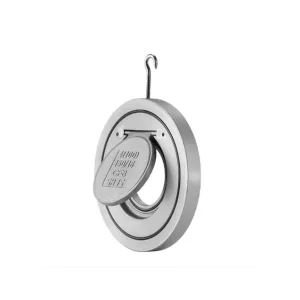
CE Certification Stainless Steel Single Disc Wafer Check Valve with Enhanced Corrosion Supplier, Manufacturers
Explore Product Details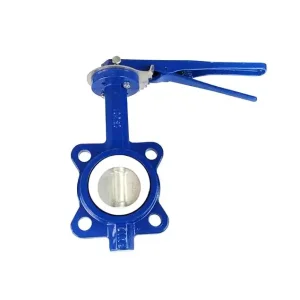
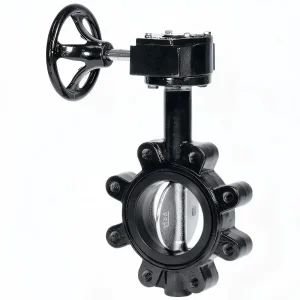
CE Certification Gear Operated Butterfly Valve - Durable & Reliable Supplier Supplier, Factory
Explore Product Details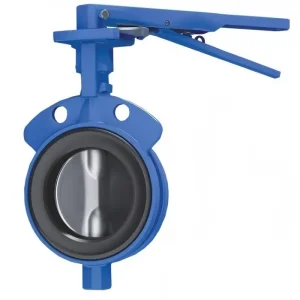
High-Quality EPDM Lining Butterfly Valve - Durable & Corrosion Resistant Suppliers, Manufacturers
Explore Product Details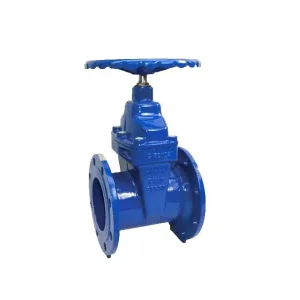
High-Quality Non-Rising Stem Elastic Seat Sealing Gate Valve Manufacturer, Factory
Explore Product Details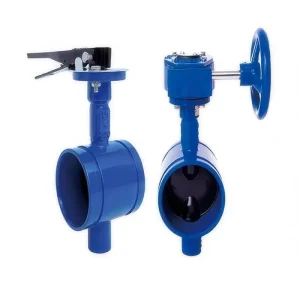
High-Quality Grooved End Butterfly Valve - Durable & Reliable Flow Control Suppliers, Supplier
Explore Product Details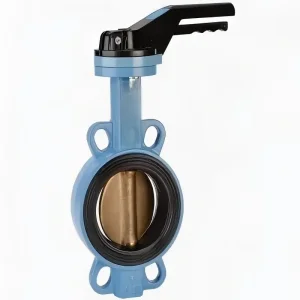
CE Certification Bronze Disc Wafer Butterfly Valve - Durable & Efficient Manufacturers, Factory
Explore Product Details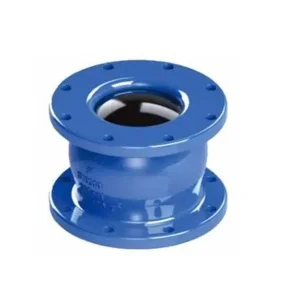
High-Quality High - Performance Silent Check Valve for Water Supply Systems Supplier, Manufacturers
Explore Product DetailsReady to Optimize Your Vacuum Thermal Piping Architecture?
Collaborate directly with our senior valve engineering staff in Tianjin. Receive project-specific general assembly CAD drawings, 3D STEP models, and full PED material compliance schedules within 24 hours.
