Precision Flow Control & Heavy-Duty Valve Assemblies
Engineered for extreme thermal gradients, corrosive chemical streams, and rigorous municipal and power utility piping infrastructures.
Engineering Authority: Three-Way Flanged Ball Valve Mechanics
A comprehensive examination of hydrodynamic port topologies, dynamic seal mechanics, and pressure-boundary reliability under PED 2014/68/EU Module H compliance guidelines.
L-Port (Diverting & Bi-Directional Shifting)
Designed primarily for 90-degree flow switching between two perpendicular output lines from a central supply or alternate intake selection. The dual-seated or four-seated L-Port configuration utilizes precision micro-lapped spherical surfaces to eliminate cross-port contamination. Our engineering tolerances ensure tight shutoff against full differential pressure ratings, preventing boundary leakage in chemical batch switching and hydrocarbon blending skids.
T-Port (Mixing, Blending & Straight-Through By-Pass)
The T-Port geometry unlocks versatile multi-directional flow capabilities: mixing two distinct streams into a singular outbound header, dividing a high-volume process feed into proportional distribution lines, or delivering straight-through passage with the third port isolated. Fitted with a 4-seat balanced dynamic pre-loading spring system, our T-port design avoids cavity over-pressurization while maintaining consistent operating torque throughout millions of cycles.
| Engineering Parameter | EN / DIN Standard Rating | ASME / API Standard Rating | Material / Quality Compliance |
|---|---|---|---|
| Nominal Diameters | DN15 to DN300 | 1/2" to 12" Full Bore / Reduced Bore | EN 558-1 Series / ASME B16.10 |
| Pressure Rating Class | PN16, PN25, PN40, PN63, PN100 | Class 150, Class 300, Class 600 | PED 2014/68/EU Cat. III / IV Module H |
| Body & Bonnet Alloys | 1.4408 (CF8M), 1.4308 (CF8), 1.0619 (GS-C25) | WCB, LCC, CF8M (SS316), CF3M (SS316L) | EN 10204 3.1 & 3.2 Spectral MTC |
| Seat & Seal Compounds | PTFE + 15% Carbon, Pure PEEK, Delrin | RPTFE, PEEK, Devlon, Stellite Metal-Seated | API 607 7th Ed. / ISO 10497 Fire-Safe |
| Fugitive Emission Stem Seal | ISO 15848-1 Class AH / BH Tightness | TA-Luft VDI 2440 Certified Live-Loaded | Quad-Ring FKM + Graphite Chevron Sets |
| Mounting Top Flange | ISO 5211 Direct Mounting Pad | Standardized F04 to F16 Bolt Circles | Compatible with Pneumatic/Electric Actuators |
Macro Industry Solutions: Mission-Critical Fluid Diversion
From cryogenic gas purification to multi-million gallon municipal water distribution networks, our three-way valve systems satisfy extreme operating environments.
Petrochemical & Refining
Our CE-marked three-way valves replace multiple conventional two-way isolation blocks, dramatically shrinking skid footprint and eliminating up to four flanged connection leak paths. Specialized PTFE and PEEK composite seats withstand aromatic hydrocarbons, corrosive sour gas (NACE MR0175 compliance), and sudden thermal cycling up to 260°C without elastomer degradation or body deformation.
District Energy & Large HVAC
Modern building services demand ultra-precise thermal redistribution. Our low-torque three-way ball valves provide tight shutoff and smooth modulating curves for central boiler systems, evaporative cooling towers, and heat-pump chillers. Direct actuation via ISO 5211 pads ensures micro-second automation response with zero water hammer risks under variable flow demands.
Chemical Batch Processing
Eliminate stagnant fluid pockets and contamination between processing phases. Designed with cavity fillers and mirror-finished stainless or exotic Hastelloy balls, our valves deliver laminar hydrodynamic routing. Compatible with aggressive CIP/SIP sanitation regimes, preventing crystallization in high-purity active ingredient synthesis pipelines.
China Factory 4.0: Supply Chain Resilience & Integrated Metallurgy
Combining four decades of proprietary elastomer development, in-house metallurgical foundries, and automated CNC machining center workflows under one unified roof.
In-House Foundry Control
Unlike trading intermediaries, our group controls body casting integrity directly through Tianjin Donglian Valve Factory (established 1996). Our foundries deploy real-time optical emission spectrometers (OES) to certify carbon, chromium, and molybdenum chemistry before molten pouring, eliminating porosity risks.
Proprietary Elastomer Seat Lab
Through Tianjin Dongfang Rubber Factory (operating since 1987), we synthesize and cure our own high-grade EPDM, NBR, and compounded fluoropolymers. We control polymer chain density, hardness, compression set, and tensile resilience in our internal physical and chemical laboratory.
5-Axis CNC Precision Lathes
Spherical roundness of ball cores is machined within ±0.005mm tolerances, achieving mirror finishes of Ra < 0.1μm. This microscopic surface perfection slashes dynamic operational torque by up to 35%, drastically lowering pneumatic and motor actuator procurement costs for clients.
100% Pressure Quality Gates
Every single manufactured unit is submitted to hydrostatic shell testing at 1.5× PN and high-pressure/low-pressure seat air testing per ISO 5208 Rate A (zero detectable bubbles). Complete batch serialization records allow 100% forward and backward traceability for 10+ operational years.
Strict Regulatory Adherence: CE / PED 2014/68/EU Module H & Beyond
Ensuring frictionless site acceptance for international EPC mega-projects through verified compliance certificates, third-party auditability, and standardized documentation.
PED 2014/68/EU Module H
Our Pressure Equipment Directive Module H certification covers Full Quality Assurance from European notified bodies. It authorizes full CE marking across Class I through Category IV pressure systems for dangerous fluids (Group 1 gases/liquids) without individual third-party witnessing delays.
ATEX & SIL 3 Verification
Designed for explosive atmosphere service in compliance with Directive 2014/34/EU (ATEX Zone 1 & 21), featuring continuous electrical earthing stems. Structural reliability models satisfy Safety Integrity Level 3 (SIL 3) in automated emergency shutdown loop (ESD) integrations.
API 607 / ISO 10497 Fire-Safe
Engineered with secondary metallic seats that engage if extreme conflagrations destroy primary polymer seals. Tested under 750°C to 1000°C for 30 minutes under active working pressure, preventing disastrous pipeline fluid release into refinery environments.
Technology Roadmap: Next-Gen Autonomous Valve Systems
The industrial valve sector is transitioning rapidly from passive mechanical isolation to intelligent cyber-physical control nodes within distributed smart factories.
Embedded IoT Health Monitoring
Our upcoming generation of three-way flanged ball valves integrates piezoelectric vibration sensors, stem torsion strain gauges, and cavity temperature probes directly into the upper bonnet flange. Real-time telemetry predicts packing fatigue and seat wear weeks before physical leakage occurs.
Digital Twin Dynamic Simulation
Every engineering order is verified against 3D Computational Fluid Dynamics (CFD) modeling to calculate exact localized turbulence, cavitation indices, and pressure drop velocity gradients. This empowers EPC specifiers to calibrate exact actuation velocity without water hammer spikes.
Near-Zero Carbon Metallurgy
Aligning with European CBAM regulations and corporate Scope 1-3 decarbonization mandates, our foundry roadmap incorporates induction-melt electric arc technology powered by clean green energy, yielding traceable low-embodied-carbon valve castings with validated EPD documentation.
Engineering Procurement Specifier Checklist: Sizing Three-Way Valves
A systematic framework to avoid costly pipeline redesigns, premature actuator failure, and unexpected flange connection mismatches.
1. Flow Routing & Port Geometry
Clarify your exact operational flow path: L-Port (switching line A to B, or line A to C with complete shutoff in between) or T-Port (continuous blending of A+B into C, or diverting C to A and B simultaneously). Specifying incorrect port geometries is the #1 cause of site commissioning rework in multi-port ball valves.
2. Dynamic Torque & Actuation Sizing
Always calculate breakaway, running, and seating torque under maximum line differential pressure. We advise specifying an actuator safety factor of at least 30% to 40% for viscous, slurry-laden, or high-temperature media to prevent partial valve opening and motor overheating.
3. QA/QC & Mill Test Documentation
Ensure purchase specifications request EN 10204 3.1 chemical & physical certification, positive material identification (PMI), non-destructive testing (NDT/RT/PT on critical pressure castings), and helium leak detection if fugitive emission compliance (ISO 15848-1) is mandatory.
Frequently Asked Questions: Industrial Multi-Port Valve Specifications
Direct technical answers from our chief engineers to assist engineering contractors, procurement heads, and valve distributors worldwide.
What is the mechanical difference between L-Port and T-Port Three-Way Ball Valves?
An L-Port (Diverting) valve features a 90-degree internal hole through the ball core. Its primary functional intent is to divert fluid flow from a common inlet to either of two independent outlets, or switch between two inlets feeding into a single outlet. It cannot connect all three ports simultaneously. A T-Port (Mixing/Diverting) valve has a tee-shaped bore through the ball, enabling the simultaneous connection of three pipeline directions (flow mixing or straight-through routing with branch discharge) or isolation of one port while permitting straight-through laminar passage.
Why is CE / PED 2014/68/EU certification critical for European exports?
The Pressure Equipment Directive (PED 2014/68/EU) is a mandatory European statutory requirement for all pressurized vessels and valves operating above 0.5 bar gauge. Depending on nominal diameter (DN) and maximum operating pressure (PS), three-way valves fall into Categories I, II, III, or IV. Our factory's PED Module H certification allows us to supply valves for both Group 1 (hazardous/flammable gases and volatile liquids) and Group 2 fluids without needing time-consuming case-by-case external inspector interventions, ensuring instant legal compliance and customs clearance throughout the European Economic Area.
How do four-seated three-way ball valves differ from dual-seated designs?
Conventional two-way ball valves only require two seats on either side of the ball. However, in three-way valves, relying solely on two seats can allow fluid pressure to force the ball against unsupported sides, resulting in severe internal bypass leakage or jamming. A four-seated (4-seat) three-way ball valve equips every port orifice with independent, spring-loaded dynamic seals. This guarantees balanced axial alignment of the ball core, equalizing internal seating stress and maintaining bidirectional zero-leakage shutoff regardless of which port experiences higher working pressure.
What seat materials do you provide for high-temperature and abrasive duties?
We formulate and engineer our seats in our specialized in-house polymer facility. For standard clean fluids up to 150°C, virgin or reinforced PTFE (RPTFE) is standard. For temperatures between 180°C and 260°C or high differential pressures, we machine seats from PEEK or Devlon. For extreme abrasive slurries, hot thermal oil, or high-pressure steam service exceeding 300°C up to 550°C, we supply metal-to-metal seats featuring Stellited or Tungsten Carbide high-velocity oxy-fuel (HVOF) coatings micro-lapped to achieve ISO 5208 Class D or Class C tightness.
How does your in-house rubber factory benefit buyers of resilient seated valves?
Our parent group has operated Tianjin Dongfang Rubber Factory since 1987. Unlike competitors who source third-party generic vulcanized seats with inconsistent durometer ratings and filler content, we blend and cure raw elastomers (such as EPDM, NBR, Viton, and Silicone) on site. We tightly monitor polymer saturation, curing time, and compression modulus. This guarantees our resilient valve seats achieve superior chemical resistance, zero swelling, lower operating torque, and extended sealing life across potable water, sewage, and marine applications.
Can your valves directly mount standard pneumatic or electric actuators?
Yes. All of our three-way flanged ball valves, butterfly valves, and high-performance automated assemblies are manufactured with integrated direct-mount ISO 5211 top flanges and standardized double-D or square output stems. This direct mounting architecture completely eliminates the need for expensive external brackets and couplers, reducing stem hysteresis, minimizing side-load stress on packing seals, and providing compact dimensions for automated process skid packages.
What inspection reports and mill certificates accompany each shipment?
Every order is dispatched with comprehensive documentation packages, including: EN 10204 3.1 Material Test Certificates detailing optical emission spectroscopy chemical analysis and mechanical tensile/impact ratings; hydrostatic and pneumatic factory test certificates (ISO 5208 / API 598); CE Declaration of Conformity; and coating dry-film thickness (DFT) verification logs. Third-party testing by agencies such as SGS, TÜV, or Lloyd's Register (EN 10204 3.2) can be accommodated seamlessly upon request.
What are the key differences between ASME B16.5 and EN 1092-1 flange standards?
ASME B16.5 governs flange pressure-temperature ratings in imperial units (Class 150, 300, 600) with specific raised-face (RF) smooth/serrated finishes common across North and South America and Middle Eastern oil & gas projects. EN 1092-1 specifies metric flanges (PN10, PN16, PN25, PN40) with specific Type B raised-face or Type D tongue-and-groove geometries prevalent in European, Asian, and African industrial developments. Our CNC machining centers can machine dual-certified drillings or exact regional flange standards to match client pipe schedules perfectly.
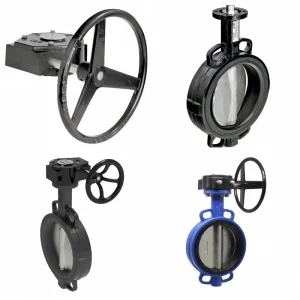
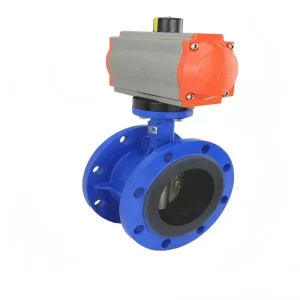
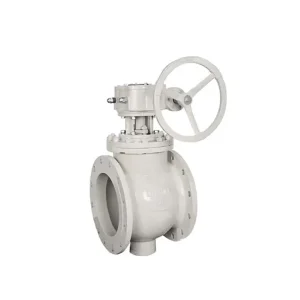
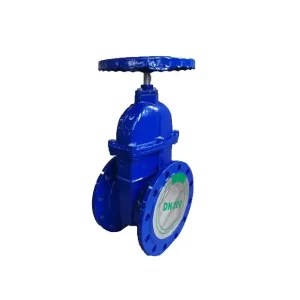
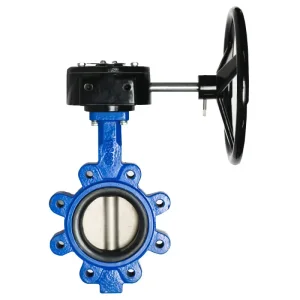
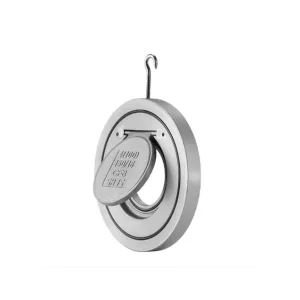
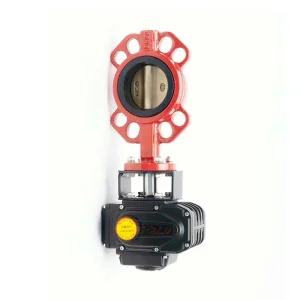
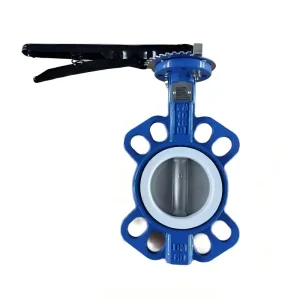
High-Performance Butterfly, Gate & Check Valves
Explore our heavy-duty valve series manufactured for global energy pipelines, chemical handling, and municipal drinking water systems.