Certified Industrial Valves
Precision Flow Isolation & Process Engineering Showcase
Explore our foundational range of CE/ISO/DIN certified manual and automated valves, manufactured in-house from metallurgical casting to 100% helium pressure testing.
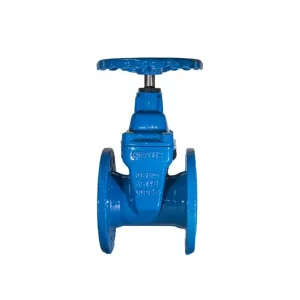
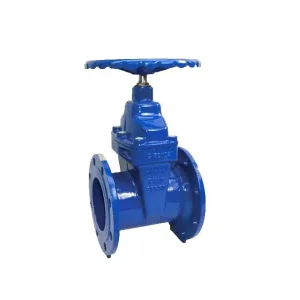
Anti-Abrasion Elastic Seat Gate Valve Reinforced
Technical Specifications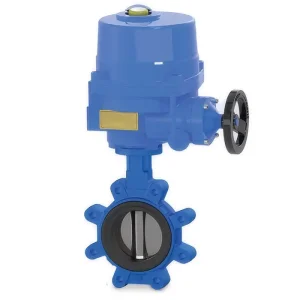
Industrial Intelligent Electrical Actuated Butterfly Valve
Technical Specifications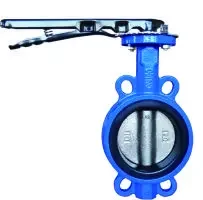
Wafer Concentric Butterfly Valve Flow Control Solution
Technical Specifications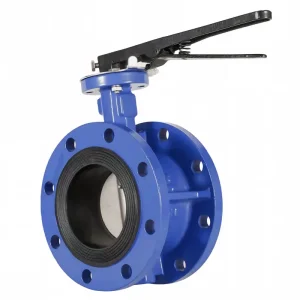
CE Certified Flanged Butterfly Valve Lever Actuated
Technical Specifications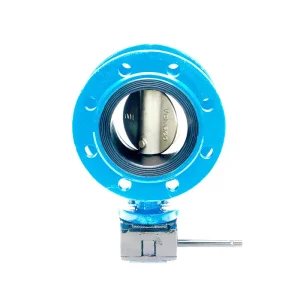
Marine Flange Type Manual Operated Butterfly Valve
Technical Specifications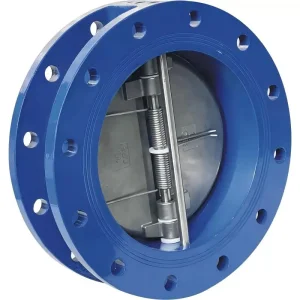
CE Dual Plate Check Valve Backflow Prevention Device
Technical Specifications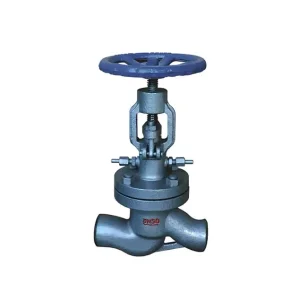
Water Seal Globe Valve with Quick-Closing Action
Technical Specifications
Engineering Whitepaper Insight
Fluoropolymer Lining Integrity & Mechanical Topography
A manual PTFE-lined butterfly valve serves as the definitive containment barricade in chemical processing. Achieving absolute isolation requires rigorous metallurgical and polymer co-engineering.
Virgin vs. Modified Fluoropolymer
We utilize ultra-high molecular weight virgin PTFE and melt-processible PFA liners with high permeation resistance. Unlike standard polymers, our compression-moulded PTFE undergoes isostatic high-density sintering to eradicate micro-porosities, effectively blocking gas migration in aggressive media like hydrochloric, nitric, and hydrofluoric acids.
Elastomeric Cushion Energetics
PTFE exhibits natural mechanical cold flow under continuous compression. To permanently offset creep deformation, our design incorporates resilient pre-compressed silicone or Viton (FKM) elastomeric cushions behind the liner, maintaining uniform, perpetual sealing pressure across dynamic thermal cycles from -40°C to +200°C.
Dynamic Dual-Stem Sealing
Addressing primary fugitive emission risks, the stem passage incorporates dual pre-loaded Belleville spring washers and self-adjusting PTFE V-ring gland packings. This complies with strict TA-Luft and ISO 15848-1 standards, preventing environmental leaks of volatile and hazardous gases throughout extended service life.
Process Applications
Macro-Industry Fluid Solutions & Engineering Fit
Demanding chemical, pharmaceutical, and metallurgical environments require specific manual PTFE valve configurations to prevent unscheduled pipeline shutdowns.
Basic Chemical & Petrochem
Engineered for continuous exposure to chlor-alkali, hydrochloric acid picking, wet chlorine, and sulfuric acid dilution streams. The split-body ductile iron (EN-GJS-400-15) housing retains internal pressure while isolating the ductile housing from severe corrosive line media.
- Zero permeation across vacuum applications
- Ductile iron epoxy coated to ISO 12944 C5-M
Pharma & Ultra-Pure Biotech
FDA 21 CFR 177.1550 compliant sanitary manual PTFE butterfly valves. Manufactured in cleanroom conditions to eliminate grease and surface impurities, safeguarding sterile fermentation, active pharmaceutical ingredient (API) dosing, and DI water lines.
- USP Class VI certified biological inertness
- Dead-space-free flow path prevents bacterial growth
Semiconductor & Wet Etching
Manufactured to eliminate trace metal leaching in ultra-pure chemical distribution systems (UPCS) conveying electronic-grade nitric, hydrofluoric, and phosphoric acid blends used during wafer fabrication and photovoltaic processing.
- High-purity PFA encapsulation option
- Trace element extraction verified via ICP-MS
Tianjin Industrial Cluster
China Factory 4.0: Supply Chain Resilience & Vertical Production
Operating out of Tianjin's industrial manufacturing hub, our integrated group structure unifies precision foundry, proprietary polymer moulding, and robotic machining on a single 23,000 m² campus.
Dedicated Foundry
In-house ductile iron and stainless casting operations eliminate third-party raw material delays. Spectrometric batch testing ensures precise nodularity and tensile strength for every batch.
Elastomer Vulcanisation
Since 1987, our internal rubber division has formulated proprietary compounds (EPDM, FKM, Silicone). This ensures optimal compression set recovery beneath the PTFE liner barrier.
CNC Multi-Axis Cell
High-precision turning centers finish disc profiles and stem geometries within tight tolerances (±0.02 mm), reducing operating torque and extending manual gear/lever life.
100% Quality Auditing
Every single valve undergoes dual-direction shell testing (1.5x design pressure) and seat bubble testing (1.1x design pressure) alongside electrostatic pinhole spark testing.
Selection Guide
Comparative Performance Matrix: Lining Materials & Valve Architectures
A systematic reference for plant designers balancing chemical compatibility, temperature thresholds, mechanical abrasion, and total lifecycle costs.
| Evaluation Parameter | Virgin PTFE Lined | Conductive PTFE (Antistatic) | PFA Lined | Standard Rubber Lined (EPDM/NBR) |
|---|---|---|---|---|
| Operating Temp Range | -30°C to +180°C | -30°C to +180°C | -40°C to +200°C | -20°C to +120°C |
| Chemical Universal Resistance | Universal (pH 0-14 except liquid alkali metals) | Universal (with static dissipation properties) | Superior permeation resistance against hot gas | Limited to mild organics, water, and low-strength acids |
| Permeation Resistance | High (Isostatically pressed) | High | Ultra-High (Melt flow resin structure) | Low (Subject to swell and gas permeation) |
| Surface Smoothness (Ra) | Ra < 0.4 µm | Ra < 0.8 µm | Ra < 0.2 µm (Mirror smooth) | Ra > 1.6 µm |
| ATEX / Explosive Zones | Requires risk evaluation | Directly certified (Zone 0/20 compliant) | Requires antistatic additive option | Non-applicable for solvent handling |
| Recommended Lifecycle | 8-12 Years in corrosive duty | 8-12 Years | 12-15+ Years in extreme duty | 2-4 Years before seat hardening/aging |
Global Assurance
Localized Support & International Regulatory Assurance
Supplying critical process control equipment requires seamless integration with engineering documentation, third-party inspection, and local statutory requirements.
Full CE / PED Compliance
Our manual PTFE butterfly valves carry direct CE marking under Pressure Equipment Directive 2014/68/EU Module H. We issue comprehensive EN 10204 3.1 material test certificates covering mechanical properties, impact tests, and pressure test results.
Global Flange Interoperability
Bodies are precision-drilled to mate seamlessly with EN 1092-1 PN10/PN16, ASME B16.5 Class 150, and JIS 10K pipeline standards, simplifying cross-border engineering design for multinational EPC projects.
Engineered EPC Sourcing
Dedicated technical project managers coordinate customized inspection test plans (ITP), support Lloyd's, DNV, SGS, or Bureau Veritas third-party testing, and guarantee sea-worthy palletized wooden case packing.
Next-Gen Technology
Technical Roadmap: Next-Generation Fluoropolymer Innovations
Continuous investment in research and development targets the next frontier of valve reliability, digital asset performance monitoring, and extreme-service chemical engineering.
Graphene-Reinforced Fluoropolymers
Our polymer laboratory is advancing nanocomposite formulations blending pristine fluoropolymers with exfoliated graphene platelets. This architecture cuts permeation coefficients by an additional 45% while boosting mechanical wear resistance across abrasive crystalline chemical slurs.
Smart Manual Operators (IoT Handwheels)
Bridging traditional manual isolation valves with modern digital plants. Our next-generation worm gear handwheels incorporate low-power wireless angle transducers and strain sensors to deliver real-time percentage opening feedback and operational torque diagnostics to cloud SCADA platforms.
Zero-Carbon Casting Metallurgy
Aligning with international ESG requirements, our foundry is transitioning melt operations to 100% electric induction powered by regional green grids, accompanied by closed-loop circular sand casting recycling that reduces production carbon footprints by up to 38%.
Procurement & Engineering
Frequently Asked Questions: Technical & Procurement Clarifications
In-depth responses curated by our senior valve applications engineering team for plant engineers, process designers, and procurement managers.
What specific advantages does a split-body PTFE lined butterfly valve offer compared to standard alloy valves?
A split-body PTFE-lined butterfly valve utilizes high-grade ductile iron or carbon steel for structural shell strength, while isolating every wetted flow component behind an impervious fluoropolymer layer. This provides total corrosion immunity across aggressive media (such as concentrated hydrochloric acid, nitric acid, and wet chlorine) at a fraction of the cost of exotic alloys like Hastelloy C276, Titanium, or Monel. The split-body architecture also enables precise compression adjustment on the seat sealing face, guaranteeing zero leakage and bubble-tight shut-off in critical services.
How does CE certification (PED 2014/68/EU) govern PTFE lined manual butterfly valves?
Under the European Pressure Equipment Directive (PED 2014/68/EU), valves intended for hazardous chemical media (Group 1 fluid classification, which covers toxic, flammable, and corrosive chemicals) are categorized under Module H or Module H1 depending on pressure-diameter products (PS x DN). CE certification mandates traceable raw material sourcing with EN 10204 3.1 verification, verified shell burst testing, certified non-destructive spark tests on the polymer liner (typically 20 kV to detect micro-cracks), and third-party notified body auditing of our manufacturing quality management systems.
Why is manual operation preferred in chemical isolation, and what gearing options exist?
Manual operation provides a fail-safe mechanical boundary during process maintenance, emergency line lock-out (LOTO), and batch transfer operations where pneumatic or electrical power could introduce an ignition source or malfunction. For line sizes from DN40 to DN100, spring-loaded 10-position locking lever handles allow quick visual verification of open/closed status. For sizes DN125 and above, high-ratio self-locking worm gearboxes with ductile iron enclosures are standard, delivering smooth torque output and mitigating hydraulic water-hammer during valve closure.
How do you resolve PTFE cold flow and maintain long-term bubble-tight sealing?
PTFE exhibits viscoelastic behavior and tends to flow under static load over time. We engineer our seats with a dual-layer profile: a continuous 3mm to 4mm virgin fluoropolymer contact layer supported by high-resilience elastomeric energizers (silicone or Viton). These elastomers maintain perpetual springback energy against the disc edge and stem journals, absorbing dimensional expansions during cyclic thermal swings and maintaining EN 12266-1 Rate A bubble-tight sealing throughout years of service.
What are the lead times and custom packaging standards for global seafreight shipments?
Standard manual PTFE butterfly valves from DN50 to DN300 are typically produced and tested in 15 to 25 business days. Because we operate an on-site foundry and rubber production facility, raw components are stocked in quantity. For export logistics, every valve bore is capped with protective PE covers, shrink-wrapped with desiccant packs, and packed into fumigated solid-plywood crates conforming to ISPM-15, ensuring complete protection against maritime salt spray and transit impact.
Factory Production Line
Extended Pipeline Hardware & Critical Control Solutions
In addition to lined butterfly valves, our Tianjin plant manufactures an extensive array of industrial isolation and backflow prevention valves for municipal, marine, and power networks.
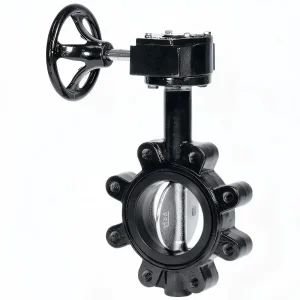
CE Certified Gear-Operated Industrial Butterfly Valve
Technical Specifications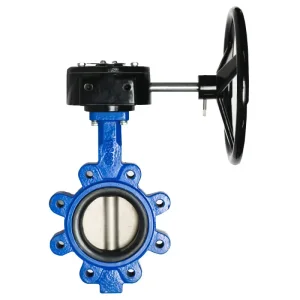
Full Lug Threaded Heavy Duty Butterfly Valve
Technical Specifications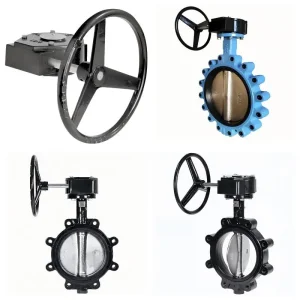
WRAS Approved Lug Type Butterfly Valve 4325G
Technical Specifications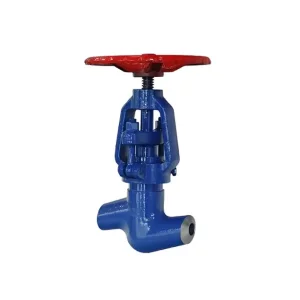
Power Station High-Temp High-Pressure Globe Valve
Technical Specifications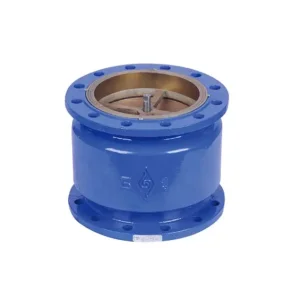
CE Energy-Saving Axial Flow Silencer Check Valve
Technical Specifications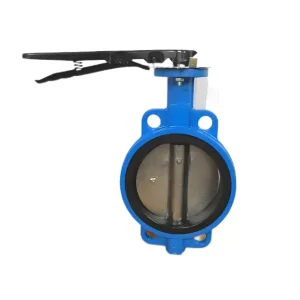
Low-Pressure Wafer Type Resilient Butterfly Valve
Technical Specifications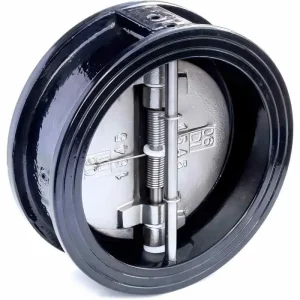
Wafer Lift Check Valve for Secure Fluid Control
Technical Specifications