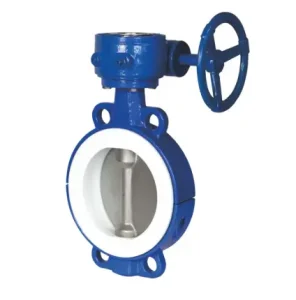
Precision Pipeline & Flow Control Inventory
Engineered in-house from Tianjin foundry casting and proprietary elastomer synthesis to rigorous multi-bar hydrostatic and pneumatic helium sniff verification.
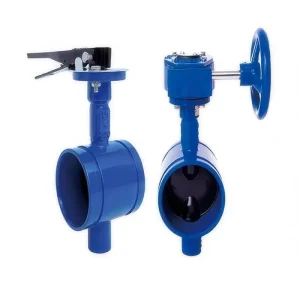
High-Quality Grooved End Butterfly Valve - Durable & Reliable Flow Control Suppliers, Supplier
Specification & Specs ➜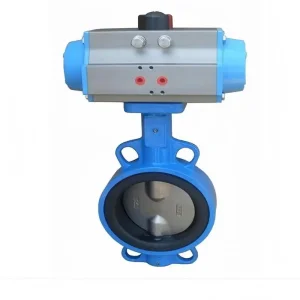
High-Quality Pneumatic Butterfly Valve - Efficient Flow Control Solution Suppliers, Factories
Specification & Specs ➜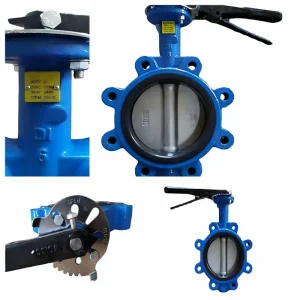
High-Quality WRAS Approved Butterfly Valve Lug Type 4325L Manufacturer, Factories
Specification & Specs ➜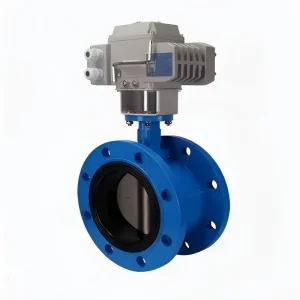
High-Quality High-Performance Electrical Butterfly Valve for Seamless Control Suppliers, Manufacturers
Specification & Specs ➜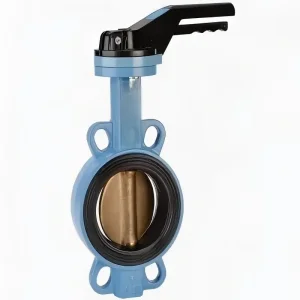
CE Certification Bronze Disc Wafer Butterfly Valve - Durable & Efficient Manufacturers, Factory
Specification & Specs ➜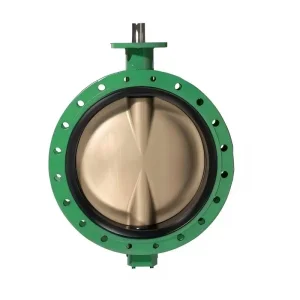
High-Quality Water Used Flanged Butterfly Valve - Durable & Efficient Manufacturer, Factories
Specification & Specs ➜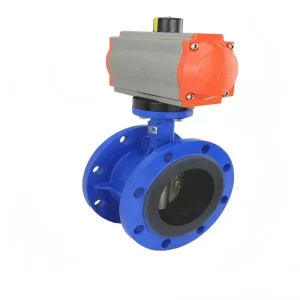
High-Quality Pneumatic Butterfly Valve - Reliable Flow Control Solution- Lug butterfly valve, flanged butterfly valve Suppliers, Manufacturers
Specification & Specs ➜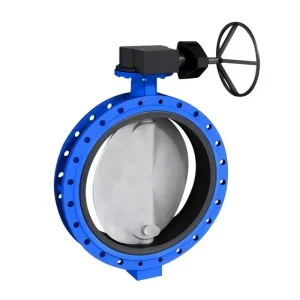
Wholesale High-Quality U Section Butterfly Valve for Reliable Flow Control Suppliers, Manufacturer
Specification & Specs ➜Macro Industry Context: R717 Modernization & Green Energy Transition
Anhydrous ammonia (NH₃/R717) is an irreplaceable zero-ODP, zero-GWP natural refrigerant and an essential green hydrogen carrier. However, its toxicity and vapor pressure demand uncompromising valve containment technologies.
Industrial Cold Chain Logistics
From automated mega-distribution hubs to flash-freezing food processing plants, modern ammonia systems operate under cyclic pressures. Manual ammonia globe valves serve as the definitive lock-out/tag-out (LOTO) isolation safeguard during maintenance, pump-down cycles, and evaporator defrosting routines.
Hydrogen Vector & Power Cracking
As global clean energy consortia transition toward ammonia as a high-density liquid energy carrier, terminal off-loading manifolds require high-performance manual throttling and shut-off valves certified to EN ISO 15848-1 low-emission standards to prevent fugitive vapor leakage under atmospheric pressure fluctuations.
Marine Reefer & Clean Propulsion
Compliant with IGC/IGF codes and marine classification societies, our straight-through and angle manual globe valves resist mechanical vibration, saline marine atmospheres, and cryogenic thermal shock during LNG/ammonia dual-fuel bunkering and on-board cargo hold conditioning.
Anatomy of a Zero-Emission Manual Ammonia Globe Valve
Ammonia reacts corrosively with copper, zinc, and brass alloys. Our dedicated ammonia valve architecture relies on precision metallurgy and specialized elastomeric seating.
Cryogenic Low-Temp Body
Cast using normalized Low-Temperature Ductile Iron (EN-GJS-400-18U-LT / QT400-18L) or Cast Carbon Steel (ASTM A352 LCB / WCB). Each batch undergoes Charpy V-Notch impact testing at -46°C to ensure zero brittle fracture risk.
PTFE / Babbitt Dual Seating
Discs incorporate high-molecular weight virginal PTFE inserts or precision lead-base Babbitt metal alloys, ensuring Class VI bubble-tight shut-off. Self-aligning swivel discs prevent galling and seat scouring under high seat-closure torques.
Back-Seating Protection
Precision ground 2Cr13 or 316 stainless steel stems feature an integral conical back-seat design. When fully open, it completely isolates the stem packing chamber from system fluid pressure, allowing safe gland re-packing during live operations.
Deep Packing & Bellows
Equipped with multi-stage chevron PTFE V-rings alternating with die-formed flexible graphite rings, pre-loaded by Belleville disc springs to dynamically compensate for thermal contractions during quick defrost cycles.
Compliance Benchmark: Top Valve vs Conventional Market Standard
International mechanical refrigeration codes enforce strict boundary constraints on valve materials, casing thicknesses, and leakage thresholds.
| Evaluation Parameter | CE & EN 12284 Protocol | Tianjin Top Valve Standard | Generic Commodity Valves |
|---|---|---|---|
| PED Directives | PED 2014/68/EU Module H / Cat III | ✓ Full CE Certified (Notified Body) | Uncertified / Basic Category I only |
| Non-Ferrous Material Control | Copper/Brass composition < 0.1% | ✓ 0.00% Zero-Copper Chemistry | Risk of internal bronze or brass trim |
| Stem Sealing Assurance | EN 13709 / EN 12284 | ✓ Live-Loaded PTFE + Inconel Bellows | Single-ring manual compression gland |
| Impact Toughness @ -46°C | Min. 27 Joules Charpy V-notch | ✓ Guaranteed > 34 Joules Avg | Untested ambient scrap castings |
| Testing Protocol | EN 12266-1 Rate A Bubble-tight | ✓ 100% Hydrostatic + Shell Helium Test | Random statistical batch sampling |
Regional Field Engineering, Warehousing & OEM Support
Fast deployment directly from our 23,000 m² Tianjin production campus with localized fulfillment pathways across Europe, North America, Southeast Asia, and the Middle East.
European Union (PED / EN 378)
Direct localized documentation matching EU compliance criteria: 3.1 material certificates according to EN 10204, CE marking under Module H, and technical dossiers tailored to German (DIN 3158) and Dutch cold storage regulations.
Americas (IIAR / ASME B31.5)
Designed to meet IIAR-2 design codes and ASME B31.5 refrigeration piping criteria. Compatible with ANSI Class 150/300 flange drilling and butt-weld ends (ASME B16.25) for smooth drop-in replacement across American cold processing hubs.
Asia-Pacific & Emerging Grids
Complete sizing support for high-humidity coastal seafood processing facilities, ammonium nitrate petrochemical refineries, and fertilizer complexes throughout ASEAN, Australasia, and the Middle Eastern industrial belts.
Next-Generation Ammonia Valve Engineering
Advancing valve automation, condition monitoring, and smart containment systems designed for unmanned, AI-managed refrigeration hubs.
Smart Stem Monitoring Phase I
Integration of ultra-sensitive MEMS sniff-detection rings inside secondary packing cavities to alert SCADA systems of micro-ppm vapor permeation long before atmospheric exposure occurs.
Diamond-Like Carbon (DLC) Trim Phase II
Application of nanostructured DLC coatings onto 316L valve stems and disc guides to reduce operating torque by 40%, virtually eliminating frictional wear during throttling.
Cryogenic Liquid H₂/NH₃ Blends Phase III
Advanced austenitic stainless body configurations engineered for deep sub-zero service (-104°C to -196°C) targeting cracking facilities and clean energy sea-borne bunkering skids.
Frequently Asked Engineering & Procurement Questions
Authoritative answers directly from Tianjin Top Valve's engineering and metallurgical testing laboratory.
Why are brass and bronze components strictly prohibited in manual ammonia valves? ▾
What documentation is supplied with CE-marked manual ammonia globe valves? ▾
What is the functional difference between straight-through and angle globe patterns? ▾
How does the valve design safeguard personnel during gland packing maintenance? ▾
Can these valves be deployed in R290 (propane) or R744 (CO₂) subcritical circuits? ▾
Comprehensive Pipeline Infrastructure Solutions
Explore our broader industrial flow product lines engineered for water distribution, chemical isolation, power stations, and vacuum pipelines.
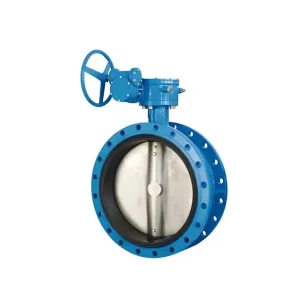
Wholesale Low - Torque Flange Type Butterfly Valve Supplier, Factory
Specification & Specs ➜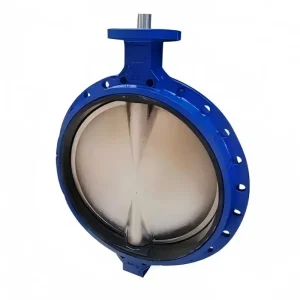
Wholesale Single Flange Butterfly Valve - Durable & Efficient Flow Control Supplier, Manufacturers
Specification & Specs ➜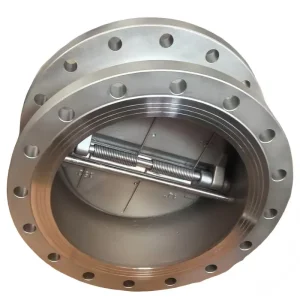
CE Certification Compact Low-Pressure Drop Wafer Lift Check Valve Supplier, Factories
Specification & Specs ➜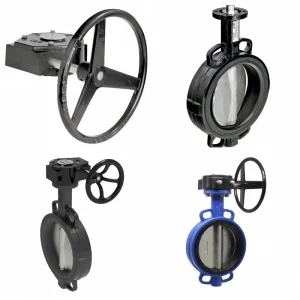
CE Certification WRAS Approved High-Performance Butterfly Valve 4020G Manufacturer, Factories
Specification & Specs ➜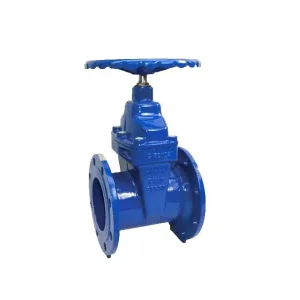
High-Quality Non-Rising Stem Elastic Seat Sealing Gate Valve Manufacturer, Factory
Specification & Specs ➜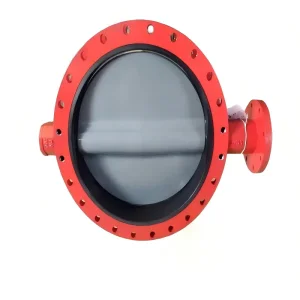
Wholesale Ceramic Disc Wafer Butterfly Valve - Durable & Efficient Design Supplier, Factories
Specification & Specs ➜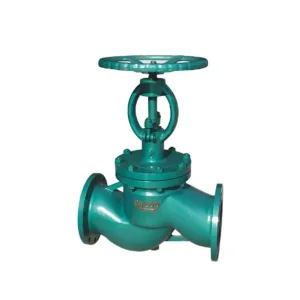
High-Quality High - Temperature - Vacuum Isolation Globe Valve for Vacuum Heat Suppliers, Factory
Specification & Specs ➜