
Verified Production Units
Featured Industrial Fluid Control Hardware
Factory-direct resilient, high-pressure, and chemical-grade automated valve systems built to international drilling and testing benchmarks.
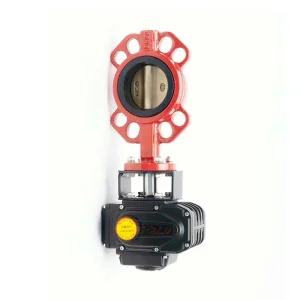
High-Quality Actuator Wafer Butterfly Valve Supplier, Manufacturers
Configure Valve Specs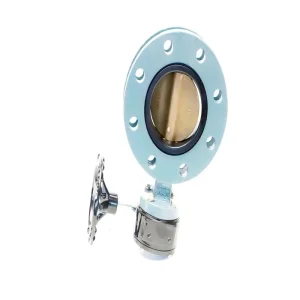
Wholesale CE/ISO/DIN/BS High Pressure Metal Seal Hard Seal Butterfly Valve Manufacturers, Manufacturer
Configure Valve Specs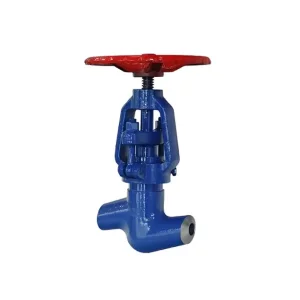
High-Quality High Temperature And High Pressure Power Station Globe Valve Manufacturers, Manufacturer
Configure Valve Specs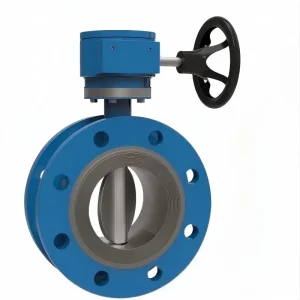
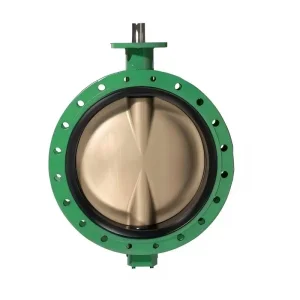
High-Quality Flange Type Butterfly Valve - Durable and Efficient Flow Control Supplier, Manufacturer
Configure Valve Specs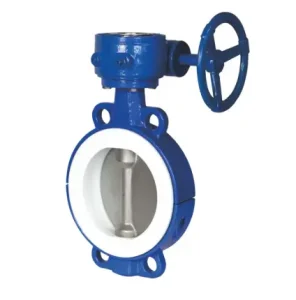
Wholesale PTFE Lined Butterfly Valve - Durable & Corrosion Resistant Manufacturers, Manufacturer
Configure Valve Specs
Wholesale Wafer Butterfly Valve - Durable & Efficient Flow Control Solution Suppliers, Factory
Configure Valve Specs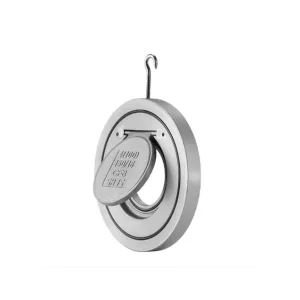
CE Certification Stainless Steel Single Disc Wafer Check Valve with Enhanced Corrosion Supplier, Manufacturers
Configure Valve Specs
Global Engineering Whitepaper
Macro-Industrial Paradigm: Electric Actuation in Modern Fluid Infrastructures
The confluence of the Fourth Industrial Revolution (Industry 4.0), decarbonization imperatives, and automated process management has repositioned the electric actuated ball valve from a passive piping asset to an intelligent field device.
Decarbonization & Fugitive Emissions
Under the EU Corporate Sustainability Due Diligence Directive and stricter global EPA enforcement, traditional pneumatic assemblies powered by parasitic fossil compressors face phase-out pressures. CE-certified electric actuated ball valves eliminate mechanical air consumption, dramatically lowering the overall plant carbon footprint while achieving ISO 15848-1 Class AH/BH fugitive emission compliance at the stem seal packing.
Edge Intelligence & Predictive Maintenance
Contemporary plant architectures rely on continuous multi-sensor feedback. Our smart electric drives embed brushless DC (BLDC) motors and high-resolution absolute encoders communicating via Modbus RTU, Profibus, or HART protocols. They record running torque profiles, total cycle counts, motor thermal dissipation, and travel deviation, alerting operations teams before valve cavitation or seat binding forces an unscheduled plant trip.
Total Cost of Ownership (TCO) Optimization
While initial CAPEX for motorized actuators slightly exceeds rudimentary pneumatic quarter-turn systems, the lifecycle OPEX advantage is decisive. Electric units eliminate clean-air compressors, desiccant dryers, pneumatic solenoid racks, and seasonal tubing freeze-ups, slashing operational intervention intervals by over 45% in sub-zero and humid offshore environments.
Vertical Integration Matrix
Foundry-to-Actuation Integrity: Why Material Provenance Matters
Valve failure in critical piping almost never stems from structural bulk—it stems from micro-porosities in cast housings, unrefined elastomer compounding, and actuator-stem mismatch. Tianjin Top Valve mitigates these risks via single-campus vertical manufacturing.
1987
Rubber Compounding Plant
1996
Foundry & Valve Machining
100%
Shell & Seat Pressure Testing
50+
Nations Deployed Across EPCs
Phase 01: Metallurgy
Direct Foundry Castings
Pouring WCB, CF8, CF8M, and ductile iron in-house eliminates porous scrap castings and delivers precise trace-chemistry conformity (EN 10204 3.1 certification guaranteed).
Phase 02: Elastomer Chem
Formulated Seats
Compounded at Tianjin Dongfang Rubber Factory since 1987. EPDM, NBR, Viton, and PTFE formulas undergo rheometer curing tests for zero-leak elasticity and high tear resistance.
Phase 03: Machining
CNC Multi-Axis Centers
Precision ball spherical milling, micro-mirror finishing, and ISO 5211 direct-mount actuator pad surfacing eliminate stem deflection and minimize seating break-away torque.
Phase 04: Assembly & QA
Actuator Matching & Test
Electric actuators are matched with a 1.3–1.5 safety torque multiplier. Every assembly undergoes dual-direction hydrostatic shell and bubble-tight seat tests per ISO 5208.
Technical Specification Blueprint
Electric Actuated Ball Valve Technical Parameters
Standard and hazardous-duty baseline configurations available directly from Tianjin Top Valve production lines for EPC contractors and industrial distributors.
| Design Dimension | Industrial Class / Standard | Heavy-Process / Chemical Spec | Marine / Subsea Spec |
|---|---|---|---|
| Nominal Diameters | DN15 to DN300 (1/2" to 12") | DN15 to DN200 (1/2" to 8") | DN25 to DN400 (1" to 16") |
| Pressure Rating | PN16, PN25, PN40 / ANSI Class 150 | PN63, PN100 / ANSI Class 300/600 | PN16, PN25 / JIS 10K, 20K |
| Body Materials | WCB, Carbon Steel, Cast Iron | CF8, CF8M, CF3M, Duplex SS | C95800 Nickel Aluminum Bronze, Monel |
| Seat & Sealing Options | Reinforced PTFE (R-PTFE), EPDM | PPL, Devlon, Metal-to-Metal Hard Seal | NBR, Viton-GLT, Resilient Dual Sealing |
| Operating Voltage | 24V DC, 220V AC (Single Phase) | 380V / 440V AC (Three Phase) | 24V DC / 110V AC Marine Isolated |
| Enclosure Protection | IP67 NEMA 4/4X Aluminum Alloy | ATEX / IECEx Ex d IIB/IIC T4/T6 | IP68 Submersible (10m, 72h) |
| Control Signal Options | On/Off, SPDT relay dry contacts | 4-20mA, 0-10V Modulating, HART | Modbus RTU RS485, Profibus DP |
| Compliance Directives | CE PED 2014/68/EU, LVD 2014/35/EU | EMC 2014/30/EU, ATEX 2014/34/EU | Marine Classification (DNV-GL, LR) |
Jurisdictional Governance
Localized Compliance & Engineering Assurance Framework
Navigating regional compliance hurdles requires deep institutional mastery. We protect plant designers and procurement directors with fully verified regulatory documentation.
European Union: CE Harmonization
Our electric actuated packages conform strictly to the Pressure Equipment Directive (PED 2014/68/EU Module H) for pressure boundary retention, the Low Voltage Directive (LVD 2014/35/EU), and the Electromagnetic Compatibility Directive (EMC 2014/30/EU). Actuators withstand industrial electrical noise without field calibration loss or inadvertent unseating.
Potable Water: WRAS & ACS
For municipal drinking water schemes in the UK and European territories, selecting toxic elastomer plasticizers can halt an entire project. Leveraging our rubber heritage since 1987, selected valve variants (models 4020G, 4020L, 4325G, 4325L) hold WRAS certification, verifying zero bacteriological leaching and chemical safety in potable networks.
North American & Marine DRILLINGS
We bridge the gap between transatlantic specifications. Valve bodies feature dual flange drillings (EN 1092 PN10/PN16 alongside ASME B16.5 Class 150), face-to-face compliance (DIN EN 558 series 14/15 and ASME B16.10), and marine nickel-aluminum bronze disc assemblies meeting global ship classification society mandates.
Deployment Realities
Engineered Application Scenarios Across Vital Infrastructure
Every fluid media behaves differently under dynamic quarter-turn control. Here is how our automated solutions perform in tough, real-world industrial environments.
District Energy & Smart HVAC
Modulating motorized ball valves eliminate hunting cycles in primary energy loops. Microprocessor-governed linear travel regulates chilled water with micro-second accuracy, minimizing thermal bypass and drastically optimizing chiller delta-T performance.
Municipal Wastewater & Sludge
Full-bore ball valves driven by high-torque electric gearboxes slice through suspended solids and fibrous slurries without seat degradation. Paired with micro-resistance ball check valves, they prevent hammer shock at pumping station lift manifolds.
Corrosive Chemical Transport
Aggressive chlor-alkali, acid, and solvent lines utilize our PTFE and PFA-lined ball and butterfly valves. Anti-static stem designs and ISO 5211 direct mounts eliminate secondary bracket deflection, isolating actuator electronics from corrosive off-gassing.
Marine Ballast & Seawater Cooling
Seawater environments destroy unalloyed steels. Our nickel aluminum bronze (C95800) and duplex stainless steel ball valve configurations resist pitting and cavitation damage, surviving decades of open-ocean exposure with minimal maintenance.
Engineering Vision 2030
Technology Roadmap: Next-Generation Electric Actuation
The pipeline automation landscape is moving quickly toward autonomous operations and micro-grid energy harvesting. Here is how Tianjin Top Valve is engineering future-proof fluid systems.
Ultra-Capacitor Fail-Safe Mechanisms
Traditional mechanical spring-return electric actuators are bulky, heavy, and wear down quickly. Our forward roadmap integrates embedded supercapacitor banks that store operational backup energy inside the actuator housing. Upon sudden mainline electrical blackout, the stored electrostatic charge drives the valve to a predetermined fail-closed (FC) or fail-open (FO) orientation instantly without mechanical spring fatigue.
Industrial IoT & Wireless Mesh Control
Hardwiring distributed valve networks across multi-kilometer sites demands massive copper conduit investments. We are introducing ultra-low-power LoRaWAN and WirelessHART modules directly into our CE-approved smart actuator electronics enclosures, allowing isolated pipelines and remote mining tailings facilities to control, calibrate, and diagnose valve positions completely wirelessly.
Smart Digital Twins & Dynamic Flow Control
Integrating CFD-derived flow curves with embedded real-time pressure transducers converts the ball valve assembly into an intelligent balancing meter. Rather than simple on/off stroke control, future installations calculate fluid flow rates dynamically in-situ, feeding flow coefficients back to SCADA systems to self-balance distribution circuits automatically.
Engineered Pipeline Hardware
Complementary Certified Piping Systems
From non-return backflow assemblies to heavy-duty wedge gate valves, examine our complete catalog of certified industrial fluid management equipment.
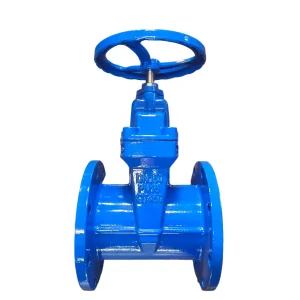
Wholesale High-Quality Gate Valve for Reliable Flow Control Manufacturer, Factories
Configure Valve Specs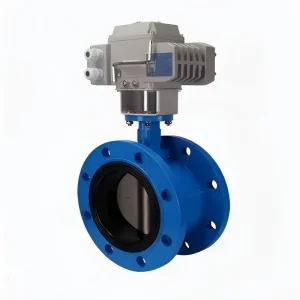
High-Quality High-Performance Electrical Butterfly Valve for Seamless Control Suppliers, Manufacturers
Configure Valve Specs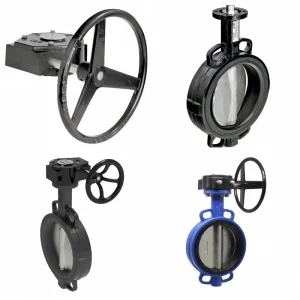
CE Certification WRAS Approved High-Performance Butterfly Valve 4020G Manufacturer, Factories
Configure Valve Specs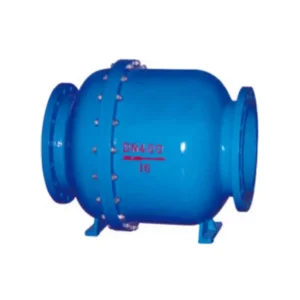
CE Certification Micro-Resistance Ball Check Valve Manufacturers, Factories
Configure Valve Specs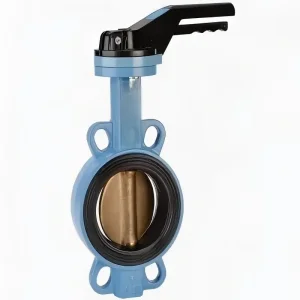
CE Certification Bronze Disc Wafer Butterfly Valve - Durable & Efficient Manufacturers, Factory
Configure Valve Specs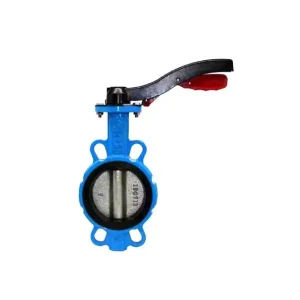
CE Certification Duplex Type Pinless Butterfly Valve Factories, Factory
Configure Valve Specs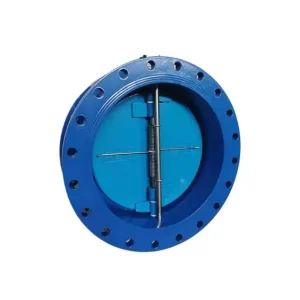
Wholesale Dual Plate Flange Type Check Valve Factories, Factory
Configure Valve Specs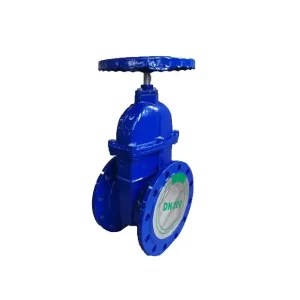
CE Certification German Standard Elastic Seat Gate Valve Manufacturers, Manufacturer
Configure Valve Specs
Technical Knowledge Base
Frequently Asked Engineering & Procurement Questions
Precise answers to critical technical inquiries submitted by pipeline designers, mechanical engineers, and global EPC project teams.
What essential standards make an electric actuated ball valve CE compliant?
CE compliance for an electric actuated ball valve involves three primary directives. First, the Pressure Equipment Directive (PED 2014/68/EU) governs the pressure-containing shell integrity, wall thickness calculations, and non-destructive testing of the valve body. Second, the Low Voltage Directive (LVD 2014/35/EU) ensures the electric motor and internal terminal blocks meet strict electrical insulation and isolation requirements. Third, the Electromagnetic Compatibility Directive (EMC 2014/30/EU) confirms the actuator electronics will neither emit disruptive radiation nor fail due to industrial electromagnetic surges. All production batches come backed by comprehensive EN 10204 3.1 inspection certification and official Declarations of Conformity.
How do you calculate the correct torque safety margin when matching electric actuators?
Calculating torque requires combining maximum hydrodynamic differential pressure, line media viscosity, seat friction coefficients, and operational frequency. For clean, lubricating liquids like treated water or light oils, we apply a minimum safety factor of 1.3 (30% above maximum breakaway torque). For viscous slurries, dry steam, abrasive powders, or systems where the valve stays stationary for prolonged periods (creating higher static friction), we apply a safety factor of 1.5 to 1.8. This ensures the electric motor never stalls or overheats in high-torque demand conditions.
Why is an in-house rubber factory advantageous for resilient-seated valves?
In industrial valve performance, seat elastomers invariably dictate operational service life and bubble-tight shut-off capabilities. Third-party rubber compounding can suffer from batch variations, regrind filler contamination, and unstable curing cycles that trigger premature swelling or cracking. Because our group operates Tianjin Dongfang Rubber Factory (established in 1987), we control compound formulations, vulcanization temperatures, and polymer hardness in-house. This gives buyers reliable tensile strength, predictable chemical resistance, and long-term compression recovery across extreme operating cycles.
Can electric actuated ball valves handle proportional modulating flow duties?
Yes. By equipping our quarter-turn actuators with intelligent servo positioning boards that accept 4-20mA DC or 0-10V DC control signals, valves operate with high throttling resolution. For precise flow characterization, we supply V-notch balls (30°, 60°, or 90° profiles) or slotted control trims. These convert standard equal percentage curves into customized linear flow profiles, preventing erratic hunting across the initial 15% of valve rotation.
What fail-safe options exist if line power is completely lost?
Depending on application needs, budget, and physical footprint, we deliver three primary fail-safe configurations:
1. Internal Battery Backup Systems (BBU): Lithium battery modules integrated inside the actuator housing take over instantly during power outages to reposition the ball to a failsafe closed or open state.
2. Supercapacitor Assemblies: Fast-charging electrostatic systems that provide dependable fail-safe positioning without battery maintenance requirements.
3. Mechanical Declutchable Handwheels: Standard manual override wheels let local technicians easily operate the valve manually when electrical power is disconnected.
How do you manage quality control and material traceability from China?
Quality control is fully vertically integrated across our 23,000 m² Tianjin campus. Every casting heat number is laser-engraved onto the valve body and fully cross-referenced in physical and chemical laboratory logs. Prior to packaging, 100% of finished valves undergo hydro-shell testing at 1.5x nominal pressure and bi-directional air-seat leakage testing at 1.1x nominal pressure per ISO 5208 standards. Actuators run complete cycle-calibration checks before units are sealed in bubble wraps and packed into reinforced wooden export crates.
