Primary Flow Control Portfolio & Check Valve Systems
Verified pressure boundary integrity compliant with CE PED Category III/IV protocols, providing zero-escape isolation for process piping installations.
Engineering Whitepaper: Ammonia Globe Valve Integrity in Chemical Synthesis
A deep-dive technical blueprint analyzing critical valve metallurgy, hermetic stem containment, and dynamic fluid dynamics for Tier-1 chemical processing units.
Hermetic Dual-Sealing Architecture
Anhydrous ammonia (NH3) presents acute inhalation toxicity and exothermic expansion risks. Modern CE-certified chemical globe valves combine hydroformed multi-ply stainless steel bellows (SS316Ti or Hastelloy C-276) with secondary dynamic grafoil/PTFE chevron packing, effectively eliminating emissions under fluctuating thermal cycles.
Cryogenic & Sub-Zero Ductility
Ammonia evaporation cycles drop process line temperatures down to -33.3°C at atmospheric flash, demanding low-temperature carbon steels (ASTM A352 LCB/LCC) or austenitic grades (CF8/CF8M). Internal components are precision-tested via Charpy V-Notch impacts at -46°C to prevent brittle fracture under operational transients.
Anti-Cavitation Throttling Trims
Ammonia synthesis and fertilizer synthesis loops require linear throttling without trim erosion. Specially engineered parabolic plugs with Stellite Grade 6 hardfacing mitigate high differential pressures, fluid flashing, and micro-cavitation while preserving Class VI tight shut-off over prolonged duty.
| Design Parameter | Standard Specification | High-Pressure Chemical Loop | Compliance Reference |
|---|---|---|---|
| Body Metallurgy | ASTM A216 WCB / A352 LCB | ASTM A351 CF8M / Hastelloy C | EN 10213 / ASME B16.34 |
| Nominal Pressure | PN16, PN25, PN40, Class 150/300 | Class 600, Class 800, PN100 | EN 1333 / ASME B16.34 |
| Operating Temperature | -40°C to +180°C | -196°C to +400°C (Extended Bonnet) | EN 12516-1 |
| Stem Packing / Barrier | PTFE V-Rings / Inconel Bellows | Multi-ply SS316Ti Hydroformed Bellows | ISO 15848-1 / TA-Luft Class AH |
| Seat & Disc Hardfacing | Stellite Gr.6 Overlay (≥1.5mm) | Solid Stellite / Tungsten Carbide | API 623 / BS 1873 |
Macro Industry Challenges & Industrial Plant Solutions
Resolving operational pain points in ammonia refrigeration systems, chemical intermediate synthesis, and international green ammonia distribution hubs.
Stress Corrosion Cracking (SCC)
Ammonia service containing minute traces of oxygen accelerates SCC in carbon steel weldments. Our solution incorporates controlled post-weld heat treatment (PWHT) and strict low-nickel chemistry compliance with NACE MR0175/ISO 15156 thresholds, stopping micro-fracture propagation in pressurized process loops.
Fugitive Energy Loss & Safety Compliance
Unplanned shutdowns due to fugitive chemical releases cost chemical processors millions annually. Our CE-certified bellows globe valves implement zero-leakage redundant barriers that eliminate atmospheric release, protecting nearby personnel and cutting plant-wide emissions penalties.
Green Ammonia Energy Logistics
With clean hydrogen economy initiatives scaling, ammonia acts as the primary maritime energy carrier. Our valves are engineered for cryogenic bunkering transfer manifolds and high-flow regasification skids, accommodating severe pressure surges with zero seat distortion.
Technological Roadmap: The Next-Gen Ammonia Valve Eco-System
Integrating Industry 4.0 predictive diagnostics, intelligent telemetry, and advanced robotic manufacturing to establish lifecycle reliability.
Embedded Smart Bellows Telemetry
Next-generation CE ammonia valves incorporate intermediate-chamber piezoresistive micro-transducers. In the rare event of initial primary bellows fatigue, the sensor immediately alerts SCADA/DCS systems while secondary stem packings sustain absolute atmospheric confinement.
Automated Laser Cladding Systems
Departing from manual arc overlay, robotic multi-axis CNC laser deposition layers Stellite 21 and chromium borides directly onto the seat and disc sealing contact zones. This yields an iron-dilution rate below 2%, delivering unmatched resistance to high-velocity scouring in throttling modes.
Composite Cryogenic Bellows
R&D efforts focused on nickel-chromium superalloy multi-layered convolutes provide up to 50,000 full mechanical strokes at -50°C, lowering the total cost of ownership (TCO) across continuous Haber-Bosch chemical loop operations.
Localized Engineering Verification & Statutory Compliance
Global regulatory compliance ensures seamless project execution across European, North American, and Asia-Pacific industrial chemical sectors.
European Union: CE PED 2014/68/EU
Full conformance to Pressure Equipment Directive (PED) Category III & IV through Module H full quality assurance. Every valve shell undergoes 1.5x design pressure hydrostatic testing, backed by EN 10204 Type 3.1 inspection certification and complete melt-heat traceability.
North America: CRN & ASME B16.34
Flange and wall thickness engineering validated against ASME B16.34 standards, with Canadian Registration Number (CRN) availability across all provinces for liquid and gaseous anhydrous ammonia chemical processing loops.
Fugitive Emissions: ISO 15848-1 & TA-Luft
Certified helium mass-spectrometer sniffing confirms leakage rates below 10-6 mg·s-1·m-1 across dynamic temperature and mechanical endurance cycles, surpassing strict chemical environmental safety audits.
Technical Clarifications & Engineering Procurement Q&A
In-depth responses to frequent procurement inquiries regarding ammonia globe valve metallurgy, seal design, and maintenance.
Why is a bellows-seal globe valve preferred over standard gland packing for chemical plant ammonia service?
What specific body materials prevent low-temperature brittle failure in ammonia evaporation loops?
How does our CE PED certification guarantee traceability and structural safety?
Can your ammonia globe valves be equipped for automated emergency shutdown (ESD) duty?
Advanced Chemical Lined & High-Performance Valve Series
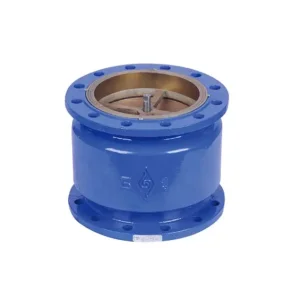
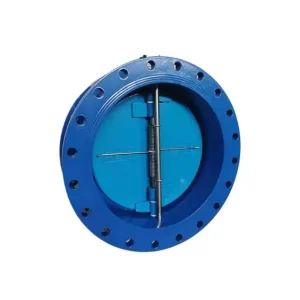
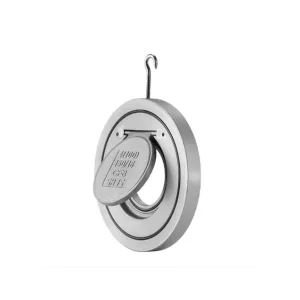
Specialized polymer linings, dual-plate non-return mechanisms, and corrosion-resistant alloys engineered for demanding chemical processes.