
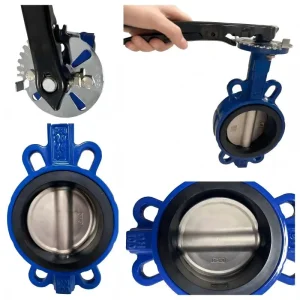
Flagship Approvals for Belgium
WRAS Certified Butterfly Valves Ready for Belgian Engineering Procurement
Direct supply to Flanders, Wallonia, and Brussels capital region engineering contractors. Designed for non-revenue water containment, industrial cooling, and sanitary infrastructure.
100%
Hydrostatic Tested (EN 12266-1)
Since 1987
In-House Elastomer Compounding
50+
Countries Export Network
DN40-DN1200
Full Bore Sizing Matrix
Regional Landscape
Belgian Industrial Landscape & Potable Water Demands
Understanding the strict micro-demands of Belgium’s decentralized water authorities, chemical corridors, and district heating mandates.
Stringent Drinking Water Mandates
Belgian regional water distributors (De Watergroep, Farys, and SWDE) require materials that strictly prevent microbial proliferation and chemical leaching. WRAS approved EPDM liners paired with high-purity ductile iron cores ensure zero contamination in long-haul distribution networks across Flemish and Walloon municipalities.
Port of Antwerp-Bruges Integration
As Europe’s second-largest chemical cluster, the Port of Antwerp-Bruges operates round-the-clock cooling loops, demineralized water pipelines, and chemical offloading facilities. Valves must resist brackish cooling loops, atmospheric marine corrosion, and fluctuating operating pressures without maintenance downtime.
Energy Transition & District HVAC
Belgium’s accelerated focus on building decarbonization and high-density district heating and cooling (DHC) systems in Brussels, Ghent, and Liège requires low-torque, tight-shutoff quarter-turn butterfly valves capable of handling modulated temperature loops and automated actuator controls.
Market Evolution
Global Valve Procurement Shifts: Resilience, Non-Revenue Water, and Total Ownership Cost
Global infrastructure owners and Belgian engineering contractors are moving away from fragmented, commodity valve trading. Modern EPC managers analyze lifecycle cost, looking closely at seat erosion rates, dynamic closing torques, and raw casting integrity.
With increasing drought frequencies across Northern and Western Europe, municipal authorities are strictly regulating non-revenue water (NRW). Valves must achieve bubble-tight zero leakage at both high test pressures and micro-pressures (down to 0.1 bar differential), where imperfect seating profiles cause hidden subterranean losses.
- ✔ Pinless Disc-to-Stem Technology: Eliminates stem penetration through the sealing plane, minimizing potential leak paths in potable networks.
- ✔ Elastomeric Compression Integrity: Custom-vulcanized EPDM compounds ensuring superior resilience, rebound, and zero chloramine embrittlement.
- ✔ Universal Flange Adaptability: Engineered for seamless drilling across EN 1092-2 PN10/PN16 and ASME Class 150 interfaces.
| Technical Parameter | Standard Specification | Belgian Engineering Target |
|---|---|---|
| Nominal Diameter | DN40 – DN1200 (1.5" to 48") | Custom dimensions for retrofit |
| Design Standard | EN 593 / BS 5155 / API 609 | EN 593 Category A Compliance |
| Potable Approval | WRAS Approved Formulation | Belgaqua compatible criteria |
| Body Material | Ductile Iron GGG40 / GGG50 | EN-GJS-450-10 or 500-7 |
| Disc Material | CF8M (316), Al-Bronze, Ductile Ni-P | AISI 316 / W.Nr. 1.4408 standard |
| Seat Material | EPDM (Food Grade), NBR, FKM | High-compression WRAS EPDM |
| Shell Test Pressure | 1.5 x PN (24 bar for PN16) | EN 12266-1 Rate A zero leak |
Manufacturing Excellence
Industry 4.0 Foundry & Rubber Compounding: Uncompromising Resilience
Why Tier-1 European contractors partner directly with our integrated manufacturing base in Tianjin rather than dealing with trading intermediaries.
In-House Rubber Plant Since 1987
Most valve assemblers purchase third-party liners with inconsistent vulcanization rates. Operating Tianjin Dongfang Rubber Factory in-house allows us complete control over polymer purity, tensile rebound, anti-aging additives, and curing parameters for certified WRAS longevity.
Automated CNC & Spherical Machining
Our computerized machining centers turn disc outer edges to precision micro-finishes (Ra ≤ 0.4 μm). This smooth spherical contact minimizes operational torque, reduces seat scuffing during cycling, and significantly prolongs actuator lifecycle under high-frequency operation.
100% Traceability & EN 10204 3.1
Each production heat is tested with our optical emission spectrometer. We verify tensile yield, nodularity, and elongation before pouring. Every valve shipped to Belgium carries full EN 10204 3.1 material certificates and hydrostatic pressure test test sheets mapped to its laser-etched serial ID.
Project Application
Tailored Deployment Across Belgian Infrastructures
From deep-sea cooling intakes along the Scheldt estuary to high-efficiency building envelopes across Wallonia.
Potable Distribution Networks
Underground municipal trunk lines in Flanders requiring high-grade fusion-bonded epoxy (min 250 μm thickness) and WRAS-certified liners to ensure total water neutrality without biofilm accumulation.
Brackish & Seawater Cooling
Harbor installations in Zeebrugge and Ghent using aluminum bronze (C95800) discs and high-integrity rubber bonded linings to defeat galvanic pitting and micro-organism encrustation in heat exchange circuits.
Industrial Process Wastewater
Chemical processing and food-and-beverage plants in Walloon industrial zones requiring abrasion-resistant ceramic discs or PTFE-lined valves capable of resisting aggressive chemical dosing regimes.
Complete Pipeline Catalog
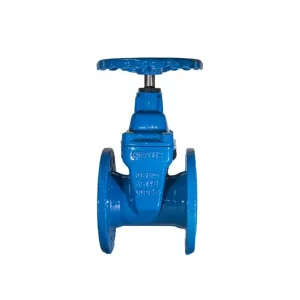
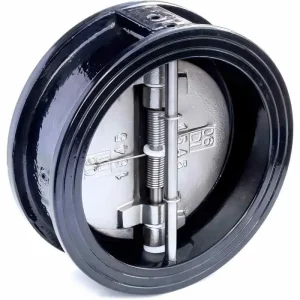
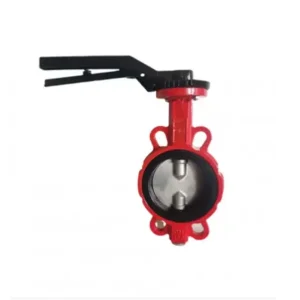
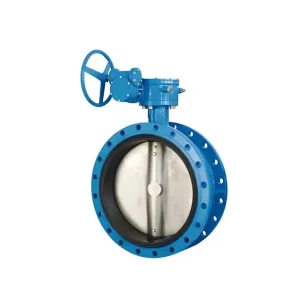
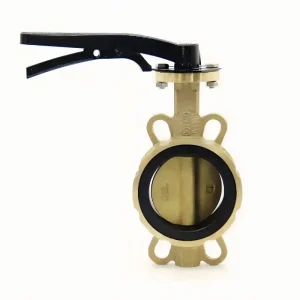
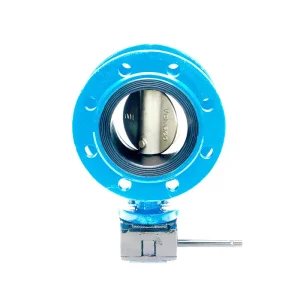
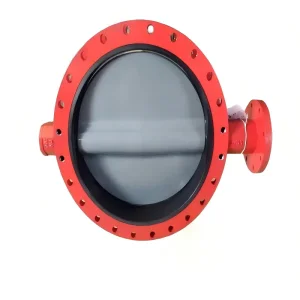
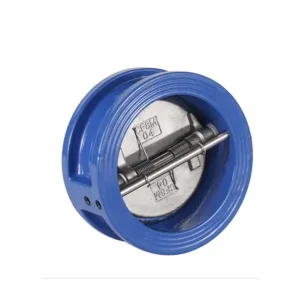
Comprehensive Industrial Valve Lineup for European Projects
Engineered to international standards, directly accessible for global and Belgian engineering supply chains.
Expert Technical Answers
Frequently Asked Engineering & Procurement Questions
Specific compliance and operational details for engineering professionals serving Belgium and the EU single market.
Q1: How does WRAS certification comply with Belgian drinking water mandates like Belgaqua?
While Belgaqua oversees direct network connections in Belgium, WRAS (Water Regulations Approval Scheme) validates the non-metallic component suitability under BS 6920 standards. This proves that our EPDM elastomers do not leach contaminants, impart color/turbidity, support microbial growth, or release cytotoxic substances. For Belgian contractors, WRAS approval serves as a globally recognized benchmark for sanitary safety that accelerates local compliance approvals.
Q2: Are your butterfly valves compatible with standard European EN 1092-2 flange drillings?
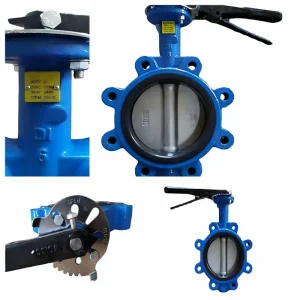
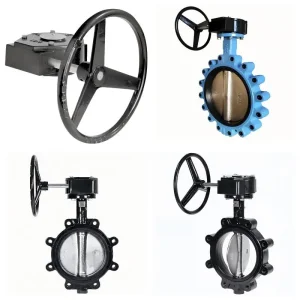
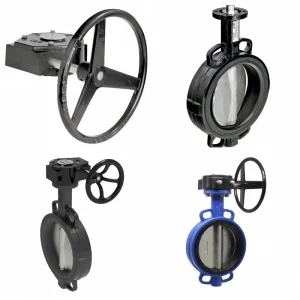
Yes. Our wafer, lug, and double-flanged butterfly valves are precision-machined to EN 1092-2 PN10 and PN16 bolt hole patterns by default. We also offer multi-standard drillings that effortlessly mate with ASME B16.5 Class 150 or British Standard tables, allowing Belgian OEMs to build standardized skid packages for worldwide export.
Q3: What prevents internal stem leakage and corrosion in industrial coastal environments?
Our butterfly valves employ an advanced pinless stem design featuring dual dry-shaft seals with secondary O-rings. The internal fluid only comes in contact with the spherical disc and vulcanized EPDM/NBR liner. For aggressive environments such as the Port of Antwerp or coastal Zeebrugge, we utilize external epoxy coating (min 250 μm) and duplex/aluminum-bronze disc options to permanently halt pitting.
Q4: What quality control documentation accompanies each valve consignment to Belgium?
Every delivery includes full EN 10204 3.1 inspection certificates, covering spectroscopic chemical analysis of castings, mechanical elongation testing, and 100% factory hydrostatic shell and seat leak test reports (EN 12266-1). WRAS approval declarations and elastomer batch cure dates are also cataloged on the certificate.
Q5: What are the lead times and logistics arrangements for direct factory deliveries into Belgium?
Standard configurations (DN50 to DN300) are maintained in semi-machined component inventories with assembly and pressure test turnaround in 7 to 14 days. Ocean container freight from Tianjin Port reaches the Port of Antwerp in roughly 30-35 days. For urgent engineering shutdowns or maintenance interventions, air freight via Brussels Airport (BRU) is available.
Engineered for Belgian Water Quality & Industrial Reliability
Direct manufacturer pricing, in-house foundry quality control, and WRAS certified longevity. Contact our engineering team for datasheets, 3D CAD models, or immediate project quotation.
