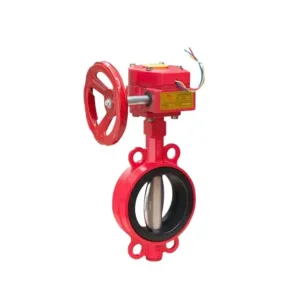
Fire Safety & UNI EN 12845
View Technical Specs
Engineered for integration across Italian municipal aqueducts, district heating loops, and agro-industrial systems.
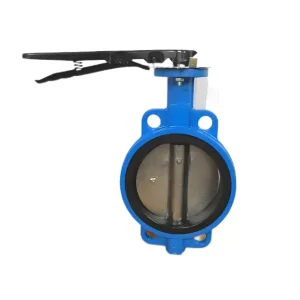
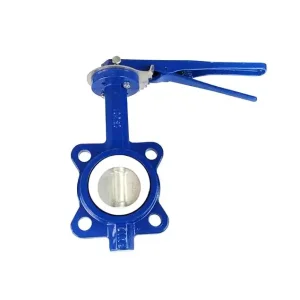
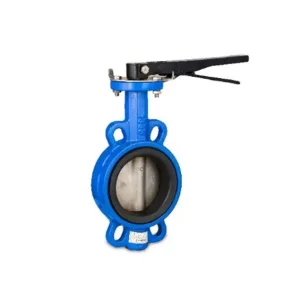
Italy represents one of Europe's most refined yet operationally demanding markets for hydro-mechanical flow equipment. Driven by the Piano Nazionale di Ripresa e Resilienza (PNRR), the Italian peninsula is undergoing a multi-billion euro structural revitalization of its aqueduct networks, urban wastewater reclamation hubs, and integrated regional distribution grids.
Water losses within aging aqueducts—historically exceeding 40% in southern districts and sub-Apennine corridors—have accelerated stringent mandates for smart-monitored, zero-leakage resilient seat isolation valves. Valves specified for projects from Milan to Sicily must not only fulfill rigorous European harmonized norms (EN 593, EN 1074-1/2) but strictly adhere to Ministerial Decree 174 (D.M. 174/2004) for potable water compatibility.
Internationally, water butterfly valves are transitioning from conventional cast commodities into high-performance control instruments. The global industrial transition demands life-cycle cost (LCC) reduction, lifecycle assessment (LCA) environmental disclosures, and complete traceability back to the pristine charge of pig iron and vulcanized polymer compounds.
Tianjin Top Automation Equipment integrates in-house elastomer synthesis (operating since 1987) with foundry metallurgical governance (since 1996). This integrated vertical control mitigates the pervasive supply chain vulnerabilities currently challenging European EPCs, assuring uncompromised metallurgical homogeneity and predictable acoustic characteristics across critical throttling applications.
Targeted flow control engineered to excel within specialized geographic, civil, and industrial operational frameworks across Italy.
Installed across primary gravity-fed transmission mains and suburban booster stations from the Alpine conduits down to the Apennine reservoirs.
Dedicated isolation and throttling duties across complex district heating/cooling substations in Turin, Milan, and Bologna.
Robust media containment within intensive Po Valley agricultural canals, brackish marsh reclamation, and coastal desalination infrastructure.
Anticipating the technological shifts in Italian plant engineering and international smart grid modernization.
Computational fluid dynamics (CFD) modeling minimizing cavitation risks and pressure loss coefficients, delivering quantifiable pumping power reductions across continuous networks.
Development of ultra-high molecular weight elastomer matrices resistant to extreme chloramine concentrations and localized high-temperature spikes up to 140°C.
Embedding acoustic emission sensors and micro-torque monitors directly into the valve neck to enable real-time predictive failure warning systems across Italian SCADA grids.
Transitioning our Tianjin cupolas to clean electric induction melting, accompanied by EPD (Environmental Product Declaration) certificates for green infrastructure bidding.
End-to-end operational capabilities designed to streamline international project execution.
Providing regional Italian valve distributors with tailored OEM branding, bespoke tag markings, high-density batch palletizing, and guaranteed rolling consignment stock.
Empowering civil EPC tender participants with comprehensive pre-bid documentation, verified test registers, CAD/BIM models, and local standard validation.
Pre-configured motorized and pneumatic valve packages matched precisely to site electrical topologies (24VDC, 230VAC, 400VAC three-phase) and bus communication protocols.
Specific insights addressing compliance, selection criteria, elastomer performance, and international logistics.
Italian Ministerial Decree D.M. 174/2004 sets the benchmark for materials coming into contact with drinking water. Our proprietary EPDM and NBR seat compounds are formulated and vulcanized within our in-house rubber factory (operating since 1987), using virgin polymers free from toxic plasticizers, lead stabilizers, or aromatic amines. The finished resilient liners undergo testing to verify global migration limits, specific heavy metal migration limits, and cytotoxicity compliance, providing reliable safety for potable civil distribution.
Conventional butterfly valves often utilize transverse pins through the disc and stem, which creates a primary vector for crevice corrosion, galvanic degradation, and secondary leakage paths over continuous operational cycles. Our pinless butterfly valves feature a high-precision internal square, double-D, or splined drive mechanism isolated completely from the line fluid. This architecture guarantees an uninterrupted disc profile, lowers pressure drop coefficients, and eliminates galvanic interaction between differing alloys.
Unlike trading intermediaries or assembly-only workshops, our group operates its own casting foundry and dedicated elastomer compounding facility on our 23,000 m² campus in Tianjin. We perform optical emission spectrometry on molten ductile iron charges to ensure precise nodularity. After CNC precision machining, every single valve undergoes 100% hydrostatic shell testing (at 1.5x design pressure) and bi-directional seat leakage testing (at 1.1x design pressure) strictly in accordance with EN 12266-1 Rate A standards prior to packaging.
Our wafer and lug butterfly valves feature multi-standard universal alignment holes or dedicated drilling patterns conforming precisely to EN 1092-2 PN10 and PN16 standards (the dominant configurations across Italian civil and industrial engineering). For specialized marine, high-pressure, or legacy projects, we supply drilling to ASME/ANSI B16.5 Class 150, JIS, and BS specifications, with face-to-face dimensions strictly abiding by EN 558-1 Series 20 (ISO 5752 short).
Standard containerized orders have an average manufacturing lead time of 20 to 35 business days depending on actuator requirements and special coatings. Our facility is situated in the Wuxia Industrial Park, offering rapid transit to Tianjin Xingang Port. Direct container shipping lanes regularly connect Tianjin to primary Italian seaports, including Genoa, La Spezia, Naples, and Trieste, with standard maritime transit times ranging between 28 to 36 days.
Engineered for aggressive chemistries, heavy municipal water loops, and mission-critical isolation duties.