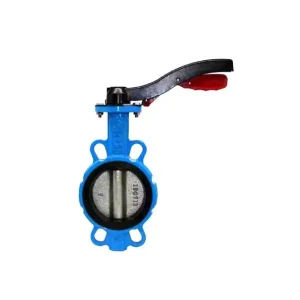
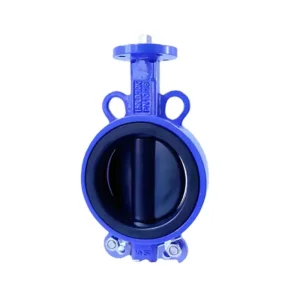
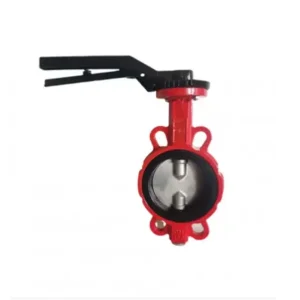
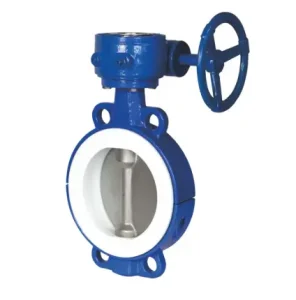
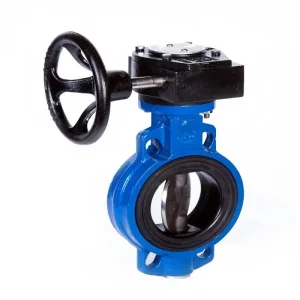
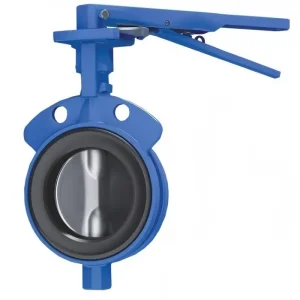
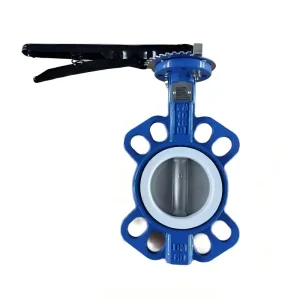
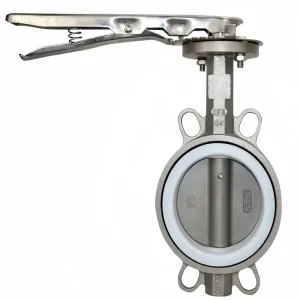
Featured Kazakhstan Regional Project Assemblies
Precision-machined resilient seated and corrosion-resistant quarter-turn valves calibrated for Almaty municipal expansion, Karaganda mining, and Astana infrastructure.
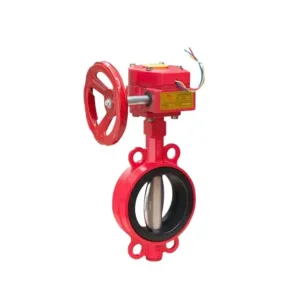
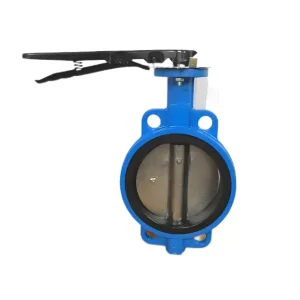
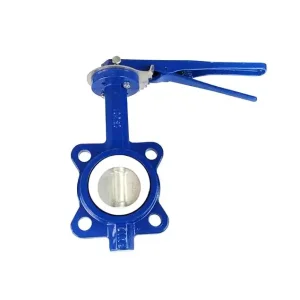
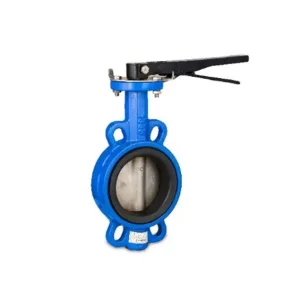
Kazakhstan Industrial Reality & Fluid Handling Challenges
Operating industrial valves across the Republic of Kazakhstan demands engineering resilience against some of the world's most demanding climatic, geotechnical, and operational conditions.
Sub-Zero Thermal Stress
Kazakhstan's continental climate swings violently between -45°C during northern Siberian freeze events in Nur-Sultan (Astana) and +42°C in the southern Kyzylkum desert. Standard gray cast iron experiences rapid brittle fracture under such thermal contraction. Direct engineering calls for spheroidal graphite ductile iron (EN-GJS-400-18-LT / QT400-18L) offering Charpy V-notch impact toughness certified to withstand cryogenic permafrost and freeze-thaw cycles without body cracking.
High Salinity & Hard Water Scaling
Raw municipal and industrial water throughout regions like Mangystau, Atyrau, and around Lake Balkhash exhibits excessive Total Dissolved Solids (TDS), elevated chlorides, and intense carbonate scaling. Concentric water butterfly valves deployed here require dynamically molded vulcanized EPDM seats formulated with high tensile elasticity to prevent tearing during mineral scale accumulation, complemented by 316 stainless steel or aluminum bronze discs.
Mining & Hydrometallurgy
From the copper operations of KAZ Minerals to Karaganda coal washeries and uranium in-situ recovery (ISR) plants in Turkestan, process water contains aggressive sulfuric acid traces, heavy abrasive sand, and chemical reagents. Valves deployed in these environments require precision pinless shafts combined with high-grade virgin PTFE or Halar (ECTFE) protective barriers that isolate the metallic pressure boundary from aggressive corrosion.
Global Valve Engineering: The Transition to Pinless, Resilient Seated Reliability
For decades, conventional through-bolt and taper-pinned butterfly valves served standard water utilities. However, modern municipal infrastructure and remote industrial facilities require maintenance-free operating spans exceeding 15 to 25 years. Pinned designs introduce galvanic corrosion cells, micro-leakage pathways through disk-penetrating pins, and stress concentrations that induce catastrophic stem shear under frozen or pressurized line shocks.
Our specialized pinless wafer and lug water butterfly valves solve these engineering vulnerabilities through an internal splined or square-drive connection completely isolated from the line medium. The fluid touches only the elastomer seat and the spherical disc edge, eliminating shaft wetting and atmospheric packing leaks.
- Hydrodynamic Disc Geometry: Contoured low-profile disc profiles reduce drag coefficients by up to 28%, significantly lowering pump energy consumption in continuous transmission lines.
- Phenolic-Backed vs. Cartridge Seating: Heavy-duty rigid backing sleeves eliminate seat deformation, twisting, and tear-out during high-velocity throttling or bi-directional flow reversals.
- Smart Actuator Interface: Precision ISO 5211 direct-mount top flanges allow seamless integration with intelligent electric actuators featuring Modbus, Profibus, or 4-20mA feedback for automated regional SCADA systems.
EAC / TR CU & GOST Technical Compliance
Kazakhstan requires rigorous compliance with Eurasian Economic Union technical regulations. Industrial valves entering project sites must strictly satisfy:
Our multi-standard drilling templates bridge the gap between legacy Soviet pipeline layouts and modern European (EN 1092-2) or American (ASME B16.5) standards.
Full Supply Chain Vertical Integration: From Foundry to Khorgos Rail Depot
Why international engineering procurement contractors (EPCs) prefer Tianjin Top Automation: complete ownership of every production node without sub-tier vendor markups or quality blind spots.
In-House Foundry
Operating group foundries casting ductile iron QT450, QT400-18L low-temp, WCB carbon steel, CF8M stainless steel, and nickel aluminum bronze. Optical emission spectrometers verify precise nodularity, carbon equivalence, and mechanical elongation prior to machining.
Rubber Plant (Since 1987)
Elastomer seats determine butterfly valve operational longevity. Our in-house Tianjin Dongfang Rubber plant compounds virgin EPDM, NBR, Viton, and food-grade silicones. Rigorous rheometer curing curves ensure zero compression set and anti-aging resilience even in glycol cooling mediums.
Automated CNC Machining
Multi-axis horizontal CNC machining centers mill body flange serrations, disc sealing radiuses, and dual-half shaft journals down to ±0.015mm tolerances. Mirror-finish disc profiling significantly lowers operational torque requirements by over 20%.
Belt & Road Express Transit
Direct block train logistics departing Tianjin via the Khorgos Gateway and Dostyk dry ports into Kazakhstan. Avoid maritime delays: deliveries arrive directly at Almaty, Shymkent, Karaganda, and Astana railyards in 7 to 12 days under customs seal.
Material Pairing Guidelines for Central Asian Operating Conditions
Ensure long-term structural integrity and zero seat degradation by matching critical valve components to local Kazakhstan fluid parameters.
| Application Sector | Typical Pipeline Medium | Recommended Body Material | Disc Material | Seat Elastomer | Design Pressure & Temp |
|---|---|---|---|---|---|
| Astana / Almaty District Heating (DH) | Treated closed-loop hot water, demineralized condensate | Ductile Iron QT400-18L (Low Temp) | CF8M Stainless Steel / Nickel-Plated DI | High-Temperature EPDM (Peroxide Cured) | PN16 / PN25 -25°C to +135°C |
| Caspian Desalination (Aktau / Atyrau) | Seawater, high-chloride brine, pre-RO brackish feed | Ductile Iron with Epoxy / Bronze | Aluminum Bronze (C95800) / Duplex 2205 | Vulcanized Shore 70A EPDM | PN10 / PN16 -10°C to +80°C |
| Karaganda Mining & Coal Washing | Slurry, tailings discharge, mine dewatering with grit | Carbon Steel WCB / Heavy Ductile Iron | Duplex Stainless / Ceramic Coated | Abrasion-Resistant Natural Rubber / Polyurethane | PN16 / Class 150 -30°C to +70°C |
| South Kazakhstan Uranium ISR Leaching | Dilute sulfuric acid (H₂SO₄), acidic pregnant solution | Ductile Iron with Full Lining | PTFE Lined Disc / Hastelloy C276 | Virgin Molded PTFE / Halar (ECTFE) | PN10 / PN16 -15°C to +150°C |
| Regional Fire Protection (NFPA / SNiP) | Pressurized municipal fire sprinkler ring lines | Ductile Iron EN-GJS-450-10 | Ductile Iron EPDM Encapsulated | Molded Full Body Resilient Rubber | PN16 / 300 PSI -20°C to +70°C |
Frequently Asked Technical Questions: Kazakhstan Supply
Direct answers for chief mechanical engineers, lead piping designers, and international purchasing officers.
How do your butterfly valves accommodate Kazakhstan's legacy GOST flanges versus modern European standards?
We manufacture wafer and lug butterfly valve bodies with multi-standard slotted or precision-tapped bolt circles compatible simultaneously with GOST 12815-80 / GOST 33259-2015 (Row 1 and Row 2), EN 1092-1/2 (PN10/PN16), and ASME B16.5 Class 150. When replacing old Soviet-era gate valves with compact butterfly units, we also supply standardized wafer-to-flange spool adaptors matching legacy GOST face-to-face dimensions (GOST 3706-93), avoiding pipeline re-welding on active sites.
What measures are taken to prevent brittle iron fracture during extreme winter conditions (-40°C)?
Standard grade GG25 / HT200 gray cast iron is strictly prohibited for external or unheated sub-zero pipelines due to cold embrittlement risks. For Kazakhstan orders, we pour specialized spheroidal graphite ductile iron (EN-GJS-400-18-LT or QT400-18L) featuring high silicon-to-carbon balancing and magnesium spheroidization treatments exceeding 90%. Every casting lot undergoes low-temperature Charpy impact testing at -40°C in our laboratory, ensuring impact energy absorption above 12 Joules before precision machining.
Why is a pinless disc butterfly valve design superior for mining tailings and waterworks?
Conventional valves utilize through-pins or taper pins drilled through the disc to secure the drive stem. In abrasive mining slurry or mineralized water, abrasive particulates attack the pin joints, causing pin loosening, galvanic crevice corrosion, and catastrophic leakages through stem seals. Our pinless design employs an internally broached polygon or hex drive within the disc hub, completely dry and sealed behind resilient rubber boundaries. This preserves structural strength, minimizes turbulence, and allows straightforward field replacement of seats without specialized heavy machinery.
What documentation and inspection certificates are supplied with valve shipments?
Every industrial valve delivery is accompanied by an extensive documentation dossier required by customs and project engineering inspectors. This includes EN 10204 Type 3.1 Inspection Certificates containing exact chemical spectrographic analysis and mechanical tensile/elongation results, hydrostatic pressure test certificates (shell at 1.5x PN, seat at 1.1x PN bubble-tight), coating thickness verification reports, certificate of origin, and EAC Declaration/Certificate of Conformity according to TR CU 010/2011 and TR CU 032/2013.
What are the shipping lead times from your Tianjin factory to Kazakhstan via the Khorgos dry port?
Tianjin Top Valve benefits from direct rail freight connections linking North China directly to Central Asia along the Belt and Road corridor. Standard production lead time for customized valve batches is typically 15 to 25 days. Once dispatched via bonded rail container, transit time through the Khorgos or Dostyk land ports to Almaty customs terminals is typically 7 to 10 days, or 10 to 14 days to Astana and Karaganda. This avoids long ocean-route disruptions and provides predictable delivery for tight project construction windows.
Engineered Butterfly Valves for Kazakhstan Industrial Projects
Select from our extensive catalog of specialized linings, duplex alloys, worm-gear reducers, and automated configurations designed for long-term service.