
High-Integrity Water Butterfly Valves for Infrastructure Projects
Fully compliant with CE Pressure Equipment Directive (PED 2014/68/EU), GOST standards, and international drinking water mandates.
-
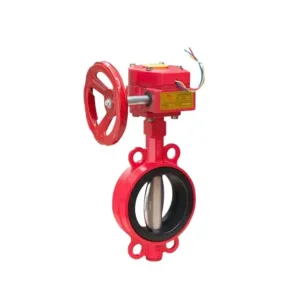
Uzbekistan Industrial & Fire Line Signal Butterfly Valve (Wafer Pattern)
View Detailed Specifications -
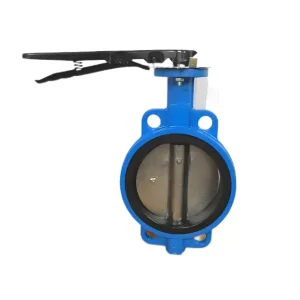
Municipal Water Supply Low-Pressure Wafer Butterfly Valve for Central Asia
View Detailed Specifications -
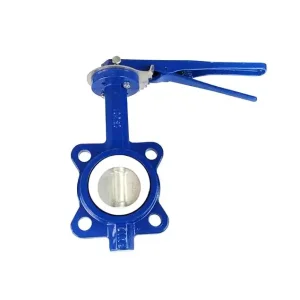
Corrosion-Resistant PTFE Lined Pinless Butterfly Valve for Navoi Processing
View Detailed Specifications -
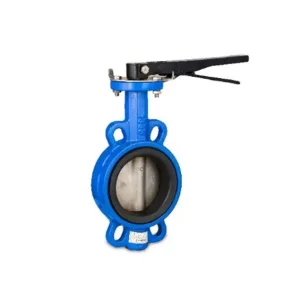
High-Cycle Rubber Lined Pinless Butterfly Valve for Uzbekistan Irrigation Works
View Detailed Specifications
Uzbekistan Industrial Landscape & Flow Control Demands
How rapid infrastructure revitalization and regional water management policies are transforming valve procurement across Central Asia.
Uzbekistan has emerged as the industrial engine of Central Asia. Under large-scale economic transition initiatives, notably the "Uzbekistan 2030" strategy, the republic is executing unprecedented capital expenditure in municipal water networks, agricultural canal modernization, and energy-intensive manufacturing clusters. The climatic realities of Central Asia—hot, arid summers paired with sub-zero continental winters—present extreme operational challenges for hydraulic infrastructure. Aging legacy pipelines from the post-Soviet era frequently succumb to high pressure differentials, cavitation, and seal hardening caused by thermal cycling.
Strategic Industrial Hubs and Fluid Service Conditions
Across key industrial clusters such as Tashkent City, the chemical facilities of Navoiyazot, the metallurgy complexes in Almalyk (AMMC), and agricultural irrigation conduits traversing the Fergana Valley, resilient butterfly valves must endure distinctive operating profiles:
- Potable Water Reticulation & Urban Sanitation: Tashkent and regional hubs are undergoing aggressive urban expansion. High-capacity municipal networks require CE-marked, WRAS-approved resilient-seated butterfly valves (EPDM liners) ranging from DN200 to DN1600. Sealing must guarantee bi-directional bubble-tight isolation (Class A according to EN 12266-1) while remaining uncompromised by silt loads carried from river catchments like the Amu Darya and Syr Darya.
- Heavy Metallurgy and Mining Applications: The Navoi and Almalyk industrial corridors process dense mineral slurries, leach acids, and high-salinity extraction waters. Valves installed in these environments demand specialized PTFE or Halar® (ECTFE) polymer linings combined with Duplex stainless steel (2205 / 2507) discs to resist severe electrochemical attack and hydraulic abrasion.
- Thermal Energy & District Heating (DHS): Centralized district heating systems across older urban areas are converting toward variable-frequency pumping. Butterfly valves must accommodate fluid temperatures fluctuating between -20°C ambient soil conditions and up to 130°C closed-circuit pressurized hot water without elastomer decomposition or stem binding.
Corrosion & Silt Resistance
Advanced electrostatically applied fusion bonded epoxy (FBE) coatings exceeding 250 microns protect valve castings against saline, mineral-heavy groundwaters common to the Aral basin drainage basins.
Low Actuation Torque
Dual eccentric and pinless drive architectures minimize hydrodynamic friction against resilient seats, lowering actuator power requirements for automated SCADA installations in remote desert booster stations.
CE & GOST Harmonization
Valves are engineered to seamlessly fit both European EN 1092-2 PN10/PN16 flange specifications and traditional GOST 12815/33259 standards, avoiding costly piping modifications during retrofit works.
Why Direct Chinese Manufacturing Outperforms Intermediaries
Combining our group's 1987 elastomer foundations with advanced automated casting and CNC machining centers in Tianjin, China.
Global procurement teams operating in Central Asia often face severe margin stack-ups and compromised delivery schedules when sourcing through regional trading agents. Sourcing directly from an integrated Tianjin valve campus provides decisive quality verification and economic control. The ultimate operating life of any water butterfly valve is determined primarily by two components: the rubber seat compound formula and the dimensional tolerance of the disc sealing edge.
Unlike assemblers who purchase vulcanized seats and raw castings from third-party suppliers, our manufacturing group maintains in-house elastomer vulcanization (Tianjin Dongfang Rubber, founded 1987) and high-precision ductile iron foundries (Tianjin Donglian Valve, established 1996). This internal integration guarantees:
In-House Elastomer Lab
Proprietary EPDM, NBR, and Viton compounding yielding compression set resistance under 18%, preventing permanent deformation under continuous water-hammer pressures.
Multi-Axis CNC Machining
Tolerances within ±0.01mm ensure ultra-smooth disc profiles, drastically reducing the micro-scuffing that leads to seal breakdown in high-cycle municipal applications.
100% Dual-Test Protocols
Every single valve undergoes both shell hydrostatic testing at 1.5× PN rating and seat air/water seal testing at 1.1× PN rating according to ISO 5208 before packing.
Belt & Road Logistical Velocity: Tianjin to Tashkent via Khorgos
Logistics efficiency is vital for infrastructure projects. Situated adjacent to northern China's premier maritime and rail interchange hubs, our factory ships directly via the China-Europe/Central Asia railway express (CRE) corridor. Heavy-tonnage orders travel via Alashankou or Khorgos to the Chukursay terminal in Tashkent within 12 to 16 days, cutting standard sea-freight timelines by over 60% and completely bypassing maritime choke points.
Engineering Configuration Matrix for Central Asian Systems
A procurement-grade technical reference to guide specification matching across water distribution, canal irrigation, and chemical processing.
| Valve Type | Body / Disc Metallurgy | Seat Elastomer | Nominal Pressure | Target Local Application |
|---|---|---|---|---|
| Wafer Signal Butterfly | Ductile Iron GGG40 / CF8M Disc | EPDM (WRAS Grade) | PN10 / PN16 | Commercial buildings & industrial fire deluge systems in Tashkent |
| Rubber-Lined Pinless | Ductile Iron / Al-Bronze C95800 | High-Resilience NBR | PN10 / PN16 | Fergana Valley raw river intake and agricultural canal pumping |
| PTFE Lined Concentric | WCB / SS316 + PTFE Encapsulated | PTFE backed by Silicone | PN10 / PN16 / Class 150 | Navoi chemical processing, acidic fertilizer discharge conduits |
| Double Flanged Resilient | Ductile Iron GGG50 / CF8 Disc | EPDM (Bonded/Replaceable) | PN16 / PN25 | Municipal primary trunk water distribution networks & pump stations |
| Duplex Pinless Design | Duplex 2205 / Super Duplex 2507 | Viton / FKM or Halar® | PN16 / PN25 / PN40 | Aral region saline groundwater desalination & mining slurry |
Pinless Disc Technology vs. Conventional Through-Pin Systems
Traditional butterfly valve assemblies rely on cross-pins or taper pins drilled through the valve disc to anchor the drive shaft. In abrasive or slightly saline water conditions—such as raw surface water sourced in Central Asia—these through-pin holes form primary points of galvanic corrosion and mechanical stress concentration. High-velocity silt erosion slowly strips the seal around pins, causing internal shaft leakage and eventual valve freeze.
Our engineered Pinless Butterfly Valve Series utilizes internal polygon drives or double half-shaft splines entirely isolated from the flowing media. The disc surface remains continuous and unperforated, guaranteeing zero process fluid contact with the stem metallurgy. This innovation doubles the maintenance-free duty cycle of valves operated in municipal canal booster stations and abrasive wastewater environments.
Future-Proofing Flow Infrastructure Across Developing Economies
Addressing water loss mitigation, smart city telemetry integration, and decarbonization through robust valve engineering.
Non-Revenue Water (NRW) Mitigation
Uzbekistan’s water ministry initiatives prioritize curtailing supply network leakage. Resilient zero-leakage butterfly valves eliminate fugitive losses, stabilizing line pressures and lowering pumping kilowatt consumption across regional grids.
SCADA & IoT Actuation Ready
Standardized ISO 5211 direct-mount top flanges allow swift integration of 4-20mA modulating electric or pneumatic actuators without field modifications, accommodating central digital flow management systems in smart districts.
Extended Thermal Resilience
Specially treated ductile iron castings (QT450-10) offer superior sub-zero impact toughness. Valves maintain complete shell integrity even during extreme continental winter frosts where external temperatures drop below -25°C.
Engineering Valves for a Major Central Asian Tender?
Access CAD drawings, certified 3.1 material test certificates, CE declarations of conformity, and comprehensive pricing for tender preparation.
Specialized Butterfly Valve Solutions for Severe & Municipal Service
Explore our heavy-duty pinless, PTFE-lined, halar-coated, and worm gear operated valve configurations built for long service cycles.
-
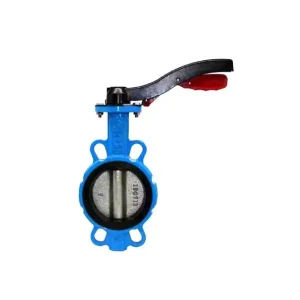
CE Certification Duplex Type Pinless Butterfly Valve for Uzbekistan Brackish Lines
View Detailed Specifications -
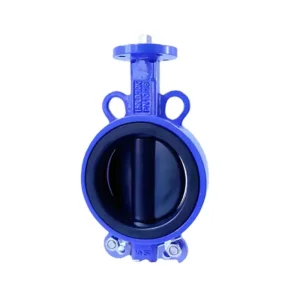
Halar (ECTFE) Lined Pinless Butterfly Valve for Severe Chemical Exposure
View Detailed Specifications -
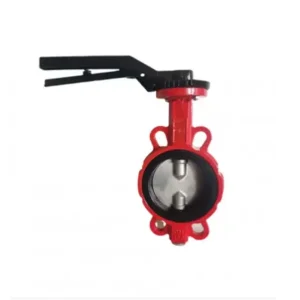
High-Strength Double Half Shaft Wafer Butterfly Valve for High Flow Stability
View Detailed Specifications -
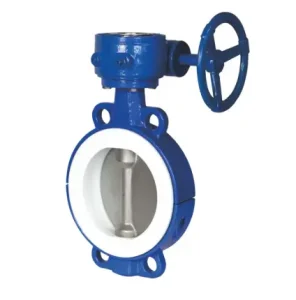
Corrosion-Proof Heavy-Duty PTFE Lined Butterfly Valve for Mineral Processing
View Detailed Specifications -
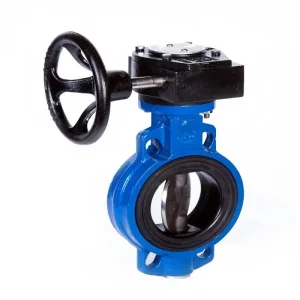
Worm Gear Rubber Lined Wafer Butterfly Valve for Large Trunkline Isolation
View Detailed Specifications -
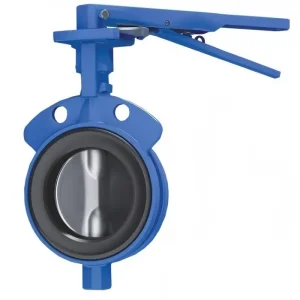
EPDM Lined Resilient Water Butterfly Valve for Municipal Drinking Water Projects
View Detailed Specifications -
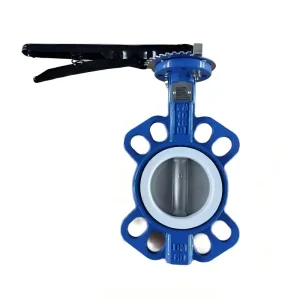
Reinforced Cast Body PTFE Lined Butterfly Valve for Petrochemical Refineries
View Detailed Specifications -
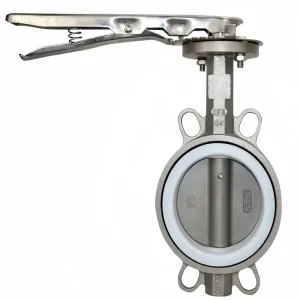
CE Certification Stainless Steel PTFE Lined Butterfly Valve for Hygienic Duty
View Detailed Specifications
Engineering & Procurement Clarifications
Key technical insights addressing standards, cross-border shipping, material compatibility, and warranty assurance for buyers in Uzbekistan.
Are your water butterfly valves compliant with both European CE and local GOST standards?
Yes. Our butterfly valves are certified under the European Pressure Equipment Directive (CE PED 2014/68/EU Module H) and manufactured to ISO 9001:2015 quality standards. For the Uzbekistan and broader CIS market, our wafer, lug, and double-flanged body patterns are dual-drilled to match both EN 1092-2 (PN10/PN16) and GOST 12815 / GOST 33259 standards. This ensures that maintenance crews can execute drop-in replacements on legacy Soviet-designed pipelines without re-welding flanges or modifying face-to-face distances.
How does your factory handle shipping and customs clearance for Uzbekistan?
We provide full multimodal logistics coordination. The predominant freight corridor utilizes regular China-Central Asia freight trains originating from Tianjin/Zhengzhou to Chukursay Station (Tashkent), typically taking 12 to 16 days in transit. We issue complete export documentation including Certificate of Origin (Form A / CO), commercial invoices, Packing Lists, Bill of Lading, and EN 10204 3.1 inspection certificates. Orders are packed in heavy-duty, fumigated multi-ply plywood export cases with internal waterproof vapor-barrier bagging to prevent transit rust and physical impact damage.
What elastomer seat formulation is recommended for municipal water in Central Asia?
For municipal drinking water networks and HVAC distribution, we recommend our WRAS-approved high-density EPDM (Ethylene Propylene Diene Monomer) seat liner. Because we formulate and mould our own rubber compounds in-house, our EPDM delivers exceptional ozone, chlorine, and chloramine resistance with a continuous temperature tolerance from -20°C up to +120°C. For raw surface water containing sand or organic sediments, our high-tensile molded NBR (Nitrile) elastomer provides heightened resistance to mechanical gouging and particle tear.
Can you supply motorized and pneumatic automated butterfly valves for SCADA networks?
Yes. All our butterfly valves are designed with integrated ISO 5211 direct-mount actuator flanges. We assemble and calibrate electric quarter-turn actuators (supporting 220V/380V, 4-20mA modulating signals, Modbus, and Profibus protocols) as well as rack-and-pinion double-acting or spring-return pneumatic actuators. Complete automated valve packages are tested as a unit in our laboratory before dispatch, ensuring exact limit switch feedback, override operation, and stroke travel speed.
What quality control measures ensure zero leakage on large diameter butterfly valves?
Our Tianjin quality assurance center executes 100% pressure verification on every valve body and seat prior to release. Following the EN 12266-1 and ISO 5208 testing regimes, valve shells are hydrostatically tested at 1.5 times the nominal working pressure (e.g., 24 bar for a PN16 rated valve), while seats undergo bidirectional hydrostatic testing at 1.1 times nominal pressure and low-pressure pneumatic seat testing at 6 bar. Zero allowable leakage (Rate A) is strictly enforced on all resilient-seated models.
Direct Engineering Consultation for Uzbekistan Projects
Connect directly with our valve engineering team in Tianjin, China. Share your flow media, pressure requirements, flange standard, and project schedule for immediate quotation and technical datasheet verification.
Send Inquiry Now