
High-Performance Ball & Process Valves for French Industry
Engineered to handle aggressive thermal duties, critical shut-off, and rapid diversion across French chemical platforms and utility loops.
-
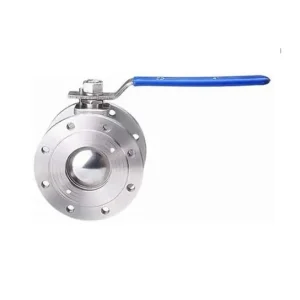 Stainless Steel Ultra-Thin Fire-Safe Ball Valve for France Process LinesExplore Product
-
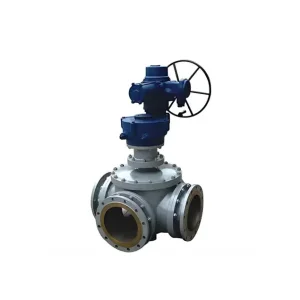 CE Certified 3-Way Flanged Ball Valve for Emergency DiversionExplore Product
-
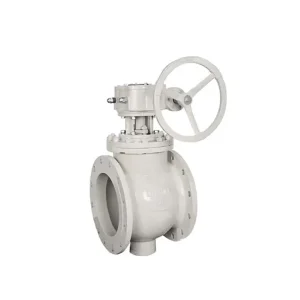 High-Pressure Eccentric Plug Valve for Oil & Gas PipelinesExplore Product
-
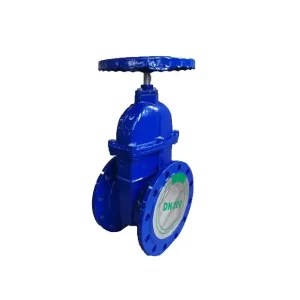 DIN Standard Elastic Seat Gate Valve for European Municipal WorksExplore Product
The French Fluid Control Landscape: Decarbonization, Compliance & Reliability
Strategic engineering insights into the modern requirements governing industrial ball valves across mainland France and export EPC operations.
Nuclear & Low-Carbon Grid Alignment
Under the French "France 2030" investment blueprint and EDF nuclear reactor lifetime extensions (Grand Carénage), ball valves require stringent austenitic stainless steel grades (CF8M/316L) and nickel alloys. Our production complies with RCC-M guidelines, providing ultra-clean forgings, liquid penetrant testing (PT), and radiographed pressure boundaries.
Fugitive Emissions & Environmental Directives
Industrial complexes in Fos-sur-Mer, Le Havre, and Lyon Chemical Valley face strict EU IED (Industrial Emissions Directive) thresholds. Our French-market ball valves employ live-loaded stem seals, micro-finished spherical balls (Ra ≤ 0.1 μm), and virgin or carbon-reinforced PTFE/PEEK sealing systems to achieve ISO 15848-1 Class AH leakage rates.
Full Harmonization with European Standards
Every valve leaving our plant features face-to-face dimensions according to EN 558 series 14/15, flange connections compliant with EN 1092-1 (PN16 to PN100), and ISO 5211 direct-mount automation pads. This ensures seamless integration into existing French industrial skid assemblies without pipework modification.
Localized Scenarios: Where Our Ball Valves Excel in France
From cryogenic gas storage to urban district heating (CPCU), our ball valve assemblies are built for exact operational parameters.
LNG Terminals: Dunkerque & Montoir-de-Bretagne
Extended bonnet cryogenic ball valves with PCTFE/Kel-F seats designed for service down to -196°C. Equipped with cavity pressure relief holes in the ball to prevent catastrophic pressure build-up during LNG gasification.
Urban Geothermal & District Heating (CPCU Paris)
All-welded or split-body full-bore ball valves optimized for high-temperature hot water (HTHW) loops reaching 180°C and 25 bar. Carbon steel bodies with hard-chrome plated or electroless nickel plated (ENP) balls resist scaling.
Biogas, Biomethane & Pure H2 Injection
In accordance with GRTgaz standards, our floating and trunnion-mounted valves offer anti-static devices (spring-loaded grounding pins) and soft seats certified for dry gaseous hydrocarbons and hydrogen-blended networks.
Technical Engineering Comparison for French Specifications
| Design Aspect | Standard Commercial Grade | Tianjin Top Valve Industrial Grade | French EPC Standard Compliance |
|---|---|---|---|
| Pressure Rating | PN10 / PN16 Only | PN16, PN25, PN40, PN63 up to Class 1500 | EN 1092-1, EN 1759-1 (PED 2014/68/EU Cat III) |
| Fire Safety Architecture | Non-rated or standard elastomer | Secondary metal-to-metal seating & flexible graphite | ISO 10497 / API 607 7th Edition Certified |
| Stem Sealing System | Single O-ring or plain PTFE pack | Belleville live-loaded V-ring Chevron packing | ISO 15848-1 Tightness Class AH/BH |
| Cast / Forged Quality | Visual inspection only | 100% NDT (UT/RT available), PMI alloy verification | EN 10204 Type 3.1 & 3.2 Inspection Certs |
| Actuation Interface | Non-standard mounting | Direct ISO 5211 flange with square stem keyway | Compatible with Rotork, Bernard Controls, Auma |
Vertically Integrated Foundry to Testing Floor: The Direct Factory Edge
Eliminating intermediaries. How our Tianjin manufacturing hub empowers French buyers with predictable delivery, rigorous cost engineering, and end-to-end quality assurance.
In-House Casting & Rubber Vulcanization
Unlike assemblers who purchase rough castings on spot markets, our group has operated an independent foundry since 1996 and compounding lines since 1987. We directly supervise spectrographic melt chemistry, annealing temperatures, and elastomer shore hardness to eliminate internal porosities before machining.
Optimized Le Havre & Marseille Logistics
Situated within rapid transit range of Tianjin Port, our freight dispatch utilizes direct sea shipping lanes to Le Havre (serving Northern France and Paris) and Marseille-Fos (serving Southern industrial zones). Each shipment includes moisture-proof VCI vacuum packing and reinforced European standard wooden export pallets.
Turnkey Documentation & French Dossiers
French engineering firms demand comprehensive documentation. We systematically supply full documentation dossiers prior to dispatch: EN 10204 3.1 inspection sheets, welding books (WPS/PQR), hydrostatic shell and closure test reports to EN 12266-1, and PED conformity declarations with French translations.
Valve Engineering Roadmap: 2025–2030
Anticipating the technological and regulatory shifts across European energy grids and chemical infrastructure.
Hydrogen-Ready Ball Valves
Certification of specialized metal-seated and soft-seated ball valves under ISO 15848-1 for 100% pure gaseous hydrogen transport and French electrolyzer facilities.
Smart Valve Digital Twins
Integration of wireless LoRaWAN torque sensors and optical stem position transmitters tailored for remote monitoring in unmanned district heating stations across France.
Cryogenic CCUS Solutions
Developing cryogenic ball valves for Carbon Capture, Utilization, and Storage (CCUS) projects, addressing dense-phase and supercritical CO2 transportation requirements.
Zero-Emission Polymer Seals
Next-generation PFAS-free self-lubricating polymeric seat rings meeting impending EU chemical regulations without compromising pressure ratings or temperature resistance.
Integrated Flow Control Solutions for French Engineering Systems
A full portfolio of complementary gate, butterfly, check, and lined valve assemblies manufactured for demanding EU site protocols.
-
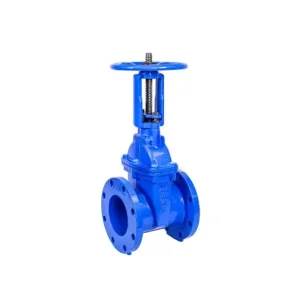 Rising Stem Resilient Seat Gate Valve for Water Utilities in FranceExplore Product
-
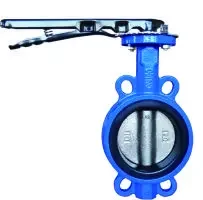 Wafer Butterfly Valve - High-Efficiency Pipeline Flow ControlExplore Product
-
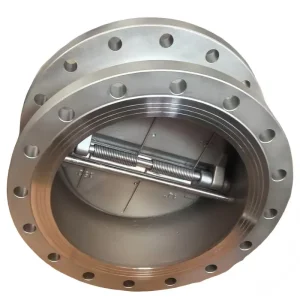 CE Compact Low-Pressure Drop Wafer Lift Check ValveExplore Product
-
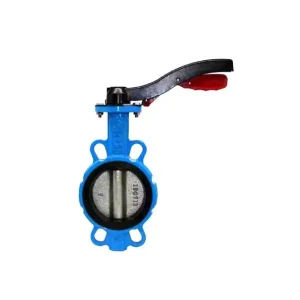 Duplex Stainless Steel Pinless Butterfly Valve for Seawater DesalinationExplore Product
-
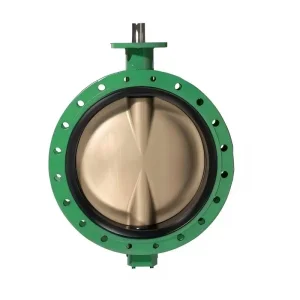 Double-Flanged Water Butterfly Valve for Municipal French NetworksExplore Product
-
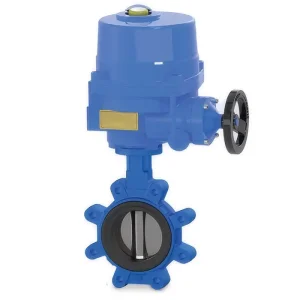 Motorized Electrical Butterfly Valve with Intelligent ActuationExplore Product
-
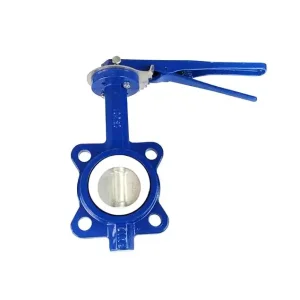 PTFE Lined Pinless Butterfly Valve for Corrosive French Chemical PlantsExplore Product
-
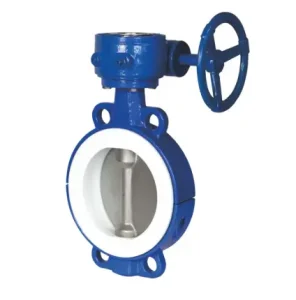 Corrosion-Resistant Fully PTFE Lined Butterfly Valve SolutionExplore Product
Frequently Asked Questions by French Engineering Buyers
Critical considerations on CE marking, material certifications, testing criteria, and technical support.
All our industrial ball valves above DN25 are manufactured, hydro-tested, and certified under PED 2014/68/EU Module H (Full Quality Assurance with Design Examination). Every valve is delivered with the CE mark, manufacturer declaration of conformity, and full traceability stamped onto the stainless steel nameplate.
Yes. We supply 3.1 material certificates with full chemical heat analysis and mechanical impact test data as standard. For nuclear, offshore, or high-criticality projects, we regularly coordinate third-party inspection (TPI) agencies (such as Bureau Veritas, TÜV, or SGS) to issue certified EN 10204 3.2 documentation.
We strictly comply with European standards including EN 558 series 14 and 15 (short/long pattern face-to-face) and EN 1092-1 for flange drillings (PN10, PN16, PN25, PN40). For petrochemical applications requiring ASME dimensions, we manufacture to ASME B16.10 and ASME B16.5 Class 150/300/600.
Standard ball valves in standard materials (WCB, CF8M) maintain an ex-factory production window of 25 to 35 days. Direct maritime shipping to Le Havre or Fos-sur-Mer takes approximately 28 to 34 days. We also offer air freight dispatch for critical emergency maintenance components.
