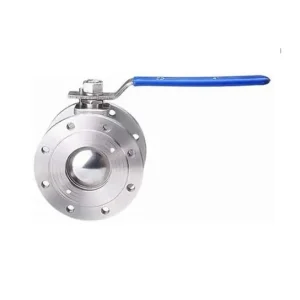
Direct-From-Foundry Product Exhibition: Stage 01
Explore our export-ready inventory engineered with WRAS-compliant elastomers, German DIN dimensions, and micro-machined precision seats.
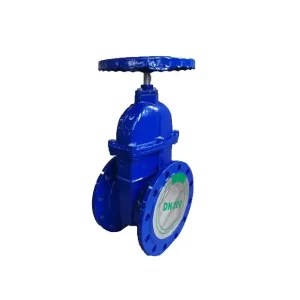
CE Certification German Standard Elastic Seat Gate Valve
View Engineering Details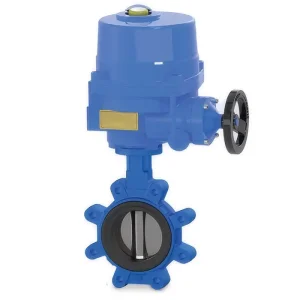
High-Quality Electrical Butterfly Valve Supplier
View Engineering Details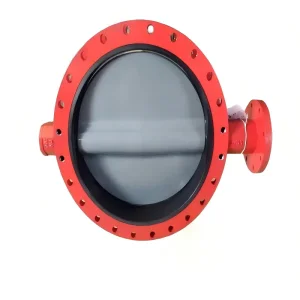
Wholesale Ceramic Disc Wafer Butterfly Valve - Durable
View Engineering Details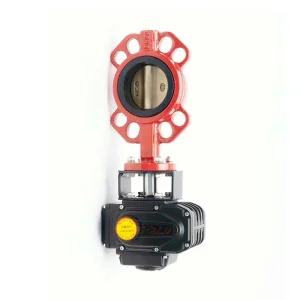
High-Quality Actuator Wafer Butterfly Valve Supplier
View Engineering Details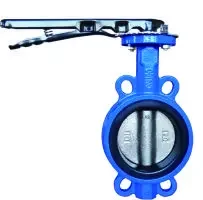
Wholesale Wafer Butterfly Valve Flow Control Solution
View Engineering Details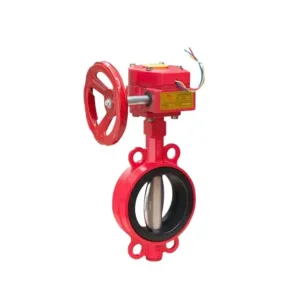
Wholesale Fire-Fighting Wafer Signal Butterfly Valve
View Engineering Details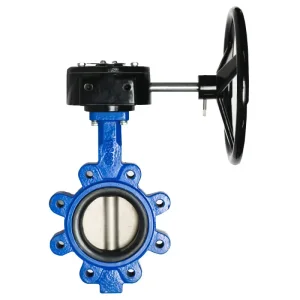
High-Quality Lug Type Butterfly Valve Manufacturers
View Engineering Details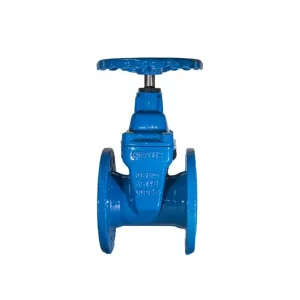
Wholesale Anti-Abrasion Elastic Seat Gate Valve
View Engineering DetailsThe Anatomy of U-Section Flanged Butterfly Valves
Overcoming the structural deflection limits of standard wafer valves: How the U-shaped body optimizes mechanical dead-end rating and prevents pipe-load transmission.
Full-Flange Integral Stability
Unlike standard wafer or semi-lug designs that rely on long line-stud bolts susceptible to thermal elongation and uneven tensioning, the U-section profile incorporates full integral flanges drilling conforming directly to EN 1092-2 PN10/PN16 or ASME B16.5 Class 150. This eliminates bending stress across pipe joints.
Vulcanized Bonded Seat Matrix
U-section valves are subjected to intense turbulent flow velocities exceeding 4.5 m/s. Tianjin Top Valve utilizes in-house phenolic-backed or hard vulcanized seat bonding. This prevents elastomer shifting, radial collapse under full line vacuum, and ensures zero tear risk during rapid throttling cycles.
Bi-Directional Dead-End Capability
By engineering reinforced body walls and dual-flange bolted anchoring, our U-section series functions seamlessly for terminal pipe dead-end service without downstream pipe retention. Certified for zero leakage up to full working pressure ratings (PN16/Class 150) under bi-directional hydro testing.
| Engineering Metric | Standard Wafer Body | Standard Lugged Body | Tianjin Top Valve U-Section Flange |
|---|---|---|---|
| Face-to-Face Standard | ISO 5752 Series 20 / EN 558 | ISO 5752 Series 20 / EN 558 | ISO 5752 Series 13 / 14 (Short/Long) |
| Terminal Dead-End Rating | Not Approved (Zero Rating) | Unilateral Only (Downstream de-rated) | Full Rated Bi-Directional Dead-End (16 Bar) |
| Elastomer Seat Anchor | Loose Boot / Replaceable Cartridge | Replaceable Snap-in Type | Direct Vulcanization / Rigid Phenolic Backing |
| Piping Load Tolerance | Vulnerable to Stud Bolt Misalignment | Moderate Torsional Resistance | Maximum Structural Rigidity via Bolted Flanges |
| Vacuum Service Performance | Prone to Liner Pull-In (-0.5 Bar limit) | Requires Custom Adhesive Bonding | Full Sub-Atmospheric Vacuum Sealed (-0.98 Bar) |
Integrated In-House Foundry & Rubber Compounding
Why Tier-1 EPC contractors avoid trading intermediaries: The critical sealing longevity of resilient valves is determined 100% at the molecular formulation level.
Dongfang Rubber (1987)
Our dedicated rubber vulcanization plant formulates certified virgin EPDM, high-nitrile NBR, and fluoroelastomers with verifiable polymer content, zero recycled filler, and strict compression set controls.
Donglian Foundry (1996)
Our automated induction furnace pours ductile iron QT450-10 / EN-GJS-450-10, cast steel WCB, and C95800 nickel aluminum bronze with spectrographic melt tracing verified before mold injection.
Multi-Axis CNC Tolerancing
Flange sealing faces, internal spherical bore radii, and double-eccentric stem journals are processed in synchronized horizontal machining centers guaranteeing 0.02mm axial concentricity.
100% Individual Testing
Every single manufactured unit is subjected to hydro shell tests at 1.5x design pressure and resilient seat pneumatic/hydro bubble tests at 1.1x design pressure conforming to EN 12266-1 Rate A.
Engineered for High-Consequence Fluid Environments
Customizing metallurgy, trim combinations, and actuation packages to withstand extreme corrosive, abrasive, and cyclical hydrodynamic operating envelopes.
Municipal Water Treatment & Transmission
For municipal raw water transmission and high-volume desalination trunklines, our WRAS-certified U-section flanged butterfly valves feature fusion bonded epoxy (FBE) coating (300µm minimum thickness) and drinking-water compliant EPDM seats that prevent biofilm adhesion and heavy metal leaching.
Marine Engineering & Offshore Ballast
Operating in aggressive saline and tidal environments requires superior galvanic protection. We produce U-section bodies with C95800 Nickel-Aluminum Bronze discs, Monel 400 or Duplex 2205 shafts, and marine-certified vulcanized seats resisting seawater cavitation and biofouling.
Heavy Slurry, Flue Gas & Mining Desulfurization
Standard metal or rubber trims degrade rapidly under fly ash or lime slurry flow. Top Valve integrates solid reaction-bonded silicon carbide (SiC) or ceramic discs combined with anti-abrasion elastomer seats, extending MTBF by over 350% across coal-fired and mineral leaching pipelines.
Engineering Compliance & Traceability Protocols
Providing international EPC procurement directors with exhaustive technical dossiers, non-destructive examination (NDE), and global accreditation.
EN 10204 3.1 Certified Metallurgy
Every casting heat batch is cataloged. We furnish verifiable chemical composition spectrographic analyses, tensile tests, elongation percentages, and Charpy impact test logs delivered with official 3.1 inspection certification before port dispatch.
Multi-Jurisdiction Flange Drilling
Our machining setups accommodate dual and multi-standard flange bolt hole tapping: EN 1092-1 / EN 1092-2 (PN6/PN10/PN16), ASME/ANSI B16.1 / B16.5 (Class 125/150), AS 2129 Table D/E, and JIS B2238 (10K), eliminating project installation mismatch risks.
Full Automation Actuation ISO 5211
Equipped with standardized ISO 5211 direct-mount top flanges and double D or keyed shaft drives. We integrate electric multi-turn/quarter-turn actuators (Modbus/Profibus/Hart protocols) and rapid spring-return pneumatic actuators tested in our automated test beds.
Next-Generation Technology & Smart Pipeline Integration
Advancing flow measurement precision, predictive digital health monitoring, and decarbonized foundry manufacturing.
IoT-Enabled Predictive Valve Monitoring
Embedding wireless micro-sensors within the U-section shaft gland and thrust bearing cavity. These monitor high-frequency acoustic emission, stem torque fluctuations, and thermal deviations to predict seat wear before critical failure occurs.
PFAS-Free Sustainable Elastomers
Anticipating international regulatory bans on per- and polyfluoroalkyl substances, our R&D polymer lab has achieved scalable synthesis of proprietary cross-linked EPDM elastomers offering the chemical inertia of fluoroelastomers without environmental persistence.
Hydrodynamic CFD Disc Geometry
Third-generation streamline lens disc contours modeled via computational fluid dynamics (CFD). The refined profile reduces drag coefficients (Cd) by 18%, substantially lowering dynamic pumping head loss across large municipal networks.
Frequently Asked Questions on U Section Butterfly Valves
Addressing structural differences, dead-end calculations, seat compounds, and export logistics.
What is the structural difference between a U-section flanged butterfly valve and a double flanged valve?
Can U-section butterfly valves be used for terminal dead-end pipeline isolation?
Why is in-house elastomer vulcanization superior to replaceable boot seats in large U-section valves?
Which disc materials should be specified for industrial seawater and brine applications?
How does Tianjin Top Valve handle international quality verification and pre-shipment inspection?
Direct-From-Foundry Product Exhibition: Stage 02
Complete your pipeline fluid automation package with precision check valves, high-pressure metal seated valves, and specialized vacuum isolation units.
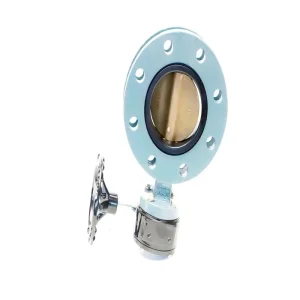
Wholesale Metal Hard Seal Butterfly Valve Manufacturers
View Engineering Details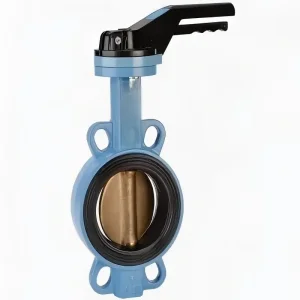
CE Bronze Disc Wafer Butterfly Valve Manufacturers
View Engineering Details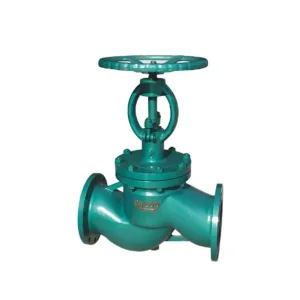
High-Temperature Vacuum Isolation Globe Valve Factory
View Engineering Details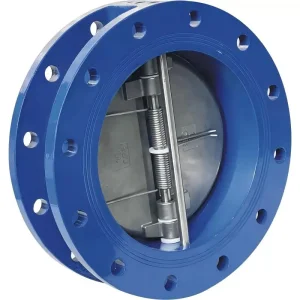
CE Certification Dual Plate Check Valve Suppliers
View Engineering Details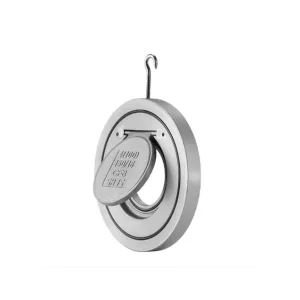
Stainless Steel Single Disc Wafer Check Valve
View Engineering Details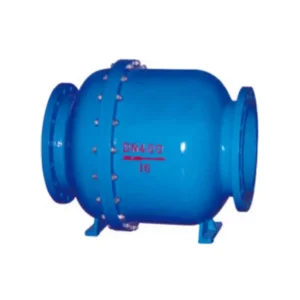
Micro-Resistance Ball Check Valve Factories
View Engineering Details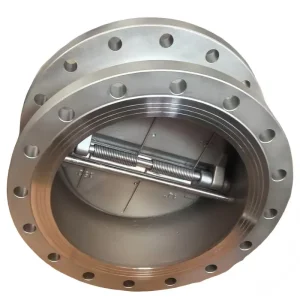
Compact Low-Pressure Drop Wafer Lift Check Valve
View Engineering Details