Direct Sourcing Catalog
High-Performance Industrial Valve Solutions: Group A
Explore precision-machined, foundry-direct valves engineered for severe service environments, zero-leakage isolation, and automated flow modulation.
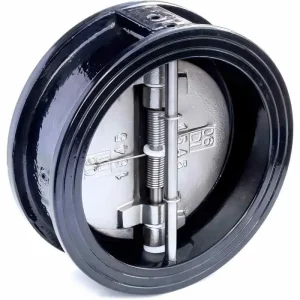
High-Quality High-Quality Wafer Check Valve for Secure Fluid Control Suppliers, Factories
View Product Details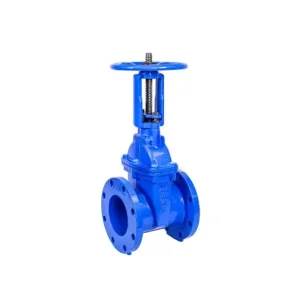
Wholesale Rising Stem Resilient Seat Gate Valve Supplier, Factory
View Product Details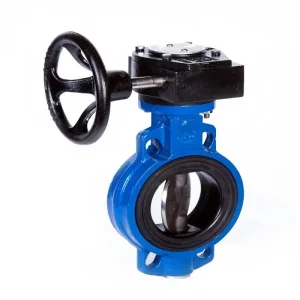
High-Quality Wafer Butterfly Valve – worm gear rubber lined butterfly valve Manufacturer, Factories
View Product Details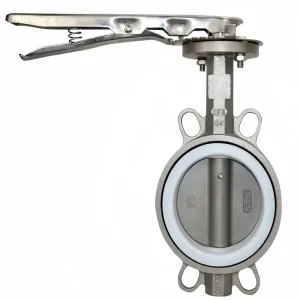
CE Certification PTFE Lined Stainless Steel Butterfly Valve Manufacturer, Factory
View Product Details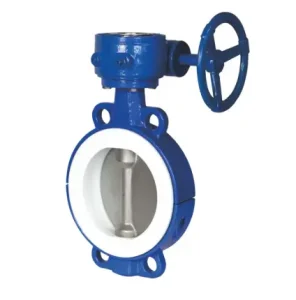
Wholesale PTFE Lined Butterfly Valve - Durable & Corrosion Resistant Manufacturers, Manufacturer
View Product Details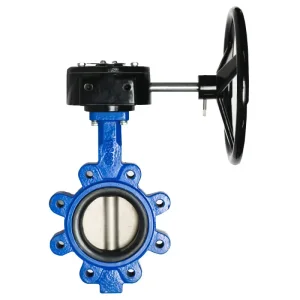
High-Quality Lug type Butterfly valve Suppliers, Manufacturers
View Product Details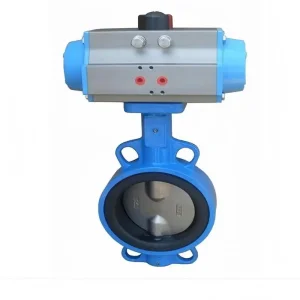
High-Quality Pneumatic Butterfly Valve - Efficient Flow Control Solution Suppliers, Factories
View Product Details
Mechanical Engineering Whitepaper
Engineering Architecture of Industrial Three-Way Globe Valves
Three-way globe valves represent the pinnacle of hydrodynamic regulation, executing critical converging (mixing) and diverging (switching/bypassing) control routines across complex process loops.
Converging (Mixing) Dynamic Control
Engineered with two distinct inlets and a single common outlet. The parabolic or multi-holed cage plug modulates incoming streams of differing temperatures or chemical concentrations, delivering balanced fluid mixtures with linear or equal percentage flow characteristics.
- Cv Ratio Rangeability up to 50:1
- Optimized plug stability under cavitation
Diverting (Splitting) High-Delta P Loops
Configured with one central inlet and dual outlets. Designed specifically to prevent hydro-dynamic out-of-balance forces across high pressure drops. Employs dual-seated trim geometries that counteract hydraulic thrust, eliminating vibration in extreme thermal bypass loops.
- Engineered anti-water hammer profiles
- Hardened Stellite trim options (Grades 6 & 12)
Stem Sealing & Fugitive Emission Containment
To comply with stringent ISO 15848-1 and TA-Luft Class A mandates, our three-way globe valve bonnet assemblies integrate multi-stage PTFE Chevron or flexible die-formed graphite packings with secondary metal bellows containment for zero fugitive VOC leakage.
- Class IV and Class VI shutoff classes
- Live-loaded Belleville spring packing gland
| Nominal Size (DN / NPS) | Pressure Class (PN / ASME) | Body Metallurgy | Flow Configuration | Applicable Standards |
|---|---|---|---|---|
| DN 15 to DN 400 (1/2" to 16") | PN16, PN25, PN40, PN64 / Class 150 - 600 | WCB, LCB, CF8M (316 SS), CF3M, Duplex 2205 | Converging (Mixing) Port 'A' & 'B' to 'AB' | API 623, BS 1873, ASME B16.34, EN 13709 |
| DN 25 to DN 500 (1" to 20") | PN10, PN16, PN25 / Class 150 - 300 | Ductile Iron GGG40.3 / EN-GJS-400-18-LT | Diverting (Bypassing) Port 'AB' to 'A' & 'B' | DIN 3356, EN 1092-2, ISO 5208 Leakage Rate A |
| DN 15 to DN 250 (1/2" to 10") | Class 150 to Class 1500 / PN100 - PN250 | Forged A105N, F316L, F22, F91, Inconel 625 | Combined Cage-Guided Balance Type | ASME B16.10, ISO 15848-1 Fugitive Emissions |
Smart Manufacturing Ecosystem
China Factory 4.0: Vertical Integration & Complete Quality Control
Combining legacy foundry capabilities established in 1987 with state-of-the-art Industry 4.0 precision engineering. We eliminate supply disruptions by controlling 100% of the manufacturing value chain within our Tianjin industrial compound.
In-House Casting Foundry
Our dedicated foundry ensures exact chemical composition and defect-free metallurgy. Every ductile iron, carbon steel, and bronze melt undergoes Optical Emission Spectrometry (OES) analysis prior to pouring.
Elastomer Compounding
Originating from Tianjin Dongfang Rubber Factory (since 1987), our clean-room rubber compounding plant vulcanizes EPDM, NBR, and Viton seats to precise shore hardness, achieving WRAS drinking water standards.
5-Axis CNC Precision Cell
Tight dimensional tolerances across stem bores, gland packings, and triple-port body flanges are machined on robotic 5-axis CNC work centers, ensuring perfect concentricity, zero binding, and reduced actuation torque.
100% Pressure & Shell Testing
Every single valve undergoes rigorous hydrostatic shell testing at 1.5x nominal pressure rating and bi-directional air-under-water seat testing in strict accordance with EN 12266-1 and API 598 standards before release.
23,000 m²
Total Campus Area
State-of-the-art integrated plant
50+
Export Destinations
Supplying global EPC contractors
38 Years
Foundry & Rubber Legacy
Unbroken compounding heritage
100%
Full Pressure Testing
Zero-leakage quality assurance
Cross-Sector Applications
Macro Industry Solutions: Engineered for Critical Process Integrity
Three-way globe valves serve as the central control nodes for thermal regulation, chemical distribution, and marine utilities where failure is not an option.
Thermal Power & Steam Systems
Regulating superheated and saturated steam bypass in combined cycle power generation plants. Our three-way globe valves withstand thermal shock, severe pressure swings, and high vibration without trim erosion or stem binding.
- Stellited seats resist wire drawing
- Ratings up to 550°C (1022°F) continuous
District Energy & Large-Scale HVAC
Delivering precision temperature modulation in central heating and cooling substations. Three-way mixing globe valves allow constant volumetric water flow through chillers and boilers while accurately controlling consumer loop supply temperatures.
- Equal percentage characteristic curves
- High rangeability minimizing energy waste
Marine Main Propulsion & Cooling Loops
Controlling main marine diesel engine jacket water and lube oil cooling loops. Utilizing nickel-aluminum bronze and duplex stainless steel trims, our valves withstand harsh sea atmospheric corrosion and rapid dynamic temperature switching.
- High corrosion resistance in saline water
- Compact face-to-face dimensions for ships
Engineering Horizons
Technical Roadmap: Next-Generation Valve Systems
In response to global industrial decarbonization, hydrogen migration, and autonomous plant operation, our engineering division is developing groundbreaking globe valve innovations.
Smart IoT Actuation & Predictive Diagnostics
Equipped with intelligent positioners featuring HART, Foundation Fieldbus, and Profinet protocols. Integrated piezoresistive pressure sensors and triaxial vibration transmitters continuously stream real-time acoustic emission and packing friction data to enterprise DCS platforms.
- Early warning for cavitation onset
- Predictive maintenance scheduling
Low-Emission Fugitive Seals for Hydrogen
Hydrogen gas migration demands ultra-dense molecular sealing. Our engineering teams have developed ceramic-coated stainless steel valve stems paired with laser-welded multi-ply Inconel 718 bellows seals, completely eliminating stem micro-leak paths under high operating pressures.
- Zero fugitive emissions below 10 ppm
- Certified for pure hydrogen & syngas
Additive Manufacturing & CFD Anti-Turbulence Trims
Leveraging direct metal laser sintering (DMLS) 3D printing technology to fabricate intricate multi-stage tortuous-path trim designs that impossible with standard CNC machining. These custom trims dissect fluid flow into micro-jets, neutralizing noise and eradicating severe fluid cavitation.
- Acoustic attenuation up to 35 dBA
- Extended service life by over 300%
Global EPC Strategic Sourcing
Procurement Resilience & Multi-Jurisdictional Compliance
Tianjin Top Automation Equipment ensures total regulatory compliance, transparent documentation, and friction-free logistics for global procurement officers, consulting engineers, and distributors.
EN 10204 3.1 & 3.2 Material Traceability
Every valve component carries complete heat number traceability back to raw billet melting. We furnish comprehensive QA documentation including Positive Material Identification (PMI), Charpy V-Notch impact testing, and third-party Lloyd's or DNV inspection signoffs.
Worldwide Logistical Readiness
Strategically situated in Dongli District, Tianjin, directly adjacent to Tianjin Port—Northern China's largest maritime shipping gateway. Every export unit is sealed in vapor-barrier bubble wraps, fitted with flange desiccants, and crated inside fumigated marine plywood cases.
Engineering Support & OEM Sizing
Our in-house valve sizing specialists utilize dedicated computational tools to compute exact Cv requirements, fluid cavitation indexes, and pneumatic actuator torque curves within 24 hours of RFQ submission, ensuring complete peace of mind.
Engineering Knowledge Base
Frequently Asked Questions on Three-Way Globe Valve Sourcing
Essential design, selection, and purchasing answers straight from our chief engineering department.
What is the core difference between converging (mixing) and diverting (bypassing) three-way globe valves?
A converging (mixing) three-way globe valve takes two separate incoming fluid lines at distinct temperatures or pressures through ports A and B and blends them into one common discharge stream through port AB. Its plug sits inside the mixing chamber to balance dynamic forces. A diverting (bypassing) valve introduces fluid through port AB and redirects it to either port A or port B. Using a mixing valve in place of a diverting application causes severe hydraulic unbalance, valve chatter, and premature actuator failure.
How does your factory prevent cavitation and wire drawing in high-pressure drop conditions?
We combat high differential pressure fluid deterioration through two primary methodologies: hardened metallurgy and multi-stage pressure reduction trims. Our seats and plugs are hard-faced with Stellite 6 or 12 or tungsten carbide overlays. Furthermore, for severe flashing or cavitation loops, we incorporate cage-guided multi-hole labyrinths that step down velocity gradually, maintaining local fluid pressure well above the medium's vapor pressure.
Can Tianjin Top Valve supply three-way globe valves with third-party inspection certifications?
Yes. We routinely work with international independent inspection agencies including SGS, TÜV, Bureau Veritas, Lloyd's Register, and DNV. We issue full EN 10204 3.1 material certificates as standard and can readily coordinate third-party witness inspection for EN 10204 3.2 documentation covering casting NDT (RT, UT, PT, MT), wall thickness gauging, and pressure testing.
What international flange drilled dimensions are available from your production line?
Because we operate our own high-precision CNC machining centers, our valves can be drilled and faced to virtually any international piping code, including ASME/ANSI B16.5 (Classes 150, 300, 600, 900), European EN 1092-1 / EN 1092-2 (PN10, PN16, PN25, PN40, PN63, PN100), British BS 4504, Japanese JIS B2220 (10K, 16K, 20K), and Australian AS 2129 specifications.
What are the lead times for custom or wholesale three-way globe valve orders?
Standard ductile iron and carbon steel valves in standard DN15 to DN200 sizes are maintained in semi-machined component inventories, allowing assembly, custom trim fitting, testing, and painting within 15 to 25 business days. Heavy project orders, exotic alloys (Duplex, Monel, Hastelloy), or high-pressure Class 600+ designs typically take 35 to 55 business days from drawing approval to dispatch from Tianjin Port.
Direct Sourcing Catalog
High-Performance Industrial Valve Solutions: Group B
Complete your plant installation with our integrated portfolio of gate, check, wafer, and actuated quarter-turn valve systems.
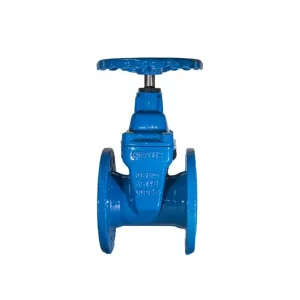
Wholesale Anti - Abrasion Elastic Seat Gate Valve with Reinforced Seat Suppliers, Supplier
View Product Details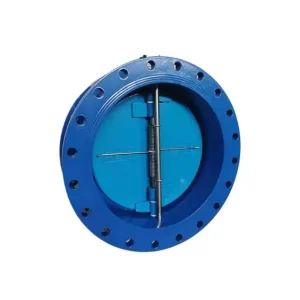
Wholesale Dual Plate Flange Type Check Valve Factories, Factory
View Product Details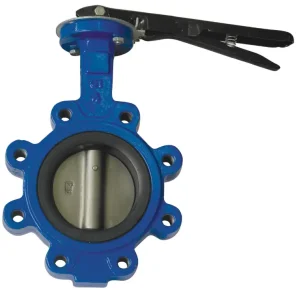
High-Quality Lug type manual operated butterfly valve Manufacturers, Factory
View Product Details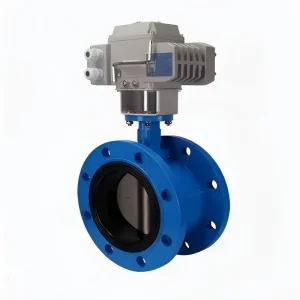
High-Quality High-Performance Electrical Butterfly Valve for Seamless Control Suppliers, Manufacturers
View Product Details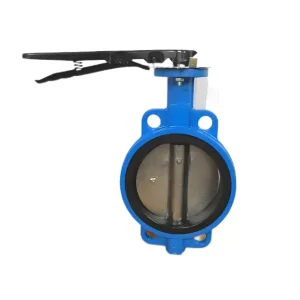
Wholesale Low - Pressure Wafer Type Butterfly Valve Supplier, Manufacturers
View Product Details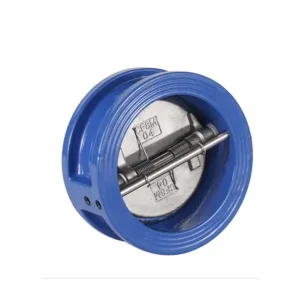
High-Quality High - Performance Dual Plate Wafer Check Valve for High - Flow Pipeline Systems Manufacturer, Factory
View Product Details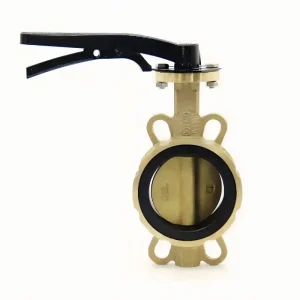
High-Quality Aluminum Bronze Butterfly Valve - Durable & Corrosion Resistant Suppliers, Manufacturer
View Product Details