
Featured Industrial Flow Solutions
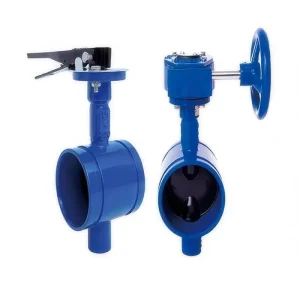
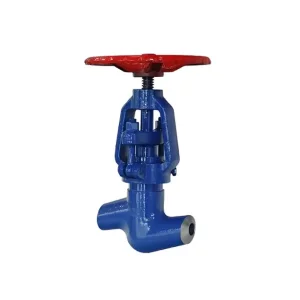
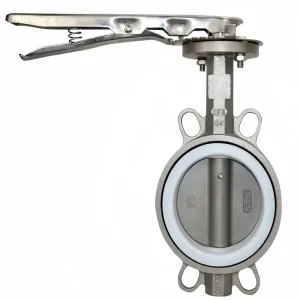
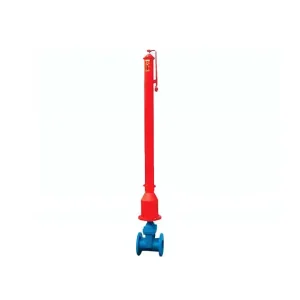
Industrial Rotary Plug Valve Engineering Whitepaper
In high-differential, abrasive, and entrained-solids fluid infrastructure, standard linear globe and concentric valves encounter cavitation scouring and packing attrition. Our rotary eccentric plug valves engineer out mechanical interference via camming geometry, vulcanized elastomer seating, and rigid cylindrical body casting.
Cam-Action Sealing Mechanism
Featuring an offset shaft design, the plug rotates eccentrically away from the seat upon initial degree of rotation. This eliminates sliding contact across the elastomer perimeter during stroke, significantly diminishing actuator breakaway torque and surface degradation.
Foundry-Level Metallurgical Integrity
Poured in our direct-control foundry (Tianjin Donglian lineage since 1996), our valve bodies utilize high-grade Ductile Iron (EN-GJS-400-15 / ASTM A536) and cast carbon steel, coupled with welded nickel or ceramic seat overlays resistant to fluid high-velocity impingement.
Formulated Seat Vulcanization
Compounded in our specialized rubber facility (Tianjin Dongfang heritage since 1987), custom NBR, Neoprene, and high-temp EPDM formulations are directly vulcanized onto the plug core, securing bubble-tight Class VI bi-directional shut-off even in slurry duties.
Rotary Plug Valve Performance Against Conventional Valves
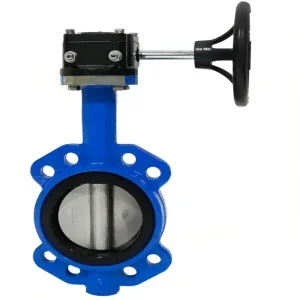
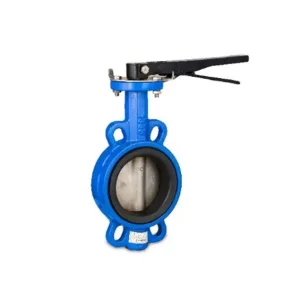
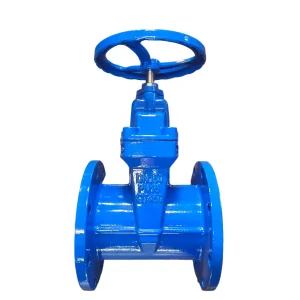
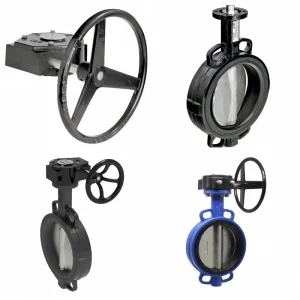
Choosing between rotary eccentric plug, resilient-seated gate, standard ball, and double-offset butterfly valves demands an evaluation of pressure recovery, particulate abrasion, and flow path obstruction.
| Evaluation Parameter | Rotary Eccentric Plug Valve | Resilient Gate Valve | Concentric/Offset Butterfly | Segmented / V-Port Ball Valve |
|---|---|---|---|---|
| Abrasive Slurry & Solids | Exceptional (Wiping motion, unobstructed full rectangular port) | Moderate (Sediment pocket deposition at bottom channel) | Poor (Disc in central flow path suffers slurry erosion) | High (Shearing edge cleans seat, higher seat cost) |
| Throttling & Control Range | Modified Linear / Equal Percentage (100:1 turndown) | Poor (Only suited for full-open or full-closed isolation) | Moderate (Control linearity limited to 20° to 70° travel) | High (Up to 300:1 rangeability, tight throttling) |
| Sealing Maintenance | Self-adjusting V-ring packing; externally replaceable | Bonnet removal required for wedge replacement | Elastomer boot failure requires pipe disconnection | Trunnion disassembly required for seat repair |
| Cavitation Resistance | Superior (High recovery coefficient, thick nickel seating) | Low (Vibration and wire-drawing under high drop) | Low (Vortex trailing edge induces vapor pocket collapse) | Moderate (Attenuating trims available at premium pricing) |
Localized Global Deployment & Industrial Environments
From extreme sub-zero municipal pumping networks to aggressive hydrocarbon tail-gas loops, engineering certifications match localized environmental conditions.
Municipal Wastewater & Raw Sewage
In lift stations where fibrous ragging and grit cause gate jamming, our rectangular port rotary plug valves (compliant with AWWA C517) pass stringy media without hang-up. Welded nickel seats (90%+ pure nickel) ensure zero pit corrosion in H2S gas micro-atmospheres.
Desalination & Seawater Brine
High pressure reject brine streams generate severe galvanic corrosion. We machine rotary plugs from Nickel Aluminum Bronze (C95800) and Super Duplex 2507, paired with WRAS-approved EPDM and fluoropolymer seals for maximum chloride pitting resilience.
Mining Tailings & Ash Handling
Power station fly ash pipelines and coal slurry networks require maximum hardness. Heavy-duty plug bodies equipped with high-chrome carbide internal cladding or structural ceramic disc components withstand constant quartz sand impingement without profile deformation.
Rotary Flow Architecture 2026–2030: The Next Generation
Predictive asset management and low-emission mandates are transforming industrial valves from static piping fixtures into intelligent data endpoints.
ISO 15848 Fugitive Emission Sealing
With escalating environmental penalties for methane and volatile chemical leaks, our forthcoming stem packing housings feature self-energizing live-loaded Belleville spring systems ensuring Class AH compliance through 100,000 continuous full-cycle sweeps.
Piezoelectric Torque Diagnostics
Integrated IO-Link digital positioners utilize Hall-effect sensors and shaft strain micro-gauges to evaluate stem torsional profiles in real time. Anomalies caused by slurry crystallization trigger proactive flushes before full stem lockup can occur.
Computational Hydrodynamic Trims
Through direct multi-phase CFD simulations, plug geometry profiles are evolving into multi-stage perforated velocity attenuation barriers. These dissipate kinetic pressure drops in staged increments, suppressing noise levels beneath 80 dBA and eliminating cavitational vibration.
Engineered Valves for Pipeline Installation
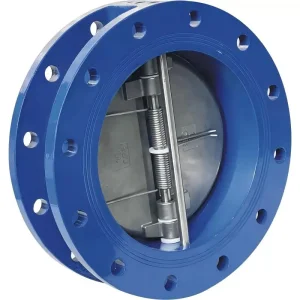
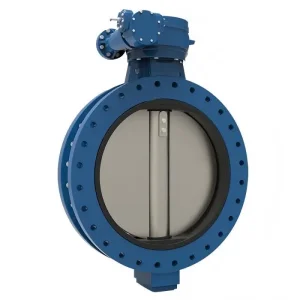
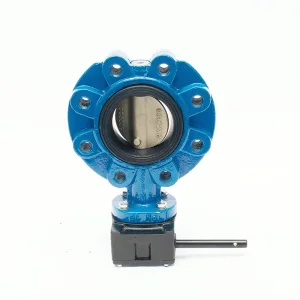
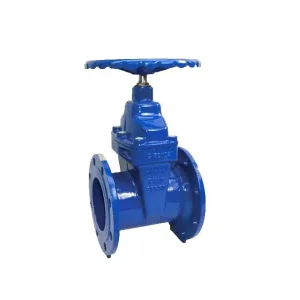
Rotary Plug Valve Procurement: Expert FAQ
Detailed technical answers addressing engineering constraints, international standards, rubber chemistry, and actuator sizing.
