
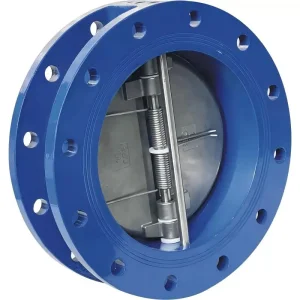
Industrial High-Performance Catalog
Integrated Flow Control Solutions: Primary Portfolio
Direct from our state-of-the-art foundry and CNC production floors, offering ultra-low leakage, high structural integrity, and fully compliant standard certifications.
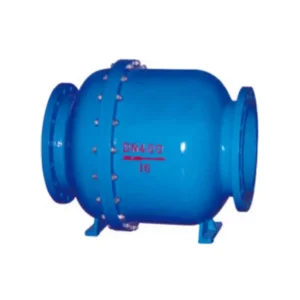
CE Certification Micro-Resistance Ball Check Valve Manufacturers, Factories
Request Technical Specs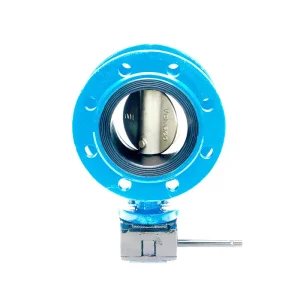
High-Quality Marine Flange Type Manual Operated Butterfly Valve Supplier, Manufacturers
Request Technical Specs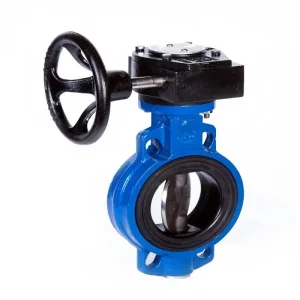
High-Quality Wafer Butterfly Valve – Worm Gear Rubber Lined Butterfly Valve Manufacturer
Request Technical Specs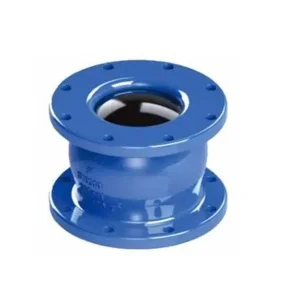
High-Quality High-Performance Silent Check Valve for Water Supply Systems Supplier
Request Technical Specs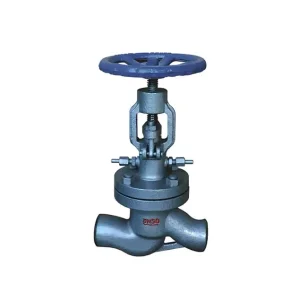
High-Quality Water Seal Globe Valve with Quick-Closing Feature Manufacturers
Request Technical Specs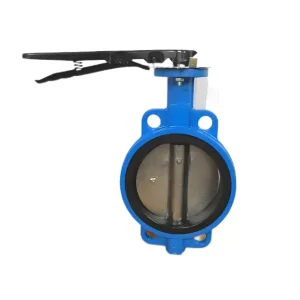
Wholesale Low-Pressure Wafer Type Butterfly Valve Supplier, Manufacturers
Request Technical Specs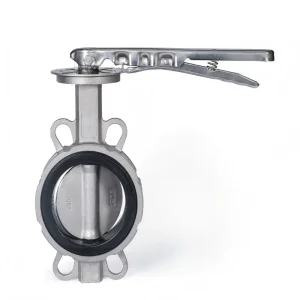
Wholesale Stainless Steel Butterfly Valve - Durable & Corrosion-Resistant Suppliers
Request Technical Specs
Technical Whitepaper
The Evolution of Manual Vacuum Isolation Globe Valves in Advanced Engineering
Manual Vacuum Isolation Globe Valves represent an imperative boundary integrity solution across extreme thermal and vacuum systems. Unlike general industrial globe valves, a vacuum isolation valve operates under asymmetrical mechanical stresses where ambient atmospheric pressure (1.013 bar) continuously applies external loads toward the rarefied internal cavity.
The core structural superiority relies on hydroformed, multi-ply AM-350 or austenitic 316L stainless steel bellows seals coupled with redundant secondary elastomeric packing rings. This architecture eliminates the traditional stem leak paths typical in dynamic rotary valves, delivering an ultra-low helium mass spectrometer leak threshold below 1×10⁻⁹ mbar·L/sec.
In power turbine condensing zones, cryo-separation columns, and PV/semiconductor deposition loops, manual globe valves provide precise, reproducible manual throttling alongside absolute shut-off capabilities that maintain operational vacuum conditions over decades of thermal cycling.
Metrology Performance Targets
Hermetic Sealing Integrity
≤ 1×10⁻⁹ mbar·L/s
Operational Vacuum Range
1.0×10⁵ to 1.3×10⁻⁶ Pa
Operating Temperature Spectrum
-196°C to +450°C
Stem Sealing Architecture
Dual AM-350 Bellows + Grafoil
Flange Dimensional Standard
ISO-KF / CF / ASME B16.5
Market Economics
Global Procurement Demands & Industry Landscape
Strategic purchasing executives in EPC contractors, chemical conglomerates, and advanced fabrication facilities face escalating performance criteria and evolving regulatory landscapes.
Semiconductor & Clean Energy
Accelerated expansion of wafer fabrication cleanrooms, lithium extraction loops, and green hydrogen infrastructure demands absolute particulate-free internal surfaces with electro-polished finishes (Ra ≤ 0.25 μm) to prevent outgassing and micro-contamination.
Total Cost of Ownership (TCO)
Unplanned shutdowns in high-vacuum systems incur operational losses exceeding tens of thousands of dollars per hour. Industrial buyers prioritize bellows fatigue life rated exceeding 10,000 full operational cycles over initial capital acquisition margins.
Traceability & Certification Rigor
Global operators mandate EN 10204 3.1 material traceability, cryogenic impact test data, positive material identification (PMI), and compliance with ASME B16.34, ISO 9001, WRAS, and EU Pressure Equipment Directive (PED 2014/68/EU).
Smart Manufacturing
China Industry 4.0: Vertical Integration & Supply Chain Resilience
Tianjin Top Automation Equipment Co., Ltd. blends over three decades of in-house foundry prowess and specialized elastomer synthesis with high-precision digital manufacturing.
In-House Foundry Control
Operating dedicated foundry assets since 1996 ensures complete chemical spectrum verification before rough machining. Casting porosities that compromise vacuum boundaries are systematically eliminated at the pour stage.
Proprietary Elastomerics
Supported by Tianjin Dongfang Rubber Factory (operating since 1987), specialized EPDM, Viton, and PTFE compounds are synthesized specifically for ultra-low outgassing under deep negative pressure conditions.
Multi-Axis CNC Tolerancing
Valve disc tapers, guide tracks, and seating finishes are crafted on advanced high-precision machining centers, achieving the sub-micron mirror finishes necessary for gas-tight contact.
100% Helium Leak Testing
Every individual vacuum isolation assembly undergoes systematic helium mass spectrometry chamber evacuation testing, ensuring zero factory defects escape to field pipelines.
Engineering Data
Comprehensive Technical Specification Framework
Engineering parameters for project specification matching and mechanical procurement alignment.
| Component / Parameter | Standard Configuration | Severe Service / Cryogenic Option | Applicable Standards |
|---|---|---|---|
| Nominal Diameters (DN) | DN15 to DN300 (1/2" to 12") | Customized engineering up to DN600 | EN 558, ASME B16.10 |
| Pressure Rating Spectrum | PN10, PN16, Class 150, Class 300 | High Pressure Vacuum up to Class 600 | ASME B16.34, DIN 2401 |
| Body & Bonnet Materials | WCB Carbon Steel, CF8 (304 SS) | CF8M (316 SS), CF3M (316L), Hastelloy C | ASTM A216, ASTM A351 |
| Stem Sealing Mechanism | Austenitic 316L Multi-Ply Bellows | Inconel 625 / AM-350 Bellows + Inert Inert Packing | MSS SP-117, ISO 15848-1 |
| Leak Rate Threshold | ≤ 1×10⁻⁷ mbar·L/sec (Air) | ≤ 1×10⁻⁹ mbar·L/sec (Helium Fine Leak) | EN 12266-1 Rate A, API 598 |
| End Connection Types | RF Flange, FF Flange, ISO-KF, CF High Vacuum | Butt Weld (BW), Socket Weld (SW) | ASME B16.5, ISO 2861, EN 1092-1 |
| Operating Temperature Range | -29°C to +200°C (PTFE / Viton soft trim) | -196°C to +450°C (Stellite hard metal facing) | BS 6364 (Cryogenic Qualification) |
Field Application
Critical Deployment Scenarios Across Global Industries
Where failure is not an option: field applications relying on manual vacuum isolation globe valves.
Thermal & Nuclear Power Condensers
Installed on low-pressure steam turbine condenser exhaust headers and steam-jet air ejectors (SJAE). Maintains deep negative pressure during full-load operations, preventing turbine backpressure elevation and optimizing thermal conversion efficiency.
Cryogenic Separation & LNG Liquefaction
In vacuum-jacketed cryogenic transport piping carrying liquid nitrogen (LN2), argon, or LNG (-162°C), vacuum isolation globe valves maintain the integrity of the insulating vacuum envelope, preventing perlite boil-off and catastrophic thermal bridging.
High-Purity Chemical Vacuum Distillation
Pharmaceutical and fine chemical synthesis requires low-temperature fractional distillation under high vacuum to isolate volatile isomers without thermal decomposition. Globe isolation guarantees reproducible flow restriction and absolute shut-off.
Heavy-Duty Hardware
Integrated Flow Control Solutions: Specialized Portfolio
Engineered for mission-critical industrial flow control, balancing pressure drops with long-term mechanical reliability.
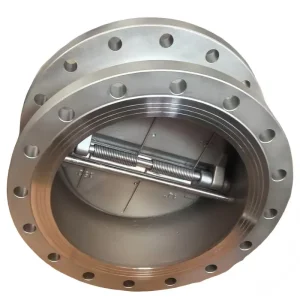
CE Certification Compact Low-Pressure Drop Wafer Lift Check Valve Supplier
Request Technical Specs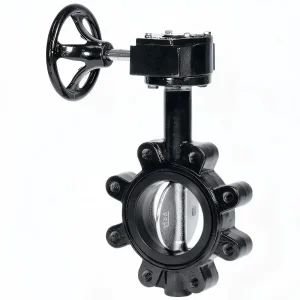
CE Certification Gear Operated Butterfly Valve - Durable & Reliable Supplier
Request Technical Specs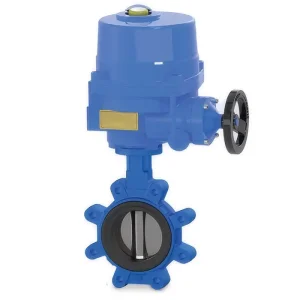
High-Quality Electrical Butterfly Valve Supplier, Manufacturer
Request Technical Specs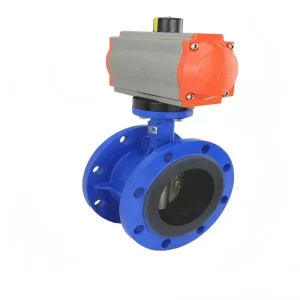
High-Quality Pneumatic Butterfly Valve - Reliable Flow Control Solution
Request Technical Specs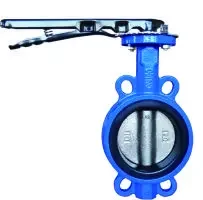
Wholesale Wafer Butterfly Valve - Durable & Efficient Flow Control Solution
Request Technical Specs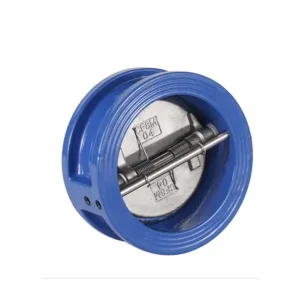
High-Quality High-Performance Dual Plate Wafer Check Valve for High-Flow Pipeline
Request Technical Specs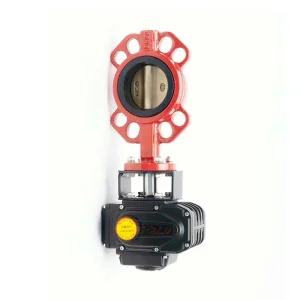
High-Quality Actuator Wafer Butterfly Valve Supplier, Manufacturers
Request Technical Specs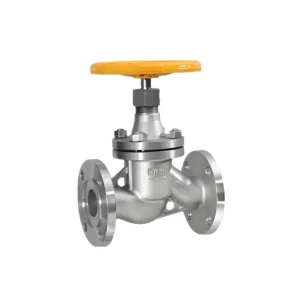
Wholesale Straight-Through Ammonia Globe Valve Manufacturers, Factory
Request Technical SpecsProcurement Guidance
Engineering Questions & Procurement FAQ
In-depth responses resolving engineering calculations, material certifications, testing standards, and global logistical support.
How does a manual vacuum isolation globe valve prevent reverse pressure leakages?
Unlike standard gate or ball designs, manual vacuum globe valves employ an engineered conical or parabolic plug seating configuration that seals directly against a precision-lapped planar seat. In high-vacuum pipelines, differential pressure actively pushes the valve disc tighter against the seating orifice when flow orientation is matched to engineering drawings. Furthermore, the combination of hydroformed metal bellows and secondary loaded PTFE/Grafoil stem packing rings prevents ambient air ingress across the stem pathway, maintaining leak tightness below 1×10⁻⁹ mbar·L/sec.
What sets Tianjin Top Valve apart in terms of in-house manufacturing resilience?
Our integrated manufacturing group controls the complete metallurgical and synthesis cycle. With our dedicated casting foundry operating since 1996 and Tianjin Dongfang Rubber Factory developing custom polymer matrices since 1987, we eliminate third-party supply chain bottlenecks. Every valve disc, body casting, elastomeric compound, and machined bellows is fully documented, traced via heat numbers, and tested on-site within our 23,000 m² production facilities.
Can these vacuum isolation globe valves be specified for cryogenic duties?
Yes. By pairing our austenitic stainless steel bodies (CF8/CF8M/CF3M) with an extended bonnet column design compliant with BS 6364, the stem packing is displaced away from cryogenic temperatures (-196°C). This allows the gas column inside the extended bonnet to insulate the packing glands, keeping elastomers within resilient operational thermal ranges and preventing freezing or hardening of the primary seals.
What non-destructive testing (NDT) documentation is supplied with wholesale consignments?
We supply comprehensive technical file packages containing EN 10204 3.1 inspection certificates, hydrostatic shell test reports, high-vacuum helium mass spectrometer leak test certificates, radiographic/ultrasonic casting inspection certificates (on request), and positive material identification (PMI) spectrometer readouts.
What are typical production lead times for standard vs. custom wholesale orders?
For standard catalog configurations (DN15-DN200, Class 150/PN16 with WCB or CF8 bodies), stock components allow dispatch within 10 to 15 working days. For engineered orders requiring custom flange facings, Inconel bellows, or specialized vacuum fittings (ISO-KF/CF), production cycles typically span 4 to 6 weeks, leveraging our direct access to Tianjin Port for global sea and air logistics.
