
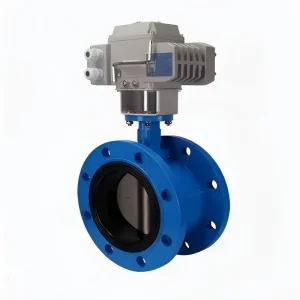
High-Performance Electrical Butterfly Valve
Heavy-duty industrial flow containment, engineered under strict ISO 9001 quality matrices and precision pressure ratings.
High-Performance Electrical Butterfly Valve
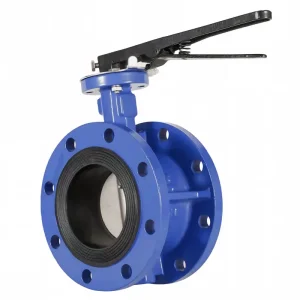
CE Flanged Butterfly Valve with Lever Actuator
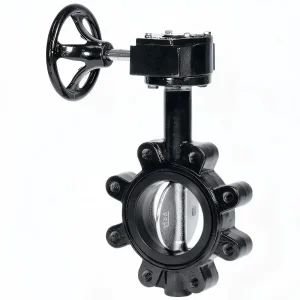
CE Gear Operated Flange Butterfly Valve
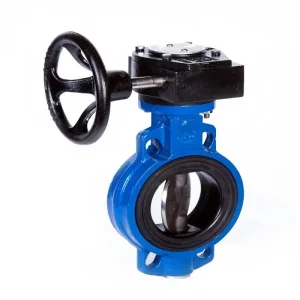
Worm Gear Rubber Lined Wafer Valve
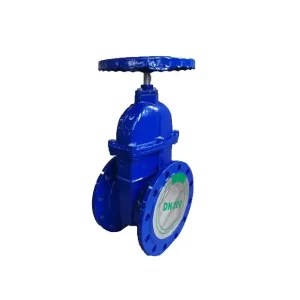
DIN German Standard Elastic Gate Valve
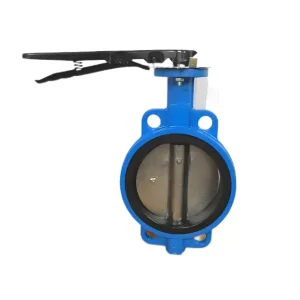
Low-Pressure Wafer Type Butterfly Valve
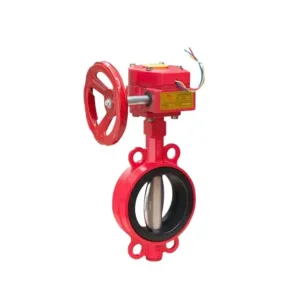
Fire-Fighting Wafer Signal Butterfly Valve
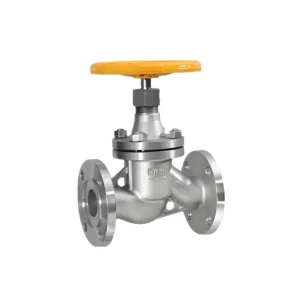
Straight-Through Ammonia Globe Valve
In fluid processing systems, the Manual Flange Type Ball Valve serves as the benchmark for positive isolation, negligible pressure loss, and mechanical reliability.
Engineered with a bore diameter precisely matching standard pipeline schedules (ASME B16.10 / EN 558). This achieves a friction factor equal to straight pipe sections, mitigating turbulent flow and eliminating localized cavitation during high-velocity slurry and hydrocarbon transit.
Every manual flanged ball valve integrates an internally assembled, bottom-entry stem equipped with self-adjusting live-loaded Belleville spring washers. Even in events of acute upstream pressure surges, the stem configuration guarantees structural containment and fugitive emission control per ISO 15848-1.
Featuring dual soft-and-metal secondary seats certified under API 607 / ISO 10497. In the occurrence of elastomer seat decomposition under external fire exposure, the machined secondary stainless-steel lip contacts the ball to sustain shut-off reliability.
Unlike trading intermediaries, our manufacturing complex integrates casting metallurgy, elastomer compounding, CNC processing, and hydrostatic certification on a single industrial campus.
Direct spectrographic analysis ensures exact chemical composition across WCB, CF8, CF8M, and Duplex castings prior to pouring, preventing subsurface porosity and intergranular corrosion.
Our proprietary formulation of virgin EPDM, NBR, and reinforced PTFE seats ensures precise Shore hardness and optimal compression set profiles, prolonging valve duty cycles under repetitive cycling.
Micro-machining of spherical balls achieves micro-inch surface finishes (Ra ≤ 0.2 μm). This drastically reduces manual breakaway torque requirements, preventing lever fatigue and minimizing seat erosion.
Every manufactured valve undergoes individual shell (1.5x PN) and seat (1.1x PN) hydrostatic testing, complemented by low-pressure pneumatic seal inspection according to API 598 and EN 12266 standards.
A reference matrix helping EPC procurement directors choose the optimal mechanical configuration based on process media, operating envelope, and lifecycle costs.
| Valve Type | Actuation Torque | Flow Resistance (Cv) | Primary Mechanical Advantage | Operational Consideration |
|---|---|---|---|---|
| Manual Flanged Ball Valve | Low to Medium (Lever/Worm Gear) | Maximal (Equal to Pipeline Bore) | Quarter-turn rapid shutoff, zero pressure drop, bubble-tight seal | Higher upfront material weight than butterfly patterns |
| Flanged Butterfly Valve | Low (Balanced Disc) | Medium (Disc profile remains in flow path) | Compact face-to-face dimensions, lower cost on large diameters (DN300+) | Potential slurry accumulation behind disc seat |
| Resilient Seat Gate Valve | High (Multi-turn Stem) | High (Full Straight-through) | Gradual shut-off prevents water hammer; clear piggable conduit | Slow operation; requires vertical clearance for spindle rise |
| High-Pressure Globe Valve | Very High (Direct Stem Thrust) | Low (Restricted S-turn Cavity) | Exceptional linear throttling and precise flow regulation | High fluid turbulence and considerable head loss |
Ensuring compliance across transcontinental pipelines, water treatment hubs, and chemical processing facilities.
Valves are delivered ready for worldwide integration, drilled to ASME B16.5 (Class 150/300), EN 1092-1 (PN10/16/25/40), and JIS B2220. Face-to-face dimensions strictly adhere to ASME B16.10 and ISO 5752 series.
Every casting heat number is laser-engraved on the valve body and cross-referenced with mill test certificates (MTC). Chemical assays, tensile tests, and Charpy impact verifications accompany shipment documentation.
Located in the Wuxia Industrial Park with direct expressway access to Tianjin Port. Products are pre-conditioned with corrosion-inhibiting VCI film, cushioned via impact-absorbing bubble packs, and sealed in fumigated seaworthy crates.
Advancing flow control through next-generation surface metallurgy, IoT condition monitoring, and sustainable manufacturing practices.
Engineering native ISO 5211 mounting pads onto manual flanged ball valves, enabling rapid in-field conversions to pneumatic or intelligent electric multi-turn actuation without dismantling fluid connections.
Extending valve operational thresholds into abrasive slurry and ultra-pure chemical services by integrating Chemical Vapor Deposition (CVD) ceramic coatings and reinforced PEEK composite seat structures.
Embedding localized strain and acoustic micro-sensors within the gland packing region to deliver continuous, real-time telemetry on packing relaxation before fugitive emissions occur.
Authoritative technical guidance compiled by our chief fluid application engineers.
A manual flange type ball valve utilizes bolted radial flanges (compliant with ASME B16.5 or EN 1092-1) to anchor the valve within piping infrastructure. Compared to threaded valves, flanged designs accommodate higher dynamic piping stresses, thermal expansion, and higher operating pressures. Unlike wafer configurations, double-flanged bodies permit dead-end pipe service and isolate downstream sections for inline maintenance without pipeline decompression.
Manual lever actuation is generally limited to valves up to DN100 (4 inches) under Class 150/PN16 ratings due to human ergonomic force limits (typically ≤ 350 N rim pull). For valves DN150 (6 inches) and larger, or smaller valves handling Class 300+ differentials, worm-gearboxes provide mechanical advantage. The self-locking gear mechanism also prevents dynamic water hammer caused by rapid manual closure.
For municipal drinking water and low-pressure ambient applications, WRAS-approved EPDM or virgin PTFE seats ensure zero-leakage shutoff with minimal operating torque. For low-pressure steam (≤ 180°C), Carbon-Filled Reinforced PTFE (RPTFE) is standard. For saturated steam above 200°C or thermal oil systems, PEEK or Stellite hard-faced metal-to-metal seating configurations prevent thermal deformation and wire-drawing erosion.
For marine and high-chloride services, we manufacture valve trim and bodies using Nickel-Aluminum Bronze (C95800) or Duplex Stainless Steel (2205 / 2507). These metallurgy choices eliminate galvanic potential differences between the disc/ball and casing. Furthermore, all internal trim components, such as stem bearings, incorporate virgin PTFE or glass-reinforced fluoropolymers to electrically isolate dynamic contact zones.
Every industrial shipment is supplied with an EN 10204 3.1 Material Inspection Certificate detailing direct optical emission spectroscopy (chemical analysis) and physical tensile/impact test values for bodies and stems. Additionally, hydrostatic shell/seat test reports (API 598), NACE MR0175 compliance declarations (where specified), Certificate of Origin (CO), and CE/ISO 9001 compliance dossiers are provided.
Engineered for high performance across municipal water networks, petrochemical processing lines, and HVAC circuits.
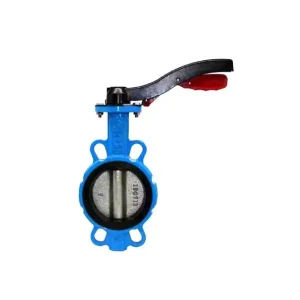
CE Duplex Type Pinless Butterfly Valve
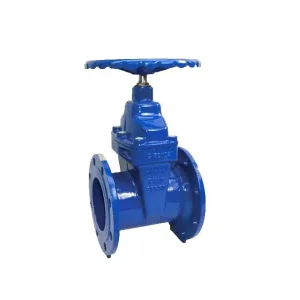
Non-Rising Stem Elastic Gate Valve
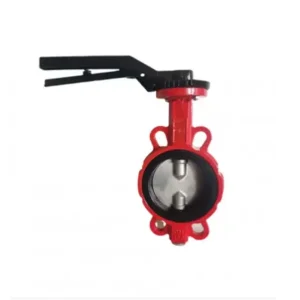
Double Half Shaft Wafer Butterfly Valve
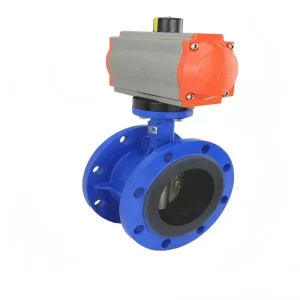
Pneumatic Actuated Control Butterfly Valve
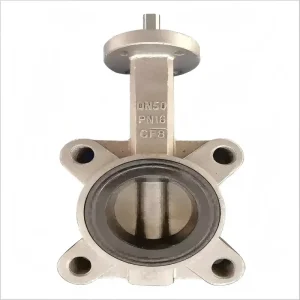
Semi-Lug Flow Control Butterfly Valve
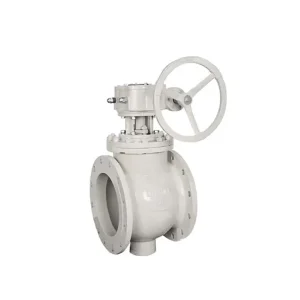
Eccentric Plug Valve for Oil & Gas
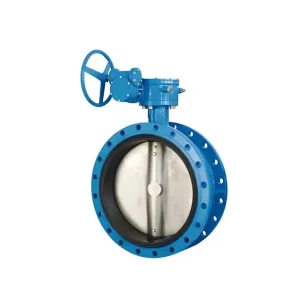
Low-Torque Flange Type Butterfly Valve
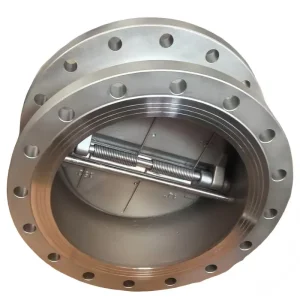
Low-Pressure Drop Wafer Lift Check Valve
