
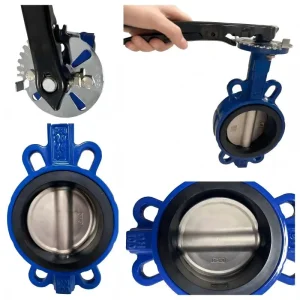
WRAS Butterfly Valve 4020L
High-performance elastomeric seating engineered for potable and low-temperature process networks.
Source Wholesale ModelFactory-direct flow control units certified under international compliance benchmarks, built for rigorous industrial service life.
High-performance elastomeric seating engineered for potable and low-temperature process networks.
Source Wholesale Model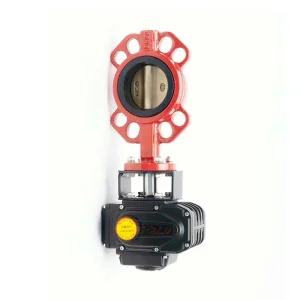
Direct-mount automated assembly providing precise torque curve transmission for process cycles.
Source Wholesale Model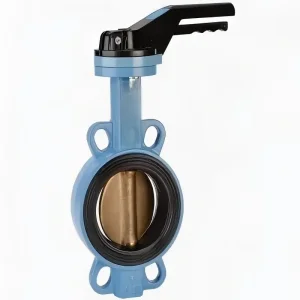
CE-certified anti-corrosive trim composition matched to marine, brine, and high-salinity piping systems.
Source Wholesale Model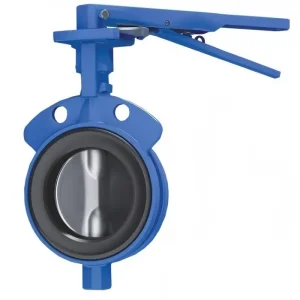
Proprietary compounded elastomer liners delivering zero-leakage shut-off up to certified limits.
Source Wholesale Model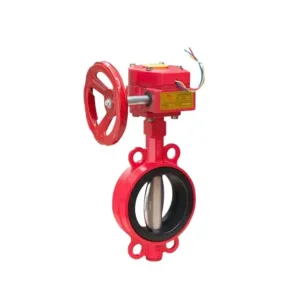
Supervisory microswitch signal integration engineered for industrial safety and fire mitigation loops.
Source Wholesale Model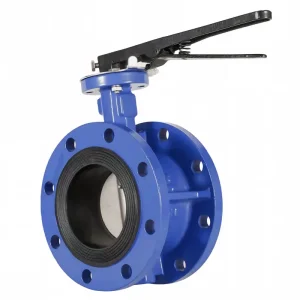
Rugged double-flanged body design meeting strict DIN and ASME bolting and face-to-face specifications.
Source Wholesale Model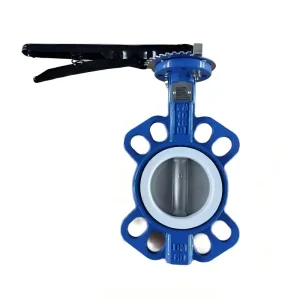
Inert fluoropolymer encapsulation designed to withstand highly aggressive oxidizing and acid media.
Source Wholesale Model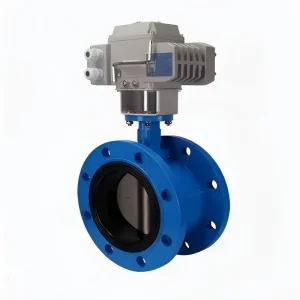
Intelligent electric modulation with feedback sensors for centralized PLC/SCADA loop monitoring.
Source Wholesale ModelIn modern superheated steam loops, thermal power generation, and petrochemical distillation plants, the selection of wholesale high temperature globe valve suppliers carries immense operational risk. High-temperature globe valves serve as the linchpin for both precise throttling and positive shut-off under fluctuating thermal stresses exceeding 450°C and pressures up to Class 2500 (PN420). As multinational plants transition toward higher thermal efficiencies, mechanical engineers face accelerated risks: seat wire-drawing, thermal binding across the bonnet, differential thermal expansion between disc and seat ring, and high fugitive emissions across stem packings.
Power station boilers and auxiliary steam headers demand globe valves with forged or cast chrome-moly alloys (ASTM A217 WC6, WC9, and C12A). Standard gate or quarter-turn valves fail to offer the repeatable throttling required without experiencing catastrophic cavitation and trim erosion.
Reliable wholesale suppliers must provide precision-welded Stellite Gr. 6 or Gr. 21 hardfacing on discs and seats. At elevated operating temperatures, material hardness drops rapidly; cobalt-based laser cladding prevents galling and guarantees zero micro-fissuring under thermal shock cycles.
Fugitive VOC and steam emissions represent severe thermal loss and ESG non-compliance. Leading manufacturers integrate multi-stage die-formed flexible graphite packing rings with live-loaded Belleville spring washers to compensate for stem contraction and thermal relaxation.
High-temperature globe valves require tailored structural configurations depending on geographic standards, media volatility, and localized operational infrastructure. Below are core field integration scenarios engineered by Tianjin Top Valve.
| Industrial Sector | Operating Envelope | Material Specification | Critical Engineering Focus |
|---|---|---|---|
| Thermal Power Generation (Steam Headers) | 480°C – 570°C / Class 900–1500 (PN160–PN250) | ASTM A217 WC9 / F22, Stellite Gr. 6 Seating | Pressure seal bonnet to prevent gasket blowout; parabolic plug trim for high-differential fine throttling. |
| District Heating & Cogeneration (Europe / CIS) | 200°C – 350°C / Class 150–300 (PN25–PN40) | EN-GJS-400-18-LT or GS-C25 Cast Steel | Bellows-seal hermetic isolation (DIN EN 13709) eliminating maintenance stem leakage in enclosed shafts. |
| Refining Hydroprocessing & Catalytic Cracking | 380°C – 540°C / Class 300–800 (PN50–PN130) | ASTM A351 CF8M / CF8C, Inconel-clad Stems | High H2S and hydrogen embrittlement resistance; compliance with NACE MR0175/ISO 15156 severe trim ratings. |
| Marine Auxiliary Boilers & Turbine Exhaust | 250°C – 450°C / JIS 10K–30K or Class 150–300 | Ductile Iron, Cast Steel, Cu-Ni Alloys | Compact body envelope, extreme resistance to vibration fatigue, Lloyd's/DNV compliance documentation. |
| Chemical Heat Transfer Fluid (Thermal Oil) | 280°C – 400°C / PN16–PN40, ASME Class 150/300 | WCB / 1.0619 Carbon Steel, Bellows Bonnet | Zero penetration of low-surface-tension synthetic thermal fluids; double barrier sealing mechanics. |
Sourcing wholesale high temperature globe valves requires total transparency into material traceability and metallurgical casting integrity. Many intermediaries outsource body casting and elastomeric/graphite sealing to low-cost subcontractors, resulting in porosity, wall thinning, and catastrophic failure under high-pressure steam.
Tianjin Top Automation Equipment Co., Ltd. operates with end-to-end vertical synergy. Built upon the legacy of Tianjin Donglian Valve Factory (since 1996) and Tianjin Dongfang Rubber Factory (since 1987), our combined 23,000 m² campus bridges heavy foundry metallurgy, in-house CNC machining, dedicated compounding labs, and full hydrostatic/pneumatic test cells under one strict quality assurance matrix.
Medium-frequency induction melting furnaces ensure strict carbon-equivalent control. Spectrometer chemical checks are executed prior to every pour, preventing brittle phases in high-alloy chrome-moly castings.
Robotic high-precision overlay stations deposit cobalt-base alloys with minimal iron dilution. Each globe valve disc and seat undergoes liquid penetrant (PT) examination to ensure zero micro-porosity.
Every production batch is stamped with unique foundry heat numbers. Mechanical tensile, Charpy V-notch impact, and hydrostatic test certs are archived for 10 years to back our international EPC clients.
As energy systems incorporate Ultra-Supercritical (USC) thermal power and concentrated solar thermal plants (CSP), globe valves face thermal cycling exceeding 600°C. Tianjin Top Valve’s innovation team is pioneering structural upgrades to redefine high-temperature fluid reliability:
Numerical modeling of S-shaped flow passages eliminates vortex recirculation, reducing overall valve pressure drop (Delta-P) by 14% and minimizing high-velocity acoustic noise during critical bypass operations.
Embedded Hall-effect stroke sensors and acoustic stem transmitters capture predictive seat erosion data in real-time, outputting maintenance schedules straight into plant SCADA systems.
Expanding casting formulations for molten salt and molten sodium loops with high-nickel alloys (Hastelloy C276, Inconel 625, Monel 400), meeting ISO 9001 and CE PED Module H compliance.
Procuring valves from an international manufacturer can involve complex interface risks. Top Valve mitigates project risk by conforming completely to target market engineering codes, eliminating re-machining and installation delays:
Valves are fully configured to EN 1092-1 (PN16 to PN160), ASME B16.34 / B16.5 (Class 150 to Class 2500), BS 10, and JIS B2220. Face-to-face dimensions align precisely with EN 558 series or ASME B16.10.
Our high-temperature pressure equipment complies fully with Pressure Equipment Directive 2014/68/EU (Category III / IV Module H), CE-certified and certified under ISO 9001, ISO 14001, and ISO 45001 systems.
Located in Wuxia Industrial Park, Dongli District, Tianjin, our factory sits minutes away from Tianjin Port. Heavy-duty vacuum-sealed rust-inhibiting foil, flange end-protectors, and export crates prevent moisture contamination.
Factory-direct wholesale inventory supporting distribution networks and engineering contractors in more than 50 countries.
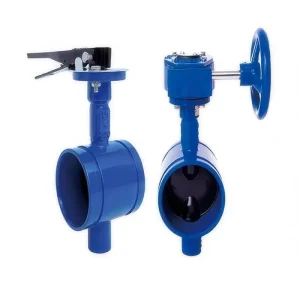
Fast-installation grooved mechanical piping valve engineered for HVAC, chilled water, and fire lines.
Source Wholesale Model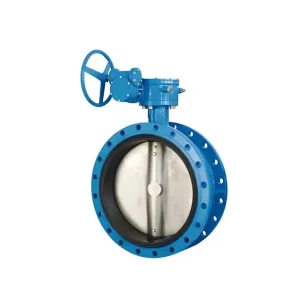
Engineered seat profile decreasing breakaway friction to dramatically downsize actuator sizing requirements.
Source Wholesale Model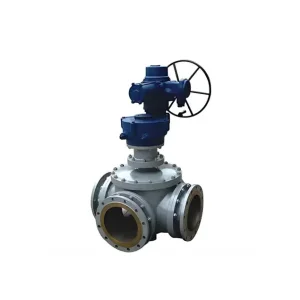
CE-certified quick-opening diverter ball valve designed for rapid fluid bypass and emergency shut-off.
Source Wholesale Model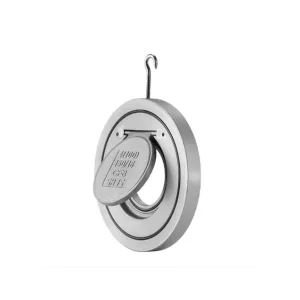
Ultra-compact wafer backflow prevention valve with high corrosion immunity across corrosive headers.
Source Wholesale Model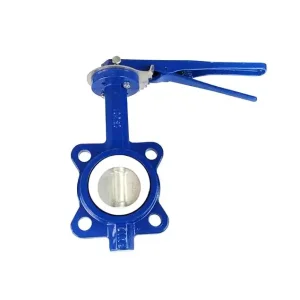
Pinless spline connection eliminating through-disc penetrations, safeguarding pure and acid streams.
Source Wholesale Model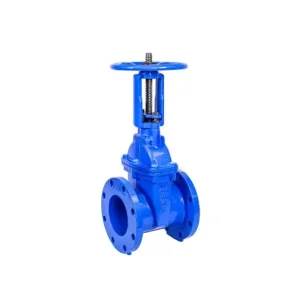
OS&Y clear visual indicator stem assembly for full-bore, low-resistance water distribution lines.
Source Wholesale Model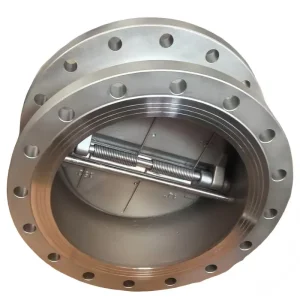
Hydrodynamically optimized spring-assisted lift mechanism preventing high-energy fluid hammer.
Source Wholesale Model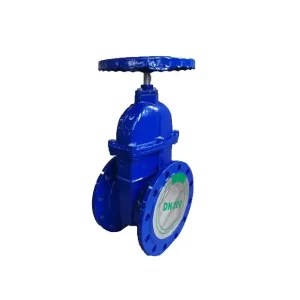
Manufactured to strict DIN 3352 F4/F5 dimensions with high-grade bonded elastomer sealing wedges.
Source Wholesale ModelDetailed technical clarity direct from our metallurgical and chief fluid control engineers.
For temperatures in excess of 425°C, standard carbon steels (WCB, WCC) undergo graphitization over time. For the 450°C to 550°C envelope, we specify 1.25Cr-0.5Mo (ASTM A217 WC6) or 2.25Cr-1Mo (ASTM A217 WC9), with forged counterparts ASTM A182 F11 and F22. For extreme conditions up to 600°C, high-performance martensitic alloys like C12A (P91) are utilized. The seating surfaces must be hardfaced with cobalt-based Stellite (Gr. 6 or Gr. 21) with a minimum deposit thickness of 1.6 mm to prevent galling, thermal wire-drawing, and creep deformation.
Gate valves are designed exclusively for fully open or fully closed service; attempting to throttle with a gate valve causes the disc to chatter, inducing violent vibration and seat scoring. Quarter-turn ball valves struggle at high temperatures due to differential expansion between the spherical ball and body seats, which causes seat binding or catastrophic elastomer/graphite degradation. Globe valves feature a plug perpendicular to the fluid flow path, enabling precise throttling along a linear or equal-percentage curve, easy seat re-machining, and bubble-tight shut-off under severe thermal cycling.
At high temperatures, standard braided PTFE or synthetic packings burn out and fail. Top Valve incorporates an engineered stuffing box assembly featuring high-density die-formed expanded flexible graphite rings bordered by braided graphite anti-extrusion rings with Inconel wire mesh. Furthermore, our severe-service high-temperature globe valves feature a live-loading Belleville spring system on gland studs. This continuously compensates for mechanical stem relaxation, graphite consolidation, and differential expansion, guaranteeing compliance with ISO 15848-1 Class AH / BH fugitive emission ratings.
Bolted bonnet connections rely on external stud torque to compress a gasket. At pressures over Class 900 (PN160) and temperatures above 400°C, the heavy bonnet flange experiences cyclical bolt relaxation, often initiating leaks during thermal startup and shutdown. Pressure seal bonnets use the internal pipeline pressure to force a flexible graphite/silver-plated metallic gasket against the internal body diameter. Therefore, as pipeline pressure rises, sealing load increases automatically, resulting in a lighter, far more compact, and blowout-proof design for power stations and superheated steam lines.
Because we operate our own casting foundry, elastomer vulcanization workshop, and multi-axis CNC machining centers, we provide comprehensive OEM/ODM engineering services. We support custom face-to-face dimensions, specialized body casting marks, laser-etched stainless steel nameplates, tailored epoxy/polyurethane/high-heat silicone coatings, and pre-mounted third-party pneumatic/electric actuators with complete factory bench calibration and hydro-test certificates before shipment.
