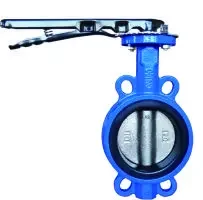
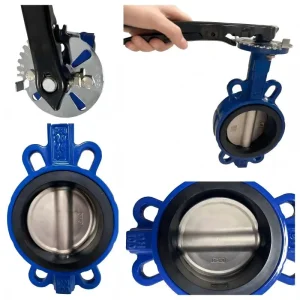
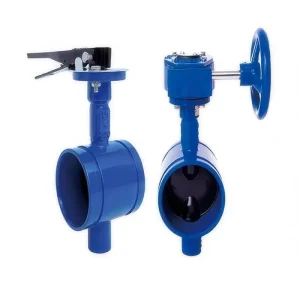
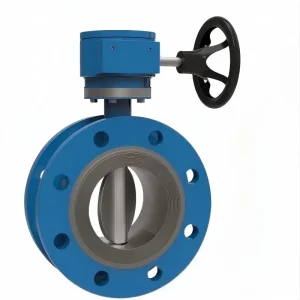
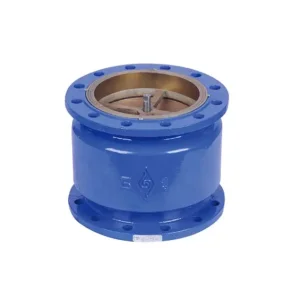
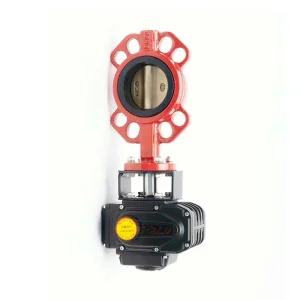
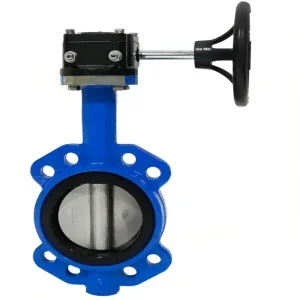
Featured Industrial Flow Control Assemblies (Series I)
Direct factory-manufactured valves featuring in-house metallurgical casting, specialized elastomeric compounding, and hydrostatic leak testing certifications.
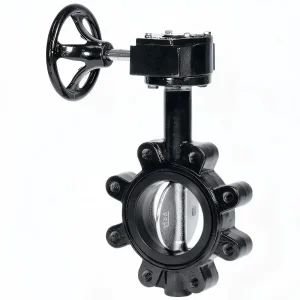
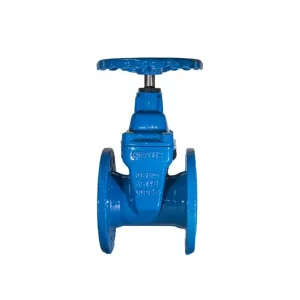
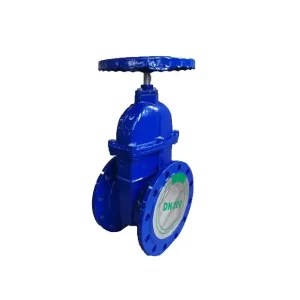
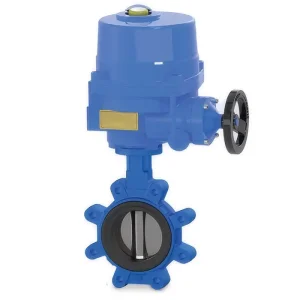
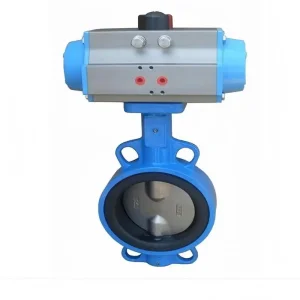
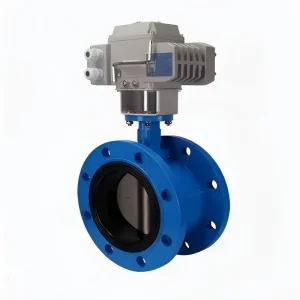
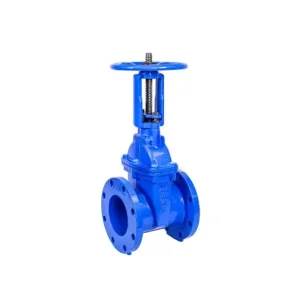
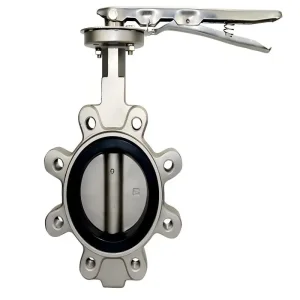
Engineering Synthesis: Halar (ECTFE) Matrix & Pinless Disc Architecture
Why leading chemical EPCs and semiconductor wet-bench fabricators are transitioning away from conventional pinned PFA/FEP valves to integrated pinless Halar-lined solutions.
Zero-Penetration Pinless Disc
Traditional valves rely on taper pins or through-bolts securing the disc to the stem. In high-permeability acid regimes (HCl, HF, Nitric blends), corrosive chemicals migrate across pin elastomeric o-rings, prompting catastrophic galvanic pitting of the inner shaft. Our pinless architecture utilizes an internal polygon drive or splined square broach fully encapsulated in pure resin, eliminating any fluid-to-metal boundary.
Superior Permeation Barrier (ECTFE)
Halar ECTFE provides distinct crystallographic resistance over standard PTFE and PFA. With up to 10-15x lower gas permeation rates against wet chlorine, sulfur dioxide, and fluorinated oxidizers, Halar minimizes subsurface micro-void delamination. Its high static surface hardness (Shore D 75) provides resilient resistance against slurry abrasion and erosion scouring.
Electrostatic Spark Testing (EN 12560)
Every single wholesale unit undergoes non-destructive high-voltage spark testing at 14,000V–20,000V DC across the entire disc and liner envelope. This guarantees an uncompromising, pinhole-free barrier coating layer (minimum thickness 2.5mm to 3.5mm), certified for zero-defect installation across critical tier-1 semiconductor UPW and exhaust scrubber loops.
Engineering Comparison Matrix: Fluoropolymer Lining Chemistries
Technical criteria utilized by mechanical lead engineers and global EPC procurement directors when evaluating valve lining specs for mission-critical chemical handling.
| Performance Parameter | Halar (ECTFE) Pinless | PFA Lined (Pinned) | Virgin PTFE Lined | Rubber (EPDM/NBR) Lined |
|---|---|---|---|---|
| Permeation Resistance (Cl2 / HCl) | Exceptional (Industry Benchmark) | Moderate to High | Low (Vulnerable to Diffusion) | Incompatible (Severe Attack) |
| Stem-Disc Dynamic Leak Path | Zero (Internal Polygon Broach) | High Risk (Pin Sealing Deterioration) | Moderate (Through-Shaft Friction) | Standard Dynamic Stem Seal |
| Abrasion & Slurry Resistance | Very High (Shore D 75 Hardness) | Moderate (Subject to Cold Flow) | Poor (Prone to Deform & Tear) | Good (Resilient Media Dependent) |
| Continuous Temperature Range | -40°C to +150°C (-40°F to 302°F) | -30°C to +180°C (-22°F to 356°F) | -20°C to +130°C (-4°F to 266°F) | -10°C to +90°C (14°F to 194°F) |
| Dielectric Spark Verification | 100% Tested at 15–20 kV DC | Sample Batch Tested | Sample Batch Tested | Non-applicable |
| Total Cost of Ownership (TCO) | Lowest (Extended MTBF 3.4x) | High Maintenance Overhaul | Frequent Seat Replacements | Moderate Replacement Frequency |
Macro Industry Solutions: Engineered for Critical Process Integrity
How our wholesale manufacturing facilities configure Halar lined pinless butterfly valves to resolve severe operating bottlenecks across primary global sectors.
Semiconductor Wet Etching
Microchip fabrication uses aggressive wet clean acid baths containing hydrofluoric, sulfuric, and hydrogen peroxide mixtures. Pinless ECTFE valves eliminate metallic contamination and trace metal ion leaching down to sub-parts-per-billion (ppb) standards.
Chlor-Alkali & Wet Chlorine
In electrolytic brine processes, wet chlorine gas rapidly destroys high alloys like Monel or Hastelloy. Our melt-molded Halar linings provide an impenetrable barrier against molecular chlorine diffusion, preventing brittle catastrophic failure of ductile cast iron bodies.
Hydrometallurgy & Acid Leaching
Mining copper and lithium extraction operations demand high slurry tolerance alongside concentrated sulfuric acid resistance. Halar's superior mechanical impact properties withstand suspended particulates without lining gouging or premature erosion flaking.
Desalination Brine Outfall
High-pressure seawater reverse osmosis (SWRO) reject lines suffer from concentrated chloride crevice attack. Pinless Halar-encapsulated ductile iron valves replace ultra-expensive super duplex alloys at less than 45% of total procurement capital expense.
Global Compliance & Integrated Manufacturing Footprint
Backed by our independent foundry and rubber processing facilities since 1987, ensuring complete chemical and mechanical traceability for tier-1 audits.
In-House Foundry & Metallurgy
Casting integrity is controlled within our proprietary group foundries. Every valve body (Ductile Iron GGG40/QT450, WCB, CF8M) is tracked via positive material identification (PMI) and optical emission spectrometry, eliminating third-party casting porosity issues.
International Pressure & Fugitive Certifications
Valves are engineered to comply with EN 558 series 20, API 609 Category A, and ASME B16.10 dimensions. Our ISO 9001, ISO 14001, CE-PED (Module H), and TA-Luft / ISO 15848-1 low-emission fugitive shaft sealing certifications streamline multi-national engineering validation.
Direct OEM/ODM Global Support
Strategically situated near Tianjin Port with dedicated sea and multi-modal logistics lanes servicing 50+ countries. We provide EPC clients with native 3D STEP/Revit CAD libraries, custom actuation sizing (pneumatic/electric), and localized MTRs (EN 10204 3.1) in 24 hours.
Technology Roadmap: Future Innovations in Fluoropolymer Valve Systems
How our valve R&D engineering laboratory is integrating advanced composite materials and predictive digitalization to reshape critical fluid infrastructure.
Ultra-High-Purity (UHP) Cleanroom Molding
Implementation of Class 1,000 cleanroom robotic lining deposition to eliminate sub-micron ionic contamination for 3nm/2nm semiconductor gigafab chemical distribution loops.
IoT-Enabled Dynamic Wear Sensing
Embedded conductive fluoropolymer micro-stripes delivering real-time telemetry on liner wear thickness, preventing unplanned acidic pipeline breaches through predictive maintenance.
Graphene-Reinforced ECTFE Nanocomposites
Novel additive manufacturing compounds optimizing Halar with functionalized graphene nanoplatelets to yield 40% higher abrasion wear-life in severe mining tailings pipelines.
Frequently Asked Engineering & Procurement Questions
Authoritative answers directly from our factory engineering team addressing design boundaries, lead times, and application suitability.
What specific advantages does a "pinless" disc design offer over pinned butterfly valves in corrosive service?
Why choose Halar (ECTFE) lining over traditional PTFE or PFA lined valves?
What non-destructive testing (NDT) standards are applied to wholesale Halar lined valves before dispatch?
Can these pinless butterfly valves handle full vacuum service conditions?
What is the standard production lead time for bulk wholesale & custom actuator-mounted orders?
Featured Industrial Flow Control Assemblies (Series II)
Expand your plant integration with our certified wafer, lug, flanged, and specialized high-durability flow control components.