Direct Foundry Inventory
Precision Flow Isolation Equipment Lineup
Explore our foundational valve configurations engineered with vertically integrated metallurgy, automated CNC stem spline broaching, and 100% hydrostatic shell testing.
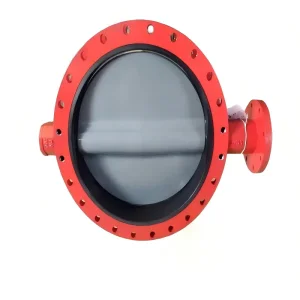
Wholesale Ceramic Disc Wafer Butterfly Valve - Durable & Efficient Design Supplier, Factories
View Product Details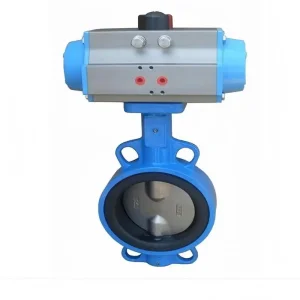
High-Quality Pneumatic Butterfly Valve - Efficient Flow Control Solution Suppliers, Factories
View Product Details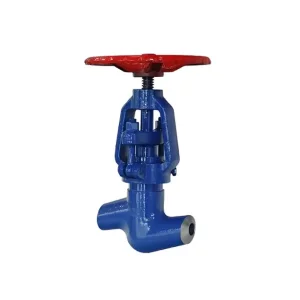
High-Quality High Temperature And High Pressure Power Station Globe Valve Manufacturers, Manufacturer
View Product Details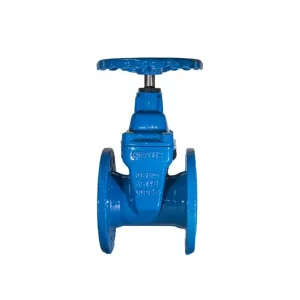
Wholesale Anti - Abrasion Elastic Seat Gate Valve with Reinforced Seat Suppliers, Supplier
View Product Details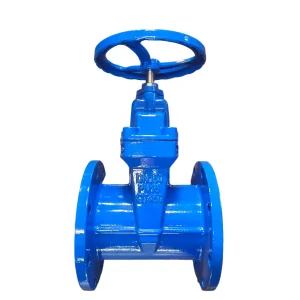
Wholesale High-Quality Gate Valve for Reliable Flow Control Manufacturer, Factories
View Product Details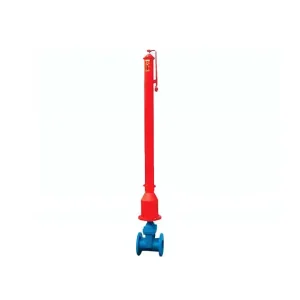
High-Quality Buried Elastic Seat Gate Valve for Reliable Flow Control Supplier, Factories
View Product Details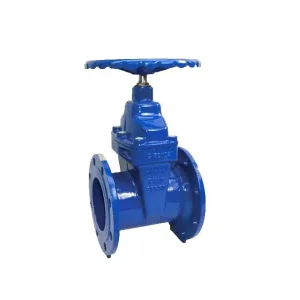
High-Quality Non-Rising Stem Elastic Seat Sealing Gate Valve Manufacturer, Factory
View Product Details
Industrial Whitepaper
Engineering Paradigm Shift: The Rise of Duplex Pinless Butterfly Valves
A comprehensive technical evaluation of mechanical pin elimination, galvanic isolation, and structural integrity in aggressive fluid handling environments.
Elimination of Penetrative Leak Paths
Traditional concentric and eccentric butterfly valves rely on through-pins, taper pins, or tangential bolts to couple the disc with the shaft. Over prolonged cyclings in high-velocity seawater or corrosive chemical streams, micro-vibrations loosen these pins, causing galvanic corrosion, erosion-corrosion crevices, and disastrous leakage behind the liner. Our pinless shaft architecture deploys an internal polygonal, hex-drive, or splined drive mechanism housed fully within the disc encapsulation, eliminating wet-area penetrations entirely.
Superior Duplex Metallurgy (2205 & 2507)
In municipal desalination, offshore brine management, and acidic chlor-alkali systems, standard austenitic steels (SS304/SS316) suffer from severe Pitting and Crevice Corrosion due to low Pitting Resistance Equivalent Numbers (PREN < 25). Our wholesale foundry casts ASTM A890 Grade 4A (2205) and Grade 5A/6A (Super Duplex 2507) discs with PREN ratings reaching 42–45. This metallurgical matrix yields twice the mechanical yield strength of standard stainless steels while providing impervious resistance to chloride-induced stress corrosion cracking.
Hydrodynamic Profile & Torque Optimization
The uninterrupted, streamlined profile of a pinless disc minimizes turbulence and wake eddy generation across the valve bore. Utilizing computational fluid dynamics (CFD) modeling, our engineers have increased the flow coefficient (Cv) by up to 18% compared to standard pinned discs of identical nominal bore (DN50 to DN1200). Concurrently, reduced hydrodynamic resistance drastically decreases breakaway and dynamic operating torque, enabling the deployment of smaller, more cost-effective pneumatic and electric quarter-turn actuators.
Zero
Shaft Leak Paths
≥ 42
PREN Rating (Super Duplex)
100%
Hydrostatic & Seat Tested
50+
Global Export Markets
Engineering Specifications
Comparative Performance Matrix: Pinned vs. Pinless Duplex Valves
Quantitative benchmarks demonstrating the total cost of ownership (TCO) advantage and reliability gains of pinless design topologies.
| Evaluation Parameter | Standard Pinned Disc Valve | Tianjin Top Valve Pinless Duplex | Engineering Operational Impact |
|---|---|---|---|
| Disc-to-Stem Coupling | Taper pins / Through-pins (Wetted) | Internal Spline / Double-D / Square drive | Eliminates 100% of pin-crevice erosion and shaft dislocation failures. |
| Corrosion Resistance (PREN) | SS316 / CF8M (PREN: ~23-25) | Duplex 2205 / 2507 (PREN: 35 to 45+) | Immune to pitting and crevice corrosion under high-salinity seawater flow. |
| Elastomer Seat Bonding | Mechanical press-fit liner | In-house vulcanized & phenolic backed | Prevents liner collapse under vacuum and eliminates distortion under surge. |
| Dynamic Flow Resistance (Cv) | Baseline (Disrupted by pin bosses) | 12% to 18% Higher Flow Efficiency | Reduces pumping head loss and pipeline lifetime electrical consumption. |
| Actuator Torque Demand | Higher initial break-away friction | Optimized low-friction seating geometry | Allows downsized actuation packages, slashing overall CAPEX by 15-25%. |
Global EPC & Procurement
Solving Macro Engineering Bottlenecks Across Core Industries
Procurement directors and pipeline consultants specify our Duplex Pinless valves across harsh-duty environments where unscheduled shutdowns carry seven-figure failure costs.
Seawater Desalination (SWRO)
High-pressure reverse osmosis trains operate under heavy chloride concentrations and abrasive particulates. Our Duplex pinless valves prevent biological biofouling behind disc fasteners and resist velocities exceeding 4.5 m/s without liner delamination.
Marine & Offshore Ballast Systems
IMO compliance and stringent maritime safety demand 100% zero-leakage isolation. Designed with aluminum bronze bodies or coated ductile iron combined with Super Duplex pinless internals, our valves ensure bidirectional bubble-tight shutoff across thousands of voyage cycles.
Chlor-Alkali & Acid Leach Mining
Aggressive hydrometallurgical leaching processes dissolve standard valves. By merging Duplex 2507 alloys with proprietary vulcanized EPDM/FKM compound liners developed by our in-house rubber factory, our valves endure abrasive slurry and aggressive acid exposure.
Municipal High-Rise HVAC & District Cooling
Chilled water loops require minimal maintenance over 30-year operational horizons. The pinless architecture delivers bubble-tight isolation with EN 12266-1 Rate A verification, substantially slashing routine building management maintenance interventions.
Vertically Integrated Manufacturing
From In-House Foundry & Rubber Synthesis to Direct Export
Unlike trading intermediaries, Tianjin Top Valve integrates body casting, in-house rubber vulcanization (since 1987), CNC spline machining, and ISO 9001 pressure inspection within a unified 23,000 m² campus.
Independent Foundry Metallurgy
Equipped with induction melting furnaces and optical emission spectrometers (OES), we verify the chemical balance of chromium, nickel, molybdenum, and nitrogen in every Duplex melt heat before tapping, ensuring complete avoidance of detrimental sigma-phase embrittlement.
Proprietary Elastomer Compounding
Operating our dedicated rubber plant (Tianjin Dongfang Rubber Factory since 1987), we compound our own WRAS-approved EPDM, high-nitrile NBR, and fluoroelastomers, achieving optimum tensile strength, low compression set, and unmatched wear resistance.
100% Quality Traceability & Testing
Every single valve undergoes bi-directional hydrostatic shell and seat pressure testing in strict accordance with API 598 and ISO 5208 standards. Positive Material Identification (PMI) and EN 10204 3.1 chemical/physical certificates accompany every wholesale consignment.
Technology Roadmap
Engineering the Future of Smart Quarter-Turn Flow Control
Our continuous R&D pipeline aligns high-integrity metallurgy with Industry 4.0 industrial automation trends to future-proof customer pipeline investments.
Phase 1: Materials
Super Duplex Thin-Wall Castings
Refining investment casting techniques for thin-wall, aerodynamic Duplex disc geometries that preserve maximum mechanical yield while trimming raw material costs.
Phase 2: Sealing
Hybrid Metal-Polymer Seats
Engineering triple-resilient composite seats combining high-purity virgin PTFE jackets with Duplex spring energizers for cryogenic and elevated thermal services.
Phase 3: Digitalization
Embedded Smart Sensors
Integrating non-intrusive acoustic emission and torque-strain sensors into valve neck mountings to allow cloud-based predictive maintenance and real-time wear analytics.
Phase 4: Sustainability
Fugitive Emissions Neutrality
Designing dynamic, quadruple-stem O-ring sealing boundaries compliant with ISO 15848-1 Class AH, ensuring near-zero fugitive volatile organic compound (VOC) emissions.
Technical FAQ
Frequently Asked Questions: Duplex Pinless Butterfly Valves
Direct engineering clarifications addressing the metallurgical, operational, and commercial questions raised by piping project engineers.
Why is a pinless shaft design preferred over traditional taper pins in seawater systems?
In high-salinity seawater, crevice corrosion routinely initiates at the micro-gap between the taper pin and the disc hole. Dynamic fluid turbulence creates cyclic stresses that erode the pin, leading to shear failure and shaft spin. Pinless designs house the torque transmission internally, completely isolating the shaft-disc drive from the corrosive fluid medium.
What is the difference between Duplex 2205 and Super Duplex 2507 for disc selection?
Duplex 2205 (EN 1.4462 / UNS S32205) features ~22% Cr, 5% Ni, and 3% Mo, providing a PREN of 35-36 suitable for standard seawater, wastewater, and general brines. Super Duplex 2507 (EN 1.4410 / UNS S32750) contains ~25% Cr, 7% Ni, 4% Mo, and elevated nitrogen, achieving a PREN ≥ 42 for severe hot brine, chlorination injection lines, and high-temperature offshore environments.
How does Tianjin Top Valve ensure elastomer liner stability under deep vacuum?
Because our group operates its own dedicated rubber molding plant (established 1987), our resilient liners feature hard phenolic or aluminum backings, or can be directly bonded and vulcanized to the ductile iron or stainless steel body. This structural reinforcement prevents the liner from flexing, collapsing, or migrating during full vacuum operating conditions.
Can your Duplex pinless butterfly valves interface with ISO standard actuators?
Yes. Every valve body is manufactured with an integral top mounting flange machined strictly to ISO 5211 dimensions (F05 through F25). This allows direct mounting of bare stems, manual hand levers, worm gearboxes, pneumatic scotch-yoke actuators, and intelligent multi-turn electric actuators without specialized brackets.
Comprehensive Valve Catalog
Complementary High-Performance Isolation & Check Valves
In addition to pinless butterfly valves, our vertically integrated plant supplies complete fluid infrastructure packages across international standards including DIN, ASME, BS, and JIS.
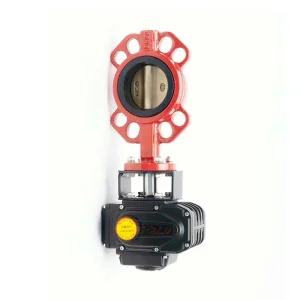
High-Quality Actuator Wafer Butterfly Valve Supplier, Manufacturers
View Product Details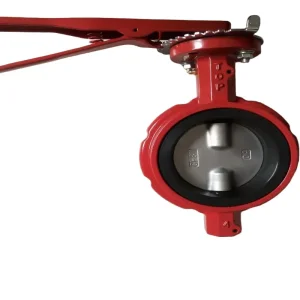
Wholesale Lugless Semi-Shaft Wafer Butterfly Valve - Durable & Reliable Manufacturer, Factory
View Product Details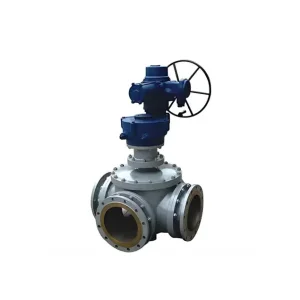
CE Certification Quick - Opening Three - Way Flange Ball Valve for Emergency Fluid Diversion Supplier, Factory
View Product Details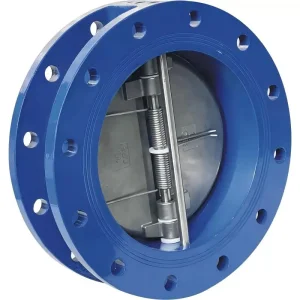
CE Certification Dual Plate Check Valve, Reliable Backflow Prevention Device Suppliers, Manufacturer
View Product Details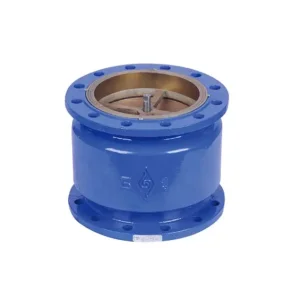
CE Certification Energy-Saving Silencer Check Valve Suppliers, Supplier
View Product Details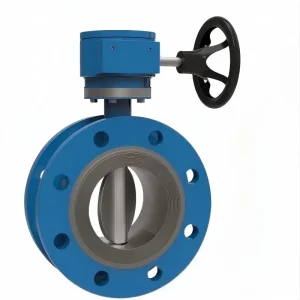
High-Quality Flange Type Butterfly Valve - Durable and Efficient Flow Control Supplier, Manufacturer
View Product Details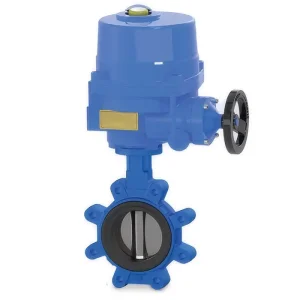
High-Quality Electrical butterfly valve Supplier, Manufacturer
View Product Details