Direct OEM Catalog
Precision-Engineered Industrial Valve Solutions
Directly from our integrated foundry and rubber seat facility to global infrastructure projects. Explore our core compliant series.
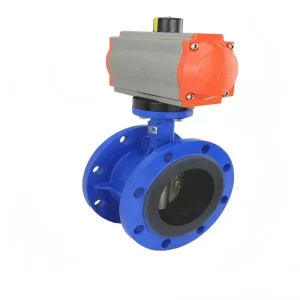
Pneumatic Actuated Flow Control Butterfly Valve
Explore Technical Specs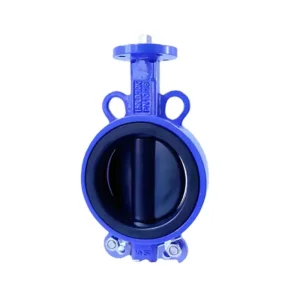
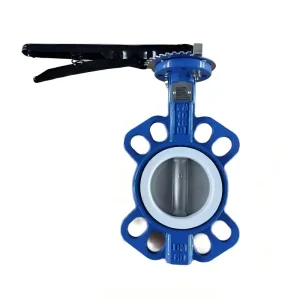
Halar Lined Pinless Heavy Butterfly Valve
Explore Technical Specs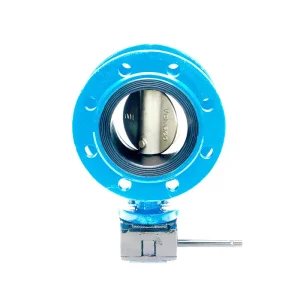
Marine Flange Manual Bronze Butterfly Valve
Explore Technical Specs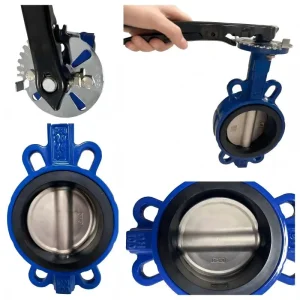
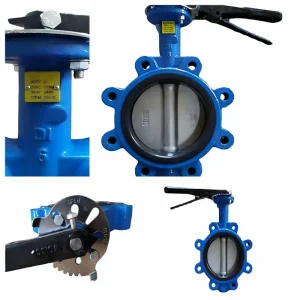
WRAS Certified Wafer Butterfly Valve 4020L
Explore Technical Specs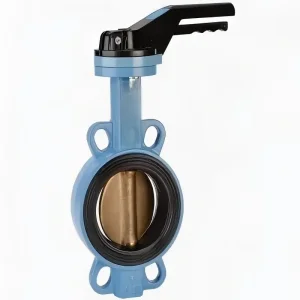
Bronze Disc Wafer Butterfly Valve (CE Marked)
Explore Technical Specs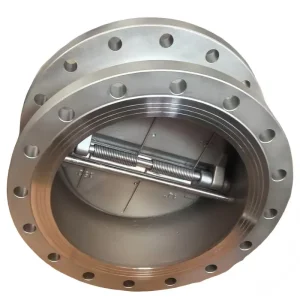
Low-Pressure Drop Wafer Lift Check Valve
Explore Technical Specs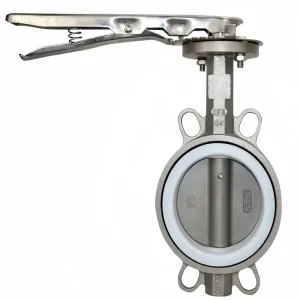
Corrosion-Proof PTFE Lined Butterfly Valve
Explore Technical Specs
Engineering Whitepaper
The Physics of Cast Iron Wafer Ball Check Valves
Optimizing non-return dynamics, zero-clog pathways, and elastomeric encapsulation in demanding municipal wastewater and chemical slurries.
Self-Cleaning Hydrodynamics
Unlike conventional swing check valves where solids, rags, and stringy fibers wrap around disc hinge pins, the wafer ball check valve features an uninhibited, full-bore flow cavity. The vulcanized NBR/EPDM rolling ball rotates constantly during cycle travel, preventing localized elastomer wear and automatically shedding sediment.
Anti-Water Hammer Mitigation
Calculated with an ultra-short travel stroke, the weighted elastomer-encapsulated core responds virtually instantaneously to liquid deceleration. By closing before flow reversal achieves significant backward kinetic velocity, surge pressure spikes and destructive pipeline shock waves (water hammer) are reduced by up to 75% compared to swing check designs.
Compact Wafer Architecture
Designed specifically to EN 558 series or compact wafer standards, these units eliminate massive flanged spools. Weighing up to 60% less than conventional iron check valves, they minimize mechanical strain on connecting PVC, HDPE, or ductile iron piping systems, allowing seamless installation between PN10, PN16, or ANSI 150 flanges.
1987
Rubber Factory Founded
23,000m²
Manufacturing Campus
100%
Hydrostatic Pressure Tested
50+
Export Destination Countries
Integrated Manufacturing
Tianjin Supply Chain Advantage: Foundry to Finished Assembly
Why global EPC contractors and distributors partner with Tianjin Top Valve: complete control over metallurgical chemistry, elastomer compounding, and precision CNC milling under one roof.
In-House Casting Foundry
Our Tianjin foundry produces GG25 (grey cast iron) and GGG40/50 (ductile iron) bodies directly. Spectrometric batch testing confirms carbon and silicon ratios prior to pouring, eliminating porosity risks and ensuring high tensile strength exceeding EN 1563 criteria.
Proprietary Rubber Compounding
Inherited from Tianjin Dongfang Rubber Factory (operating since 1987), we compound our own NBR, EPDM, and Viton elastomers. Our vulcanized valve balls utilize aluminum or carbon steel solid cores encapsulated with uniform rubber thickness for perfect elasticity and zero unbonding.
CNC Precision Machining
Valve seat chamfers, internal guide rails, and wafer face serrations are machined via high-precision CNC equipment. This maintains strict tolerances within ±0.02mm, guaranteeing bubble-tight zero leakage at both micro backpressure (0.2 bar) and nominal ratings (16 bar).
Procurement Specifications
Global Procurement Matrix: Selecting the Right Check Valve
Engineers must balance space restrictions, media contamination, head loss, and maintenance frequency when procuring wholesale check valves.
| Evaluation Parameter | Wafer Ball Check Valve | Dual Plate Wafer Check | Swing Check Valve | Silent Lift Check Valve |
|---|---|---|---|---|
| Primary Application | Wastewater, Slurries, Viscous Liquids | Clean Water, HVAC, Seawater | Raw Water, Main Transmission | High-Rise Pumping, Potable Water |
| Clogging Susceptibility | Zero-Clog (Full Port) | Moderate (Pin Obstruction) | Moderate (Flap Hinge Jamming) | High (Fine Particles Jam Guide) |
| Installation Orientation | Vertical (Upward) or Horizontal | Horizontal / Vertical Up | Horizontal Primary | Horizontal / Vertical Up |
| Dynamic Resilient Sealing | Full Rubber Encapsulated Ball | EPDM/NBR Inset Vulcanized | Metal-to-Metal or EPDM Ring | Rubber O-Ring / Bronze Disc |
| Face-to-Face Compactness | Ultra-Short Wafer | Ultra-Short Wafer | Long Standard Spool (EN 558) | Medium Flanged / Wafer |
| Maintenance Cycle | Extremely Low (1 Moving Part) | Medium (Spring Replacement) | Medium (Hinge Pin Gasket) | Low (Protected Spring) |
Localized Application & Standards
Global Compliance & Field Installations
Every municipal project and process facility demands distinct certifications and environmental adaptations. We support major international code compliance.
Municipal Wastewater Treatment
Designed for wastewater lift stations handling stringy solids, grit, and industrial discharge. Installed on pump discharges to prevent reverse siphoning, our valves resist internal biogas corrosion through 250μm electrostatically applied fusion bonded epoxy (FBE) conforming to DIN 30677-2.
Mining Dewatering & Tailings
Abrasive slurry rapidly destroys metal valve seats. Our ductile iron wafer ball valves utilize high-durometer polyurethane or heavy-wear NBR vulcanization, capable of cycling abrasive particulates without losing downstream shut-off capability.
Standards & Material Traceability
Supplied strictly with EN 10204 Type 3.1 chemical and mechanical test inspection certificates. Compliant with CE-PED (Pressure Equipment Directive 2014/68/EU), ISO 9001 quality systems, and flange drillings to EN 1092-2 PN10/PN16, ASME B16.1 Class 125, and JIS 10K.
Future Engineering Trends
Evolutionary Trends in Non-Return Valve Technology
How progressive foundry manufacturing, eco-friendly polymers, and automated skid architectures are transforming backflow management.
Compact Modular Packaged Skids
Modern wastewater pump stations are rapidly moving toward pre-packaged containerized systems. The ultra-compact face-to-face dimensions of wafer ball check valves allow system engineers to compress skid footprint by up to 35%, drastically saving shipping container freight costs.
Non-Toxic Advanced Elastomer Formulations
Stricter environmental regulations (e.g., REACH, RoHS) are eliminating plasticizers and heavy metal stabilizers in rubber vulcanization. We formulate specialized food-grade EPDM and chlorobutyl rubbers that meet potable wastewater contact standards without leeching organic carbons.
Acoustic Smart Acoustic Sensors
While wafer ball check valves are naturally silent and non-slam, modern industrial IoT integrates external acoustic and vibration transducers on the valve housing. By monitoring the subtle resonance of ball seating cycles, predictive maintenance software can identify seal degradation before backflow leaks happen.
Technical Clarifications
Frequently Asked Engineering & Procurement Questions
Answers to technical, operational, and commercial questions raised by EPC procurement managers and municipal pipeline engineers.
Can cast iron wafer ball check valves be installed in both vertical and horizontal pipelines?
Yes, wafer ball check valves operate reliably in vertical upward flows where gravity assists the ball in seating upon flow cessation, as well as in horizontal positions. For horizontal piping, our internal casting includes a calibrated guide rail channel that directs the ball directly into the downstream seat without wobbling or off-center misalignment. They are not recommended for vertical downward flow lines.
What is the minimum pressure required to open and seat the vulcanized ball?
Our ball designs feature an optimized mass density. Cracking pressure to open is exceptionally low, typically between 0.05 bar and 0.1 bar (0.7 to 1.45 psi). For bubble-tight reseating against backward contamination, an effective backpressure of only 0.2 bar (3 psi) is sufficient to compress the rubber vulcanization against the machined ductile iron seating face.
Why choose ductile iron (GGG50) over grey cast iron (GG25) for wholesale valve purchases?
While grey cast iron (GG25/Class 125) offers superior vibration dampening and economy for standard low-pressure gravity systems, ductile iron (GGG40/GGG50) possesses nodular graphite structures that impart high tensile strength and impact resistance. For pressurized pumping lines subject to cyclic thermal expansion or transient pressure surges, ductile iron provides superior yield safety margins preventing body cracking.
How does your factory prevent rubber delamination on the check ball?
As operators of Tianjin Dongfang Rubber Factory since 1987, we execute a specialized 3-stage vulcanization process. Metallic internal ball cores undergo shot blasting to SA 2.5 profile, followed by chemical bonding agent application, and high-temperature compression injection molding. This delivers molecular-level adhesion, preventing blistering or rubber peeling even during aggressive backpressure surges.
What documentation and third-party inspection do you provide with bulk container shipments?
Every shipment includes comprehensive EN 10204 3.1 Material Certificates covering chemical spectrometry and tensile testing, 100% shell hydrostatic (1.5x PN) and seat pneumatic/hydro leakage (1.1x PN) inspection reports conforming to ISO 5208. We also welcome independent third-party audits such as SGS, BV, or Lloyd's Register prior to port dispatch.
Accelerate Your Engineering Procurement
Direct factory access to datasheets, 2D/3D CAD models, material certifications, and container-load FOB/CIF quotations within 24 hours.
Complete Project Supply
Extended Infrastructure Valve Series
Broaden your project procurement with our full suite of butterfly, gate, and specialized non-return valve configurations.
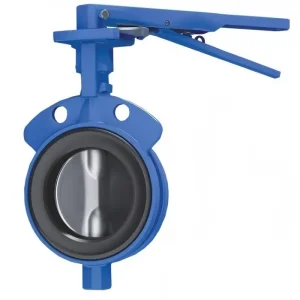
Resilient EPDM Lined Butterfly Valve
Explore Technical Specs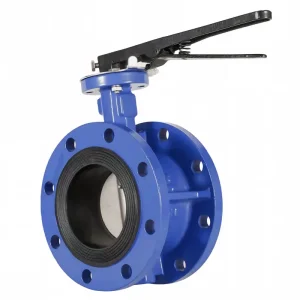
Flanged Lever Butterfly Valve (CE Approved)
Explore Technical Specs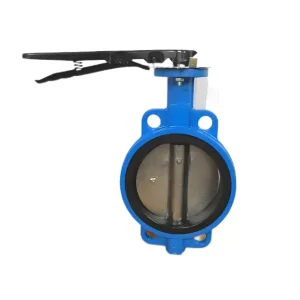
Low-Torque Wafer Type Butterfly Valve
Explore Technical Specs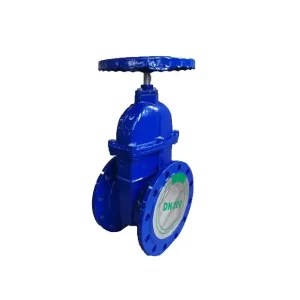
German DIN Standard Elastic Seat Gate Valve
Explore Technical Specs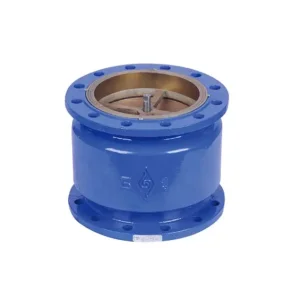
Energy-Saving Silencer Silent Check Valve
Explore Technical Specs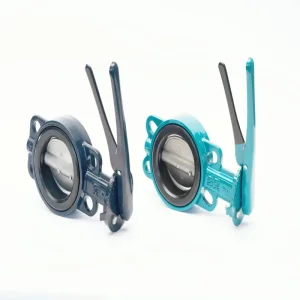
Potable Water-Safe Flow Butterfly Valve
Explore Technical Specs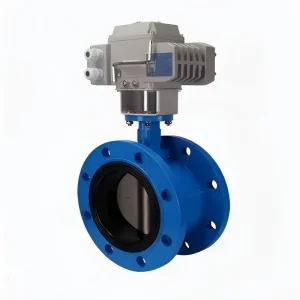
Electric Actuated High-Performance Butterfly Valve
Explore Technical Specs