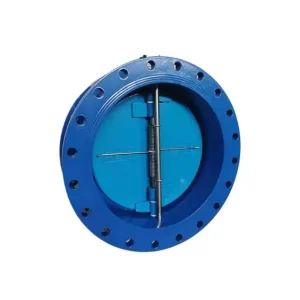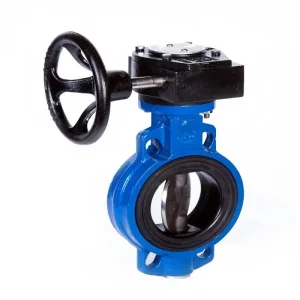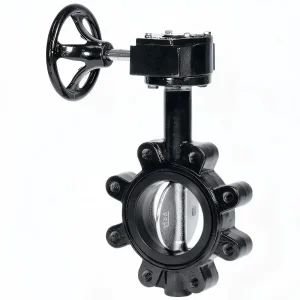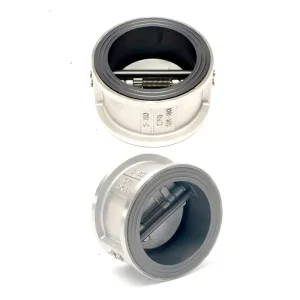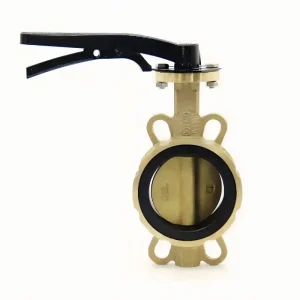
High-Quality Aluminum Bronze Butterfly Valve - Durable & Corrosion Resistant Suppliers, Manufacturer
Explore Model
Vertical integration from internal foundries to proprietary rubber formulation ensures maximum cyclic integrity, bubble-tight shut-off, and verified compliance with WRAS and CE directives.
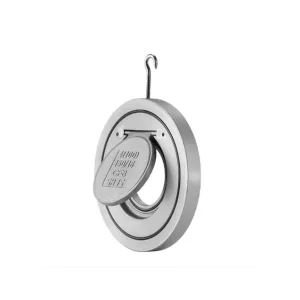
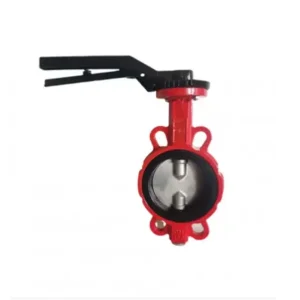
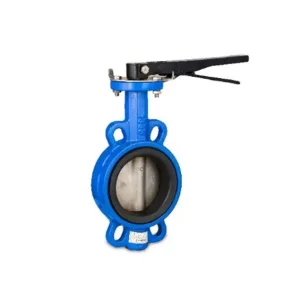
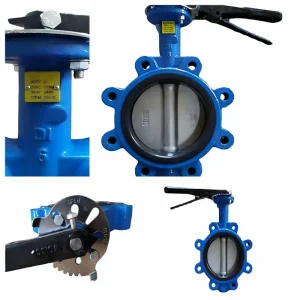
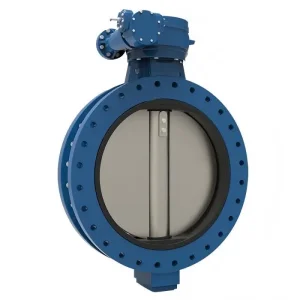
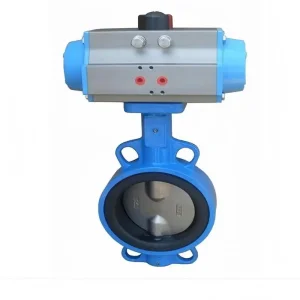
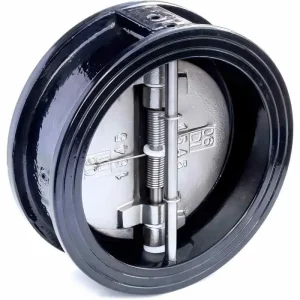
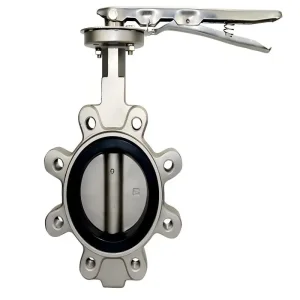
The industrial transition toward compact, low-emission, and easily maintainable piping networks has established manual lug type butterfly valves as a globally preferred isolation asset.
Our manufacturing architecture couples metallurgical chemistry verification with proprietary in-house elastomer vulcanization (Tianjin Dongfang Rubber heritage since 1987) for unyielding seal resilience.
The Pinless Stem Advantage: Traditional pinned discs create galvanic crevices and stress concentrations where fluid can seep down the shaft. Tianjin Top Valve manufactures high-strength splined and double-half shaft connections, keeping the disc face completely smooth and isolating stem metallurgy from corrosive line media.
From municipal booster stations in arid geographies to ballast treatment on chemical tankers, lug manual valves deliver localized performance configured for specific environments.
Engineering metrics verified across physical and chemical laboratories in accordance with ISO 9001 and CE pressure directives.
| Engineering Parameter | DN40 to DN300 (Small to Mid Bore) | DN350 to DN1200 (Large Bore) | Compliance Standards |
|---|---|---|---|
| Nominal Pressure (PN) | PN10 (1.0 MPa) / PN16 (1.6 MPa) / Class 150 | PN10 (1.0 MPa) / PN16 (1.6 MPa) | EN 1333, ASME B16.34 |
| Face-to-Face Dimensions | EN 558 Series 20, API 609 Table 1, BS 5155 | EN 558 Series 20, ISO 5752 Series 20 | ISO 5752, DIN 3202-K1 |
| Flange Compatibility | EN 1092-2 PN10/PN16, ASME B16.5 Class 150, JIS 10K | EN 1092-2 PN10/PN16, ASME B16.47 Series A | EN 1092-1/2, ASME B16.5 |
| Shell Test Pressure | 1.5 × Maximum Allowable Pressure (MAP) | 1.5 × MAP (Hydrostatic Water) | ISO 5208, EN 12266-1 |
| Seat Closure Test | 1.1 × MAP (Hydrostatic & Low-Pressure Air) | 1.1 × MAP (Class A Bubble-Tight) | API 598, ISO 5208 Rate A |
| Actuator Mounting Flange | ISO 5211 (F05 / F07 / F10 standard patterns) | ISO 5211 (F12 / F14 / F16 / F25 patterns) | ISO 5211 Mounting Norms |
| Temperature Bounds | EPDM: -20°C to +120°C | NBR: -10°C to +80°C | PTFE: -20°C to +180°C | FKM: -10°C to +200°C | ASTM D2000 Formulation |
As global industry aligns with Industry 4.0 and decarbonization goals, mechanical valves are evolving into digitally enabled, eco-efficient fluid assets.
Integration of triple dynamic stem seals and ISO 15848-1 certified packing stacks, reducing microscopic VOC emissions to near-zero levels across process pipelines.
Integrating non-intrusive angle sensors and passive NFC chips into manual gear operators, allowing field technicians to scan and confirm exact valve position via mobile tablets.
Incorporating graphene-reinforced fluoropolymers to lower disc friction coefficients by 35%, slashing manual actuation torque and dramatically lengthening seat fatigue cycles.
Deploying electric arc furnace melting coupled with renewable scrap iron sourcing, cutting embodied carbon emissions by over 40% across our foundry production lines.
Direct technical clarifications on design considerations, standards matching, and operational best practices.
Wafer valves are clamped between pipe flanges using long all-thread studs that span the entire body, meaning upstream piping cannot be disconnected without removing the valve. Lug valves have individual threaded tapped ears that accept bolts from either side, enabling complete dead-end service where one side of the line is depressurized and dismantled while the valve retains upstream system pressure safely.
Yes. Manual lug valves equipped with 10-position notched throttle handles or calibrated worm gearboxes function well between 20° and 70° disc opening angles. Below 15°, high-velocity localized cavitation can cause seat scouring, whereas above 75°, flow approaches maximum Cv with negligible incremental control. For precise modulation, gear operation is recommended over lever handles to avoid dynamic flow pull.
The elastomer seat is the primary consumable component determining shut-off life. Third-party rubber compounding frequently suffers from inconsistencies in curing temperature, carbon black dispersion, and reclaimed rubber additives. By compounding and vulcanizing our own EPDM, NBR, and FKM seats in-house at our group rubber plant (since 1987), we guarantee exact compression resilience, elongation limits, and WRAS chemical compliance.
Because lug ear drillings are threaded, they must precisely match the counter-flange thread pattern. We precision-drill and tap our valve bodies on high-accuracy CNC machining centers to match EN 1092-2 PN10/PN16 (metric M-threads), ASME B16.1/B16.5 Class 125/150 (UNC imperial threads), or JIS B2238 standards. Engineering datasheets must confirm bolt standards prior to production dispatch.
Complete pipeline configurations manufactured with full material traceability, hydrostatic certification, and factory-direct support for international EPC engineering contracts.