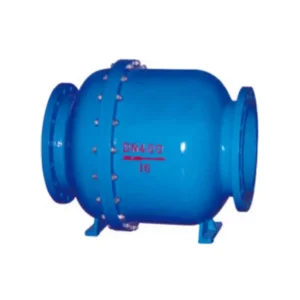
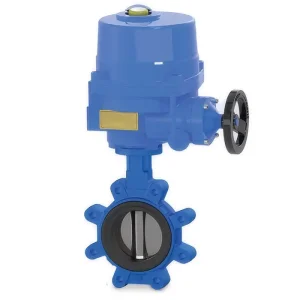
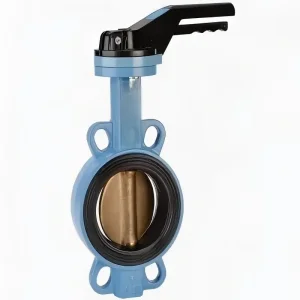
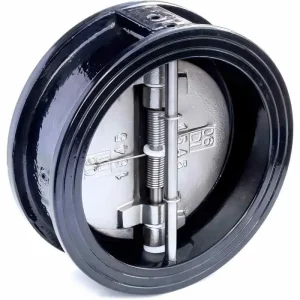
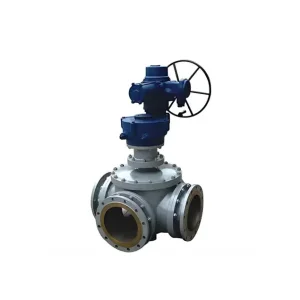
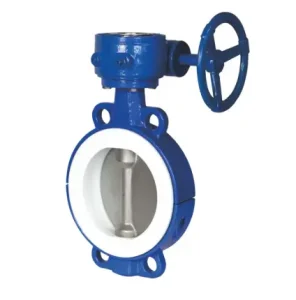
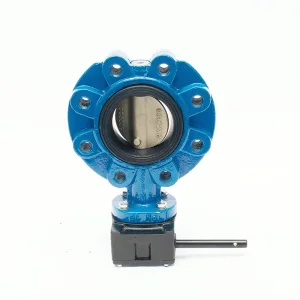
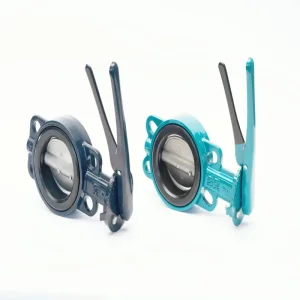
Featured Industrial Valve Portfolio: Primary Selection
Engineered for mission-critical municipal, chemical, and heavy industrial plant duties, delivering micro-friction actuation and zero-leakage isolation.
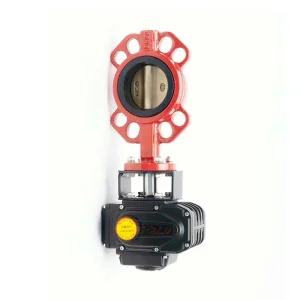
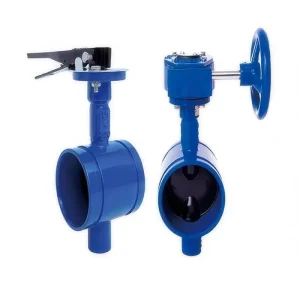
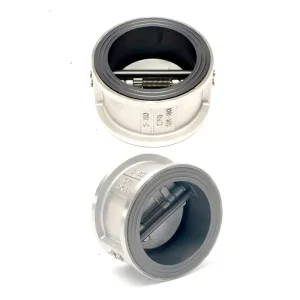
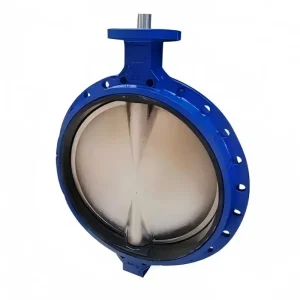
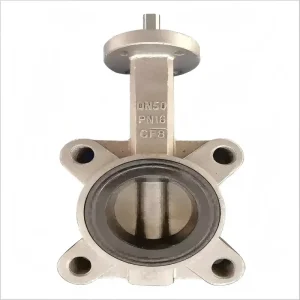
Engineering Low-Torque Flanged Butterfly Valves: The Mechanics
In modern pipeline automation, operating torque dictates pneumatic and electric actuator sizing, lifecycle power consumption, and mechanical wear cycles across critical utility infrastructures.
Dual-Eccentric & Spherical Sealing
By offsetting the stem from the disc centerline and body seal face, camming action lifts the disc out of contact immediately upon rotation, eliminating progressive seat jamming and friction shearing.
Low-Friction Trunnion Bearings
Sintered bronze or PTFE-backed composite dry sleeve bearings absorb fluid hydraulic side-thrust, ensuring negligible breakaway friction even after static dormancy under full differential pressure.
Optimized Elastomeric Geometry
Dovetail locked, vulcanized, or phenolic-backed EPDM/NBR seats feature engineered compression ratios that achieve EN 12266-1 Rate A zero leakage without inducing extreme disc displacement load.
The China Supply Chain: Tianjin Engineering Ecosystem
Vertical manufacturing ecosystems in northern China integrate specialized automated foundries, high-purity elastomer synthesis, and micron-level CNC lines under stringent quality assurance regimes.
Full In-House Foundry Control
Direct ownership of ductile iron (EN-GJS-400-15/500-7) and carbon steel melt chemistry via optical emission spectrometry eliminates micro-porosity before finish machining.
Proprietary Elastomer Compounding
Compounding custom WRAS/FDA-grade EPDM, hydrogenated NBR, and fluoroelastomers since 1987 delivers guaranteed elasticity, thermal endurance, and compression recovery.
Precision Multi-Axis Machining
Continuous twin-spindle CNC machining centers profile double-flanged bodies, disc contours, and stem bores in unified fixtures to preserve perpendicular alignments below 0.02 mm.
Traceability & 100% Inspection
Every cast heat, vulcanization batch, and final flanged assembly receives hydrostatic shell (1.5x PN) and pneumatic low-pressure leak tests documented under EN 10204 3.1 certification.
Engineering Matrix: Low-Torque Flanged vs Conventional Designs
A rigorous empirical benchmark assessing dimensional resilience, mechanical footprint, actuator loads, and long-term pipeline operational cost.
| Evaluation Parameter | Advanced Low-Torque Flanged (Top Valve) | Standard Concentric Flanged | Conventional Wafer/Lug Type |
|---|---|---|---|
| Breakaway Torque (DN300 @ 16 Bar) | 195 – 240 N·m (Actuator-Optimized) | 420 – 510 N·m (Heavy Actuator Req.) | 380 – 460 N·m (Subject to Piping Pinch) |
| Piping Flange Connection | ISO 7005-2, EN 1092-2 PN10/16, ASME B16.5 | EN 1092-2 PN10/PN16 Standard | Between-Flange Clamping (Prone to Misalignment) |
| End-of-Line Pipeline Isolation | Full Bi-directional Differential Rating | Permitted (Requires Counter Flange) | Requires Lug Type; Restricted Pressure |
| Stem Bearing Technology | Self-Lubricating Sintered PTFE Composite | Brass Bushing / Direct Cast Contact | Bronze or Carbon Steel Bushing |
| Actuator Power Sizing Rating | Class 1 Minimal Consumption (ISO 5211) | Class 3 Heavy Draw Requirements | Class 2 Standard Draw |
| Expected Seat Durability Cycles | > 50,000 Cycles without Degradation | 12,000 – 18,000 Cycles (Scuffing Risk) | 15,000 – 20,000 Cycles |
Macro-Infrastructure Deployment & System Integration
Targeted solutions engineered to resolve high-stress flow conditions across municipal grids, deep marine engine loops, industrial HVAC, and industrial desalination facilities.
Municipal Potable Water Distribution
WRAS-approved resilient EPDM compounds prevent chemical leaching and microbial formation. Low-torque disc paths enable solar-powered or remote battery-operated intelligent smart valves (SCADA) to perform seasonal flow throttling without auxiliary booster generators.
District Cooling & Industrial HVAC
Continuous chilled water cycles (4°C–12°C) experience severe thermal expansion differences between body housings and internals. Flanged construction withstands bending moments from suspended piping, preventing stem bind-up and protecting energy efficiency.
Seawater Desalination & Marine Bilge
Nickel-aluminum bronze discs (C95800) paired with vulcanized high-fluorine elastomers withstand high-velocity saline scour. The rigid flanged interface eliminates pipeline gasket slip under aggressive deep-sea hydraulic hammering and cavitation states.
Global Procurement Demands: Total Cost of Ownership (TCO)
EPC contractors and plant engineers are shifting evaluation methodologies from initial purchase outlay toward full-lifecycle operational expenditure models.
Actuator Downsizing Economics
Because torque ratings are certified 30-45% below historical benchmarks, EPC procurement engineers safely specify smaller pneumatic spring-return or quarter-turn electric actuators, cutting auxiliary actuation budgets by up to 28% across major balance-of-plant contracts.
Fugitive Emissions Compliance
With stringent global greenhouse gas mandates, dual internal O-rings combined with secondary stem seal barriers conform to ISO 15848-1 tightness Class AH, mitigating fugitive micro-leakages across chemical, steam, and volatile utility headers.
Rapid Delivery & Standardization
Multi-standard bolt drilling patterns (DIN PN10/PN16, ANSI 150, JIS 10K) and integrated ISO 5211 direct-mounting flanges simplify international multi-site inventory stocking, drastically reducing supply chain SKU counts and warehouse footprint.
Engineering FAQ: Specification & Operational Clarifications
Clear, definitive technical evaluations addressing actuator sizing safety factors, material selection, and installation best practices.
Featured Industrial Valve Portfolio: Complementary Range
Complete fluid management technologies: check, ball, and advanced resilient seated isolation units engineered to international standards.