
Direct Sourcing Catalog · Top Tier Selection
Precision Flow Assurance & Backflow Prevention Assemblies
Engineered for high-duty continuous operation, our featured industrial isolation and check valve assemblies deliver zero-seat leakage, anti-water hammer mitigation, and verified material metallurgy.
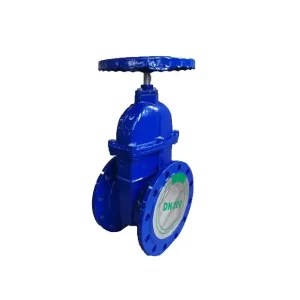
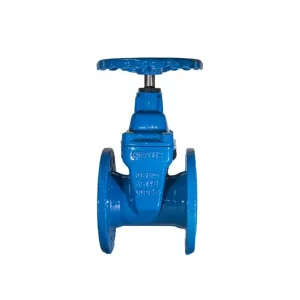
CE Certification German Standard Elastic Seat Gate Valve Manufacturers
Request Spec Sheet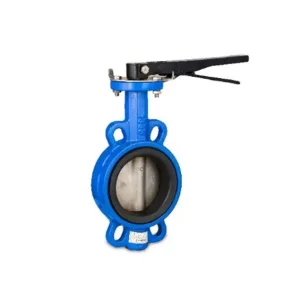
High-Quality Rubber Lined Pinless Butterfly Valve Supplier, Factories
Request Spec Sheet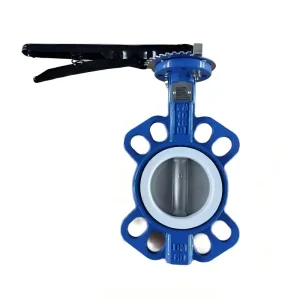
Wholesale PTFE Lined Cast Body Butterfly Valve Suppliers, Factory
Request Spec Sheet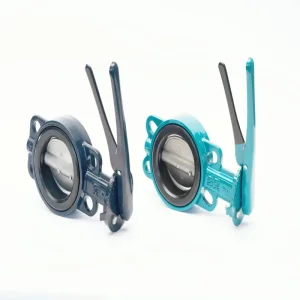
CE Certification Water-Safe Butterfly Valve for Efficient Flow Control
Request Spec Sheet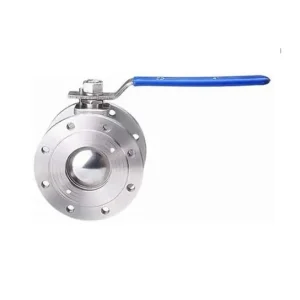
Stainless Steel Ultra-Thin Ball Valve with Fire-Safe Design
Request Spec Sheet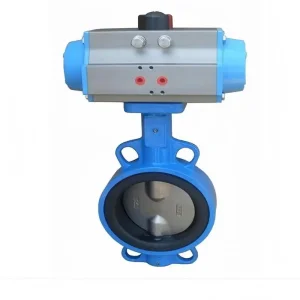
High-Quality Pneumatic Butterfly Valve Flow Control Solution
Request Spec Sheet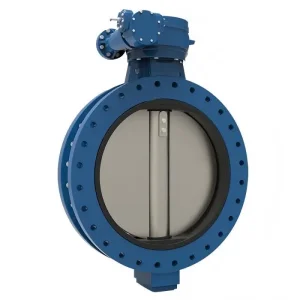
CE Certification Flanged Butterfly Valve - Durable Flow Control
Request Spec Sheet
Technical Specification & Engineering White Paper
Globe Non-Return Valves: Hydrodynamic Kinematics & Transient Protection
An authoritative analysis of lift-check, stop-check, and axial globe non-return architecture across supercritical steam, district cooling, desulfurization, and offshore fluid transmission lines.
1. Kinetic Disc Motion & Rapid Deceleration
Unlike swing or conventional dual-plate check valves that operate along a rotational arc, the Globe Non-Return (Lift Check) valve features an axial disc guided perpendicularly or obliquely to the seat orifice. Flow drives the disc upwards against calibrated spring loading or gravity.
- Minimal Closure Travel: Disc stroke is typically 25% of pipe diameter, ensuring closing speeds under 0.15 seconds upon pump trip.
- Anti-Slam Damping: Hydraulic dashpot or internal piston cushions deceleration, preventing destructive pressure spikes (water hammer).
- Optimized Seat Profiles: Stellite hard-faced metal-to-metal seating ensures Class V and VI tight shut-off even in slurry duties.
2. Stop-Check Multi-Functional Architecture
By integrating a non-attached screw-down stem into a globe lift check assembly, the globe non-return valve provides dual functionality: automated non-return isolation during pump run, and mechanical positive shut-off when down-threaded.
- Secondary Containment: Allows plant operators to manually isolate boilers or high-pressure headers without installing an auxiliary gate valve.
- Thermal Fatigue Resistance: Designed with forged or cast alloy steel (A216 WCB, A351 CF8M, A217 WC6) to manage extreme thermal transients.
- Guided Stem Integrity: Heavy-duty cage guiding stops lateral disc flutter under high turbulent Reynolds numbers.
3. CFD Cavitation Mitigation & Pressure Recovery
Traditional globe patterns introduce an inherent Z-shaped tortuous flow path that induces moderate head losses. Our factory implements high-fidelity computational fluid dynamics (CFD) modeling to sculpt venturi diffuser profiles.
- Optimized Cv Coefficients: Curved nozzle contours recover static pressure rapidly behind the disc skirt, raising effective flow capacity.
- Cavitation Resistance: Engineered seating divergence prevents micro-bubble implosion on downstream metal surfaces.
- Predictable Cracking Pressure: Calibrated spring sets open smoothly at differential pressures as low as 0.05 bar (0.72 psi).
Engineering Data Matrix
Globe Non-Return Valve Architecture vs Alternative Check Designs
A procurement-grade technical comparison detailing operational thresholds, dynamic response times, and system life expectancy across critical pipeline assets.
| Performance Criterion | Globe Lift / Stop-Check Valve | Dual Plate Wafer Check | Swing Check Valve | Axial Nozzle Check Valve |
|---|---|---|---|---|
| Closure Dynamic Speed | Very Fast (<0.20 sec) | Fast (<0.35 sec) | Slow to Moderate (>0.80 sec) | Extremely Fast (<0.10 sec) |
| Water Hammer Resistance | Superior (Hydraulic Damping) | Moderate to High | Poor (Prone to Slamming) | Exceptional (Non-Slam Profile) |
| Manual Positive Isolation | Yes (Screw-Down Stop Stem) | No (Auxiliary Valve Required) | No (Auxiliary Valve Required) | No (Auxiliary Valve Required) |
| Seating Tightness Class | API 598 Zero Leakage / Stellite | Resilient / Metal Seat VI/IV | Metal-to-Metal Class IV | Class V / VI Metal Seated |
| Temperature & Pressure Scope | -196°C to +650°C / Up to Class 2500 | -40°C to +200°C / Class 150-600 | -29°C to +425°C / Class 150-900 | -196°C to +550°C / Class 150-2500 |
| Installation Flexibility | Horizontal / Vertical (Spring Assist) | Horizontal or Vertical Upflow | Primarily Horizontal Lines | Any Spatial Orientation |
Localized Deployment Scenarios
Demanding Real-World Operating Environments
Our globe non-return valve configurations are customized to comply with regional pressure ratings, volatile chemical media, and environmental extremes across major continents.
Thermal & Combined Cycle Power (Americas)
Configured in ASTM A217 WC6/WC9 chrome-moly steel with ASME Class 1500 butt-weld ends for main boiler feed lines, surviving severe thermal shock and cycling without galling or seat deflection.
District Energy & Heating Networks (Europe)
Constructed according to DIN EN 13709 / EN 1092-1 PN25/PN40 with DIN face-to-face dimensions. Features hydro-tested bellow seals and back-seating capability to eliminate fugitive greenhouse gas emissions.
Desalination & Seawater Injection (Middle East)
Machined from nickel aluminum bronze (C95800) or Super Duplex UNS S32750 bodies, designed specifically to withstand high-velocity crevice corrosion and pitting in GCC hypersaline brine reverse-osmosis trains.
Heavy Petrochemical & LNG Transfer (Asia-Pacific)
Low-temperature austenitic stainless steel (CF8M/CF3M) with extended bonnets and PCTFE or Stellite hardfacing, operational at cryogenic limits of -196°C to isolate compressor discharge runs reliably.
Integrated Manufacturing Ecosystem
China Supply Chain Resilience & Vertical In-House Mastery
By unifying foundry pouring, proprietary elastomer compounding, high-precision multi-axis CNC machining, and automated pressure testing on a single 23,000 m² industrial campus in Tianjin, we eradicate middleman delays and third-party quality variance.
Dedicated Casting Foundry (Since 1996)
Direct ownership of our casting facility guarantees chemical purity and structural density before any metal chips are cut. Every melt undergoes strict optical emission spectrometer analysis to confirm low carbon and high nickel fractions.
- Elimination of sand inclusion and internal porosity through 3D mold flow modeling.
- Direct procurement of certified raw pig iron and traceable alloy ingots.
- Full internal heat treatment regimens: normalizing, annealing, and solution quenching.
Proprietary Elastomer Compounding (Since 1987)
Originated as Tianjin Dongfang Rubber Factory, our in-house elastomer plant formulates, mixes, and vulcanizes custom EPDM, NBR, FKM, and PTFE components to match stringent drinking water and aggressive solvent media.
- WRAS-approved potable water elastomer compounds free of toxic plasticizers.
- Superior compression set resistance, extending valve seat lifespans beyond 100,000 cycles.
- In-house rheometer and tensile testing validating resilience at -30°C to +150°C.
CNC Precision & 100% Hydrostatic Assurance
Modern machining cells finish seating contours and guide pin tolerances to micron precision. No finished valve departs the plant without meeting or exceeding API 598, EN 12266, and ISO 5208 testing protocols.
- High-precision boring and facing lathes ensuring perfect flange perpendicularity.
- Hydrostatic shell testing at 1.5× rated working pressure for maximum structural safety.
- High-pressure seat leakage and low-pressure air testing guaranteeing absolute hermetic integrity.
23,000 m²
Modern Manufacturing Campus
37+ Years
Rubber & Sealing Material Heritage
100%
Individual Hydro & Pneumatic Seat Tested
50+
Global Export Sovereign Destinations
Industrial R&D Roadmap
Engineering Frontiers: Smart Monitoring & Zero-Emission Valving
Anticipating the next decade of decarbonization, cryogenic energy storage, and AI-enabled industrial telemetry with targeted valve technology advancements.
IoT-Enabled Acoustic & Travel Telemetry
Integrating non-invasive piezo-electric acoustic sensors and Hall-effect stem travel indicators within globe check bodies. Enables predictive maintenance algorithms to detect disc flutter, scale buildup, and early seat bypass before pipeline degradation occurs.
Hydrogen & Ultra-Low Molecular Sealing
Developing micro-finished diamond-like carbon (DLC) coatings and ultra-dense forged austenitic alloy bodies engineered specifically to resist hydrogen embrittlement at pressures exceeding 700 bar in future clean fuel transmission grids.
Sub-Zero Cryogenic LNG Stop-Checks
Advancing vacuum-jacketed, extended bonnet globe non-return assemblies utilizing spring-energized PTFE lip seals certified to ISO 28921-1, providing reliable zero-leak performance in floating LNG (FLNG) loading arms down to -196°C.
Global Regulatory Adherence
International Harmonization & Engineering Compliance
Ensuring complete documentation traceability, localized certification compliance, and third-party inspection readiness for global engineering procurement construction (EPC) projects.
Pressure Equipment Directive (PED/CE)
Full CE certification under EU PED Module H, ensuring our globe, check, and gate valve assemblies operate legitimately under high thermal-hydraulic stresses across all EU member states.
WRAS Potable Drinking Water Approval
Selected butterfly and valve families hold full WRAS certification, verifying that internal rubber compound matrices will not leach contaminants, support microbial growth, or alter water organoleptics.
ASME / ANSI & API Compliance
Manufactured to ASME B16.34, B16.10, and B16.5 flange drilling configurations, with wall thicknesses conforming to API 600 / API 602. Inspected strictly in accordance with API 598 pressure standards.
Full EN 10204 3.1 Traceability
Every project shipment includes comprehensive MTRs (Mill Test Reports), physical test results, chemical heats, non-destructive testing (NDT/RT/PT), and visual inspection records down to individual serial batches.
Complete Project Sourcing Suite
High-Flow Pipeline Solutions & Resilient Check Valves
Complementary valve designs featuring dual-plate wafer non-return units, marine lug patterns, and silent closing checks manufactured to exact EPC tender specifications.
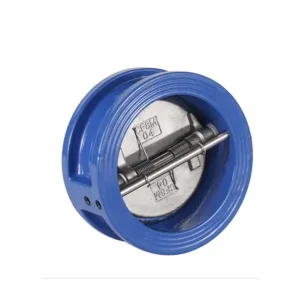
Dual Plate Wafer Check Valve for High-Flow Pipelines
Request Spec Sheet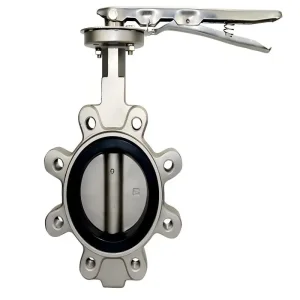
High-Quality LUG Stainless Steel Butterfly Valve
Request Spec Sheet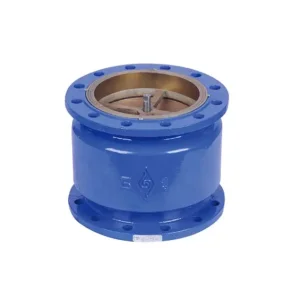
CE Certification Energy-Saving Silencer Check Valve
Request Spec Sheet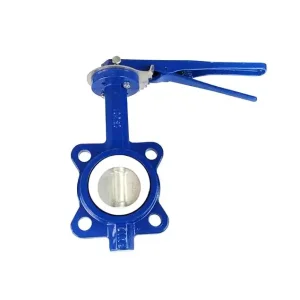
High-Quality PTFE Lined Pinless Butterfly Valve Supplier
Request Spec Sheet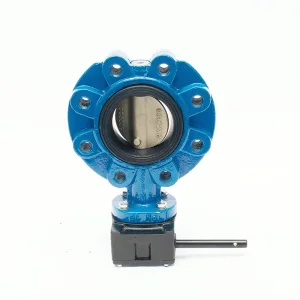
Marine Centric Lug Type Manual Operated Butterfly Valve
Request Spec Sheet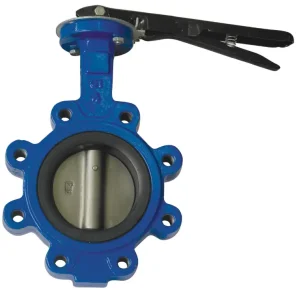
High-Quality Lug Type Manual Operated Butterfly Valve
Request Spec Sheet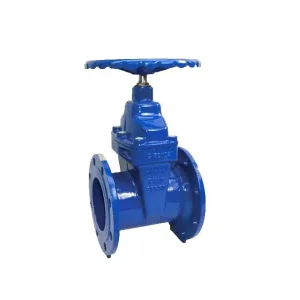
Non-Rising Stem Elastic Seat Sealing Gate Valve
Request Spec Sheet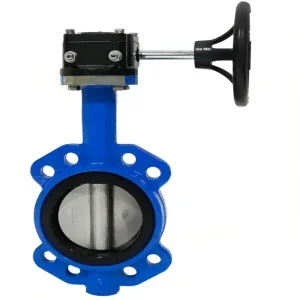
CE Certification Wafer Butterfly Valve for Water Usage
Request Spec Sheet
Technical & Procurement Inquiries
Frequently Asked Questions: Industrial Globe Non-Return Valving
In-depth responses covering installation guidelines, fluid kinematics, material grades, and customized manufacturing timelines.
What distinguishes a Globe Non-Return Valve from a standard Swing Check Valve?
A Globe Non-Return Valve (often known as a lift check or stop-check valve) utilizes a linearly guided disc that moves perpendicularly to the seat plane, driven by line fluid dynamics and spring mechanics. In contrast, a swing check valve hinges around an offset pin. The linear stroke of a globe non-return valve is significantly shorter (approximately 25% of pipe diameter), enabling remarkably rapid closing speeds upon pump shutdown, effectively preventing damaging hydraulic shock waves (water hammer). Additionally, globe stop-check designs permit manual mechanical positive shut-off via an external stem, a capability absent in swing designs.
Can Globe Non-Return Valves be mounted in vertical pipeline orientations?
Yes, provided the flow direction is vertically upward and the valve is equipped with an engineered internal spring-assist mechanism. In vertical up-flow lines, gravity assists the spring in bringing the disc to rest against the seat during flow deceleration. However, downward vertical flow configurations cannot accommodate globe lift check designs, as gravity would prevent proper opening kinematics and induce severe flow obstruction.
How does your factory control elastomer quality and casting metallurgy?
Unlike valve assemblers who outsource critical components, our industrial group incorporates Tianjin Dongfang Rubber Factory (founded in 1987) and Tianjin Donglian Valve Factory (founded in 1996). We mix, vulcanize, and mold our own EPDM, NBR, and PTFE seats in-house, testing compression set, tensile yield, and chemical resistance. Our proprietary foundry pours carbon steel, ductile iron, stainless steel, and bronze bodies under optical spectrometry control. Every single valve undergoes shell hydrostatic testing at 1.5× rating and seat leakage testing per ISO 5208 and API 598 prior to crating.
Which international face-to-face and flange standards can you manufacture to?
Our CNC machining centers can produce flange patterns, face-to-face lengths, and end preps conforming to ASME/ANSI B16.5 (Class 150, 300, 600, 900, 1500, 2500), EN 1092-1 / DIN PN10, PN16, PN25, PN40, British Standard BS 10 / BS 4504, and Japanese Industrial Standard JIS 10K/20K. For German-standard infrastructure projects, we strictly observe DIN 3202 F1/F4 face-to-face dimensions.
What documentation and inspection protocols accompany export consignments?
All shipments are accompanied by EN 10204 Type 3.1 Inspection Certificates containing full material chemical composition and mechanical tensile data. Optional non-destructive examinations (Radiographic Testing, Ultrasonic Testing, Dye Penetrant Inspection, and Magnetic Particle Testing) can be performed upon project specification. We regularly facilitate third-party client witness inspections with SGS, BV, TÜV, and DNV at our Tianjin testing facilities.
Need Technical Support for an Upcoming Tender?
Our engineering group reviews piping and instrumentation diagrams (P&ID), media parameters, and transient surge specifications within 24 hours. Connect with our technical application specialists directly.
