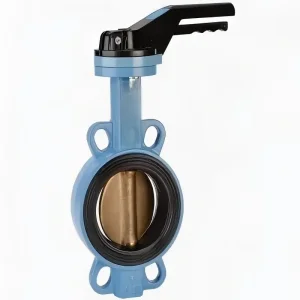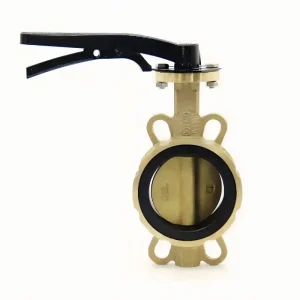
High-Quality Aluminum Bronze Butterfly Valve - Durable & Corrosion Resistant Suppliers, Manufacturer
View Specifications
Explore our primary factory-direct pipeline flow isolation and control assemblies engineered for municipal infrastructure, seawater desalination, abrasive fluid control, and chemical process safety.
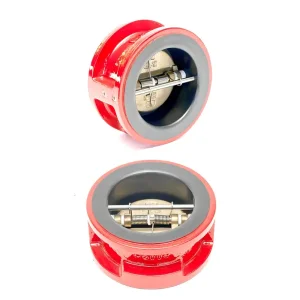
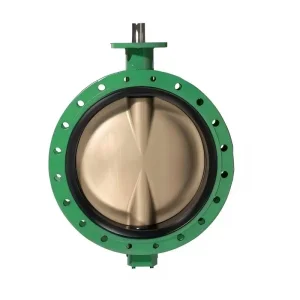
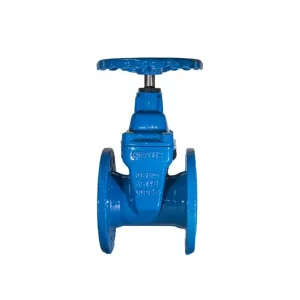
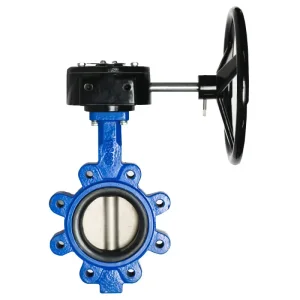
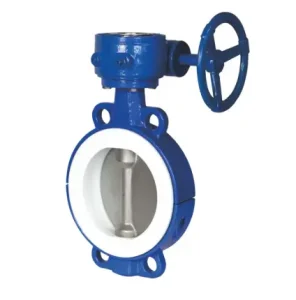
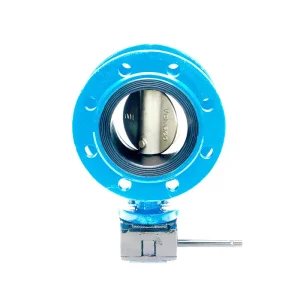
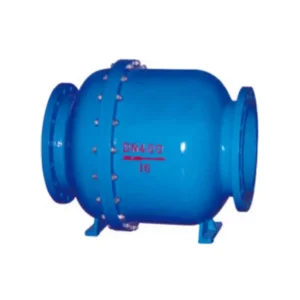
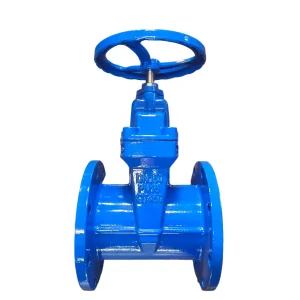
The DIN 3202-F4 standard (harmonized under EN 558-1 Series 14 / DIN EN 1171) represents the pinnacle of compact, low-pressure-loss fluid isolation across modern municipal waterworks, cooling circuits, and industrial trunklines. Designed with a short face-to-face dimension, these valves minimize raw casting mass while delivering rigid body geometry capable of resisting extreme ground settling stress and seismic pipeline deflection. Through vertical control over our ductile iron foundries (operating since 1996) and elastomer compounding lines (operating since 1987), Tianjin Top Automation Equipment ensures that every gate valve satisfies stringent bi-directional zero-leakage standards (EN 12266-1 Rate A).
Civil infrastructure design requires gate valves that eliminate legacy operational failure modes. Explore how resilient seated German standard F4 valves resolve structural challenges across municipal and industrial applications.
Eliminating baseline network leakage is central to global water conservation metrics. Traditional metal-seated valves experience sediment build-up in bottom recesses, causing incomplete closure. The F4 resilient seat features a straight-through bore without pockets, combining with vulcanized EPDM wedges to achieve perpetual bubble-tight shut-off and protect against utility revenue losses.
Large-scale commercial and industrial HVAC loops require valves engineered for cyclic thermal stress and low head loss. The compact DIN F4 layout significantly reduces pump head requirements compared to throttling globe patterns, preserving thermal energy transfer efficiencies across secondary central heating and industrial cooling plants.
Excavation maintenance creates steep municipal operating budgets. Our non-rising stem (NRS) F4 gate valves are built for chamberless direct burial. Equipped with high-integrity O-ring stem seals, maintenance-free bearing arrangements, and telescopic extension spindles, they provide long-term subterranean service life without chamber construction costs.
Supply chain localization, material traceability, and regulatory compliance are essential for international procurement. Here is how our production ecosystem complies with international pipeline mandates.
Flange drillings conform to EN 1092-2 (PN10/PN16/PN25), ensuring full compatibility with European standard piping systems. Complete compliance with DIN 3202-F4 guarantees standardized face-to-face dimensions, enabling plug-and-play retrofit capabilities across utility networks without pipe re-engineering or flange modifications.
Public drinking water networks require clean elastomer and coating technologies. Our EPDM compounds are formulated to eliminate toxic leaching, biological growth, and taste alterations. Combined with electrostatic fusion-bonded epoxy (minimum thickness 250 µm conforming to DIN 30677-2), our assemblies protect potable water purity.
Every cast ductile iron body (EN-GJS-500-7 / EN-GJS-400-15) carries heat-batch traceability linking it to our in-house spectral metallurgy and physical tensile testing logs. Inspection certificates verify chemical composition, yield strength, elongation, and hydrostatic pressure testing according to EN 10204 3.1.
Valve durability depends on precise duty matching. Review typical deployment scenarios alongside our engineering roadmap for next-generation digital smart valves.
Direct pump discharge isolation and transmission mains. Features smooth full-bore water passage preventing limescale, calcium, and mineral aggregate accumulation.
Aerobic, anaerobic, and effluent discharge headers. Fitted with NBR vulcanized wedges to provide strong resistance to domestic fats, light hydrocarbons, and industrial sludge.
Dedicated ring mains and deluge feed lines. Rising stem (OS&Y) configurations allow immediate visual status checks, while non-rising designs integrate limit switches for SCADA networks.
Our R&D team is standardizing ISO 5210 top flanges to accept smart IoT electric actuators, providing dynamic real-time torque feedback, acoustic leak identification, and automated asset cycle analytics.
Find clear answers regarding German standard dimensions, material grades, vulcanization testing, and operating parameters.
The primary distinction is face-to-face installation length. The DIN 3202-F4 pattern (EN 558-1 Series 14) is the short-body configuration, whereas DIN 3202-F5 (EN 558-1 Series 15) is long-body. For example, in a DN100 valve, an F4 valve has a face-to-face dimension of 190 mm, while an F5 valve is 230 mm. The shorter F4 layout saves weight, occupies less space in valve chambers, and reduces overall pipeline installation costs while delivering identical pressure containment ratings.
The rubber wedge lining is the primary wear component in resilient gate valves. Our group has manufactured rubber products since 1987, compounding high-purity EPDM and NBR polymers with precise cross-linking formulations. This provides high tensile strength, excellent tear resistance, and very low compression set, preventing elastomeric shearing, peeling, or cracking during high-cycle throttling or closing under differential pressures up to 25 bar.
Our F4 non-rising stem (NRS) gate valves utilize a triple O-ring stem seal system coupled with a high-strength 420 or 316 stainless steel stem. The upper O-rings can be replaced under operating system pressure without removing the valve from the main pipeline. A PTFE/bronze thrust bearing lowers operating torque, allowing effortless manual closure or extended duty life when paired with electric or pneumatic actuators.
Every production unit undergoes 100% shell and seat hydrostatic testing in accordance with EN 12266-1 and ISO 5208. The shell test pressure reaches 1.5 times nominal working pressure (e.g., 24 bar for PN16), while the bi-directional seat test is conducted at 1.1 times (17.6 bar for PN16) with zero allowable leakage (Rate A). Coating thickness is verified via electromagnetic gauges, and pinhole integrity is tested using a 3kV high-voltage spark detector.
Complete project procurement packages with complementary valves manufactured under our group's verified ISO 9001, ISO 14001, and CE certified production systems.