
Featured Industrial & Vacuum Flow Control Catalog
Direct from our manufacturing hubs in Tianjin: Certified isolation, throttling, and backflow prevention valves engineered with in-house foundry casting and proprietary elastomer compounding.
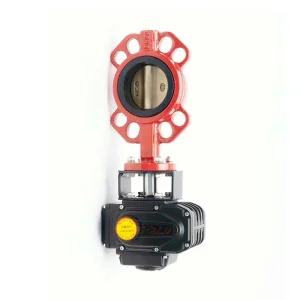
High-Quality Actuator Wafer Butterfly Valve Supplier, Manufacturers
Explore Valve Specs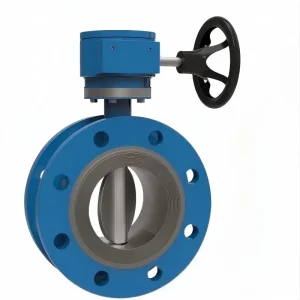
High-Quality Flange Type Butterfly Valve - Durable and Efficient Flow Control Supplier, Manufacturer
Explore Valve Specs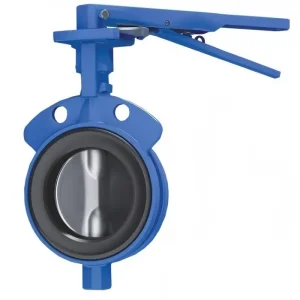
High-Quality EPDM Lining Butterfly Valve - Durable & Corrosion Resistant Suppliers, Manufacturers
Explore Valve Specs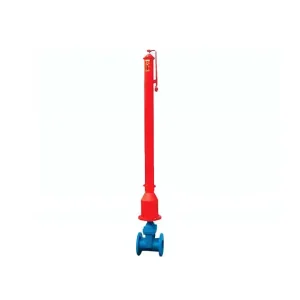
High-Quality Buried Elastic Seat Gate Valve for Reliable Flow Control Supplier, Factories
Explore Valve Specs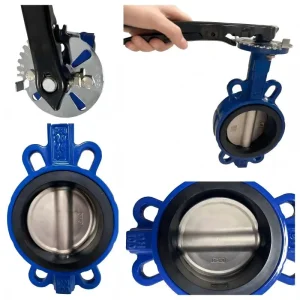
High-Quality WRAS Approved Butterfly Valve - High Performance & Durability 4020L Supplier, Manufacturers
Explore Valve Specs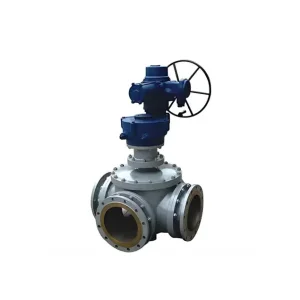
CE Certification Quick-Opening Three-Way Flange Ball Valve for Emergency Fluid Diversion Supplier, Factory
Explore Valve Specs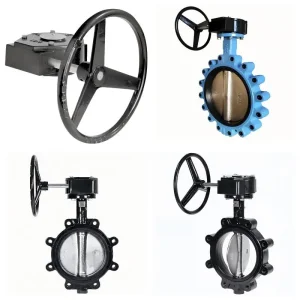
Wholesale WRAS Approved Lug Type Butterfly Valve 4325G Supplier, Factories
Explore Valve Specs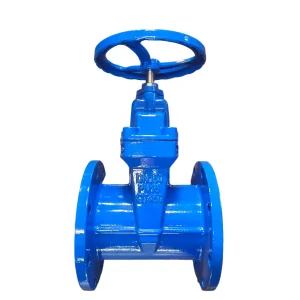
Wholesale High-Quality Gate Valve for Reliable Flow Control Manufacturer, Factories
Explore Valve SpecsThermodynamic Principles & Critical Sealing Architecture of Vacuum Heat Isolation Valves
In contemporary advanced manufacturing—spanning semiconductor crystal growth, aerospace vacuum carburizing, thermal solar molten salt circuits, and high-temperature vacuum metallurgical furnaces—fluid handling infrastructure operates at the unforgiving crossroads of negative atmospheric pressure gradients (10⁻¹ to 10⁻⁷ mbar) and severe thermal stresses ranging from +250°C to beyond +550°C. Standard industrial globe or isolation valves fail cataclysmically under these concurrent conditions due to elastomeric degradation, atmospheric air ingress via standard stem gland packings, and micro-warp thermal fatigue across the disc-seat interface.
Hermetic Multi-Ply Bellows Barrier
Conventional packing glands rely on friction compression, which deteriorates during frequent thermal expansions. Our vacuum heat isolation globe valves integrate formed 316Ti or Inconel 625 multi-ply hydroformed metal bellows that completely isolate the moving stem from external ambient contamination, guaranteeing true zero atmospheric leakage.
Secondary Thermal Radiation Deflector
Elevated process heat can overheat stem guide mechanisms and actuators. A patented thermal standoff neck alongside internal heat-sink radiation shields dissipates conductive heat flow, maintaining the upper packing chamber and actuator mount below 80°C even during 450°C sustained media throughput.
Stellite Gr.6 Hard-Faced Metal Trim
Under high vacuum, microscopic surface welding and galling are rampant risks. By precision deposition of Cobalt-base Stellite Gr.6 hardfacing on both the conical globe disc and body integral seat, our valves achieve bubble-tight shut-off (ISO 5208 Rate A) with total immunity to high-temperature thermal galling.
Industrial Landscape: Navigating Thermal Vacuum Integrity Across 50+ Markets
Modern industrial transformation requires unprecedented thermodynamic containment. The confluence of decarbonization, advanced semiconductor fabrication, and high-performance metallurgical processing has dramatically elevated the operational threshold for industrial isolation valves worldwide.
Semiconductor Wafer Epitaxy & Photovoltaic Polysilicon
In chemical vapor deposition (CVD), atomic layer deposition (ALD), and silicon crystal pulling furnaces (Cz furnaces), system pressures drop below 10⁻³ mbar while process carrier gases and radiative heaters operate at 300°C–800°C. Any trace atmospheric oxygen leakage triggers immediate wafer batch poisoning, causing millions of dollars in silicon scrap. Tianjin Top Valve's CE-certified vacuum isolation globe valves furnish verified helium tightness that completely prevents micro-ingress of oxygen and moisture.
Concentrated Solar Power (CSP) & Molten Salt Heat Transfer
Next-generation molten salt thermal storage towers require closed-loop vacuum heat exchange systems to eliminate thermal fluid degradation. High-temperature synthetic thermal oils (such as Dowtherm, Therminol) and binary nitrate salts volatilize or burn if exposed to ambient air. Our high-temperature vacuum isolation globe valves maintain vacuum blankets on expansion vessels and thermal loop separators, surviving continuous cycling between 290°C and 565°C without packing degradation.
Vacuum Heat Treatment & Aerospace HIP Metallurgy
Hot Isostatic Pressing (HIP) and vacuum furnace brazing of titanium and superalloy turbine blades mandate deep vacuum extraction followed by high-pressure inert gas quenching. The valve hardware must withstand extreme differential pressures: negative 1 bar during initial pump-down, followed immediately by rapid exposure to hot gas flow. Our robust globe valve cast body geometries minimize aerodynamic flow turbulence while guaranteeing zero leakage under reverse pressure shocks.
Nuclear Secondary Steam & Condenser Evacuation Circuits
In power station steam turbine condensers, maintaining vacuum conditions (around 0.05 to 0.1 bar absolute) is mandatory for thermodynamic Carnot cycle efficiency. Air ingress into vacuum loops collapses turbine backpressure, causing sharp power generation losses. Our CE-compliant vacuum isolation valves serve as dependable boundary valves for condenser vacuum pump suction lines, air-ejector trains, and auxiliary turbine gland extraction loops.
Full Traceability, CE-PED Conformity, and Stringent Testing Matrices
International EPC contractors cannot afford non-compliant hardware in critical vacuum and high-temperature thermal projects. Every unit manufactured at our Dongli, Tianjin facility undergoes exhaustive physical, chemical, and non-destructive evaluations before dispatch.
| Regulatory Standard | Certification Scope | Mandatory Verification Method | Engineering Benefit to EPC Buyers |
|---|---|---|---|
| CE / PED 2014/68/EU | Pressure Equipment Directive (Cat II, III, IV, Module H/H1) | Independent notified body audits, hydrostatic shell burst test at 1.5× PN rating. | Legal compliance for all European industrial plants without cross-border customs or regulatory hold-ups. |
| ISO 15848-1 / TA-Luft | Fugitive Emissions & Toxic Volatile Compound Isolation | Helium sniffer vacuum chamber mass spectrometry testing (< 1×10⁻⁶ mg·s⁻¹·m⁻¹). | Prevents greenhouse gas leaks, thermal oil aerosol vapor hazards, and volatile organic compound fines. |
| EN 13709 / ASME B16.34 | Steel Globe Valves Design, Wall Thickness, and Ratings | 3D FEA stress simulation, ultrasonic wall thickness verification, chemical heat analysis. | Guarantees dimensional safety factors against piping thermal expansion bending moments and thermal shocks. |
| ISO 5208 Rate A / API 598 | Bidirectional Pressure & Vacuum Tightness | Dual-stage high-pressure pneumatic test (6 bar air) + deep vacuum retention test (< 0.1 mbar). | 100% zero-bubble shut-off guarantee, preventing reverse contamination in alternating process lines. |
| EN 10204 3.1 / 3.2 | Material Chemistry & Mechanical Traceability | Spectrometric melt analysis, Charpy V-notch impact testing at design temp, tensile elongation. | Full lot traceability back to raw ingot pour in our in-house group foundry established in 1996. |
Unlike trading houses and assemble-only vendors, Tianjin Top Valve operates an integrated supply chain: our shareholder group owns Tianjin Donglian Valve Factory (since 1996) for heavy metallurgical casting and CNC machining, alongside Tianjin Dongfang Rubber Factory (since 1987) for proprietary polymer and seal compounding. This vertical structure allows strict oversight from pig iron alloying to final high-vacuum leak spectrometry.
Engineered Installation Topologies: Solving Complex Fluid Stresses
Review our field-proven valve configurations deployed in challenging production conditions worldwide.
Vacuum Distillation & Thin-Film Evaporation
Used in petrochemical fractioning columns where high-boiling pharmaceutical intermediates are separated under fine vacuum (0.5 to 5 mbar) at 280°C. The globe valve's contoured parabolic disc provides precise metering while safeguarding the vacuum manifold against air leaks.
Thermal Oil Deaeration & Expansion Systems
Installed between the thermal oil heater outlet and the inert nitrogen expansion tank. At 320°C, the valve seals against vacuum boiling and prevents hot oil fumes from releasing into the atmosphere or degrading under ambient oxidation.
Lithium-Ion Battery Vacuum Drying Ovens
Electrode slurry moisture extraction demands rapid cyclic evacuation down to 10⁻² mbar at 120°C–160°C. The valve's high-cycle bellows assembly withstands over 100,000 rapid opening/closing operations without stem gland wear or particle shedding.
High-Temperature Fuel Cell (SOFC) Loops
Solid Oxide Fuel Cell test stands run reforming gases at 500°C under moderate vacuum conditions. The valve’s full stainless steel (CF8M/1.4408) metallurgy and Stellite trim prevent hydrogen embrittlement and high-temperature carburization.
Technology Roadmap: Intelligent Sensors, Superalloys, and Green Transition
As industrial processes push toward higher thermal efficiencies and net-zero emissions, valve technology must advance beyond conventional mechanical designs. Here is how Tianjin Top Valve is charting the future of vacuum heat isolation.
IoT-Enabled Bellows Health Monitoring
Our engineering R&D lab is deploying built-in inter-space pressure monitoring between double-bellows chambers. Integrated miniature piezoelectric transducers detect micro-cracks milliseconds before catastrophic rupture, transmitting real-time alarms to DCS via WirelessHART or IO-Link.
Additive Manufacturing of Optimized Internals
Utilizing Laser Powder Bed Fusion (LPBF) 3D printing in Inconel 718 and Hastelloy C276, we are producing topologically optimized valve plugs with integrated helical cooling channels, reducing thermal response latency and eliminating dead fluid pockets in high-purity vacuum loops.
Ultra-Low Power Smart Actuation
Electrification of remote solar thermal and offshore facilities requires high torque with minimal power consumption. Our next-generation smart electric actuators feature integrated supercapacitors for fail-safe vacuum closure within 1.2 seconds upon power disruption.
Factory-Direct Butterfly, Check & Gate Solutions
Explore our full line of industrial valves, built with strict quality controls to ensure performance in demanding environments worldwide.
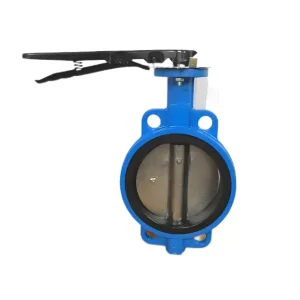
Wholesale Low - Pressure Wafer Type Butterfly Valve Supplier, Manufacturers
Explore Valve Specs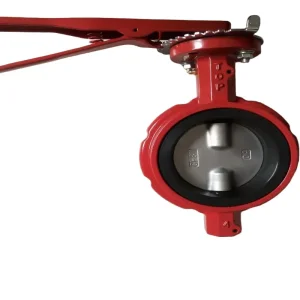
Wholesale Lugless Semi-Shaft Wafer Butterfly Valve - Durable & Reliable Manufacturer, Factory
Explore Valve Specs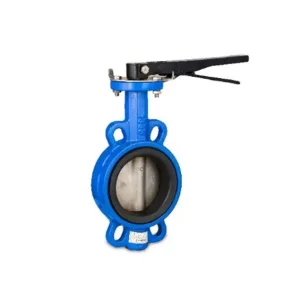
High-Quality Rubber Lined Pinless Butterfly Valve Supplier, Factories
Explore Valve Specs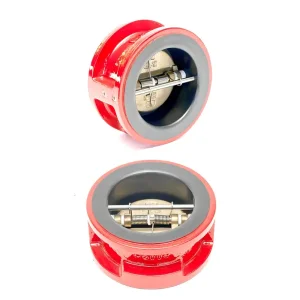
Wholesale Full Rubber Coated Check Valve Supplier, Factories
Explore Valve Specs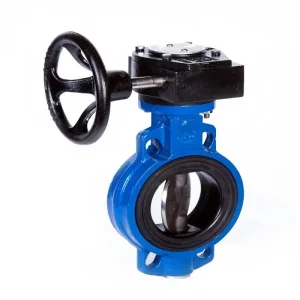
High-Quality Wafer Butterfly Valve – Worm Gear Rubber Lined Butterfly Valve Manufacturer, Factories
Explore Valve Specs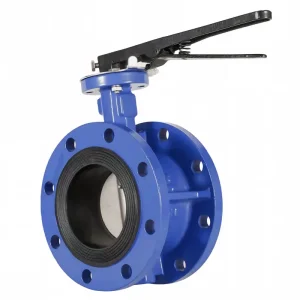
CE Certification Flanged Butterfly Valve with Lever Actuator - Durable & Reliable Manufacturers, Factory
Explore Valve Specs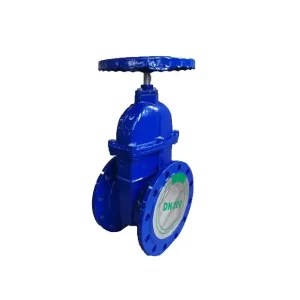
CE Certification German Standard Elastic Seat Gate Valve Manufacturers, Manufacturer
Explore Valve Specs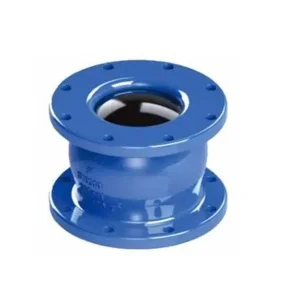
High-Quality High-Performance Silent Check Valve for Water Supply Systems Supplier, Manufacturers
Explore Valve SpecsFrequently Asked Questions: Vacuum Heat Isolation Globe Valves
Direct answers to the most critical technical, compliance, and material selection questions asked by piping engineers and procurement leads.
Why is a standard globe valve unsuitable for vacuum heat isolation duty?
Standard globe valves utilize graphite or PTFE compression gland packing rings designed specifically to retain positive internal pressure. When exposed to internal vacuum (negative differential pressure), ambient air (containing oxygen and humidity) is sucked inward past the packing rings. Furthermore, elevated heat (>200°C) dries out lubricating binders in ordinary gland packing, worsening air ingress and leading to severe medium oxidation or vacuum pump failure. Our vacuum heat globe valves solve this with multi-ply hermetic metal bellows seals welded to both the stem and the bonnet.
What is the significance of CE PED 2014/68/EU certification for this valve category?
Under the European Pressure Equipment Directive (PED 2014/68/EU), valves operating with high-temperature thermal fluids (Group 1 dangerous fluids like heat-transfer oils, volatile hydrocarbons, or superheated steam) and vacuum-to-pressure cycles fall into Category II, III, or IV. CE marking guarantees that the valve casting thickness, weld joints, non-destructive testing (NDT), and hydrostatic pressure capabilities have been audited and certified by an authorized EU Notified Body under Module H/H1 conformity assessment.
How is helium leak detection performed for vacuum service verification?
We employ the vacuum chamber test method in accordance with ISO 15848-1 and EN 1779. The valve internal volume is evacuated to below 0.01 mbar using a turbomolecular high-vacuum pumping station. Helium tracer gas is sprayed around all pressure-boundary flanges, bonnet joints, and bellows assemblies. A mass spectrometer measures the helium influx rate. Our standard threshold for vacuum heat isolation valves is under 1×10⁻⁹ mbar·L/s, guaranteeing total bubble tightness and air exclusion.
What body and trim materials are recommended for thermal oil vs. clean vacuum service?
For synthetic thermal oil and heat transfer fluids up to 350°C, Cast Carbon Steel (ASTM A216 WCB / 1.0619) or High-Temperature Alloy Steel (ASTM A217 WC6 / 1.7357) with 13Cr or Stellite Gr.6 hard-facing is optimal. For semiconductor vacuum epitaxy, thin-film chemical processing, or corrosive atmospheres up to 550°C, we specify Austenitic Stainless Steel (ASTM A351 CF8M / 1.4408) or Inconel 625 with full integral Stellite weld-overlay seats to ensure zero oxidation scaling and zero micro-particle shedding.
Can these vacuum isolation globe valves be actuated automatically?
Yes. Every Tianjin Top Valve vacuum isolation globe valve is engineered with an ISO 5211 direct-mount high-flange connection. This enables seamless mounting of pneumatic single-acting (spring-return for emergency fail-close isolation), pneumatic double-acting, or intelligent Modbus/Profibus electric quarter-turn/multi-turn actuators with position feedback and rapid stroke capability down to < 1 second.
How does your group heritage support product quality and delivery lead times?
Our company, Tianjin Top Automation Equipment Co., Ltd. (founded 2016), operates backed by two foundational facilities in Tianjin: Tianjin Donglian Valve Factory (foundry and precision machining since 1996) and Tianjin Dongfang Rubber Factory (seal formulating and molding since 1987). By eliminating third-party foundries and seal subcontractors, we maintain tight quality control over alloy metallurgy, vulcanization, and CNC machining, reducing standard production lead times to 3–4 weeks for customized configurations.
