High-Performance Flow Solutions: Featured Production Line
Direct-from-factory valve selections manufactured with integrated metallurgical integrity, custom elastomer vulcanization, and certified pressure compliance.
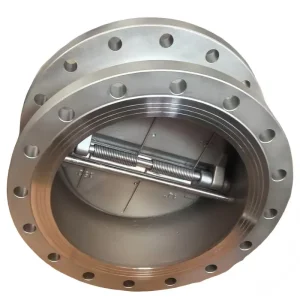
Wholesale CE/ISO/DIN/BS High Pressure Metal Seal Hard Seal Butterfly Valve Manufacturers, Manufacturer
Explore Technical Specs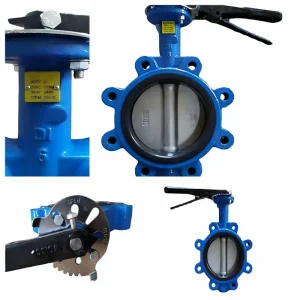
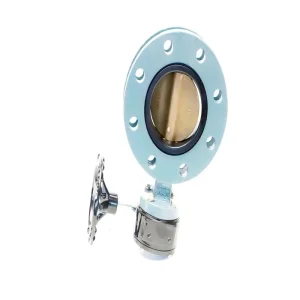
High-Quality WRAS Approved Butterfly Valve Lug Type 4325L Manufacturer, Factories
Explore Technical Specs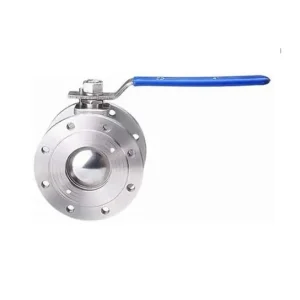
Wholesale Stainless Steel Ultra - Thin Ball Valve with Fire - Safe Design Supplier, Factories
Explore Technical Specs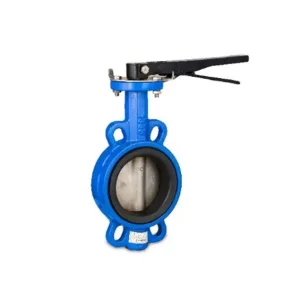
High-Quality Rubber Lined Pinless Butterfly Valve Supplier, Factories
Explore Technical Specs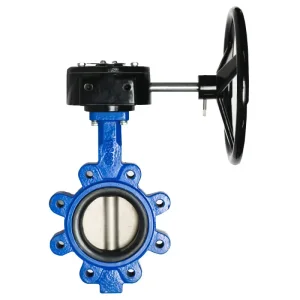
High-Quality Lug type Butterfly valve Suppliers, Manufacturers
Explore Technical Specs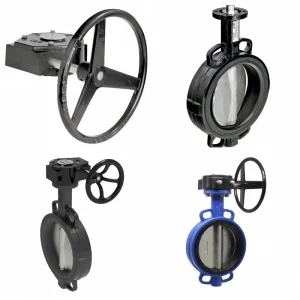
CE Certification WRAS Approved High-Performance Butterfly Valve 4020G Manufacturer, Factories
Explore Technical Specs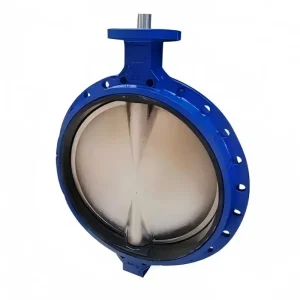
Wholesale Single Flange Butterfly Valve - Durable & Efficient Flow Control Supplier, Manufacturers
Explore Technical Specs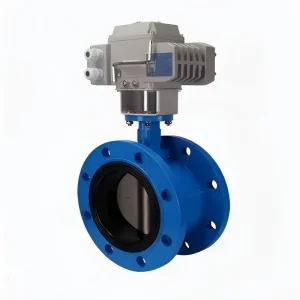
High-Quality High-Performance Electrical Butterfly Valve for Seamless Control Suppliers, Manufacturers
Explore Technical SpecsThe Evolution of Ultra-Thin Ball Valves in Modern Fluid Handling
Demands for weight reduction, compact skid integration, and zero fugitive emissions are reshaping ball valve architecture worldwide.
Structural Miniaturization & Space Economy
Traditional flanged ball valves carry substantial face-to-face dimensions and mass. The modern ultra-thin ball valve (also classified as a short-pattern or wafer thin-line ball valve) achieves up to a 70% face-to-face dimension reduction and a 60% weight reduction. This spatial efficiency is vital for packaged process skids, offshore platforms, shipboard machinery rooms, and compact cleanroom distribution networks.
Key Benefit: Skid Footprint OptimizationSevere Service & Fire-Safe Integrity
Because the body wall and flange spacing are drastically reduced, thermal gradient management becomes decisive. Advanced CE-certified ultra-thin valves integrate secondary graphite seals, anti-blowout stem designs, and fire-safe qualifications conforming to API 607 / ISO 10497. This ensures that even under seat destruction at temperatures exceeding 800°C, metal-to-metal shutoff prevents volatile medium propagation.
Key Benefit: API 607 Fire-Safe ContainmentLow-Torque Dynamic Automation
Precision CNC ball spherical tolerances within ±0.005mm paired with micro-lapped polymer seats (PTFE, RPTFE, PEEK) reduce breakout and running torques significantly. Consequently, procurement engineers can pair ultra-thin ball valves with substantially smaller pneumatic or electric actuators, curbing overall automated assembly costs, air consumption, and structural pipe strain.
Key Benefit: Downsized Actuator EnergeticsGlobal Enterprise Sourcing Criteria for CE-Certified Ultra Thin Ball Valves
Enterprise procurement professionals evaluate suppliers based on risk mitigation, verified compliance frameworks, and comprehensive metallurgical provenance.
PED 2014/68/EU Module H Conformity
For pressure equipment placed within the EEA, CE marking is not merely a formality. Sourcing teams mandate third-party audited Module H full quality assurance, validating calculated stress limits, hydrostatic burst boundaries, and non-destructive examination (NDE) protocols on all pressure-bearing ultra-thin cast and forged shells.
Raw Material Traceability & EN 10204 3.1
Corrosive, hydrocarbon, and high-purity systems require strict chemical compositions. Reliable suppliers furnish authentic EN 10204 3.1 inspection certificates documenting heat analysis, tensile strength, yield points, elongation, and charpy impact values for stainless steel (CF8M, CF3M, SS316, SS304) and specialized alloys.
ISO 5211 Standardized Actuator Flange
Seamless direct mounting without bulky custom brackets or adapter couplings eliminates mechanical backlash. EPC contractors standardize on direct-mount ISO 5211 patterns (F03 through F12) with dual-square stem profiles to enable immediate field retrofit of pneumatic, smart modulating electric, or safety spring-return actuators.
Integrated Foundry & Vertical In-House Control
By relying on an internal foundry and precision rubber and elastomer compounding facilities (operating since 1987 and 1996), our manufacturing chain eliminates subcontracting porosity, micro-cracks, and vulcanization delays, ensuring predictable batch quality and reliable factory delivery schedules.
Integrated Sector Solutions & Application Matrices
Explore how wafer thin-pattern ball valves solve spatial, thermodynamic, and mechanical bottlenecks across industrial pipelines.
| Industrial Sector | Application Scenario | System Engineering Challenge | Ultra-Thin Valve Solution Architecture | Certified Performance Level |
|---|---|---|---|---|
| Chemical & Petrochemical | Dosing modules & solvent transfer | Extreme spatial restriction & aggressive corrosive media | Wafer CF8M/CF3M body, virgin PTFE/RPTFE seat, dual Viton stem O-rings | PED Module H, Class 150/300, Bubble Tight |
| Industrial Cryogenics | Liquid Nitrogen (LN2) & LNG skids | Thermal shrinkage, stem freeze-up, brittle fracture | Extended stem column, PEEK/PCTFE seats, cryogenic degassing bore in ball | EN 1626 / BS 6364 tested down to -196°C |
| Marine & Shipbuilding | Ballast water, bilge, exhaust scrubbers | Vibration, pipe misalignment, tight bulkhead space | Short face-to-face wafer clamp design, ductile iron/stainless/bronze disc | ISO 9001, CE, Marine Classification approved |
| District Energy & HVAC | Plate heat exchanger bypass & headers | Excessive mechanical deadweight stressing pump headers | Ultra-short ball valve profile, direct electric modulation, low Ap loss | EN 12266-1 Rate A, PN16/25 Rated |
| Semiconductor & Purity | DI Water, ultrapure gas loop isolation | Particle shedding, cavity stagnation, dead legs | Electropolished internal surface (Ra ≤ 0.4 μm), cavity-filled PTFE seats | CE, cleanroom degreased & sealed packaging |
Localized Support Framework & Regulatory Compliance
Comprehensive technical and commercial backing tailored to European, North American, and Asia-Pacific regulatory regimes.
Full CE, PED & ATEX Compliance Dossier
Every shipment bound for Europe is accompanied by a comprehensive technical construction file (TCF), including CE Declaration of Conformity under the Pressure Equipment Directive (2014/68/EU), ATEX 2014/34/EU non-electrical equipment certification for explosive atmospheres (Zone 1/21), and operating and maintenance instructions.
Engineering Response & Custom Sizing
Our Tianjin-based core innovation team, backed by seasoned application engineers, delivers 24-hour turnaround on project datasheets, CAD drawings, and 3D STEP files. Whether your facility demands custom bore dimensions, specialized flange drilling (DIN PN10/16/25, ANSI 150/300, JIS 10K/20K), or bespoke stem lengths, our factory delivers verified calculations.
Export Logistics & Port Proximity
Strategically situated in Wuxia Industrial Park, Dongli District, Tianjin, our production facility features seamless highway access to Tianjin Xingang Port. With protective individual vacuum bagging, nitrogen purging for stainless units, and reinforced seaworthy wooden crates, our products reach over 50 countries with zero shipping distortion.
Technical Roadmap & Future Fluid Control Horizons
Advancing next-generation valve performance through smart telemetry, metallurgical innovation, and decarbonization solutions.
Digital Smart Skids & IoT
Embedding wireless micro-sensors into the valve neck to capture real-time stem packing cycle counts, seat friction torque shifts, and ambient operational temperatures for predictive maintenance.
Zero-Methane Fugitive Sealing
Upgrading wafer ball and butterfly valve packings with pre-compressed live-loaded Belleville springs and graphite-PTFE hybrid seals compliant with emerging EPA and EU methane abatement mandates.
Hydrogen Service Adaptations
Deploying specialized hydrogen-embrittlement-resistant metallurgy (316L with low nickel variation) and specialized non-permeable composite polymer seats to isolate gaseous hydrogen networks up to 50 bar.
Additive Metal Ultra-Thin Cores
Integrating selective laser melting (SLM) 3D printing into internal flow-shaping disc and ball cores, minimizing fluid turbulence and delivering an extra 15% increase in operational flow coefficient (Cv).
Frequently Asked Questions: Engineering & Sourcing
Direct technical answers addressing pressure testing standards, flange adaptation, elastomer choices, and international logistics.
What is the key engineering difference between standard ball valves and ultra-thin ball valves?
The core difference is face-to-face dimension. Ultra-thin ball valves use a specialized compact wafer casing clamped between pipeline flanges using long through-bolts or tapped holes. This eliminates roughly 60% to 70% of the overall length and weight compared to ASME B16.10 flanged ball valves, fitting into locations where standard valves cannot mount.
How does CE Certification (PED 2014/68/EU) apply to ultra-thin ball valves?
The Pressure Equipment Directive classifies valves based on size, maximum allowable pressure (PS), and the danger of the fluid (Group 1 hazardous or Group 2 non-hazardous). Valves matching Category I, II, or III undergo third-party audited compliance, qualifying shell wall thicknesses, weld joints, and mechanical integrity to guarantee safety under pressure.
Can ultra-thin ball valves be equipped with pneumatic or electric actuators?
Yes. Our ultra-thin series comes standard with an integrated ISO 5211 direct-mount platform. This eliminates the need for expensive brackets or adapters, allowing compact double-acting/spring-return pneumatic actuators or smart modulating electric actuators to mount directly on the stem without mechanical play.
What pressure tests are conducted before dispatch?
Every single valve undergoes 100% factory pressure inspection per ISO 5208 and EN 12266-1. This includes a hydrostatic shell test at 1.5 times the nominal working pressure and a high/low-pressure bi-directional seat leakage test at 1.1 times the design pressure to guarantee zero leakage (Rate A).
Enterprise Pipeline Components & Specialized Solutions
Explore complementary check, globe, gate, and specialized butterfly valve architectures for complete system integration.
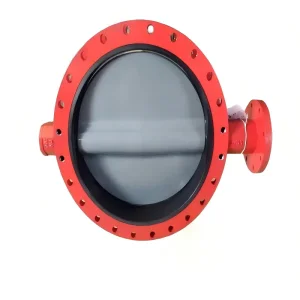
Wholesale Ceramic Disc Wafer Butterfly Valve - Durable & Efficient Design Supplier, Factories
Explore Technical Specs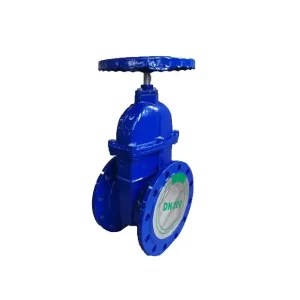
CE Certification German Standard Elastic Seat Gate Valve Manufacturers, Manufacturer
Explore Technical Specs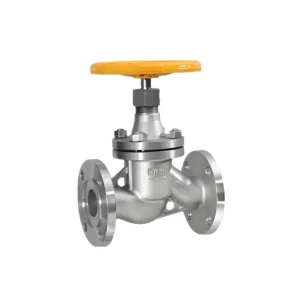
Wholesale Straight-Through Ammonia Globe Valve Manufacturers, Factory
Explore Technical Specs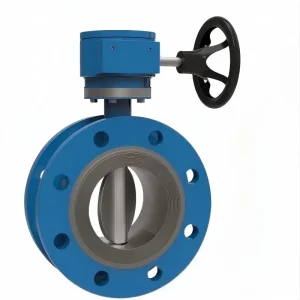
High-Quality Flange Type Butterfly Valve - Durable and Efficient Flow Control Supplier, Manufacturer
Explore Technical Specs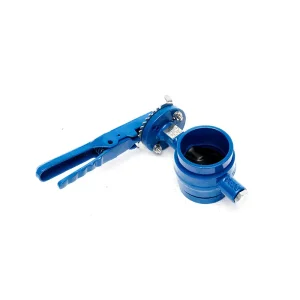
High-Quality Grooved Type Manual Butterfly Valve Suppliers, Manufacturers
Explore Technical Specs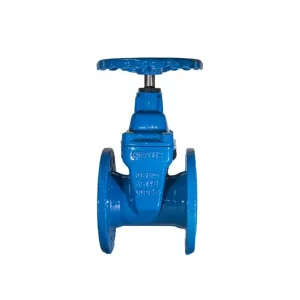
Wholesale Anti - Abrasion Elastic Seat Gate Valve with Reinforced Seat Suppliers, Supplier
Explore Technical Specs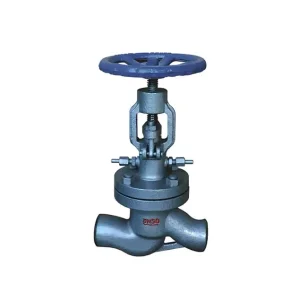
High-Quality Water Seal Globe Valve with Quick - Closing Feature Manufacturers, Manufacturer
Explore Technical Specs