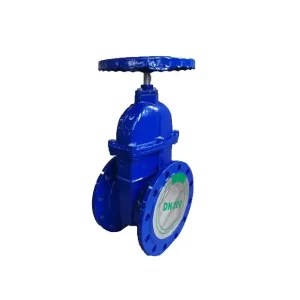
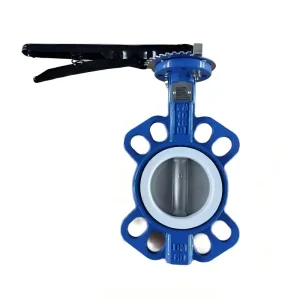
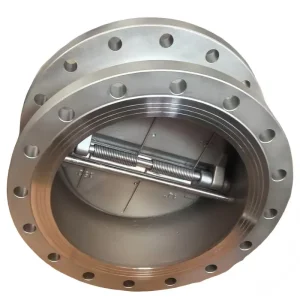
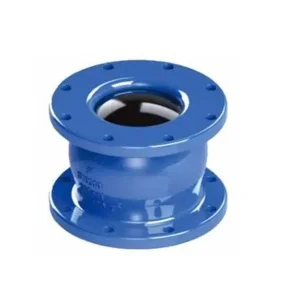
Featured Industrial Pipeline Flow-Control Series
Direct factory supply from our ISO 9001, CE, and WRAS-certified industrial foundry and assembly infrastructure.
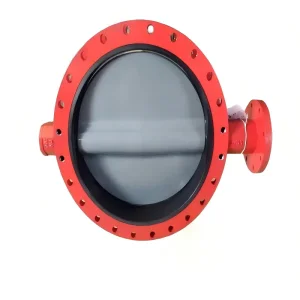
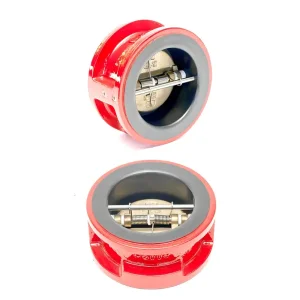
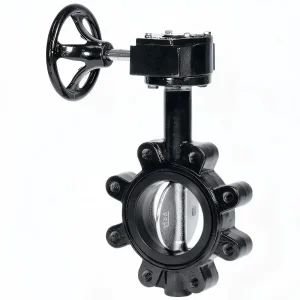
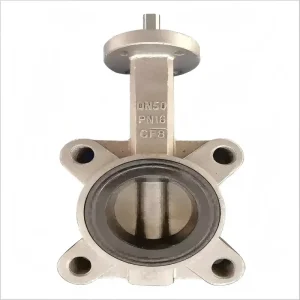
The Technological Evolution of Three-Way Flanged Ball Valves
From rudimentary flow diverting manifolds to multi-seat balanced, zero-emission flow switching systems compliant with CE-PED 2014/68/EU and ISO 15848-1.
Hydraulic Manifold Consolidation
Historically, chemical and industrial heating processes utilized complex assemblies comprising multiple two-way gate or ball valves paired with tee junctions. This architecture suffered from severe cavitation, pressure drop accumulation, and expanded fugitive emission leak paths across multiple welded or flanged joints.
- Reduced Footprint: Replaces two or three discrete inline valves.
- Minimized Leak Paths: 60% reduction in external pipe flange joints.
- Cycle Synchronization: Eliminates water-hammer caused by out-of-sync dual actuation.
Four-Seat Dynamic Balancing
Conventional 3-way ball valves relied on 2-seat designs, which suffered from internal bypass and ball drift under upstream pressure fluctuations. Our CE-certified multi-port design features a 4-seat pre-compressed spherical geometry that mechanically stabilizes the ball core along XYZ Cartesian axes.
- Omni-Directional Sealing: Holds zero leakage across all three flanged ports.
- Torque Uniformity: Balanced PTFE/PEEK seat loading mitigates operational drag.
- Cavity Relief: Automatic over-pressure relief back to the upstream path.
Precision Hydrodynamics: L-Port vs T-Port
Engineering selection relies on deterministic fluid routing. Top Valve manufactures both L-bore diverting geometries and T-bore mixing/continuous-bypass patterns to serve batch processing, cooling tower recirculation, and chemical metering loops without turbulence surge.
- L-Port (90° Diverting): Pure two-direction switching without cross-contamination.
- T-Port (180° Blending): Simultaneous dual-feed blending or three-way cross connection.
- Full Bore Construction: Cv values matching equivalent straight pipeline runs.
L-Port Configuration (Diverting Function)
Designed for 90-degree port switching. A quarter-turn (0°-90°) redirects media from a bottom or side common inlet to alternate process lines.
- Position 1: Port 1 to Port 2 connected; Port 3 tightly isolated.
- Position 2 (Quarter Turn): Port 1 to Port 3 connected; Port 2 isolated.
- Zero Mid-Stroke Deadlock: Flow path smoothly translates without entrapment.
T-Port Configuration (Mixing & Flow Splitting)
Features an orthogonal three-way drill-through allowing proportional mixing of two fluids into one outlet, or dividing a single input stream into twin outlets.
- Mixing Mode: Ports 1 & 3 feed into common Port 2 at controlled ratios.
- Straight-Through Bypass: Port 1 to Port 3 inline flow with Port 2 shut.
- Continuous Service: Eliminates pump dead-heading during changeovers.
Global EPC Procurement Criteria & CE Regulatory Mandates
Navigating stringent European Directives, pressure boundary safety, and automated valve actuation packaging for mission-critical industrial installations.
PED 2014/68/EU Module H Audit
CE certification on pressure equipment is non-negotiable for the European Economic Area (EEA) and multinational contractors. Module H full quality assurance mandates extensive design verification, third-party foundry surveillance, and 100% shell/seat hydrostatic pressure validation.
- EN 12516 Stress Calculations: Shell thickness safety margins exceeding Category III/IV.
- EN 10204 Type 3.1 Certification: Complete chemical heat-lot and physical tensile tracking.
- Notified Body Traceability: Affixed CE mark with registered Notified Body ID.
Fire-Safe & Low Emission Envelopes
Process plants handling hydrocarbons, volatile organic compounds (VOCs), and combustible refrigerants mandate valves built to API 607 / ISO 10497 fire safety and ISO 15848-1 Class AH/BH fugitive emission thresholds.
- Secondary Metal-to-Metal Seat: Backs up the primary soft seat during direct fire events.
- Live-Loaded Stem Packing: Belleville spring washers compensate for thermal cycling creep.
- Anti-Blowout Stem: Machined integral shoulder guarantees retention under extreme pressure.
ISO 5211 Direct Automation Pad
Integrating pneumatic, electric, or electro-hydraulic quarter-turn actuators demands repeatable torque transmission and low hysteresis. Our valves feature integrated ISO 5211 mounting flanges and dual square/keyway drive stems.
- Bracket-Free Mounting: Lowers center of gravity and eliminates bracket backlash.
- Predictable Breakaway Torque: Consistent low torque curve cuts actuator sizing costs.
- SIL 3 Safety Integration: Qualified for Emergency Shutdown (ESD) instrumented loops.
| Design Standard | Pressure Classes | Body Metallurgy | Seat Elastomers & Polymers | Leakage Classification | Flange Standards |
|---|---|---|---|---|---|
| EN 1983 / ASME B16.34 | PN16, PN25, PN40 / Class 150, 300 | WCB, CF8 (304), CF8M (316), Duplex 2205 | Virgin PTFE, RPTFE (15% Glass/Carbon), PEEK | ISO 5208 Rate A / ANSI Class VI | EN 1092-1 / ASME B16.5 / JIS B2220 |
| PED 2014/68/EU Mod H | Up to 100 Bar Custom | Low-Carbon LCB/LCC, Super Duplex 2507 | Metal-to-Metal (Stellite Overlay), Delrin | API 598 Zero Bubble Tight | DIN 2501 / BS 4504 Flanged |
| API 607 7th Ed. Fire-Safe | Class 150 to 600 | Hastelloy C276, Titanium Gr. 2, Monel | Carbon-Reinforced PEEK, Flexible Graphite | ISO 10497 Through-Seat Qualified | Raised Face (RF) / Ring Type Joint (RTJ) |
China Industry 4.0: Supply Chain Resilience & Vertical In-House Control
How our consolidated 23,000 m² Tianjin manufacturing campus merges foundry metallurgy, rubber elastomer polymer science, and CNC automation into a unified competitive moat.
In-House Casting Integrity
Unlike valve assemblers dependent on outsourced commercial foundries, Tianjin Top Valve operates its own electric induction melting and automated molding lines. Optical emission spectrometry checks each molten charge before tapping.
- Strict Carbon-Equivalent Control: Eliminates micro-porosity and hot cracking.
- Austenite Grain Refinement: Maximizes impact toughness in low-temperature service.
- Non-Destructive Testing (NDT): Radiographic and dye-penetrant checks on pressure boundaries.
Proprietary Elastomer Compounding
Stemming from Tianjin Dongfang Rubber Factory (established 1987), we blend, vulcanize, and mold our own high-density EPDM, NBR, FKM, and PTFE seat liners in-house. Sealing life is governed by elastomer quality.
- Anti-Aging Polymeric Formulation: Excellent resistance to chloramines and ozone.
- Compression Set Control: Elastic memory prevents seat deformation under prolonged load.
- WRAS Compliant Ingredients: Non-leaching elastomers certified safe for drinking water.
CNC Machining & Automated Testing
Valve disc profiles, spherical ball tolerances, and flange gasket serrations are machined on multi-axis CNC centers. Every completed unit undergoes 100% shell hydrostatic pressure testing at 1.5× PN rating and seat testing at 1.1× PN rating.
- Ball Sphericity Grade 25: Mirror micro-finish (Ra < 0.2 μm) cuts seat wear.
- Synchronized Flange Boring: Absolute concentricity across all 3 flange faces.
- Digital Test Data Logging: Pressure decay curves archived per valve serial number.
Global Commercial Landscape & Specialized Application Scenarios
How modern three-way flanged ball valves drive process automation, energy efficiency, and safety across global industrial powerhouses.
District HVAC & Thermal Energy
In central hydronic heating and cooling systems, 3-way flanged ball valves perform continuous proportional blending of chilled or heated water to air handling units (AHUs).
- High Rangeability: Characterized V-port ball trims provide linear heat exchange.
- Zero Deadhead: Continuous pump circulation prevents thermal shock and pressure spikes.
Chemical & Petrochemical Processing
Refineries and polymer synthesis plants use CF8M/316L 3-way valves with energized PTFE cavity fillers to divert corrosive acids, aromatic hydrocarbons, and solvents without stagnation.
- Cavity-Filled Seats: Eliminates residual media entrapment and polymerization.
- Fugitive Emissions: Certified to TA-Luft and ISO 15848-1 low-leak criteria.
Continuous Filtration (Duplex Strainers)
Critical lubrication and fuel systems cannot tolerate downtime for filter cleaning. A three-way flanged valve placed upstream and downstream of duplex filter baskets allows seamless offline basket changeover.
- Uninterrupted Operation: 100% continuous fluid supply to downstream turbines.
- Single-Point Operation: Replaces 4 isolation valves with 2 linked 3-way units.
Marine & Offshore Ballast Switching
Shipboard ballast, bilge, and cooling water circuits demand space-efficient valving resistant to aggressive marine atmospheres and saltwater galvanic corrosion.
- Aluminum Bronze & Duplex: Exceptional cavitation and pitting resistance (PREN > 35).
- Class Society Approvals: Strict wall thickness compliant with DNV, BV, and Lloyd's Register.
Engineering & Compliance Inquiries for Global Buyers
Clear, definitive answers addressing European CE marking, flow routing options, actuator torque calculations, and export delivery protocols.
What specific documentation certifies CE Compliance under PED 2014/68/EU?
How do I determine whether my project requires an L-Port or T-Port ball?
Why is a 4-seat construction superior to a 2-seat configuration in 3-way ball valves?
What safety factor should be applied when sizing pneumatic or electric actuators?
Can Tianjin Top Valve supply valves compliant with both DIN and ANSI flange standards?
How does your in-house foundry ensure metallurgical compliance?
What anti-static and fire-safe features are engineered into the valve assembly?
What are typical production lead times and global shipping logistics?
Full-Spectrum Flow Control & Heavy Process Valves
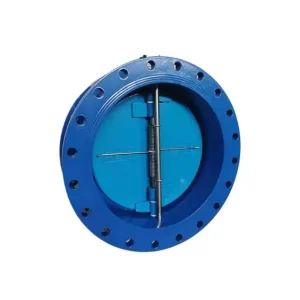
Explore our dual-plate checks, resilient gate valves, WRAS-approved sanitary assemblies, and specialized chemical lined components.