Industrial Flow Control & Quarter-Turn Valve Portfolio
Factory-direct industrial valves engineered to European CE standards and global project specifications. Manufactured in Tianjin with documented metallurgy and hydro-testing.
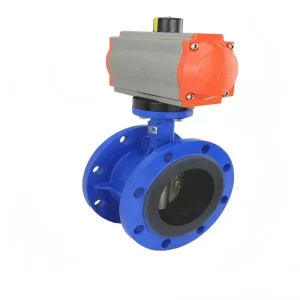
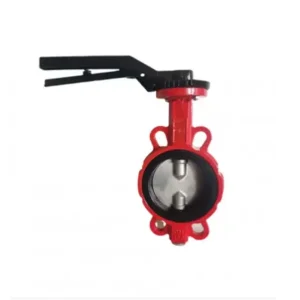
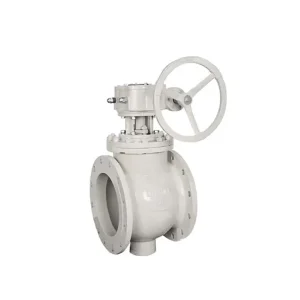
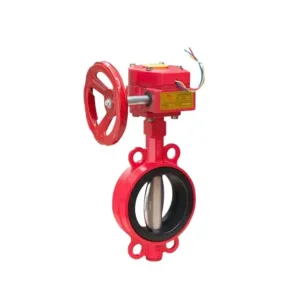
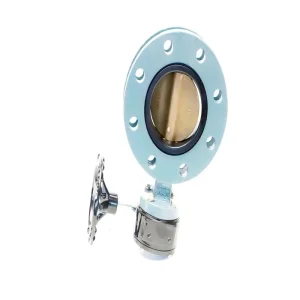
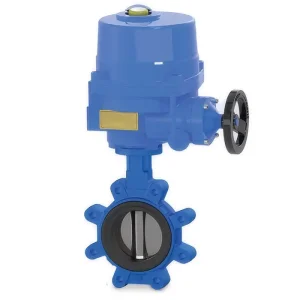
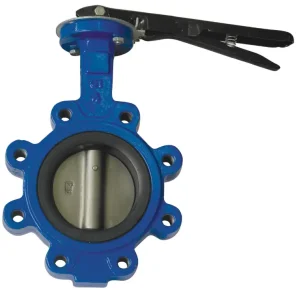
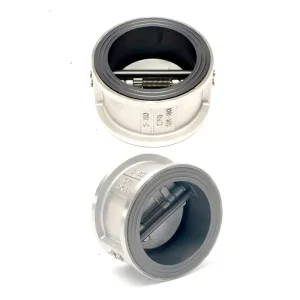
CE-PED Certification Architecture for Multi-Port Flanged Ball Valves
Under the European Pressure Equipment Directive 2014/68/EU (PED), a three-way ball valve with flange operating above 0.5 bar qualifies as a critical safety pressure accessory. Achieving certified manufacturer status requires verifiable metallurgy, full material traceability, and audited quality assurance.
PED 2014/68/EU Module H Full QA
Our manufacturing campus in Dongli District, Tianjin operates under Module H conformity. This grants design verification, production supervision, and final valve hydro-testing approval without requiring individual batch third-party intervention.
EN 10204 3.1 Material Traceability
Every cast body—whether WCB, CF8, CF8M, or high-alloy Duplex 2205—is melted in our integrated group foundry. Mill Test Certificates (MTCs) document optical emission spectrometry (OES) chemical breakdowns and Charpy V-notch impact values.
ISO 15848-1 Fugitive Emission Class A
Stem leakage accounts for over 75% of fugitive emissions in chemical networks. Our three-way ball valves utilize spring-energized live-loaded PTFE/graphite chevron packing assemblies, exceeding TA-Luft and ISO 15848-1 tightness thresholds.
Multi-Port Flanged Ball Valve Mechanics: L-Port vs. T-Port Matrix
Three-way flanged ball valves replace paired traditional gate or butterfly valves, optimizing piping footprint and reducing leak pathways. Understanding bore geometry and differential cavity pressure is vital for correct valve actuation and sealing.
| Valve Design Parameter | L-Port Configuration (Diverting / 90°) | T-Port Configuration (Mixing / 180° / 360°) | Engineering Compliance Standards |
|---|---|---|---|
| Core Fluid Function | Dedicated 2-way diversion, single-inlet/dual-outlet switching | Simultaneous proportioning, complete bypass, or 3-stream blending | CE Certified ISO 5211 / API 608 |
| Bore Geometry Options | Full Bore or Reduced Bore (90° internal passageway) | Straight-through with 90° intersecting cross-drilled core | EN 12516-1 / ASME B16.34 Wall Thickness |
| Seating Arrangement | 4-Seat (PTFE / R-PTFE / PEEK / Devlon) for balanced sealing | 4-Seat bidirectional spring-loaded chamber isolation | EN 12266-1 Rate A (Bubble Tight) |
| Flange Connection Dimensions | EN 1092-1 Type 21 (PN16/40), ASME B16.5 Class 150/300 | EN 1092-1 Type 21 (PN16/40), ASME B16.5 Class 150/300 | Face-to-Face DIN 3202-F1 / ASME B16.10 |
| Stem Safety Mechanism | Blowout-proof bottom-entry stem with antistatic ground | Heavy-duty anti-blowout collar with twin ground springs | API 6D Annex D / ATEX Directive 2014/34/EU |
| Cavity Pressure Relief | Automatic ball sphere upstream pressure equalization hole | Directional seat relief grooves avoiding trapped liquid lock | PED 2014/68/EU Essential Safety Clauses |
ISO 5211 Direct Mount
Integrally cast high platform conforms directly to ISO 5211 dimensions. No bracket or exposed coupling required for electric or pneumatic actuator mounting, eliminating hysteresis.
Antistatic Protection
Dual conductive spring-loaded stainless steel balls connect stem-to-ball and stem-to-body, continuously discharging static electricity generated by volatile fluid velocity.
Four-Sided Seat Preload
Unlike inexpensive two-seat diversion valves, our four-seat configuration supports internal pressure from any branch port, preventing disc tilting, seat deformation, and internal cross-port bypass.
Fire-Safe API 607 / ISO 10497
Secondary metal-to-metal backup sealing surfaces stop uncontrolled product escape if primary polymer seat inserts are consumed during high-temperature plant fires.
Global Industrial Landscape: Demand Drivers for Flanged 3-Way Ball Valves
The transition toward modularized process skids, automated heating/cooling loops, and clean energy processing has transformed three-way flanged ball valves from niche accessories into core engineering components worldwide.
Skid Modularization in Europe & Americas
Engineering procurement contractors (EPCs) constructing hydrogen generation packages, biopharmaceutical filtration skids, and sea-water reverse osmosis (SWRO) racks face aggressive spatial constraints. A single CE-certified three-way flanged ball valve eliminates two traditional inline valves, a piping tee, and four welding/flange connection joints, decreasing structural payload by up to 38%.
Decarbonization & District Energy Networks
District heating and cooling grids throughout Northern Europe, the UK, and North America require heavy-duty diverter valves capable of modulating low-loss thermal water up to 180°C. Resilient-seated ball designs replace heavy gate and globe valves, offering rapid quarter-turn emergency switching and bubble-tight zero leakage during maintenance routing.
Stringent Methane & VOC Emission Laws
Regulatory updates from the US EPA (Clean Air Act) and European Commission (Methane Regulation (EU) 2024/1787) mandate quarterly sniffing and zero-tolerance packing emissions across chemical tank farms. Flanged three-way ball valves manufactured with verified ISO 15848-1 compliance protect plant operators from punitive emission fines.
Tianjin Manufacturing Cluster: In-House Foundry & Elastomer Synergy
Western European and North American buyers frequently face 20–32 week lead times for multi-port flanged alloy valves. Tianjin Top Automation Equipment Co., Ltd. consolidates casting, rubber compounding, CNC machining, and automated pressure testing within one 23,000 m² physical perimeter.
Integrated Foundry Since 1996
Our heritage factory, Tianjin Donglian Valve Factory (established 1996), provides direct molten metallurgy control. We pour WCB carbon steel, CF8, CF8M, and nickel aluminum bronze in-house. This eliminates third-party casting queues and guarantees solid, non-porous valve bodies free of subsurface sand inclusions.
Proprietary Rubber & Polymer Plant
Tianjin Dongfang Rubber Factory (operating since 1987) compounds custom vulcanized elastomeric liners and polymer seals. By formulating virgin PTFE, modified R-PTFE, Viton, and drinking-water approved EPDM on-site, we maintain tight control over compound elasticity, cure cycles, and shore hardness.
CNC Spherical Accuracy & Hydro Testing
Multi-axis CNC turning and grinding centers machine three-way ball spheres to a mirror sphericity within Ra 0.2 µm. Each assembled valve completes dual-direction shell testing at 1.5× PN rating and seat leakage testing at 1.1× PN rating using nitrogen and demineralized water.
Where CE-Marked Flanged Three-Way Ball Valves Perform
Whether handling corrosive seawater, delicate chilled water distribution, or flammable petrochemical fractions, our three-way flanged ball valves ensure uninterrupted, leak-free diversion and flow regulation.
HVAC Central Heat Pump Chiller Loops
Equipped with electric rotary modulating actuators (4–20 mA feedback), flanged three-way T-port valves regulate secondary chilled water mixing with return loops. Rapid quarter-turn positioning maintains precise temperature control without hydraulic hammering.
Refinery Chemical Dual-Filter Bypass
Continuous process filtration lines cannot pause for basket changes. An L-port three-way flanged valve shifts crude or hydrocarbon solvent flows seamlessly between Filter Vessel A and Filter Vessel B without causing line pressure spikes or product stagnation.
Thermal Fluid & Heat Transfer Systems
Hot thermal oil systems operating up to 300°C demand metal-seated or reinforced flexible graphite seated three-way flanged valves. They direct heat flow to reactor jackets while maintaining bypass circulation to protect primary thermal heaters.
Desalination (SWRO) Membrane Diversion
High-chloride seawater requires casting in Super Duplex 2507 (UNS S32750) or Aluminum Bronze. Our 3-way flanged diverter valves safely alternate high-pressure permeate flush streams from fouled concentrate rejection discharge ports.
Emerging Technological Trends Shaping Multi-Port Valve Design
From IIoT diagnostics to polymer improvements and zero-leakage packing designs, industrial valve manufacturing is embracing intelligent automation and extended maintenance lifecycles.
Smart Actuation & Predictive Diagnostics
Modern plant architectures integrate smart quarter-turn actuators communicating via HART, Modbus, or Profinet. By monitoring continuous operating torque curves across 90° transitions, operators detect early seat wear or scaling buildup before shutoff failures happen.
Modified Fluoroelastomers & PEEK Seats
Our polymer laboratory in Tianjin is developing ultra-dense modified PTFE and PEEK composite formulations that preserve elasticity up to 260°C under continuous cyclic diversion, effectively eliminating the cold-flow creep historically linked with conventional fluoropolymer seats.
Additive Core Manufacturing & Light-Weighting
Topology-optimized internal fluid passages engineered through CFD simulation reduce turbulence and lower pressure loss across 90-degree transitions. This directly decreases operating pump kilowatt requirements throughout municipal and chemical pumping stations.
Global Procurement Checklist: Factory Acceptance Testing (FAT)
Specifying three-way flanged ball valves demands clear, thorough documentation to avoid job-site installation issues, flange face mismatches, and compliance discrepancies with European notified bodies.
1. Flange Standard & Facing
Confirm flange drilling standard: EN 1092-1 (PN10, PN16, PN25, PN40) with Raised Face (Form B1) or ASME B16.5 (Class 150, Class 300) with 125–250 AARH serrated finish. Mismatched flange standards cause costly field work and delay critical plant commissioning.
2. Flow Path Orientation Diagram
Always furnish an operational schematic displaying Port 1, Port 2, and Port 3 with defined actuator fail positions. Clarify whether Position 0° diverts from Port 1 to Port 2 and Position 90° directs flow from Port 1 to Port 3, or if continuous proportioning is required.
3. Testing Certifications & FAT
Require certified EN 10204 3.1 inspection reports containing shell hydrostatic tests (1.5× design rating), high/low-pressure closure seat tests per EN 12266-1 Rate A, antistatic electrical continuity verification (<10 ohms), and actuator operation tests with travel limit checks.
Frequently Asked Engineering & Commercial Questions
Straightforward answers regarding our manufacturing capabilities, PED approvals, material limits, and custom automation options.
What specific documentation proves CE certification for your three-way flanged ball valves?
We supply an EU Declaration of Conformity referencing the Pressure Equipment Directive 2014/68/EU (PED) Module H, signed by our quality director. The valve body features a permanent, forged/cast CE nameplate indicating our Notified Body identification number, material heat code, maximum design pressure/temperature limits, and serial number matched to an EN 10204 Type 3.1 Material Test Report.
How does an L-port three-way ball valve differ from a T-port in piping operations?
An L-port ball features two ports machined at 90 degrees. It acts as a dedicated flow switcher, directing media from a bottom or common inlet to either Left Port A or Right Port B. A T-port ball has three interconnected bores. It can unite two separate flows into a single common line (mixing), split a single flow across two lines (splitting), or allow straight-through flow with the third branch isolated.
Why is a 4-seat configuration critical for three-way flanged ball valves?
Economy valves sometimes cut corners with only two seats, which causes the internal ball sphere to skew toward the unseated branch under backpressure, creating cross-port leaks. Our three-way valves feature four pre-compressed polymer seats surrounding all four quadrants. This keeps the ball precisely centered regardless of which branch experiences positive system pressure.
Can you accommodate non-standard face-to-face dimensions and custom flange drilling?
Yes. Because we operate our own casting foundry and dedicated CNC machining centers in Tianjin, we can adapt patterns to DIN 3202-F1, ASME B16.10, or custom retrofits for existing European or Japanese piping runs. Flanges can be drilled to EN 1092-1 PN16/25/40, ASME B16.5 Class 150/300, or JIS B2220 10K/20K with matching raised face finishes.
What seat materials are available for corrosive chemicals and high temperatures?
Our standard seating is virgin PTFE or 15% glass-reinforced PTFE (R-PTFE) for service up to 180°C. For aggressive chemical handling, steam lines, or abrasive slurries, we provide carbon-filled PTFE, PEEK (rated up to 260°C), Delrin/Devlon for high-pressure gas service, or stellite-hardfaced metal-to-metal seating for continuous thermal oil applications up to 350°C.
What lead times can international EPC projects expect for automated packages?
Standard manual and bare-stem flanged three-way valves in stainless steel (CF8M) or carbon steel (WCB) typically ship in 3 to 4 weeks. Automated valve assemblies fitted with pneumatic actuators, solenoid valves, and smart positioners require 4 to 6 weeks, including full assembly, limit calibration, and hydrostatic/pneumatic FAT testing in our workshop.
Need Engineering Drawings & 3D Models for Tender Bidding?
Provide your required line size, design pressure, flow configuration (L/T), and flange drilling standard. Our engineering team returns full dimensional general assembly (GA) drawings and formal quotation packages within 24 hours.
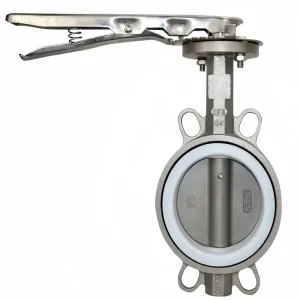
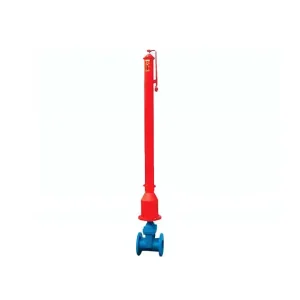
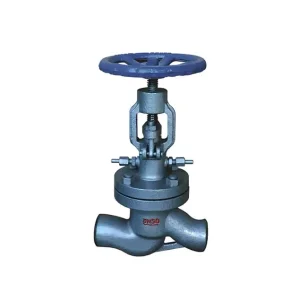
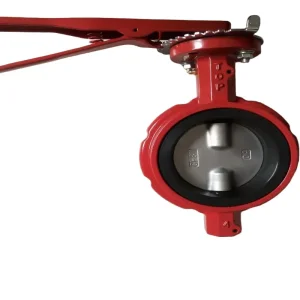
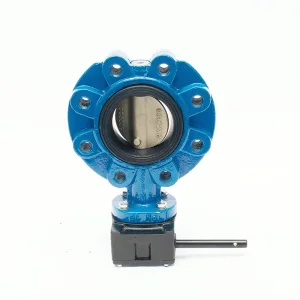
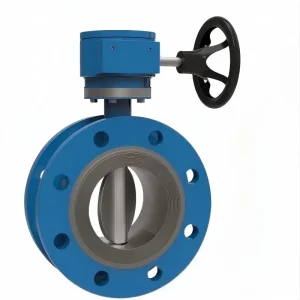
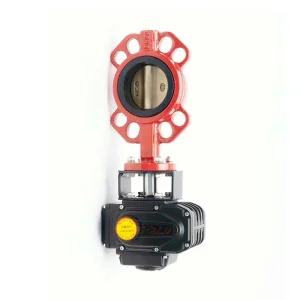
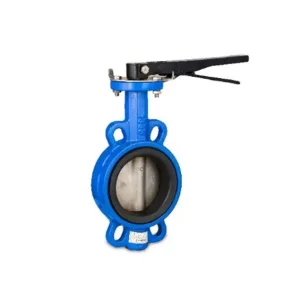
Engineered Check, Gate, Globe & Butterfly Valves
Discover our broader industrial valve product lines, covering marine, municipal, chemical, and building automation pipelines globally.