Featured Heavy Industrial & Field Flow Control Valves
Direct factory manufacturing featuring in-house casting foundry, elastomer compounding, CNC precision machining, and strict hydrostatic pressure verification according to CE and global standards.
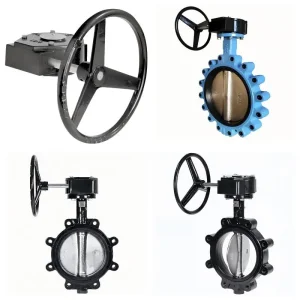
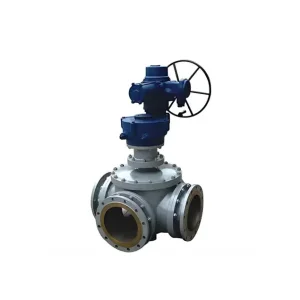
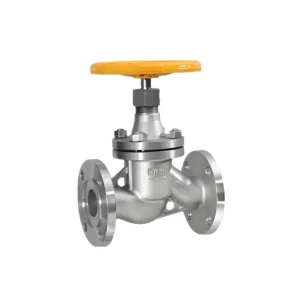
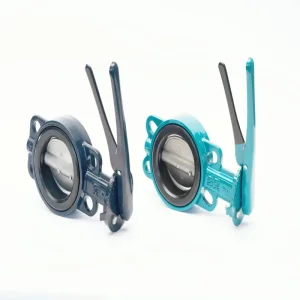
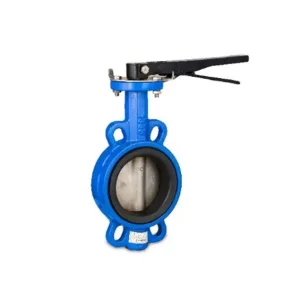
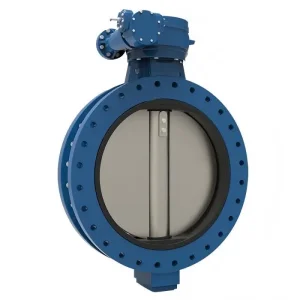
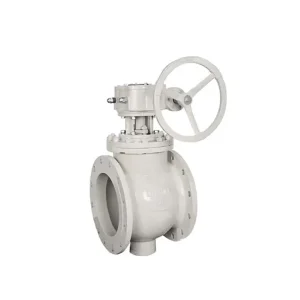
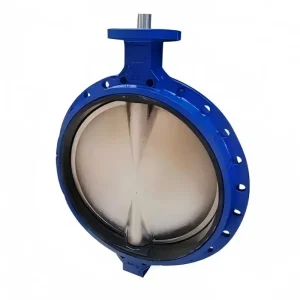
The Engineering Landscape of Oil-Field Globe Valves: Evolution & Critical Challenges
Modern upstream oil extraction and midstream processing infrastructure demand exceptional pressure containment, precision throttling accuracy, and uncompromising fugitive emission mitigation under sour, abrasive conditions.
High Differential Pressure Throttling
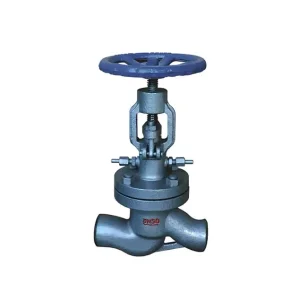
Oil-field production flowlines continuously encounter extreme pressure drops across choke points and manifold splits. Ordinary valves experience severe cavitation, flashing, and trim wire-drawing. Our CE certified globe valves incorporate engineered multi-stage pressure breakdown trims, parabolic plug profiles, and hardfaced Stellite Grade 6 / tungsten carbide seats, effectively dampening acoustic kinetic energy and eliminating localized cavitation pitting during high differential pressure throttling service.
Hydrodynamic Trim GeometrySour Service (H2S) & NACE MR0175 Metallurgy
Crude hydrocarbons and associated sour gas carry high concentrations of wet hydrogen sulfide (H2S) and carbon dioxide (CO2), inducing sulfide stress cracking (SSC) and hydrogen-induced cracking (HIC). All our pressure-retaining castings and forgings—including ASTM A216 WCB, A352 LCC, and A995 duplex alloys—undergo stringent heat treatment regimens to maintain core hardness strictly beneath 22 HRC, matching NACE MR0175/ISO 15156 standard requirements for lifetime reliability.
NACE MR0175 / ISO 15156 CompliantFugitive Emissions & Environmental Integrity
With environmental regulatory mandates tightening across the European Union and North America, valve stem packing leakage accounts for over 50% of uncontrolled hydrocarbon emissions. We incorporate precision-burnished live-loaded stem sealings, multiple die-formed flexible graphite rings with braided carbon anti-extrusion rings, and secondary bellows-seal barriers achieving ISO 15848-1 Class AH and TA-Luft tightness, drastically eliminating volatile organic compound (VOC) release.
Live-Loaded Low Emission Stem PackTechnical Distinction: Globe vs. Gate Valve Throttling Dynamics: While gate valves are strictly engineered for fully open or fully closed isolation and develop destructive disk flutter when cracked open, the linear perpendicular motion of the globe valve plug relative to the seat ring creates a linear or equal-percentage flow characteristic ideal for precise flow metering, bypass equalizing lines, and emergency blowdown loops in upstream oil-gathering networks.
Global EPC & Energy Procurement Requirements
Comprehensive insight into the mandatory qualification matrix, documentation auditability, and supply risk mitigation criteria expected by international oil corporations (IOCs) and national energy majors.
CE & PED 2014/68/EU Module H Auditability
Global operators within the European Economic Area require full conformity with Pressure Equipment Directive (PED) 2014/68/EU Module H full quality assurance. Every globe valve carries CE marking, validated by independent Notified Bodies, backed by comprehensive design calculation files and pressure hazard risk assessments.
EN 10204 3.1 & 3.2 Material Traceability
Full chemical composition spectrometer analysis, tensile strength verification, Charpy V-notch impact testing at sub-zero temperatures (-46°C to -196°C), and non-destructive testing (NDT) via radiographic (RT), ultrasonic (UT), and dye-penetrant (PT) inspections provided with traceable Mill Test Certificates.
In-House Manufacturing Integration
Operating since 1996 with group rubber roots from 1987, Tianjin Top Valve integrates an independent foundry, rubber compounding facilities, precision CNC machine centers, and an accredited physical-chemical testing laboratory under one roof, guaranteeing direct pricing without middleman trading markups.
Rigorous Hydrostatic & Low-Pressure Air Testing
100% of manufactured units are subjected to shell hydrostatic pressure tests at 1.5 times nominal pressure rating, along with high-pressure and low-pressure air seat leakage tests adhering strictly to API 598 and EN 12266-1 standards, ensuring verifiable zero-leakage shut-off prior to export packaging.
Technical Parameters & Material Configuration Guide
Engineered to conform with ASME B16.34, API 623, BS 1873, and DIN EN specifications for high-pressure hydrocarbons, sour crude, thermal steam, and cryogenic service.
| Parameter / Component | Standard Oil-Field Service | Sour Gas & Severe Service (NACE) | High-Temperature / EOR Steam Service |
|---|---|---|---|
| Nominal Diameter (DN / NPS) | DN15 to DN400 (1/2" to 16") | DN15 to DN300 (1/2" to 12") | DN25 to DN250 (1" to 10") |
| Pressure Classes | ASME Class 150 to 900 / PN16 to PN160 | ASME Class 300 to 2500 / PN40 to PN420 | ASME Class 600 to 2500 / PN100 to PN420 |
| Body & Bonnet Materials | ASTM A216 WCB / WCC, A105 Carbon Steel | ASTM A352 LCC / LCB, A351 CF8M, Duplex 2205 | ASTM A217 WC6, WC9, C12A Chrome-Moly Alloys |
| Trim Configuration (API Trim) | Trim 1 (13Cr) / Trim 8 (13Cr + Stellite Hardfaced) | Trim 12 (316SS + Stellite 6) / Inconel 625 Clad | Trim 5 (Full Stellite 6 Facing on Seat & Disc) |
| Stem Sealing & Packing | Die-formed pure flexible graphite rings | Live-loaded graphite with Braided Inconel anti-extrusion | High-temp expanded graphite with live-loaded belleville springs |
| Design Standards | API 623, API 602, ASME B16.34, BS 1873 | API 623, NACE MR0175, ISO 15848-1, CE/PED | ASME B16.34, API 623, DIN 3840, IBR Standard |
| Testing & Inspection | API 598, EN 12266-1 Shell & Seat Leak Test | API 598 zero leakage + ISO 15848-1 Helium Sniffing | High-temp hydrostatic + Radiographic NDT inspection |
Macro-Industry Engineering Solutions Across the Hydrocarbon Lifecycle
From deepwater subsea manifold tie-backs to desert oil-gathering stations and complex thermal cracking refinery towers, our valves deliver guaranteed reliability where pipeline failure is never an option.
Upstream Wellhead Choke & Manifold Metering
Raw multi-phase reservoir extraction carries sand particulates, formation brine, and gaseous fractions at pressures exceeding 5,000 PSI. Our angle-pattern and straight-pattern globe valves feature tungsten-carbide lined venturi diffusers and solid ceramic disc inserts that dissipate dynamic turbulence, preventing cavitation erosion and preserving precise flow metering into separator modules.
Enhanced Oil Recovery (EOR) High-Pressure Steam
Thermal recovery projects (SAGD and cyclic steam stimulation) inject superheated steam up to 450°C at 180 bar into heavy bitumen reservoirs. Our pressure-seal bonnet globe valves utilize forged chrome-moly ASTM A217 WC9 alloy bodies, high-purity expanded graphite gaskets encased in silver-plated metallic shrouds, preventing thermal differential relaxation and steam cut leaks.
Offshore FPSO Topside & Seawater Injection
Weight limitations, high marine saline atmospheres, and continuous structural vibrations on Floating Production Storage and Offloading (FPSO) vessels require rugged, corrosion-resistant valve packages. We provide forged Super Duplex 2507 and Nickel-Aluminum Bronze C95800 globe and butterfly valves engineered to withstand aggressive seawater cooling loops and fuel gas treatment skids.
Localized Regulatory Compliance & Lifecycle TCO Optimization
Strategic valve procurement extends beyond initial capital expenditure (CAPEX). A truly robust oil-field flow system minimizes operational expenditure (OPEX) by preventing unplanned downtime, eliminating fugitive emissions, and extending mean time between maintenance (MTBM).
In-Line Quick-Change Trim Architecture
Traditional welded globe valves require extensive flame cutting and re-welding during overhaul. Our bolted bonnet designs feature top-entry access, enabling maintenance personnel to extract the disk, seat ring, and stem without removing the valve body from the pipeline manifold. This modular trim design cuts field turnaround times by over 65%, returning well strings to active production hours ahead of schedule.
Complete Regulatory Dossier & Dossier Archival
Every shipment includes an exhaustive Engineering Dossier containing foundry heat certificates, mechanical impact test charts, NDT radiographic records, CE Declaration of Conformity according to PED Category III / IV Module H, and pressure test witness logs. Digital archives are retained securely for 10 years, ensuring complete traceability for future facility audits and re-certifications.
Corrosion Protection & High-Durability Coatings
To survive aggressive offshore marine salt spray and arid desert sandstorms, exterior valve surfaces receive near-white metal grit blasting to Sa 2.5 profile, followed by a three-coat NORSOK M-501 compliant protective system: zinc-rich epoxy primer, polyamide intermediate epoxy barrier, and aliphatic polyurethane topcoat delivering exceptional UV and chemical resistance.
Technology Roadmap: Next-Generation Oil-Field Flow Regulation
How our engineering team in Tianjin is pioneering smart valve integration, additive manufacturing of specialized labyrinth trims, and zero-emission sealing breakthroughs.
Digital Twin & CFD Simulation
Computational Fluid Dynamics (CFD) and Finite Element Analysis (FEA) modeling are applied to every custom valve body geometry, predicting vortex shedding frequencies and optimizing internal fluid passage radii to reduce turbulence and pressure drop by up to 14%.
Smart IoT Diagnostic Actuation
Integration of intelligent electro-pneumatic digital positioners equipped with HART, Foundation Fieldbus, and Modbus telemetry. Built-in acoustic emission sensors detect micro-leakage through seats before high-pressure wire-drawing causes unrecoverable body erosion.
Additive Labyrinth Disk Fabrication
Direct Metal Laser Sintering (DMLS) 3D metal printing of multi-tiered labyrinth cage trims in Inconel 718. The tortuous path fluid design forces high-velocity fluid through staged pressure drops, eliminating cavitation noise even under extreme choke conditions.
Hermetic Magnet-Coupled Stems
Research into packing-free magnetic-drive actuator coupling for ultra-hazardous and toxic hydrogen sulfide gas streams, achieving total physical isolation of process media from atmosphere and setting new benchmarks for Net-Zero oil-field decarbonization.
Frequently Asked Engineering & Sourcing Questions
Clear, authoritative technical answers to assist piping engineers, QA/QC inspectors, and supply chain managers in selecting the optimal valve solution.
What specific requirements govern CE certification for oil-field globe valves?
Under the European Union Pressure Equipment Directive (PED) 2014/68/EU, industrial globe valves operating in hazardous hydrocarbon service (Group 1 fluids: explosive, flammable, toxic) fall into Category III or IV depending on the nominal size (DN) and maximum allowable pressure (PS). CE certification necessitates an approved quality management system under Module H (Full Quality Assurance), design appraisal by an accredited Notified Body, material certification confirming impact toughness at design temperatures according to EN 10204 3.1, and hydrostatic shell testing witnessed and documented per European harmonized standards.
How does an API 623 globe valve differ from standard API 600 or API 602 valves?
API 623 is the definitive standard dedicated exclusively to cast steel globe valves with bolted bonnets in petroleum and natural gas industries. Unlike generic ASME B16.34 valves or API 600 gate valves, API 623 explicitly mandates heavier wall thicknesses to resist piping loads, guided plug discs to prevent stem galling under throttling, hardfaced Stellite 6 trim as a minimum on both disc and seat, and enlarged stem diameters to withstand high-thrust opening and closing seating forces without buckling or stem deformation under maximum shut-off differential pressures.
What steps prevent stem packing leaks and ensure compliance with ISO 15848-1?
We achieve ISO 15848-1 Class AH tight fugitive emission sealing by applying a mirror-finish burnishing treatment to the valve stem (surface roughness Ra < 0.2 µm), controlling stuffing box bore tolerance within strict limits, and installing a multi-ring live-loaded packing assembly. This set combines die-formed 99.8% high-purity expanded flexible graphite rings with woven carbon fiber anti-extrusion end rings, maintained under constant compressive load by Belleville disc spring washers. This arrangement automatically compensates for thermal expansion and packing relaxation across thousands of operational cycles.
Can you provide custom face-to-face dimensions and alternative end connections?
Yes. In addition to standard ASME B16.10 face-to-face dimensions and ASME B16.5 raised face (RF) or ring-type joint (RTJ) flanges, our engineering and CNC machining facilities can accommodate specialized DIN EN 558-1 series, butt-weld (BW) ends per ASME B16.25, socket-weld (SW) per ASME B16.11, and compact grayloc clamp hub connections commonly specified for offshore topside modular skids with restricted space envelopes.
How does in-house foundry and rubber compounding enhance product quality?
Most valve suppliers outsource casting production and seat compounding to third-party suppliers, exposing buyers to metallurgy defects, internal gas porosity, and inconsistent elastomer aging. Since 1996 for valve manufacturing and 1987 for rubber vulcanization, our facility in Tianjin controls the raw chemical formulations, melt spectroscopy, heat treatment, vulcanization press cure times, and CNC tolerances directly on our 23,000 m² campus, eliminating third-party quality variance and passing significant cost savings directly to project owners.
What is the standard procedure for third-party inspection (TPI) prior to shipment?
We regularly accommodate client-appointed third-party inspection agencies such as Bureau Veritas (BV), DNV GL, SGS, TÜV, and Lloyd's Register. Standard inspection intervention points include witnessing raw casting chemical and mechanical tests, dimensional verification, 100% hydrostatic shell and seat leak testing per API 598, low-pressure air testing, paint dry film thickness (DFT) checks, and final crate packaging inspections prior to container dispatch from Tianjin Port.
Explore Additional Oil-Field, Industrial & Process Valves
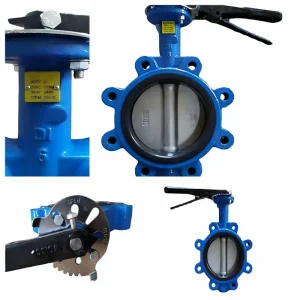
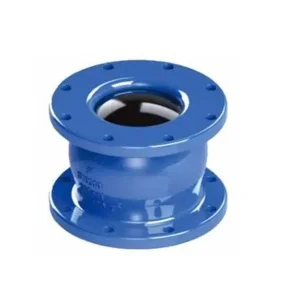
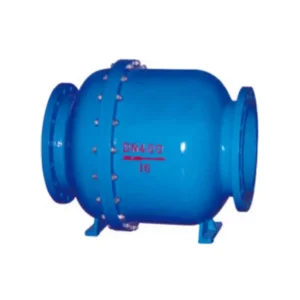
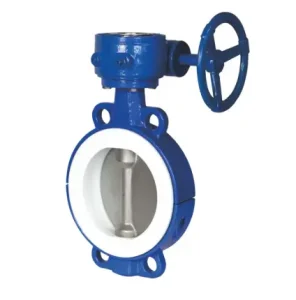
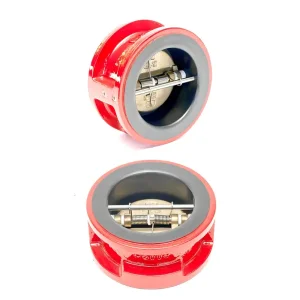
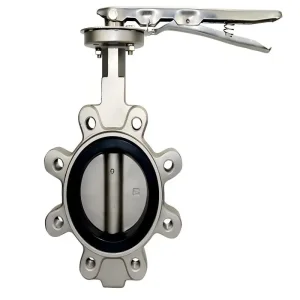
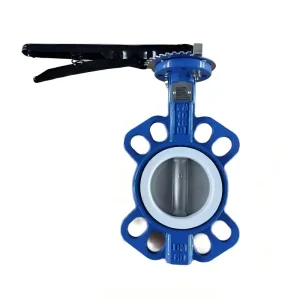
Select from our verified line of WRAS-certified butterfly valves, high-pressure check valves, non-slam backflow devices, and fluoropolymer-lined severe service assemblies.