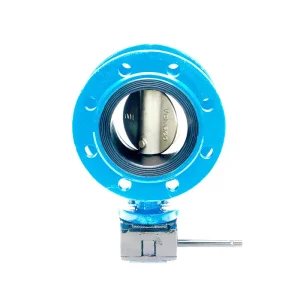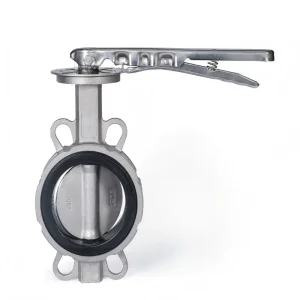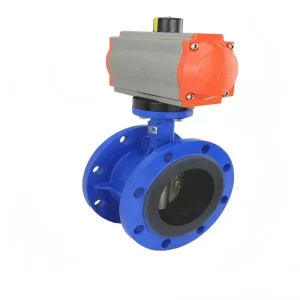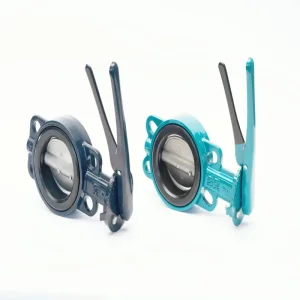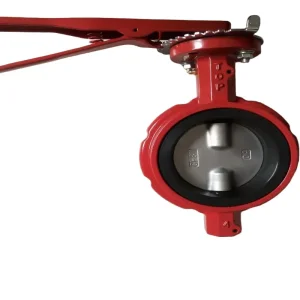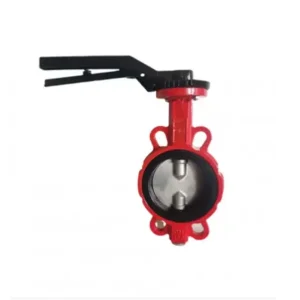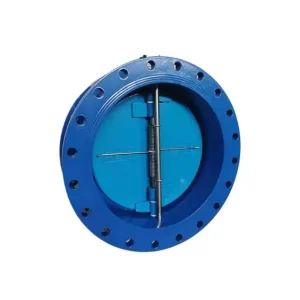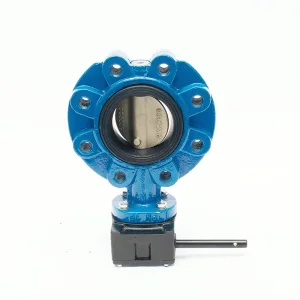
Marine Centric Lug Manual Butterfly Valve
Configure & Procure
Engineered for absolute bubble-tight shut-off (EN 12266-1 Rate A), zero fugitive emissions, and low operational breakaway torque under rigorous continuous service.
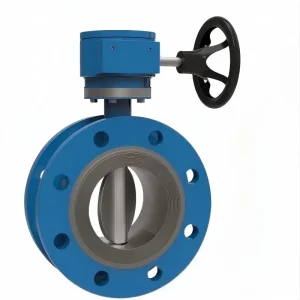
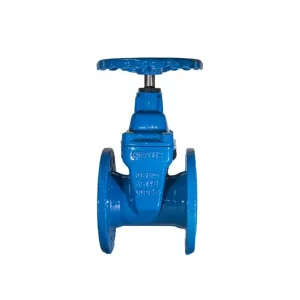
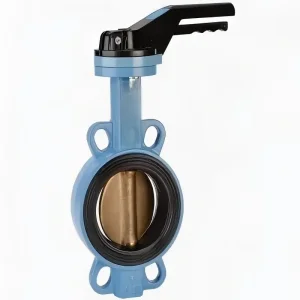
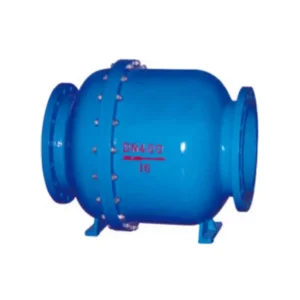
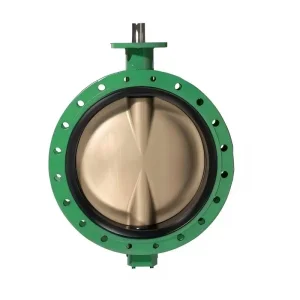
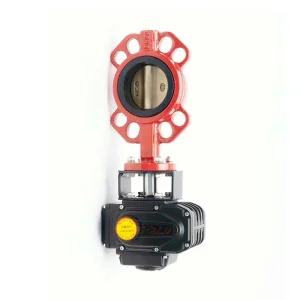
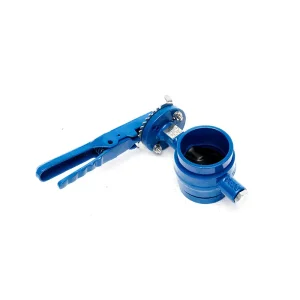
In-depth metallurgical and mechanical insights into manual quarter-turn isolation: concentric design, elastomer bonding, self-locking worm gears, and European Pressure Equipment Directive (PED 2014/68/EU) compliance.
Manual concentric butterfly valves rely on interference fit between the spherically machined disc edge and the resilient elastomer seat. This interface provides hermetic bi-directional shut-off while minimizing seating torque.
Compliance with the European Pressure Equipment Directive requires documented pressure boundary calculations, nondestructive testing, and strict batch traceability from melt furnace to final shipment.
Manual manual intervention demands predictable mechanical leverage to overcome pipeline differential pressure without compromising operator safety or valve seating ergonomics.
From district cooling plant headers in Western Europe to mining slurry circuits in Latin America, manual butterfly valves are specified according to stringent environmental parameters.
Installed across urban transmission mains, raw water intake pumping plants, and water treatment filtration skids. WRAS and CE approved non-toxic EPDM compounds eliminate bacterial colonization and chemical leaching, ensuring water quality preservation.
Naval and commercial vessel engine room systems rely on Aluminum Bronze (C95800) disc manual lug valves for ballast isolation. High resistance to chloride pitting, cavitation erosion, and biofouling ensures long maintenance cycles offshore.
In hydronic balance loops, condenser water circuits, and thermal energy storage tanks, manual wafer valves provide economical flow regulation and positive isolation during scheduled seasonal coil changeouts.
Pure PTFE/PFA fully lined manual butterfly valves isolate concentrated inorganic acids and alkaline liquors. Iso-statically molded fluoropolymer liners (minimum 3mm thickness) guarantee chemical impermeability across wide temperature ranges.
| Nominal Size | Pressure Rating | Body Material Options | Seat Elastomer | Disc Material | Standard Compliance |
|---|---|---|---|---|---|
| DN40 – DN150 (1.5" – 6") | PN10 / PN16 / Class 150 | Ductile Iron GGG40 / WCB | EPDM / NBR / FKM | SS316 / CF8M / Bronze | EN 593, PED 2014/68/EU |
| DN200 – DN600 (8" – 24") | PN10 / PN16 / Class 150 | Ductile Iron GGG50 / CF8M | WRAS EPDM / PTFE | CF8M / Nickel Aluminum Bronze | API 609, ISO 5752 Series 20 |
| DN700 – DN1200 (28" – 48") | PN6 / PN10 / PN16 | Ductile Iron / Carbon Steel | Reinforced NBR / EPDM | Ductile Iron Epoxy Coated / 316 | AWWA C504, EN 1092-2 |
| DN50 – DN300 (Specialty) | PN16 / Class 150 / 300 psi | Ductile Iron / Stainless Steel | High-Performance PTFE | Ceramic / Dual-Phase Steel | ASME B16.34, CE Category III |
How deep vertical integration at the Tianjin production cluster buffers global engineering projects from raw material price volatility, elastomer aging failure, and delivery disruptions.
Unlike assemblers who outsource critical subcomponents, our vertically integrated manufacturing cluster encapsulates foundry casting, custom polymer compounding (since 1987), precision CNC machining, and hydrostatic validation under one management system.
This closed loop guarantees that chemical tolerances in ductile iron melts and polymer cure rates are calibrated specifically to minimize friction torque and extend valve service life.
Disruptions in global logistics require robust regional supplier clusters. Situated in the Wuxia Industrial Park adjacent to the major maritime gateway of Tianjin Port, our plant maintains raw material buffers and high-capacity foundry output.
Turnaround times for custom CE drilled patterns (PN10/16, ANSI 150, JIS 10K) are reduced by 40% compared to typical global competitors relying on fragmented multi-tier supply networks.
Global procurement requires complete quality parity across international jurisdictions. All manual butterfly valves comply with ISO 9001 quality systems and CE conformity requirements.
Full dimensional compliance with ISO 5752 series 20 face-to-face dimensions ensures direct interchangeability with legacy valves across European, American, and Asian processing plants.
Even purely manual flow control devices are evolving. Discover how predictive position sensing, lightweight materials, and zero-methane emissions certifications are shaping the next generation of butterfly valves.
Manual gear operators are being integrated with low-power wireless angle transmitters (LoRaWAN/Bluetooth). Without requiring heavy pneumatic or motor power conduits, plant operators monitor true valve disc degree open/closed status via central SCADA.
Through micro-arc oxidation and advanced fluoropolymer-ceramic impregnation of disc seating edges, breakaway operating torque is reduced by up to 30%, enabling downsized manual operators and easier field operation.
Addressing EU Scope 3 emissions reporting, Tianjin foundry operations are transitioning to electric induction melting, scrap closed-loop recycling, and documented Environmental Product Declarations (EPD) to support green building standards like LEED and BREEAM.
Key engineering considerations for CE compliance, flange compatibility, and elastomer selection when ordering factory-direct industrial manual butterfly valves.
Wafer valves feature locating holes clamped between pipeline flanges by long stud bolts; they cannot be used for dead-end service. Lug valves feature threaded tapped holes around the entire perimeter, allowing either pipe flange to be unbolted for downstream maintenance while maintaining full line pressure upstream (dead-end isolation service).
A CE mark confirms that the valve meets the essential safety requirements of the European Pressure Equipment Directive (PED 2014/68/EU). Depending on valve size (DN) and maximum allowable pressure (PS), it verifies verified shell strength calculations, certified metallurgical properties, and hydrostatic factory acceptance testing.
EPDM is ideal for potable water (WRAS), hot water up to 120°C, and HVAC loops, but degrades in hydrocarbons. NBR (Buna-N) provides excellent resistance to mineral oils, hydraulic fluids, and compressed air up to 90°C. PTFE provides universal chemical inertness across corrosive acids, alkalis, and high-purity industrial solvents.
Standard engineering practice recommends ten-position levers up to DN150 (6") for rapid quarter-turn actuation. For sizes DN200 (8") and above, or pipelines with line velocities exceeding 3 m/s, self-locking worm gear operators are mandatory to prevent hydraulic disc slam, water hammer, and unsafe manual torque loads.
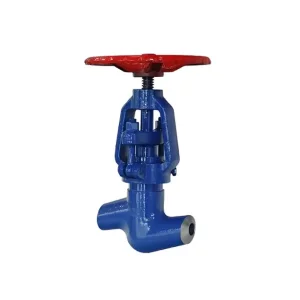
Explore our full engineering portfolio: pinless shafts, corrosion-resistant stainless steel butterfly valves, wafer non-return systems, and high-pressure steam globe valves.