
Primary Flanged Butterfly Valves for Brazilian Infrastructure
Engineered for severe duty cycles, compliant with ABNT NBR, ASME B16.5, AWWA C504, and EN 558 standards with zero-leakage bidirectional sealing.
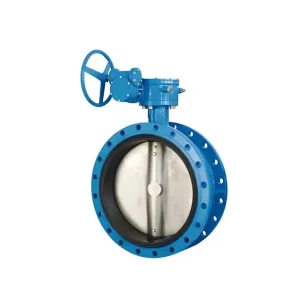
Brazil High-Efficiency Low-Torque Flanged Butterfly Valve (DN50-DN2000)
View Technical Specifications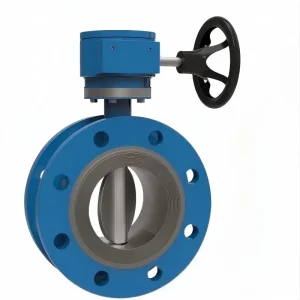
Double Flanged Resilient Seated Butterfly Valve for Mining & Industrial Flow
View Technical Specifications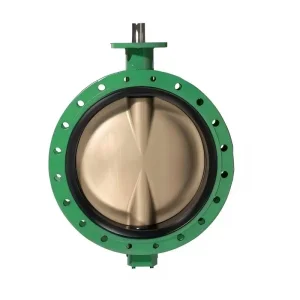
Potable & Raw Water Supply Double Flanged Butterfly Valve (PN10/PN16/Class 150)
View Technical Specifications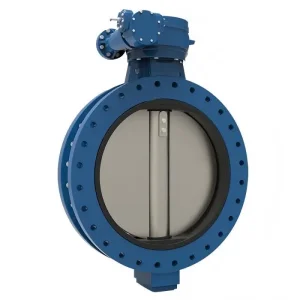
CE & ISO Certified Double Eccentric High-Performance Flanged Valve
View Technical SpecificationsThe Industrial & Infrastructure Ecosystem in Brazil
Brazil stands as Latin America's largest industrial power. Fluid handling engineering across the nation demands high-resilience flanged butterfly valves capable of enduring aggressive environments, high mechanical stress, and strict regional regulatory frameworks.
Novo Marco Legal do Saneamento
Federal Law 14.026/2020 mandates universal water supply and sanitation by 2033, unlocking over USD $120 billion in concession investments across Sabesp, Aegea, Copasa, and Sanepar. This requires massive trunk line upgrades where large-diameter flanged butterfly valves (DN600 to DN2400) replace aged gate valves to minimize water hammer and reduce pumping power dissipation.
Severe Mining Slurry & Tailings
In the Iron Quadrangle (Minas Gerais) and Carajás (Pará), operators like Vale process billions of tons of iron ore and bauxite. Pipeline valves must withstand extreme abrasive wear, hydro-transport slurry velocity, and corrosive process water. Our heavy-walled ductile iron and high-chrome disc configurations deliver extended service lifespans under abrasive slurry conditions.
Pre-Salt Offshore & FPSO Modules
Brazil’s Santos and Campos basins demand Petrobras-compliant valves for topside cooling, seawater ballasting, and produced water management. Valves must resist chloride stress corrosion through Nickel-Aluminum Bronze (C95800), Duplex 2205, and Super Duplex 2507 metallurgy with strict vulcanized fire-tested sealing per API 607 standards.
Sugarcane Ethanol & Vinasse Handling
São Paulo and Central-West ethanol refineries handle highly corrosive, hot vinasse (vinhaça) and bagasse boiler condensates. Flanged butterfly valves with specialized peroxide-cured EPDM or PTFE liners resist organic acids and temperature swings, preventing unexpected downtime during 24/7 harvest crushing seasons.
Pulp & Paper Mill Expansion
Giants like Suzano and Klabin operate the world's most productive eucalyptus kraft pulp facilities. High-consistency pulp slurries and bleaching plant chemicals require flanged butterfly valves with cavitation-resistant disc profiles, polished 316L discs, and bubble-tight shut-off up to 25 bar working pressures.
Hydroelectric & Thermal Power Cooling
Hydropower generates over 65% of Brazil's electricity (Itaipu, Belo Monte). Turbine bypass, penstock shutoff, and heat exchanger cooling circuits demand heavy-duty double-flanged butterfly valves capable of maintaining zero-leakage sealing across millions of operational cycles under fluctuating head pressures.
China Industry 4.0: Metallurgical Precision & Supply Chain Resilience
Eliminating trading intermediaries through end-to-end proprietary production: in-house metallurgy, customized rubber formulation, CNC precision profiling, and certified quality traceability.
Why Rubber Chemistry Determines Valve Lifespan
In flanged resilient-seated butterfly valves, over 80% of premature field failures stem from elastomer degradation: compression set failure, swelling under chemical media, or debonding from the body ring. While most assemblers outsource rubber seats, our group operates Tianjin Dongfang Rubber Factory (established in 1987).
We formulate raw EPDM, NBR, FKM (Viton), and food-grade compounds directly. Our engineers optimize vulcanization cure curves to achieve ultra-low compression set (<18% after 1,000 hours at 100°C), exceptional tear strength, and chemical resistance calibrated to the exact fluid composition of Brazilian municipal and industrial projects.
- Automated Foundry Ingot Control: Spectrometric batch analysis ensures strict nodularity (>85%) in GGG40/GGG50 ductile iron.
- CNC 5-Axis Spherical Disc Contouring: Reduces seating torque by 28%, significantly downsizing actuator requirements and overall capital expense.
- Fusion Bonded Epoxy (FBE) Coating: 250-300μm electrostatic coating per AkzoNobel standards, pinhole-free tested at 14kV per DIN 30677-2.
Supply Chain Certainty for Brazilian EPC Contractors
Procurement delays on infrastructure projects across São Paulo, Minas Gerais, and Bahia can trigger severe contractual penalties. With direct maritime routes from Tianjin Port to the Port of Santos, Port of Paranaguá, and Port of Suape, we maintain end-to-end logistical transparency.
Our factory runs on unified ERP scheduling, maintaining raw casting buffers for standard flanged patterns (ISO 5752 Series 13 & 14, AWWA C504 short and long body). This drops export production lead times to 3–4 weeks even for high-volume bids.
EN 10204 Type 3.1 Material Test Reports (MTR), Shell & Seat Hydrostatic Test Certificates (API 598 / ISO 5208 Rate A), Torque Curves, Paint Thickness Verification, and CAD/BIM 3D models for immediate pipeline design integration.
Engineering Specifications for Brazilian Pipeline Deployment
Seamlessly interface with Brazilian ductile iron pipelines (ABNT NBR 7675), petrochemical lines (ASME B16.5 / B16.47), and water infrastructure standards.
| Engineering Parameter | Concentric Flanged Valve | Double Eccentric High Performance | Triple Eccentric Metal-to-Metal |
|---|---|---|---|
| Nominal Diameter Range | DN50 – DN2400 (2" – 96") | DN80 – DN1800 (3" – 72") | DN80 – DN2000 (3" – 80") |
| Pressure Ratings | PN10, PN16, PN25, Class 125/150 | PN16, PN25, PN40, Class 150/300 | PN16 – PN100, Class 150 – 600 |
| Body Flange Standards | ABNT NBR 7675, EN 1092-2, ASME B16.5 | EN 1092-1, ASME B16.5, ASME B16.47 | ASME B16.5, ASME B16.47 Series A/B |
| Face-to-Face Standards | ISO 5752 Series 13/14, EN 558 Series 13/14 | ISO 5752 Series 14, EN 558 Series 14/15 | API 609 Table 2, ISO 5752 Series 16 |
| Body Casting Metallurgy | Ductile Iron (QT450-10 / GGG40 / GGG50) | WCB, CF8M (316 SS), Duplex 2205 | WCB, LCC, CF8M, Inconel Lined |
| Elastomer / Seat System | Vulcanized EPDM, NBR, Viton, Hypalon | PTFE + 15% Carbon, RPTFE, Metal Seat | Laminated 316SS + Graphite, Solid Stellite |
| Operating Temperature | -20°C to +120°C (Elastomer bound) | -50°C to +200°C | -196°C (Cryogenic) up to +550°C |
| Target Brazilian Industries | Sanitation (Sabesp), Raw Water, HVAC | Pulp & Paper, Mining Slurry, Chemical | Pre-Salt Petrobras, High-Pressure Steam |
Engineering Problem-Solving Across Brazilian Job Sites
Real-world case dynamics showing how flanged butterfly valve configurations resolve field failure modes.
Sabesp Trunk Distribution Modernization
Challenge: Excessive leakage and actuator burn-out on DN1200 buried water main valves in Greater São Paulo.
Solution: Double-flanged U-section valves with integral vulcanized EPDM liners, IP68 submerged electric actuators, and 316SS disc edges, dropping hydrodynamic operating torque by 32% and ensuring zero water loss under dynamic line surging.
Minas Gerais Iron Ore Tailings Dewatering
Challenge: Extreme erosion on wafer butterfly valve liner necks caused by abrasive quartz-iron particles under 16 bar head.
Solution: Replaced with double-flanged long-pattern valves featuring hard ceramic coated ductile iron discs and heavy-wall natural rubber seats, extending valve replacement intervals from 4 months to over 26 months.
Macaé Offshore FPSO Seawater Intake
Challenge: Marine biofouling and rapid pitting corrosion in marine ballast piping using standard cast iron.
Solution: Installed Nickel-Aluminum Bronze (ASTM B148 C95800) double-flanged butterfly valves with Monel K500 shafts and high-rebound fluoropolymer seats, completely resisting micro-galvanic chloride corrosion.
Need Engineering Sizing or Valve Schedule Pricing for Brazil?
Our bilingual valve engineering team assists with Kv/Cv calculations, cavitation coefficient checks, material compatibility, and comprehensive NCM tariff support.
High-Performance Industrial Valve Portfolio Serving Brazil
Explore our full line of automated, manual, resilient, and metal-seated valve solutions engineered for heavy industry.
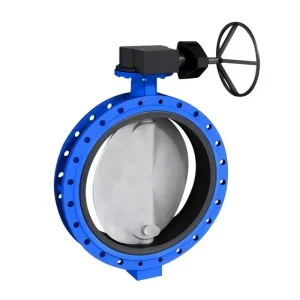
Flanged U-Section Butterfly Valve for Heavy Water Works Distribution
View Technical Specifications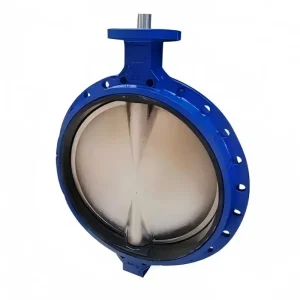
Single Flange Resilient Seated Valve for End-of-Line Pipeline Service
View Technical Specifications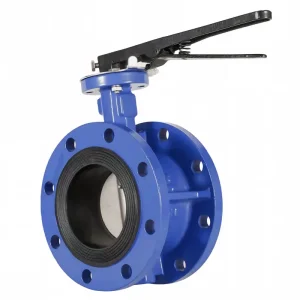
CE Flanged Butterfly Valve with Precision Ergonomic Lever Actuator
View Technical Specifications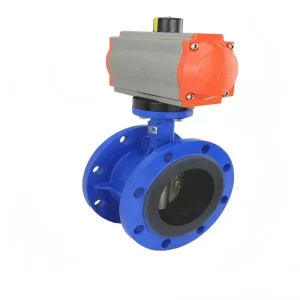
Pneumatic Actuated Flanged Butterfly Valve for Rapid Automation Cycling
View Technical Specifications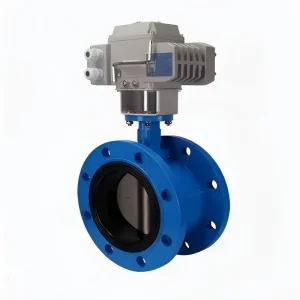
Intelligent Modulating Electric Flanged Butterfly Valve (4-20mA / Modbus)
View Technical Specifications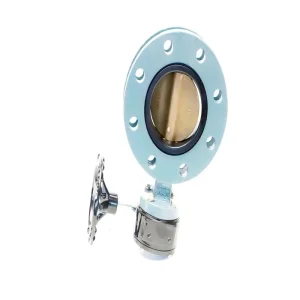
Triple Eccentric High-Pressure Hard Metal Seal Flanged Butterfly Valve
View Technical Specifications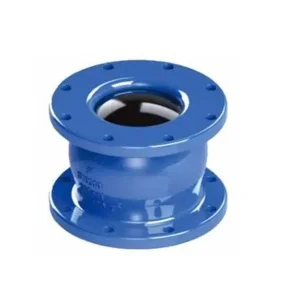
Non-Slam Silent Check Valve for Booster Pump Station Water Hammer Arrest
View Technical Specifications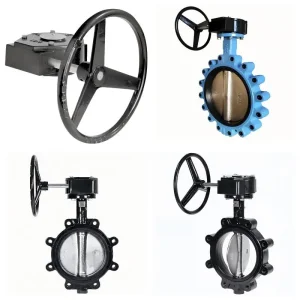
WRAS Certified Resilient Seated Lug & Flanged Potable Water Valve 4325G
View Technical SpecificationsFrequently Asked Questions by Brazilian Engineers & Procurement Teams
In-depth technical answers addressing flange standard matching, rubber compound resilience, import procedures, and pressure integrity testing.
How do your flanged butterfly valves interface with Brazilian ABNT NBR 7675 ductile iron pipe standards? ➕
ABNT NBR 7675 specifies flange drilling dimensions that correspond closely to international ISO 2531 and EN 1092-2 standards (PN10, PN16, and PN25). Our CNC multi-spindle drilling centers accurately machine bolt circle diameters (BCD), bolt hole quantities, and facing profiles matching Brazilian municipal pipe fittings without requiring on-site flange adapters. When working with vintage ANSI/ASME Class 125 or Class 150 legacy piping in Brazilian industrial plants, our double-drilled or universal flange configurations ensure seamless alignment.
Why choose a double-flanged butterfly valve over wafer or lug designs in Brazilian sanitation networks? ➕
Double-flanged butterfly valves provide structural pipeline anchoring and dead-end isolation capabilities that wafer-type valves cannot safely deliver. Under the high surge pressures typical in Sabesp and Copasa distribution mains, long-pattern flanged valves (ISO 5752 Series 14) provide independent bolt tensioning on both upstream and downstream sides. This allows downstream pipeline maintenance or pump replacement while maintaining full upstream line pressure without risk of disc dislodgement or gasket blowout.
What specific elastomer seat compound is recommended for abrasive Brazilian iron ore slurry? ➕
For abrasive slurry services like those in the Carajás or Samarco pipeline corridors, standard EPDM suffers rapid scouring. Our in-house rubber facility compounds proprietary High-Tear Natural Rubber (NR) and Carboxylated Nitrile (XNBR) elastomers. These compounds possess superior tensile resilience and rebound elasticity, which bounce abrasive hematite and quartz particles off the sealing surface rather than cutting the polymer matrix. For slurry involving chemical flotation reagents, we formulate customized Hydrogenated NBR (HNBR) or high-density Viton (FKM).
What quality certifications and testing records accompany every valve shipment to Brazil? ➕
Every valve leaves our Tianjin facility with full EN 10204 Type 3.1 certification. This includes direct chemical spectroscopy and tensile test data of the heat lots for the ductile iron body and disc, hardness testing, Charpy impact testing (for low-temperature steel), paint DFT (dry film thickness) verification, and 100% hydrostatic shell testing at 1.5× working pressure and seat testing at 1.1× working pressure per ISO 5208 / API 598 Rate A (zero allowable bubbles).
How does your factory support Brazilian customs clearance (Siscomex) and tariff optimization? ➕
Our experienced export documentation department works closely with Brazilian despachantes aduaneiros (customs brokers). We supply precise Commercial Invoices, Packing Lists with accurate net/gross weights per wooden crate, Certificates of Origin, and correct Mercosur Common Nomenclature (NCM) classifications—predominantly NCM 8481.80.95 or 8481.80.99. All export packaging utilizes fumigated, IPPC-stamped ISPM-15 compliant solid timber crates with internal moisture-barrier vapor corrosion inhibitors (VCI) to protect against humidity during maritime transit through equatorial sea lanes.
Can your flanged butterfly valves be delivered with automated actuators matching Brazilian on-site protocols? ➕
Yes. All top flanges comply with ISO 5211 dimensions with double-D or keyed shaft drives. We integrate our own electric and pneumatic actuators or mount customer-specified packages (Auma, Rotork, Festo, or local Brazilian brands like Bray/Valmicro). Actuators can be configured for 220V/380V/440V 60Hz 3-phase power, with fieldbus support including Profibus DP, Modbus RTU, Foundation Fieldbus, or standard 4-20mA analog position transmitters with IP68 immersion ratings.
Request Your Engineering Quote & Valve Specification Submittal
Contact our technical sales team for comprehensive valve datasheets, torque calculations, 3D CAD models, and factory-direct pricing for your pipeline, mining, or water treatment projects in Brazil.
