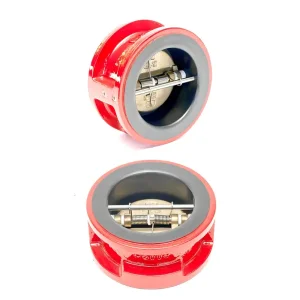
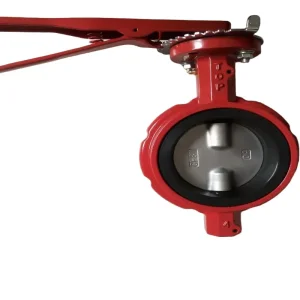
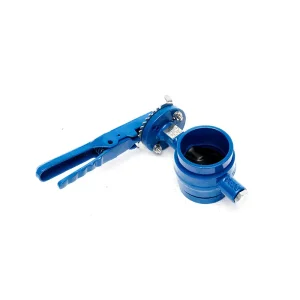
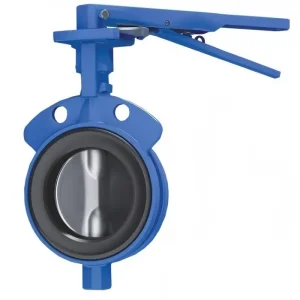
Nagoya Industrial Lineup: High-Performance Isolation Units
Engineered for high-duty cycles, extreme thermal stability, and tight shut-off conditions in Nagoya's complex manufacturing and port handling environments.
Technical Whitepaper: Industrial Fluid Dynamic Realities in Greater Nagoya
Analyzing operating thresholds, international certification compliance, and supply chain synchronization for Aichi Prefecture's industrial center.
The Greater Nagoya industrial cluster, anchoring Japan’s Chubu region, represents the country's most formidable manufacturing engine. With world-class concentrations of automotive giants (such as Toyota and associated tier-1 supplier networks), heavy machinery manufacturing, aerospace engineering, and the maritime shipping hubs at the Port of Nagoya, pipeline integrity requires absolute compliance with zero-leakage mandates. As facilities undergo retrofitting for decarbonization, hydrogen fuel blending, and secondary coolant closed loops, the demand for CE-marked Pressure Equipment Directive (PED 2014/68/EU) certified ball valves with fire-safe ratings has escalated sharply.
Nagoya's heavy industries operate under stringent environmental and seismic monitoring programs. Valves deployed in localized chemical finishing, hydraulic stamping circuits, and shipboard bunkering must endure rapid cycling without packing leakage. CE certification guarantees verified metallurgical provenance, non-destructive testing (NDT), burst-proof stem architecture, and full traceable documentation (EN 10204 3.1 inspection certificates) ensuring total alignment with Japanese JIS standards while providing seamless compatibility for equipment scheduled for export across Europe and the Americas.
Automotive Finishing & High-Pressure Paint Lines
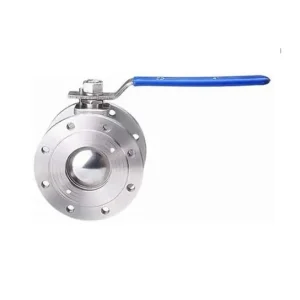
Modern paint-shop robotic applicators and pneumatic solvent handling in Aichi factories require valves free of silicone, capable of fast-acting shut-off without pressure surges. Our ultra-thin fire-safe ball valves guarantee zero cross-contamination and minimal line hold-up volume.
Port of Nagoya Maritime Bunkering & Ballast
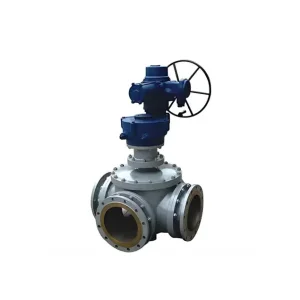
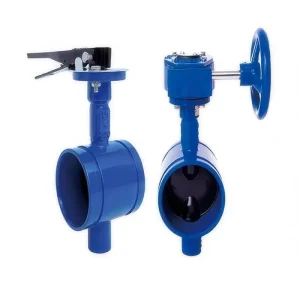
As one of the world's highest-tonnage ports, Nagoya demands marine valves immune to saline pitting and cavitation. Our CE-certified multi-port valves and resilient rubber-lined units deliver long sealing life across ship-to-shore LNG bunkering and ballast water treatment modules.
Thermal Generation & Heavy Turbine Coolant Loops
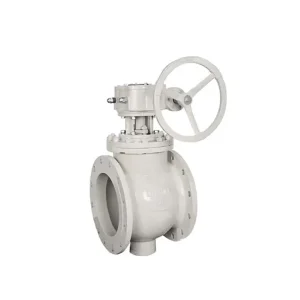
Turbine testing cells and coastal power utilities require heavy-duty isolation against high thermal differential expansion. Featuring stellite hard-facing or reinforced PTFE/PEEK seats, our valves maintain bubble-tight containment under repeated thermal shock.
Global Market Trajectory & China Manufacturing Efficiency
How vertically integrated foundry operations reduce total cost of ownership (TCO) for international engineering procurement contractors.
The worldwide industrial valve market is experiencing a profound transition toward fugitive-emission compliance (ISO 15848-1) and automated predictive actuation. Western and Japanese OEM buyers are actively mitigating supply chain bottlenecks by partnering directly with scaled Chinese manufacturers that combine metallurgical casting, polymer compounding, and multi-axis CNC finishing under single-ownership governance.
Unlike third-party assembly shops, our group leverages over three decades of in-house foundry operations (since 1996) and custom elastomer formulation (Tianjin Dongfang Rubber Factory, established 1987). This structural vertical integration yields four fundamental competitive advantages for procurement teams in Nagoya and overseas:
| Technical Vector | Conventional Trading / Assembly Brokers | Tianjin Top Valve Integrated Direct Model |
|---|---|---|
| Metallurgical Control | Outsourced castings; variable scrap ratios and micro-porosity risks. | Group-owned foundry; spectrographic chemical analysis per heat charge. |
| Elastomer Formulation | Commercial off-the-shelf seats; unpredictable compression set. | In-house vulcanization & compounding (EPDM/NBR/PTFE) engineered for lifespan. |
| Quality Assurance & CE Audit | Batch audits; fragmented traceability between foundry and machine shop. | 100% shell & seat hydro/air testing; single-source EN 10204 3.1 documentation. |
| Lead Time to Chubu/Nagoya | 8 to 14 weeks due to fragmented subcontract networks. | 3 to 5 weeks via direct Tianjin Port shipping corridors to Nagoya Port. |
For Japanese EPCs managing global overseas installations, sourcing valves backed by CE Certification ensures unhindered clearance across European project jurisdictions without requiring redundant re-inspections. By standardizing on dual-drilled flange designs conforming to both JIS 10K/20K and EN 1092 PN16/40 standards, our engineering team eliminates pipeline transition mismatches.
Technical Clarifications & Procurement FAQ
Detailed engineering responses answering the explicit search intent of industrial plant managers and international valve purchasers.
Why is CE PED certification essential for valves delivered to Japanese firms like those in Nagoya?
How does in-house elastomer synthesis extend ball and butterfly valve longevity?
Can your ball valves be cross-drilled to match both Japanese JIS 10K/20K and European PN16 flange patterns?
What non-destructive and destructive inspection procedures verify each valve shipment?
What logistics protocols ensure safe, scratch-free maritime transit into the Port of Nagoya?
Extended Flow Control Arsenal: Industrial Check, Butterfly & Globe Valves
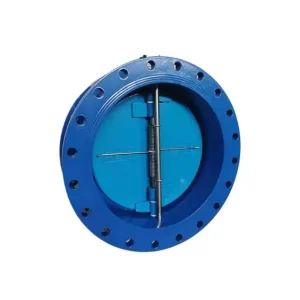
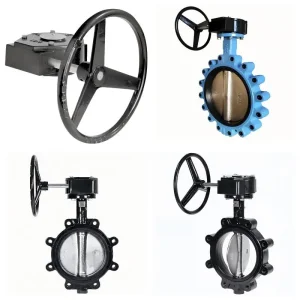
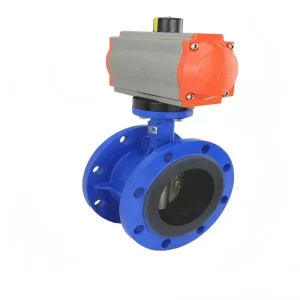
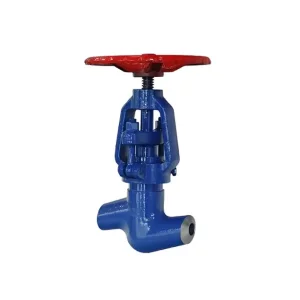
Comprehensive valve portfolio configured to support continuous duty across civil piping, thermal generation, and mechanical engineering systems in Nagoya.