
High-Performance Actuation-Ready Flow Solutions
Engineered for seamless integration with mechanical, pneumatic, and intelligent linear actuators across industrial water networks, steam plants, and hydrocarbon processing lines.
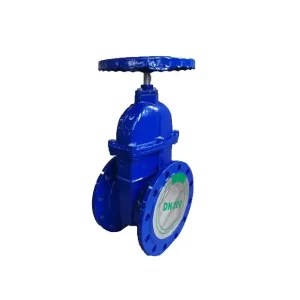
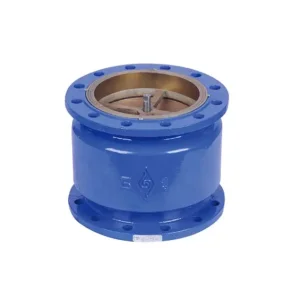
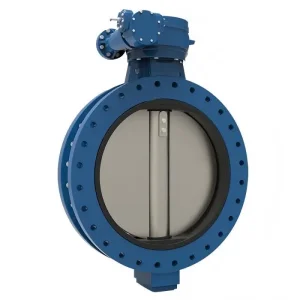
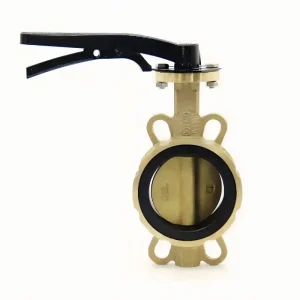
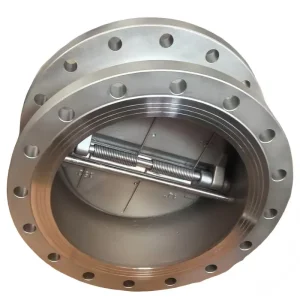
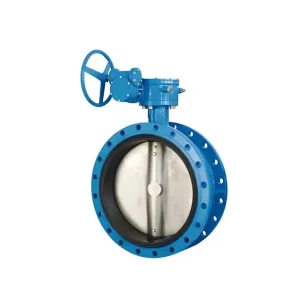
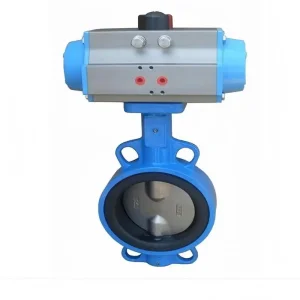
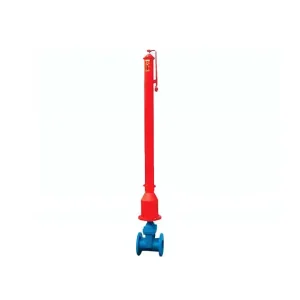
Actuator Kinematics & Mechanical Design Principles for Globe Valves
Unlike rotary quarter-turn assemblies, globe valves demand high-thrust linear positioning capable of opposing substantial line pressure across the valve seat orifice. Here is an in-depth breakdown of essential engineering considerations.
Stem Thrust & Hydrodynamic Force
Globe valve actuators must exert continuous mechanical thrust ($F_{\text{total}}$) calculated as the vector sum of hydrostatic plug load, stem friction, dynamic fluid impingement, and seating stress requirements. Sizing formulas mandate minimum 1.35 safety factors for clean fluid service and up to 1.6 for flashing slurry networks.
- Seat Orifice Area Resistance$\Delta P \times A_{\text{seat}}$
- Packing Box Shear Friction$F_{\text{packing}} \ge 2.2 \text{ kN}$
- Seating Tightness ClassANSI FCI 70-2 IV to VI
Precision Throttling & Travel Control
Micro-step positioning resolution determines flow coefficient ($C_v$) accuracy. Digital actuators feature 12-bit non-contact hall-effect encoders yielding stroke deviations under 0.15%. Linear anti-backlash drive nuts guarantee precise regulation without hunting during thermal cycling or high-velocity pressure oscillations.
- Positioning Resolution$\le 0.1\%$ Full Travel
- Hysteresis & Deadband$\le 0.25\%$ Dynamic
- Stroke Velocity ProfileProgrammable 0.5–8 mm/s
Fail-Safe Emergency Operation
Critical plant processes dictate predictable fail-safe postures: Fail-Open (FO), Fail-Close (FC), or Fail-In-Place (FIP). Pneumatic configurations utilize multi-spring mechanical canisters, while intelligent electric units employ high-output ultra-capacitors delivering emergency torque without external power lines.
- Safety Integrity LevelIEC 61508 SIL 2 / SIL 3
- ESD Trip Time< 1.0 Second Linear Travel
- Emergency StorageSupercapacitor / Mech. Spring
| Actuator Technology | Thrust Capacity (kN) | Duty Cycle Rating | Field Protocol Interfaces | Mean Time Between Failures | Optimal Industrial Deployment |
|---|---|---|---|---|---|
| Pneumatic Multi-Spring Diaphragm | 2.5 – 65 kN | 100% Continuous | 4–20mA, HART 7.0, Profibus PA | 180,000 Cycles | Petrochemical Refining, Superheated Boiler Steam |
| Intelligent Electric Linear Drive | 5.0 – 250 kN | S2-30min / S4-1200 c/h | Modbus RTU, Foundation Fieldbus, BACnet | 120,000 Cycles | District Heating Networks, HVAC Chilled Water |
| Self-Contained Electro-Hydraulic | 50 – 850 kN | S1 Continuous | Dual Redundant Optical Fiber, Modbus TCP | 250,000 Cycles | Main Steam Isolation (MSIV), Severe Slurry Throttling |
| Piston Spring-Return Pneumatic | 10 – 180 kN | 100% Heavy Duty | 4–20mA with Smart Positioner Feedback | 160,000 Cycles | Cryogenic LNG Terminal Regasification Units |
The Chinese Factory Advantage: Tianjin Vertical Integration
Combining three decades of metallurgy, elastomer formulation, and automated robotics to supply global procurement departments with unmatched valve and actuator quality at competitive TCO.
Foundry Heritage & Metallurgy Traceability
Situated in the Wuxia Industrial Park of Dongli District, Tianjin, our manufacturing campus combines full in-house sand-casting and investment foundries operating since 1996. By melting and pouring our own valve bodies—ranging from ductile iron (GGG40/50), WCB, CF8M stainless steel to aluminum bronze—we enforce continuous optical emission spectrometry. Every actuator bracket and valve casting maintains zero gas porosity and certified EN 10204 3.1 chemical tracking.
Integrated casting eliminates secondary vendor markups and supply chain bottlenecks, giving overseas wholesalers dependable delivery cycles even during peak raw material market swings.
Polymer & Sealing Synthesis Since 1987
A premier vulnerability in globe and butterfly actuation systems is premature seal degradation. Backed by our specialized Tianjin Dongfang Rubber facility (founded in 1987), we synthesize proprietary EPDM, FKM (Viton), and PTFE compounds tailored for severe stem cycling. Actuator dynamic stem seals endure 200,000+ full-stroke reversals without fugitive gland emissions.
Our combined CNC machine park finishes valve stems to $Ra \le 0.2\mu m$ mirror finishes, dramatically reducing packing friction and allowing smaller, more cost-efficient actuator sizes for the exact same pipeline shut-off classes.
2025–2030 Technological Trends Reshaping Valve Actuation
The convergence of Industrial IoT, edge diagnostics, and strict carbon-neutral regulations is moving the industry from simple mechanical actuators to intelligent cyber-physical flow assets.
Edge AI & Predictive Maintenance
Next-generation smart actuators record continuous thrust signatures, motor winding thermal decay, and micro-positioning backlash. Onboard neural models process these variables locally to forecast seat erosion, stem scoring, and packing wear up to 6 months prior to failure, directly transmitting alert telemetry via MQTT or OPC UA.
Zero-Emission Fugitive Control
With international standards such as ISO 15848-1 Class AH enforcing sub-100 ppm stem leak boundaries, actuator designs now integrate anti-side-load linear guide yokes. By eradicating lateral stem deflection under high aerodynamic thrust, packings remain hermetically sealed across hundreds of thousands of cycles.
IEC 62443 Operational Cybersecurity
As industrial automation networks migrate toward open industrial Ethernet protocols, digital valve actuators are subjected to stringent cybersecurity evaluations. Modern Chinese manufacturers build microcontrollers with hardware root-of-trust, encrypted firmware updates, and role-based access to safeguard critical energy grids.
Macro Application Scenarios & Heavy Industry Solutions
Customized actuation packages deployed across international engineering projects to solve severe process control challenges.
Superheated High-Pressure Steam Balancing (450°C+, Class 600/900)
Operational Challenges: Severe thermal expansion of valve stems, acoustic cavitation, rapid packing gland dry-out, and intense flow turbulence requiring massive seating thrust.
Engineered Actuator Solution: High-thrust pneumatic diaphragm assemblies equipped with multi-fin cooling bonnets, chrome-moly linear yokes, and ceramic trim throttling discs. Positioned with digital electro-pneumatic positioners maintaining continuous valve seated tightness Class V.
Seawater Desalination & Reverse Osmosis (SWRO)
Operational Challenges: Severe chloride pitting, galvanic corrosion along mounting hardware, and continuous high-frequency modulation (S4 1200 starts/hr).
Engineered Actuator Solution: IP68 marine-grade epoxy-coated electric actuators integrated onto aluminum bronze and duplex stainless steel globe bodies. Designed with brushless DC motor tech and contactless position feedback that eliminates mechanical potentiometer wear.
District Thermal Heating & HVAC Energy Optimization
Operational Challenges: Distributed network management, seasonal temperature drift, low-voltage control constraints, and hydraulic water hammer surges.
Engineered Actuator Solution: Modbus RTU/BACnet intelligent multi-turn actuators featuring non-intrusive Bluetooth commissioning. Integrated velocity-damping algorithms slow the final 5% of stem closure, completely preventing acoustic surge shock across municipal mains.
Chemical Process & Toxic Fluid Isolation
Operational Challenges: Aggressive acid attack, explosive atmospheres (ATEX Zone 1/21), zero tolerance for airborne volatile emissions.
Engineered Actuator Solution: Flameproof Ex d IIC T4 Gb certified linear actuators combined with PTFE-lined bellows-sealed globe valves. Mechanical double-lock clutches ensure absolute retention of stem posture upon total auxiliary signal loss.
Global Sourcing Criteria: Sizing, Compliance & Total Cost of Ownership
A systematic framework for EPC contractors, engineering directors, and wholesale distributors seeking to balance initial CAPEX with long-term plant availability.
1. Standardization & Mounting
Ensure actuator mounting flanges comply with ISO 5210 (multi-turn) or ISO 5211 / DIN 3337. Standardized bore diameters, drive bushes, and bolt patterns enable drop-in replacements across diverse valve brands without custom machining downtime.
2. Ingress & Ambient Durability
Verify enclosures meet minimum IP67 or IP68 immersion standards (10 meters for 72 hours). For tropical or arctic pipeline projects, insist on internal thermostatically managed anti-condensation heaters and operating ranges from -40°C to +85°C.
3. Lifecycle TCO Assessment
Actuator initial purchase price represents only 15–20% of total lifecycle cost. Sourcing from vertically integrated Chinese plants provides access to low-cost modular components (geartrains, power boards, seal kits), dramatically reducing OPEX over a 20-year span.
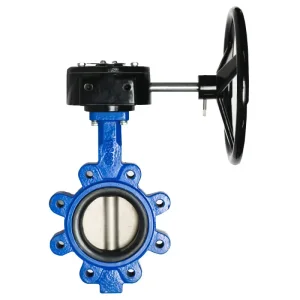
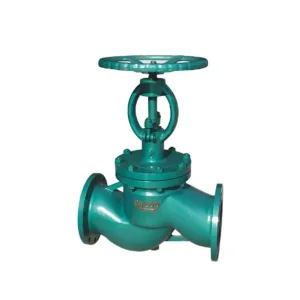
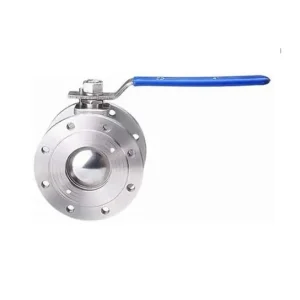
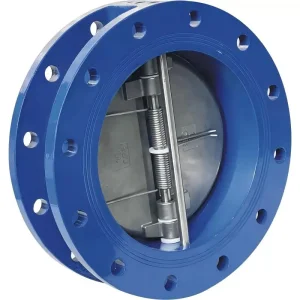
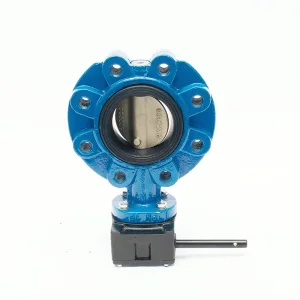
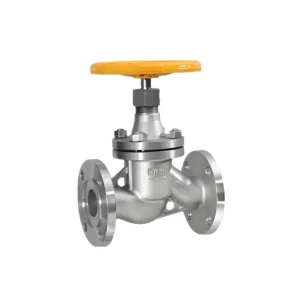
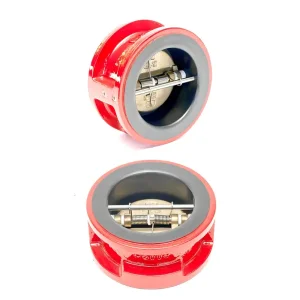
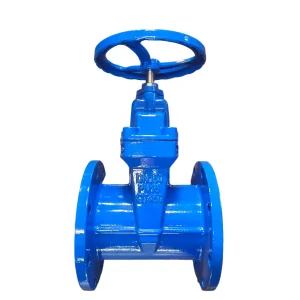
Severe Duty Globe, Ball & Marine Valve Assemblies
Fully compliant with DIN, ASME, JIS, and BS standards. Custom actuator brackets, stems, and positioners fabricated directly in our Tianjin precision machining center.
Frequently Asked Questions: Industrial Globe Valve Actuation
Clarifying technical inquiries on thrust engineering, sizing standards, protocol integration, and field deployment.
How do you calculate necessary thrust for an automated globe valve?
Actuator linear thrust calculation incorporates multiple hydrodynamic variables: $F_{\text{net}} = (\Delta P \times A_{\text{seat}}) + F_{\text{packing}} + F_{\text{stem\_pressure}} + F_{\text{seating\_force}}$. We factor the maximum differential shut-off pressure across the orifice, fluid specific gravity, stem packing friction (dictated by depth and material, e.g., PTFE chevron vs. graphite), and required seating tightness class (ANSI FCI 70-2 Class IV, V, or VI). Engineering safety margins of 30% to 50% are added to protect against line surges and mechanical aging.
What is the difference between multi-turn and linear globe valve actuators?
Linear actuators produce direct straight-line axial thrust via pneumatic diaphragms, hydraulic pistons, or integrated linear ball screws. Multi-turn actuators generate rotary output torque that drives an external threaded stem nut within the valve yoke, translating rotational power into linear stem travel. For high-speed throttling or tight safety trips, direct linear actuators deliver superior response rates, whereas multi-turn electric actuators are preferred for immense seating thrust across high-pressure Class 900+ networks.
Can electric globe valve actuators support Fail-Safe emergency shutdown?
Yes. While mechanical spring pneumatic actuators inherently fail-safe via compressed springs upon air loss, modern electric actuators incorporate intelligent energy reservoirs—primarily industrial supercapacitor arrays or internal lithium ferro-phosphate (LiFePO4) power reserves. Upon utility electrical blackouts, the smart controller disconnects normal positioning logic and instantly drives the valve plug to its programmed failsafe posture (Fail-Closed or Fail-Open) within sub-second timescales.
What mounting flange standards are used for globe valve actuation?
Multi-turn electric actuators typically follow ISO 5210 interface standards (utilizing flange ratings F07 through F35 with defined drive bush shapes including A, B, and C). Direct linear actuators conform to DIN 3358 or custom linear yoke pillar mountings (standardized pillar centers typically 60mm, 100mm, or 130mm with threaded stem couplers from M10 to M36). We custom machine mounting brackets and precision stem adapters in-house to bridge legacy dimensions with modern actuators.
How does Tianjin Top Automation ensure valve-actuator compatibility?
Every actuated package is fully integrated and tested as a unified flow-control cell before shipping. We run automated diagnostic routines checking stem concentricity, travel calibration, stroke timing, deadband responsiveness, and 100% shell/seat hydrostatic pressure containment in our physical laboratory. Buyers receive a certified test report containing the calibrated torque profile, seating load signature, and electronic travel telemetry.
What digital bus protocols are supported for plant automation?
Our intelligent actuator packages accommodate widespread distributed control systems (DCS) and PLC architectures. Standard analog options feature 4–20mA DC with HART 7.0 communication. Digital fieldbus options encompass Modbus RTU/ASCII (RS-485), Profibus DP V1/V2, Foundation Fieldbus H1, and Ethernet-based systems including Modbus TCP, Profinet, and EtherNet/IP for real-time asset condition tracking.
