Featured Industrial Valve Engineering Catalog
Factory-direct pipeline isolation and non-return valves manufactured in accordance with API, EN, and ISO testing protocols.
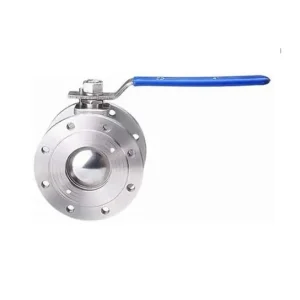
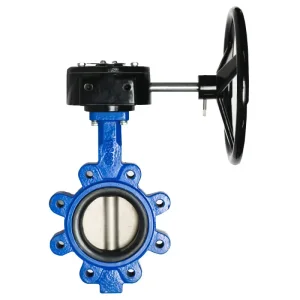
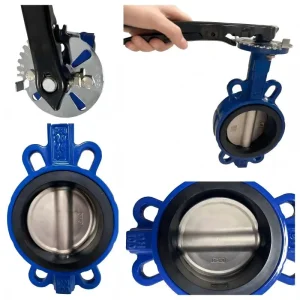
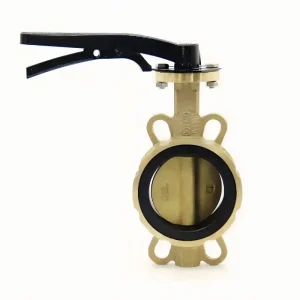
Global Landscape of Dual Plate Wafer Check Valves
Evaluating dynamic surge damping, space conservation, and life-cycle asset protection in international process engineering.
Critical Water Hammer Mitigation
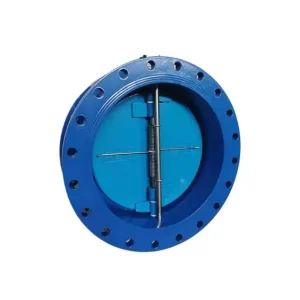
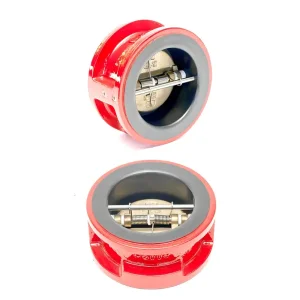
Sudden pump stoppage causes reverse pressure waves that shatter standard flanged non-return systems. The dual plate wafer check valve uses precision torsion springs that drive both semicircular plates closed before fluid velocity reaches zero, neutralizing hydraulic slam.
Compact Structural Enclosure
With an axial length governed by API 594, wafer check valves eliminate large bolting flanges and swing bodies. This cuts plant weight by up to 80% and drastically lowers structural load ratings for offshore skids, FPSOs, and high-density plant piping racks.
Low Head Loss & High Cv Values
Modern computational fluid dynamics (CFD) optimizes disc contour profiles, allowing plates to open wide into the flow path with minimal turbulence. The split-flow design lowers operational head loss and cuts annual pump power draw across large facilities.
Chinese Factory Efficiency: In-House Metallurgy & Compounding
How deep vertical integration in Tianjin delivers precision quality, complete material traceability, and competitive wholesale pricing.
Autonomous Group Foundry
Valve castings are poured in our dedicated foundry using induction melting and optical emission spectrometers. We maintain tight melt controls over ductile iron (GGG40/50), WCB, CF8M, and nickel-aluminum bronze alloys directly on-site.
Elastomer Compounding Since 1987
Resilient valve longevity depends directly on seal vulcanization. Our sister company (Tianjin Dongfang Rubber Factory) formulates EPDM, NBR, and Viton in-house, ensuring reliable elasticity, low compression set, and verified WRAS compliance.
CNC Precision Machining Center
Hinge pin bores, disc stop faces, and body sealing profiles are machined on multi-axis CNC centers. Tight tolerances prevent disc binding and ensure smooth plate closure without localized stress concentrations.
100% Shell & Seat Pressure Testing
Every single valve undergoes hydrostatic and low-pressure pneumatic seat testing according to API 598 and EN 12266-1. Serialized test logs are permanently tied to heat numbers and dispatch inspection certificates (EN 10204 3.1).
Engineering Parameters & Material Selection Standards
Standard industrial configurations for dual plate wafer check valves across global pipeline networks.
| Parameter / Component | Standard Configuration | High-Corrosion / Marine Option | High-Pressure / Chemical Option |
|---|---|---|---|
| Nominal Diameter | DN50 – DN1200 (2" – 48") | DN50 – DN1000 (2" – 40") | DN50 – DN600 (2" – 24") |
| Pressure Rating | PN10, PN16, ASME Class 150 | PN16, PN25, ASME Class 150/300 | ASME Class 300, 600, 900, 1500 |
| Body Metallurgy | Ductile Iron (QT450 / EN-GJS-400-15) | Nickel Aluminum Bronze (C95800) | WCB, CF8M, Duplex SS (2205 / 2507) |
| Plate (Disc) Matrix | CF8 / CF8M (SS304 / SS316) | Al-Bronze (C95800 / AB2) | Super Duplex, Hastelloy C276 |
| Seat Sealing Ring | EPDM (Drinking Water/WRAS) / NBR | Viton (FKM) / Neoprene | Metal-to-Metal Stellite Overlaid |
| Spring & Hinge Pin | Inconel X-750 / SS316 | Inconel 625 / Monel 400 | Inconel X-750 / Hastelloy |
| Design Standards | API 594, EN 16767 | API 594, BS 1868, EN 558 | API 594 Retainerless Design |
Localized Application Scenarios in Modern Industry
Dual plate check valves operate where space, reliability, and surge damping are critical to pipeline integrity.
Municipal Water & Desalination
Reverse osmosis skids and high-volume treated water transmission mains rely on WRAS-certified resilient seats and ductile iron or aluminum-bronze dual plate check valves to stop backflow without imparting taste, odor, or chemical contaminants.
Marine Ballast & Seawater Cooling
Shipboard pump rooms and offshore platforms use compact wafer check valves to conserve space. Outfitted with nickel-aluminum bronze bodies and Monel trim, these units withstand aggressive chloride pitting and cavitation stress.
Commercial HVAC & District Cooling
High-rise chiller water discharge systems and regional energy utility networks use spring-assisted wafer check valves to prevent backspin on parallel centrifugal pumps, eliminating acoustic water hammer noise across building structures.
Technological Frontiers & Industry Trends
Market-driven structural and material innovations shaping modern non-return valve design.
Retainerless Zero-Emission Architecture
Traditional dual plate check valves use through-body holes to support the hinge and stop pins, which are sealed with threaded plugs that can leak over time. Modern API 594 retainerless designs hold internal pins in blind pockets inside the bore, eliminating external leak paths and satisfying stringent ISO 15848-1 fugitive emission mandates.
Advanced High-Stress Torsion Springs
Standard stainless springs can succumb to fatigue in turbulent flows. Engineering trends favor Inconel X-750 and titanium alloys that resist stress corrosion cracking and maintain accurate spring rates through millions of opening and closing cycles.
Additive Manufacturing & CFD Profile Discs
Direct metal laser sintering (DMLS) and advanced 3D casting tooling yield hydrodynamically profiled discs with parabolic leading edges. These designs increase flow coefficients (Cv) by up to 18% compared to flat plate designs, significantly reducing ongoing pumping costs.
EPC & Wholesale Sourcing Considerations
Key evaluation criteria procurement officers, distributors, and engineering contractors review before issuing purchase orders.
Full Metallurgical Traceability
Wholesale buyers require verified Mill Test Certificates (MTC) conforming to EN 10204 3.1. Chemical composition, tensile strength, yield strength, and elongation must correlate directly with cast heat numbers stamped on the valve body.
Universal Flange Compatibility
Wafer check valves are held between pipe flanges by through-bolts. Global procurement teams prioritize dual-drilled or multi-standard bodies compatible with ASME B16.5 Class 150/300, EN 1092-1 PN10/PN16/PN25, and JIS 10K/16K to streamline inventory across multiple international projects.
Third-Party Factory Audits
Top international buyers require suppliers to support third-party visual, dimensional, and NDT inspections (SGS, TÜV, Bureau Veritas) and welcome live remote video audits through modern, certified manufacturing facilities.
Frequently Asked Technical & Commercial Questions
Engineering, design, and wholesale ordering insights from our valve manufacturing specialists.
What gives a dual plate wafer check valve its anti-water-hammer characteristics?
What are the main performance trade-offs between retainer and retainerless designs?
Can dual plate check valves be installed in vertical piping lines?
How does in-house rubber compounding improve valve sealing and working life?
What documentation and inspection certificates are supplied with wholesale shipments?
Comprehensive Industrial Valve Line
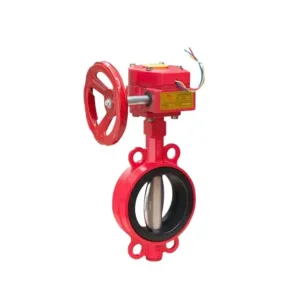
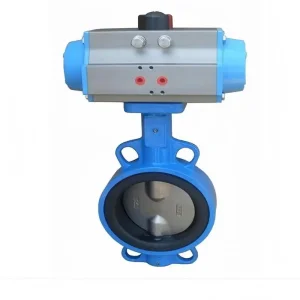
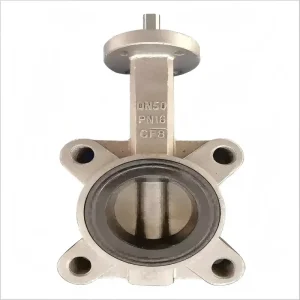
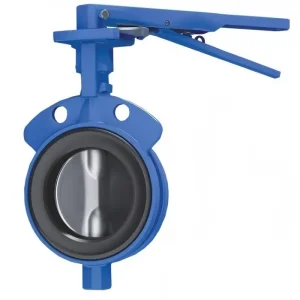
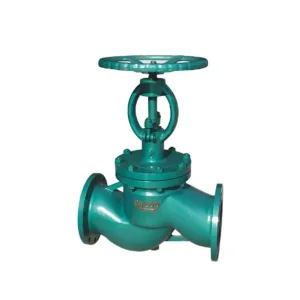
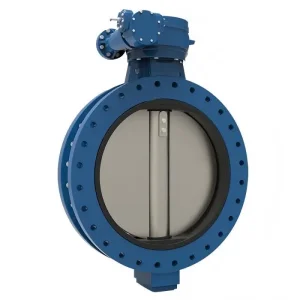
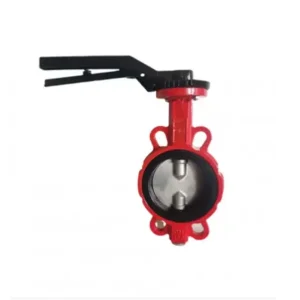
Flanged check, fire protection, and resilient seated quarter-turn valves manufactured to international standards.