
Precision-Engineered Water Butterfly & Flow Control Valves
Direct OEM & EPC specification portfolio manufactured under strict ISO 9001 quality supervision, providing hydrostatic reliability up to PN25.
The Critical Role of Water Butterfly Valves in Global Fluid Infrastructure
Rapid urbanization, climate-driven drought resilience, and industrial water recirculation require unprecedented hydraulic efficiency and low non-revenue water (NRW) losses.
Across the globe, municipal potable transmission grids, industrial wastewater effluent plants, desalination networks, and thermal power cooling loops confront an escalating crisis: massive energy dissipation and high non-revenue water (NRW) rates. In aging municipal networks across Europe and North America, water transit loss frequently exceeds 22% to 30%, primarily driven by micro-fissures, seat degradation, and water hammer cavitation across legacy iron gate valves. Concurrently, the hyper-expansion of industrial desalination plants across the GCC region and megascale semiconductor fabrication facilities across APAC calls for quarter-turn isolation valves capable of handling high saline velocities, abrasive particulates, and uninterrupted multi-cycle duty without catastrophic pressure drops.
Within this dynamic, the water butterfly valve serves as the indispensable cornerstone of global mechanical flow regulation. In comparison to cumbersome rising-stem gate valves or high-torque ball valves, concentric and eccentric resilient-seated butterfly valves deliver up to an 80% reduction in installed mechanical weight, a 60% reduction in face-to-face spatial envelope, and dramatically diminished initial valve investment. However, operational longevity across large municipal and process lines demands uncompromising metallurgical and elastomer integrity. Tianjin Top Valve directly addresses these worldwide challenges through its in-house supply chain integration—combining our independent ductile iron foundry (established 1996) with Tianjin Dongfang Rubber Factory’s proprietary vulcanization compounding (established 1987) to eradicate mechanical porosity, prevent premature chemical blistering, and guarantee verifiable ISO 5208 Rate A zero-leakage shut-off.
Macro Industry Solutions Powered by Top Valve Metallurgy
From raw sea water intake to district cooling distribution, explore our dedicated engineering configurations tailored to demanding fluid conditions.
Municipal Potable Water & Aqueduct Transmission
Designed to eradicate water loss across bulk transport arteries. Utilizing WRAS and NSF-certified EPDM seat liners vulcanized with micro-compression memory, combined with fusion-bonded epoxy (FBE) electrostatic coatings over 250 μm, preventing bio-film adhesion and chemical leaching across urban trunk lines.
Desalination, Seawater RO & Marine Ballast
Aggressive halide exposure causes rapid pitting in conventional stainless discs. We implement Nickel-Aluminum Bronze (C95800) and Duplex 2205/2507 disc alloys mounted in fully vulcanized rubber bodies, neutralizing galvanic corrosion and pitting in high-chloride brine environments up to 55,000 ppm TDS.
District Energy, HVAC Chillers & Cooling Towers
Thermal balancing networks require dynamic low-torque actuation and minimal hydro-resistance. Top Valve’s profiled streamlined discs maximize the flow coefficient (Cv) while dual-o-ring stem sealing systems eliminate secondary atmospheric leaks under rapid cyclic cooling conditions.
Tribological Selection, Material Matrix & Structural Design
A detailed technical evaluation designed for pipeline design engineers, project procurement directors, and water authority consultants.
1. The Mechanical Advantage of Pinless Disc-to-Stem Technology
In standard commercial water butterfly valves, disc-to-stem transmission relies on drive taper pins or set screws passing through the fluid flow path. Over protracted operation, turbulence and vibration induce micro-wear around these perforations, generating catastrophic stem leak paths, crevice corrosion, and unseated disc slop. Tianjin Top Valve manufactures an advanced Pinless Spline/Square Drive Butterfly Valve. By encapsulating the high-strength stainless steel shaft (17-4PH / 420 / 316) within an internally broached disc hub protected by precision-molded elastomer collars, the media is entirely isolated from internal structural metals. This design facilitates complete bi-directional bubble-tight sealing and eliminates shear stress failures during rapid emergency actuator shutdowns.
2. Material Matrix: Selecting Body, Disc, and Liner Configurations
Proper matching of media pH, suspended silt solids, operating pressure, and thermal range is crucial to achieving a 30-year design life. Below is the technical specification matrix enforced across our manufacturing plants:
| Component | Standard Grade | High-Performance Grade | Critical Application Focus |
|---|---|---|---|
| Valve Body | Ductile Iron QT450-10 (GGG40) | Cast Steel WCB / CF8M / Duplex | Municipal mains, high static pressure networks, buried service |
| Valve Disc | Ductile Iron + Nylon Coated / SS304 | Aluminum Bronze C95800 / SS316L / 1.4462 | Potable water networks, marine ballast lines, RO high-brine stages |
| Seat Elastomer | Virgin Potable EPDM (WRAS Grade) | High-Temp EPDM (-20°C to 135°C) / NBR / PTFE | Drinking water distribution, raw raw sewage, chloraminated circulation |
| Valve Stem | Stainless Steel 2Cr13 (420) | 17-4PH (SUS630) / Stainless Steel 316 | High torsional transmission, anti-blowout stem design |
3. Flow Coefficient (Cv) Optimization and Pumping Energy Conservation
In high-volume municipal trunk lines, continuous pumping head dissipation accounts for over 70% of lifecycle expenditure. Top Valve utilizes Computational Fluid Dynamics (CFD) modeling to contour the leading and trailing edges of our butterfly discs. This ultra-streamlined profile reduces fluid separation zones and secondary vortex shedding, lowering head loss factors ($K$-values) by up to 18% compared to conventional flat-profile discs. In pumping networks operating continuously, this hydrodynamic optimization saves thousands of kilowatt-hours annually per valve station.
Global Regulatory Compliance & Localized Technical Support
Full compliance frameworks bridging international EPC standards with local on-site project verification and direct engineering assistance.
Potable Water Approvals
Compliant with international hygienic directives. Fully certified WRAS models for UK & Commonwealth markets, alongside NSF/ANSI 61 and 372 lead-free compliance for zero toxic leaching in public drinking reservoirs.
Dimensional Interoperability
Global universal drilling: compatible with EN 1092-2 (PN10/PN16/PN25), ASME B16.1 Class 125/150, AS 4087, and JIS 10K/16K. Enables seamless bolt-up integration into brownfield piping systems without flanged transitions.
Rapid EPC Supply Logistics
Located in Tianjin adjacent to northern China’s largest deep-water international port. We maintain extensive raw casting stocks, reducing standard engineered valve lead times from 12 weeks to under 21 calendar days.
Full Heat Heat Traceability
Every valve casting possesses an indelibly stamped heat number tied to raw spectral analysis reports, tensile test results, and hydrostatic shell/seat charts compliant with EN 10204 Type 3.1 inspection certification.
Real-World Mission-Critical Field Applications
Field-proven mechanical isolation and continuous throttling across demanding environmental extremes worldwide.
Metropolitan Water Distribution – Manchester, UK
Supplied over 1,400 units of WRAS-approved Lug & Flanged butterfly valves (DN200–DN1200) for regional district metering and booster pump stations. The zero-pin design with WRAS EPDM seals successfully eliminated seat degradation issues caused by chloramination residual levels, guaranteeing absolute isolation across unheated underground valve chambers.
Thermal Desalination Plant – Jubail, Saudi Arabia
Installed high-velocity Nickel-Aluminum Bronze C95800 wafer butterfly valves with vulcanized NBR liners on raw seawater intake lines. Despite ambient sand-storm exposure and salinity exceeding 44,000 ppm at 45°C water temperature, Top Valve assemblies delivered over 40,000 trouble-free cycles without pit corrosion or actuator jamming.
Mega-Scale Data Center District Cooling – Singapore
Engineered low-torque pneumatic and electric wafer butterfly assemblies managing chilled water loops with 6°C supply lines. Precision CNC-machined disc profiles mitigated water-hammer risks during fast pump changeovers, maintaining tight modulating differential pressure control across all server chiller racks.
Technology Roadmap: Intelligent Valves & Smart Water Grids
Our path toward Industry 4.0 automation, IoT monitoring, and long-term carbon reduction across fluid distribution.
Integrated IoT Cavitation & Leak Telemetry
Integrating piezoelectric vibration and acoustic emission sensors directly into the butterfly valve neck flange. These self-powered edge modules monitor micro-vibrations, providing real-time SCADA alerts before cavitation or seat erosion leads to system-wide failure.
Advanced Nanocomposite Elastomers
Formulating graphene-reinforced and fluoropolymer-grafted EPDM elastomeric matrixes within Tianjin Dongfang Rubber Factory. Aiming for an extended service life exceeding 45 years with 50% reduced frictional drag against stainless steel disc rims.
Carbon-Neutral Circular Valve Castings
Transitioning our foundry melting cupolas to 100% renewable electric induction furnaces. Incorporating secondary scrap metal recycling to achieve verified low-embodied carbon certification for municipal clients prioritizing Scope 3 emissions reductions.
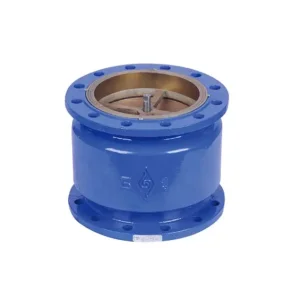
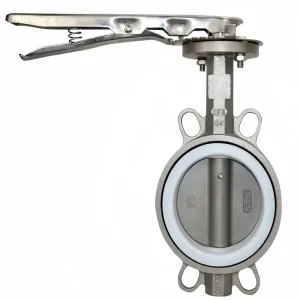
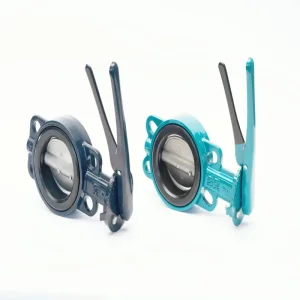
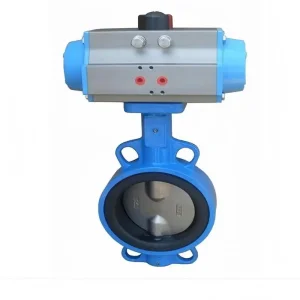
Engineered Actuation & Backflow Prevention Portfolio
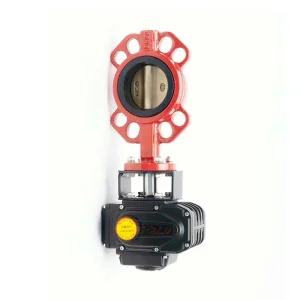
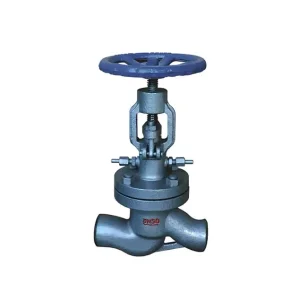
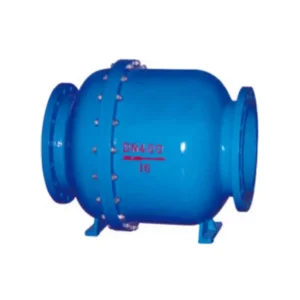
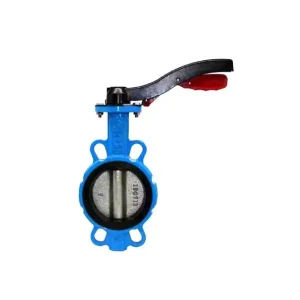
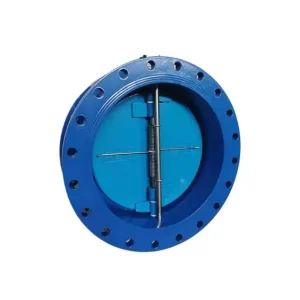
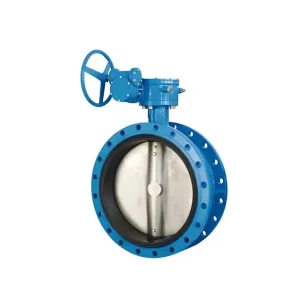
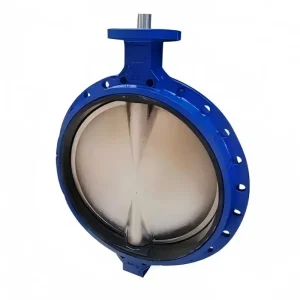
High-specification dual plate, duplex pinless, and automated quarter-turn units completing your plant flow architecture.
Frequently Asked Questions: Water Butterfly Valve Engineering
Clear, authoritative technical answers addressing specification criteria, metallurgy, certifications, and pipeline maintenance.
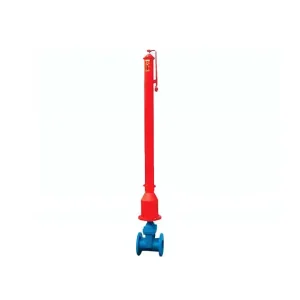
Why should an engineer select a resilient-seated butterfly valve over a gate valve in water networks?
How does in-house rubber seat compounding improve operational reliability?
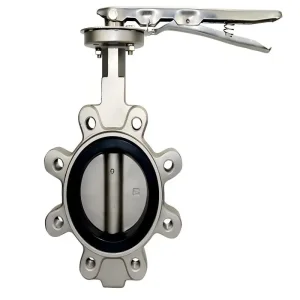
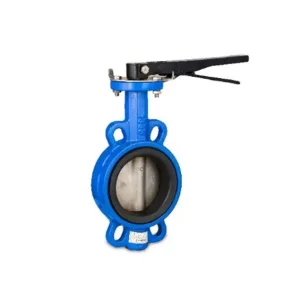
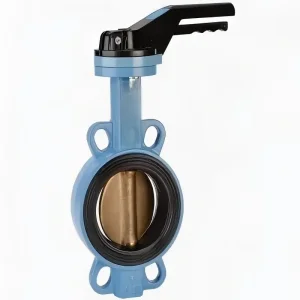
What is the functional difference between Wafer, Lug, and Flanged butterfly end configurations?
Lug type: Features tapped threaded eyelets enabling independent bolt installation from either side; ideal for terminal isolation and end-of-line dismantling without draining the adjacent pipeline.
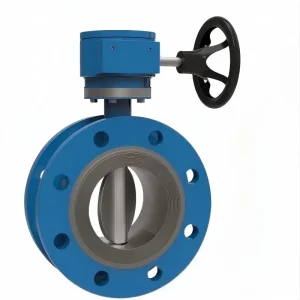
Flanged type: Features full double-flanges compliant with EN 1092 / ASME B16.5; offers the highest structural rigidity and gasket retention across large diameters (DN600 to DN2400) under intense bending moments.
