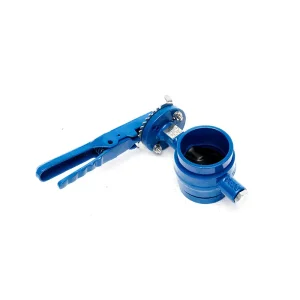
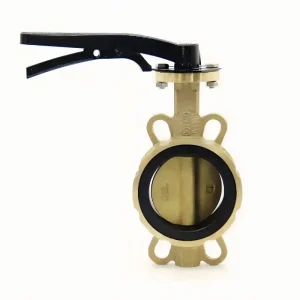
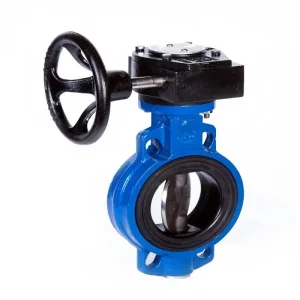
Precision Automated & Manual Industrial Valves
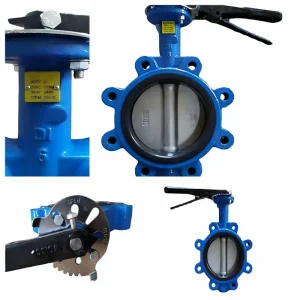
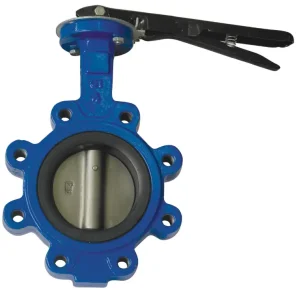
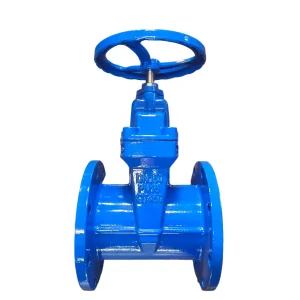
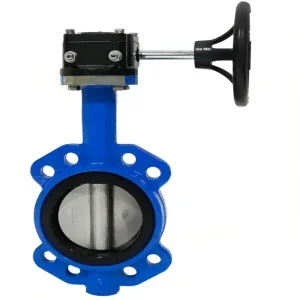
Explore our factory-direct butterfly, gate, and actuated valve configurations manufactured under ISO 9001, WRAS, and CE-PED quality standards.
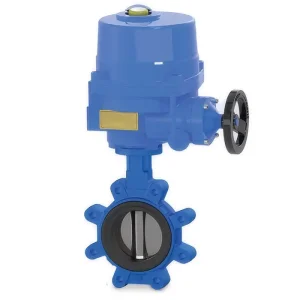
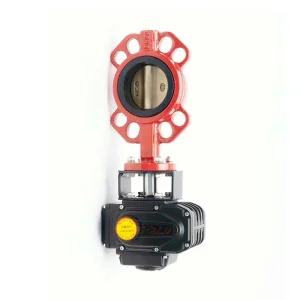
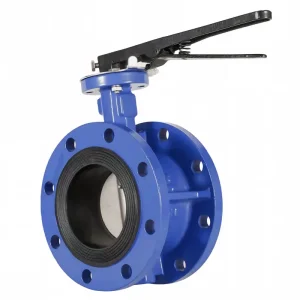
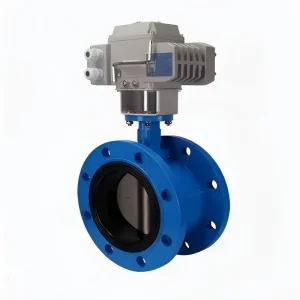
Kinematics & Fluid Mechanics of Quick-Opening 3-Way Ball Valves
An analytical overview of hydrodynamic flow coefficients ($C_v$), rapid-stroke torque curves, and zero-cavitation multi-port flow switching.
L-Port vs. T-Port Configuration
Quick opening three way ball valves utilize precision-machined spherical plugs configured in either an L-port (90° flow redirection) or T-port (straight-through flow, mixing, or multi-branch diversion) geometry. L-port designs provide fail-safe channel switching between two discrete destination headers. T-port geometries permit simultaneous proportional confluence or division, maintaining an optimized discharge coefficient while mitigating water hammer via controlled linear velocity gradients.
Rapid Actuation Dynamics & Torque Break
Quick-opening capability demands instantaneous breakaway torque capability (<0.5 to 1.5 seconds full stroke). Integrating high-output pneumatic rack-and-pinion actuators or fast-acting electric servomotors requires a rigid stem-to-ball interface. Our precision CNC machined stems feature double D-drive or keyed connections with blowout-proof internal shoulders, guaranteeing structural stability under sudden peak hydrodynamic pressure spikes and aggressive cycling frequencies.
In-House Foundry & Elastomer Synthesis
Sealing performance in high-speed ball valves hinges on compound resiliency and dimensional tolerance. Drawing on our group's heritage—Tianjin Dongfang Rubber Factory (since 1987) and Tianjin Donglian Valve Factory (since 1996)—we compound proprietary virgin PTFE, R-PTFE, and reinforced elastomers in-house. Paired with ductile iron, WCB carbon steel, and CF8M stainless steel bodies from our own foundry, every unit guarantees ISO 5208 Rate A zero-leakage performance.
Integrated 3-Way Architecture vs. Traditional Manifolds
Why process engineers and global EPC procurement leads are replacing multi-valve dual-isolation loops with quick-opening three-way ball valves.
| Evaluation Parameter | Dual Two-Way Valve + T-Junction Manifold | Integrated Quick-Opening 3-Way Ball Valve | Procurement Advantage |
|---|---|---|---|
| Installation Footprint & Weight | Requires 2 valves, 1 tee fitting, and 4-6 flanged connections; excessive structural mass. | Single compact body housing 3 flanged/wafer ports; up to 55% weight reduction. | Decreased structural support, ideal for marine and skid skids. |
| Switching Latency & Synchronization | Interlocked actuators risk cross-over delay, pressure build-up, and localized deadheading. | Single 90° or 180° motion cycle ensures immediate, synchronized diversion with zero lag. | Eliminates automated interlock failure points in emergency isolation. |
| Fugitive Emission Vulnerability | Multiple flanged joint gaskets and two dynamic valve stem packings multiply risk points. | Unified single-bonnet assembly featuring live-loaded stem seals certified to ISO 15848-1. | Meets strict environmental emissions benchmarks and reduces maintenance audits. |
| Hydraulic Flow Efficiency ($C_v$) | Turbulence induced by T-branch tees leads to chronic pressure drops and cavitation. | Smooth-bore ball cavity aligns with flow vectors, lowering system pumping energy. | Measurable reduction in lifetime operational power consumption. |
| Actuator & Signal Wiring Overhead | Two independent actuators, dual limit switch boxes, and dual solenoid valves required. | Single actuator assembly requiring one set of power, air lines, and telemetry feeds. | Cuts field instrumentation wiring, DCS I/O cards, and commissioning hours by 50%. |
Cavitation Resistance
During ultra-fast opening cycles, localized pressure differentials can drop below fluid vapor pressure. Our hydrodynamically profiled ball orifices minimize vortex formation, preventing micro-implosions and surface pitting on downstream piping.
Live-Loaded Stem Packing
Equipped with Belleville spring washers and self-adjusting chevron PTFE/Graphite v-rings, our stem packing maintains constant sealing pre-load across thermal shock cycles, preventing atmospheric leakage in chemical handling.
Full Bore vs. Reduced Bore
Available in true full-bore configurations matching standard pipe IDs for piggable pipelines, or optimized reduced-bore options designed for weight-sensitive offshore cooling skids and HVAC chiller bypass circuits.
Macro Solutions Across Critical Process Sectors
Engineered to handle severe thermal gradients, corrosive electrolytes, high pressures, and high cycle frequencies across global infrastructure.
Municipal & Potable Water Distribution
Engineered for raw water treatment diversion, pump discharge backwash isolation, and potable transmission mains. Models with WRAS-approved EPDM internal liners eliminate fluid contamination while delivering uninterrupted switching performance over decades of municipal service.
District Energy & Large-Scale HVAC
Central plant thermal storage loops require millisecond heat-pump switching and cooling tower bypass. Our quick-opening 3-way assemblies integrate proportional modulation actuators to maintain micro-differential temperature balance and reduce system pump heads.
Chemical & Petrochemical Processing
From batch reactor feed blending to corrosive process media transfer, our valves utilize solid CF8M stainless steel bodies and virgin PTFE or reinforced carbon-graphite seats resistant to aggressive aromatics, acids, and thermal cycling up to 260°C (500°F).
Marine & Offshore Ballast Systems
Naval architecture and offshore platforms require compact, salt-spray resistant valves. Utilizing cast aluminum bronze disc assemblies and Monel trim, our multi-port configurations operate ballast discharge, bilge pumping, and scrubber effluent routing without galvanic decay.
Industrial Refrigeration & Ammonia Loops
Quick diversion of low-temperature vapor and liquid refrigerants. Engineered to withstand sub-zero thermal shrinkage down to -46°C, incorporating extended bonnets, cryogenic degreasing, and specialized elastomeric sealing resilient against rapid embrittlement.
Power Generation & Auxiliary Steam
High-pressure boiler feed pump bypass and turbine condensate diversion. High-integrity forged steel construction paired with stellite hard-faced metal-to-metal seating guarantees zero leakage under superheated steam and severe thermal shock conditions.
Comprehensive Global Compliance & Material Traceability
Strict adherence to international design, testing, and environmental regulations guarantees seamless plant integration and long-term risk reduction.
ISO 9001 / 14001 / 45001
Vertically managed quality management systems across casting, machining, seat compounding, and hydrostatic shell testing. Fully documented serial-level QA audit trails.
WRAS Potable Certification
Select configurations, including models 4020G, 4020L, 4325G, and 4325L, feature certified non-toxic EPDM compounds tested to BS 6920 standards for clean drinking water safety.
CE-PED Compliance
Conforms to European Pressure Equipment Directive 2014/68/EU Module H. Rigorous shell wall thickness design compliant with ASME B16.34 and EN 12516 safety indices.
Multi-Standard Flange Drilling
Universal flange hole patterns machined to ASME B16.5 Class 150/300, EN 1092-1 PN10/PN16/PN25, JIS B2220 10K/20K, and Australian AS 2129 Table D/E standards.
Looking for EN 10204 3.1 Material Test Reports (MTR)?
Every industrial valve batch ships with full chemical spectrographic analysis, Charpy impact test logs, ultrasonic non-destructive testing (NDT) reports, and 100% hydrostatic pressure charts.
Technological Innovations in Multi-Port Automation
Pioneering smart digital actuators, advanced surface coatings, and zero-leakage materials engineering designed for future industrial requirements.
IoT-Enabled Predictive Torque Sensors
Next-generation quick-opening valves incorporate integrated strain gauges and digital position transmitters. By monitoring real-time breakaway torque signatures over Modbus, HART, or IO-Link, industrial control systems predict elastomer seat degradation before blow-by occurs, eliminating unplanned process outages.
Diamond-Like Carbon (DLC) & Ceramic Trims
For high-cycle slurry diversion and mining applications, standard stainless steel surfaces can degrade. We are deploying Diamond-Like Carbon (DLC) coatings and ultra-dense structural ceramics (ZrO₂ / SiC) on our spherical ball surfaces, increasing surface hardness to 2500+ HV and reducing rotational friction by over 40%.
Hydrodynamic Computational Fluid Dynamics (CFD)
Using advanced finite volume analysis and transient multiphase simulations, our R&D engineering hub optimizes interior port curvature. This redesign reduces vortex formation during mid-stroke switching, mitigating fluid acoustic noise and pressure losses across critical distribution pipelines.
Frequently Asked Questions by Valve Engineers & Buyers
Authoritative guidance on sizing, material selection, rapid actuation sizing, and international design conformity.
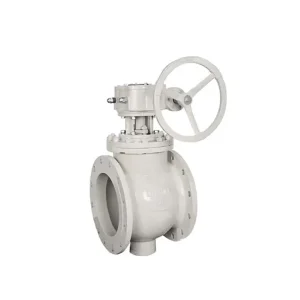
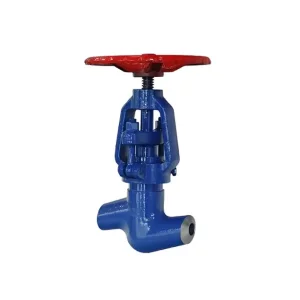
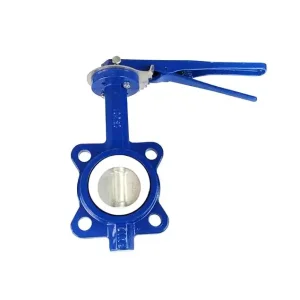
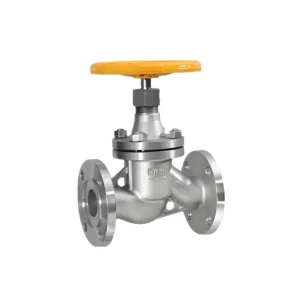
Specialty Industrial Butterfly, Gate, Plug & Globe Valves
Factory-direct specialized valve configurations designed for marine corrosion, extreme temperatures, and severe process isolation.