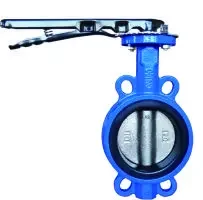
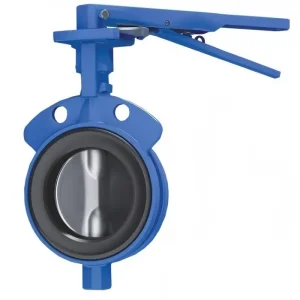
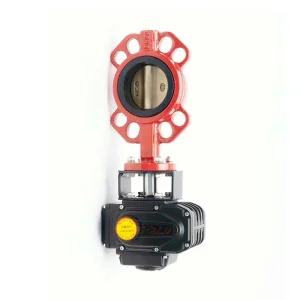
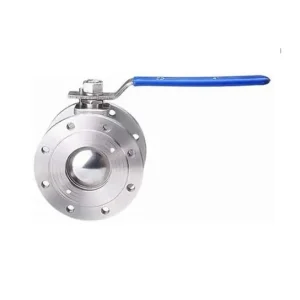
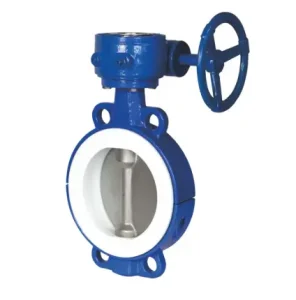
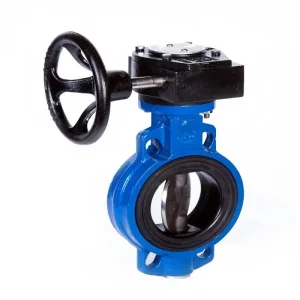
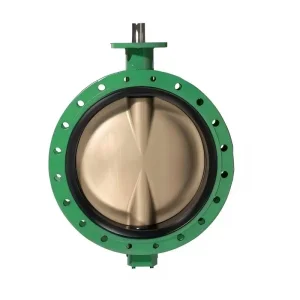
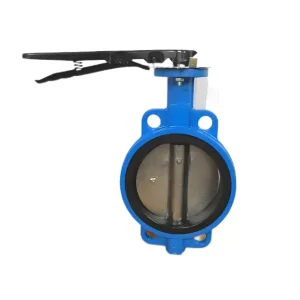
Factory-Engineered Automated & Process Control Valve Lineup
Explore our core quarter-turn valves and pipeline safety assemblies, manufactured under rigorous metallurgical oversight, strict dimensional tolerances, and multi-standard hydrostatic shell-and-seat verification.
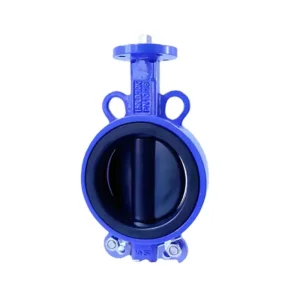
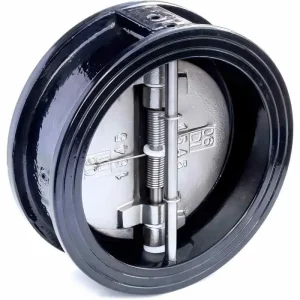
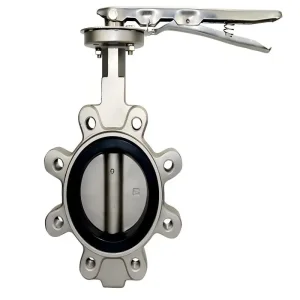
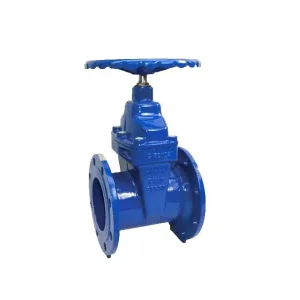
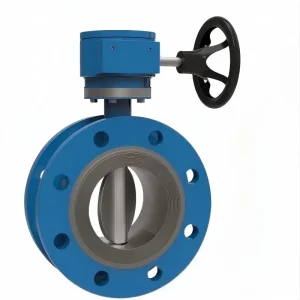
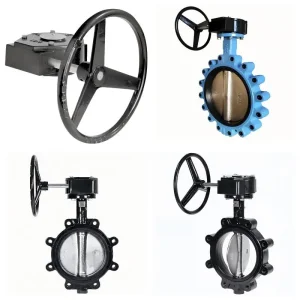
Pneumatic Butterfly Valve Architecture: Precision Automation Engineering
A comprehensive analysis of pneumatic actuation dynamics, quarter-turn mechanical efficiency, and elastomer longevity in heavy-duty automated process loops.
Kinematics of Pneumatic Actuation: Rack-and-Pinion vs. Scotch Yoke
In automated process systems, pneumatic butterfly valves serve as the workhorses for rapid shut-off, precise throttling, and fail-safe pipeline isolation. The interface between the pneumatic actuator and the valve disc must handle intense dynamic loads. Rack-and-pinion actuators deliver a linear, constant torque profile across the entire 0° to 90° rotation, making them the standard choice for concentric resilient-seated butterfly valves where breakout torque, run torque, and seating torque remain relatively consistent.
Conversely, for high-performance double-eccentric and triple-offset metallic sealing butterfly valves, the torque requirement peaks sharply at breakaway and mechanical seating. In these severe applications, Scotch Yoke pneumatic actuators—delivering a parabolic torque curve with peak force at 0° and 90°—prevent oversized air cylinder selection, drastically reducing instrument air consumption and lowering infrastructure capital expenditures across massive chemical, petrochemical, and municipal installations.
Tianjin Top Automation Equipment ensures every automated valve package meets ISO 5211 direct-mount standards without extraneous brackets or coupling backlash. This ensures zero hysteresis, accurate digital valve positioning, and extended shaft packing life by preventing side-loading friction.
Elastomer Rheology and In-House Chemical Vulcanization
The primary point of vulnerability in any resilient-seated butterfly valve is not the metallic shell, but the elastomeric lining. Minor variations in polymer compound chemistry, plasticizer purity, or vulcanization kinetics can lead to premature seat hardening, excessive swelling, compression set failure, or explosive decompression under automated cycling.
Tianjin Top Valve's heritage trace back to the establishment of the Tianjin Dongfang Rubber Factory in 1987. Unlike valve assemblers who outsource elastomer sourcing to commoditized third-party vendors, we chemically formulate, compound, mold, and cure our proprietary EPDM, NBR, Viton (FKM), and PTFE blends in-house. Our specialized WRAS-certified potable water EPDM seats exhibit compression set values under 15% after 100,000 continuous operating cycles, completely avoiding the stem-leakage paths and high breakaway torque spikes that plague generic commercial assemblies.
Chinese Manufacturing Ecosystem: Complete Vertical Integration
Eliminating middleman markups and mitigating global supply chain volatility through comprehensive on-site metallurgy, precision CNC machining, and automated cleanroom assembly.
Dedicated Foundry Operations
Founded on the operational heritage of Tianjin Donglian Valve Factory (since 1996), our in-house metallurgical foundry utilizes electric induction melting and automated resin sand casting lines. We control chemical composition (carbon equivalents, nodularity > 90% for ductile iron QT450-10/GGG40) on-site via optical emission spectrometry, preventing internal porosity and tensile micro-defects.
High-Precision Multi-Axis CNC
Disc perimeter hydrodynamic contouring, spherical sealing profiles, and double-D or keyed stem splines are machined using multi-axis CNC centers. Dimensional tolerances are maintained within ±0.015mm, guaranteeing uniform seat interference, ultra-smooth disc edge polish (Ra < 0.4µm), and reduced operational torque requirements.
Logistical Port Velocity
Situated in the Wuxia Industrial Park, Dongli District, Tianjin, our factory sits within 45 kilometers of Tianjin Xingang Port—one of Northern China's largest maritime gateways. Direct factory-to-berth container drayage reduces inland transit risk, lowers carbon transport footprints, and ensures prompt ocean delivery schedules for project sites across Europe, the Middle East, Southeast Asia, and the Americas.
Strategic Total Cost of Ownership (TCO) Advantages for Global Buyers
Procuring automated flow control valves from fragmented trading agencies introduces compounding failure modes: inconsistent sub-vendor sourcing, untraced casting heats, mismatch between actuator torque output and seat drag, and escalating markups. By engaging directly with our fully integrated manufacturing group, EPC contractors and valve stockists achieve up to 35% reduction in total landed procurement costs while enhancing technical compliance.
Our engineering division supports custom valve-automation packaging: pairing heavy-duty single-acting (spring return) or double-acting pneumatic actuators with certified solenoid valves (NAMUR standard), electro-pneumatic positioners (4-20mA with HART / Foundation Fieldbus protocol), limit switch boxes, and emergency de-clutchable manual worm gear overrides. Every sub-assembly is mounted, calibrated, and cycle-tested before export shipping.
International Standards Alignment & Engineering Matrix
Cross-standard engineering reference verified against ASME, EN/DIN, ISO, API, and British Standards for universal pipeline interoperability.
| Engineering Parameter | American Standard (ASME / API / AWWA) | European Standard (EN / DIN / BS) | International / Industrial Standard (ISO / JIS) |
|---|---|---|---|
| Design & Valve Construction | API 609 (Category A & B), AWWA C504 | EN 593, DIN EN 12516-1 | ISO 10631, JIS B2064 |
| Face-to-Face Dimensions | ASME B16.10, API 609 Wafer/Lug | EN 558-1 Series 20 / Series 16 | ISO 5752 Series 20, DIN 3202-K1 |
| Flange Compatibility | ASME B16.5 Class 150, ASME B16.47 Class 150 | EN 1092-1 PN10 / PN16 / PN25 | ISO 7005-2, JIS B2220 / B2239 10K/16K |
| Actuator Mounting Pad | ISO 5211 / MSS SP-102 | EN ISO 5211 Direct Mount | ISO 5211 (F03 through F30 PCD) |
| Pressure & Leakage Testing | API 598 (Zero Leakage Rate A) | EN 12266-1 (Rate A Zero Bubble) | ISO 5208 Rate A, BS 6755 Part 1 |
| Potable Water Compliance | NSF/ANSI 61, NSF 372 Lead-Free | WRAS (Selected Models 4020G, 4325G) | ACS, DVGW W270 / KTW Compliant Blends |
| Fugitive Emissions & Fire Safety | API 607 7th Edition Fire-Safe, EPA Method 21 | ISO 15848-1 Class AH/BH, TA-Luft VDI 2440 | EN ISO 10497 Fire Test Certification |
Rigorous Inspection Protocols & NDT Verification
Reliability in harsh automated environments begins with material integrity. Our physical and chemical testing laboratory conducts comprehensive non-destructive testing (NDT), including ultrasonic testing (UT) on valve stems and disc critical stress areas, magnetic particle inspection (MPI) on ferromagnetic castings, and dye penetrant inspection (DPI) on stainless steel (CF8, CF8M, CF3M) and aluminum bronze (C95800, C95400) surfaces.
Every single valve undergoes 100% hydrostatic shell testing at 1.5 times the nominal working pressure (e.g., 24 bar for PN16 rated valves) and high-pressure bi-directional pneumatic seat leakage testing at 1.1 times the design pressure. Material test reports (EN 10204 3.1 certification) are generated for each production heat, providing full traceability from raw molten pig iron and scrap alloy back to final export crating.
Emerging Trends: Smart Pneumatic Flow Automation & IIoT Telemetry
How digital valve positioners, SIL-rated functional safety modules, and low-emission stem packaging are revolutionizing automated quarter-turn control in modern Industry 4.0 plants.
Intelligent Electro-Pneumatic Control
Modern plants are migrating from basic analog on/off actuators to micro-processor-controlled digital valve positioners. Utilizing HART 7, Foundation Fieldbus, or Profibus PA communications, these smart positioners execute real-time partial stroke testing (PST), verifying valve availability in emergency shut-down (ESD) loops without interrupting ongoing pipeline operations.
SIL 3 Functional Safety Integrity
For chemical and hazardous fluid installations, pneumatic actuator assemblies must satisfy IEC 61508 / IEC 61511 functional safety standards. Our pneumatic packages integrate redundant 3/2-way or 5/2-way solenoid valves with SIL 3 rated spring-return cylinders, guaranteeing fail-closed or fail-open emergency action within fractions of a second during power or instrument air loss.
Fugitive Emission Mitigation
Global environmental mandates—including the EU Clean Air Directive and US EPA regulations—demand radical suppression of volatile organic chemical (VOC) leaks. Our proprietary live-loaded chevron PTFE and flexible graphite stem packing systems comply with ISO 15848-1 Class BH standards, reducing stem leakage rates to less than 10⁻⁴ mbar·l/(s·mm) over extensive automated cycling regimes.
Pinless Shaft-to-Disc Geometries: Eradicating Crevice Corrosion
In conventional butterfly valve designs, cross-pins or drive taper pins penetrate through the disc and stem, creating localized stress concentrations, crevice corrosion cells, and eventual leakage paths directly past the elastomer boundary. Tianjin Top Valve utilizes advanced spline drive and square/double-D broached shaft connections that completely isolate the internal disc-to-stem connection from the corrosive pipeline fluid.
This pinless architecture is particularly vital in our high-purity lined series—such as our wholesale Halar (ECTFE) and PTFE lined butterfly valves. Fluid media contacts exclusively the virgin fluoropolymer lining and encapsulation disc, preventing galvanic degradation and extending service intervals by up to 300% in chlor-alkali, acid pickling, and pharmaceutical solvent pipelines.
Localized Engineering Use Cases & Material Selection Profiles
Field-proven valve architectures custom tailored to meet the exacting operating stresses of distinct global industry environments.
Potable Water Networks & Desalination
Drinking water networks require zero extraction of volatile taste/odor compounds. Our WRAS-approved 4020G wafer and 4325G lug valves feature WRAS-certified EPDM vulcanized seats paired with mirror-polished 316SS discs or C95800 Nickel-Aluminum Bronze components. They resist pitting corrosion in reverse-osmosis brine intake streams while guaranteeing non-toxic fluid transmission.
Chemical Processing & Corrosive Service
For sulfuric acid, caustic soda, hydrochloric acid, and organic compounds, our PTFE-lined and pinless Halar-lined valves eliminate metallic exposure. The heavy-duty 3mm minimum polymer thickness prevents permeation, and spring-energized dynamic shaft seals maintain bubble-tight integrity under fluctuating thermal cycling from -20°C to +180°C.
HVAC, Building Automation & District Energy
Large-scale commercial central energy plants and district cooling loops require high-cycling automated valves with low head loss. Our wafer and lugged resilient-seated valves configured with fast-acting pneumatic actuators deliver high $C_v$ values, reducing pumping electrical power demands while preventing water hammer through tuned exhaust speed-control throttles.
Marine, Offshore & Ballast Systems
Seawater environments generate aggressive galvanic corrosion on standard cast iron bodies. We supply marine-pattern butterfly valves cast in our foundry with ductile iron (GGG40/QT450) bodies coated in high-build offshore epoxy (>300µm), paired with high-tensile Aluminum Bronze discs and high-resilience seawater-resistant NBR or Viton seating liners.
Engineering FAQ: Pneumatic Butterfly Valve Sizing & Operations
In-depth responses to critical technical queries frequently raised by project engineers, instrumentation managers, and international procurement leaders.
How do you calculate the correct safety sizing factor for pneumatic actuators on resilient-seated butterfly valves?
Sizing pneumatic actuators strictly to the manufacturer's nominal catalog torque is a common engineering mistake. Resilient seat elastomeric compounds experience "breakaway stiction" when left seated without cycling for extended periods. Furthermore, media characteristics drastically modify required torque.
Our engineering guideline mandates applying safety multipliers over the maximum calculated seating torque under full differential pressure:
- Clean lubricating fluids (water, light oils): Minimum 20% to 25% safety margin.
- Dry gases, instrument air, powders, or non-lubricating dry steam: Minimum 35% to 50% safety margin.
- Slurries, abrasive suspended solids, or viscous liquids: 50% to 75% safety factor.
For example, if a DN200 PN16 butterfly valve exhibits a seating breakout torque of 280 Nm on raw river water, we pair it with an actuator outputting no less than 350 Nm at the minimum operating supply air pressure (e.g., 5.0 bar air supply).
What are the key differences between Concentric, Double-Eccentric, and Triple-Offset Butterfly Valves?
Concentric (Zero-Offset): The stem and disc centerlines are completely aligned with the valve body bore. Sealing relies on continuous 360° mechanical interference between the rounded disc edge and the elastomeric seat. Economical, lightweight, and ideal for low-to-medium pressure utility pipelines (up to PN16/Class 150) in water, HVAC, and light chemicals.
Double-Eccentric (High-Performance): Offset 1 places the shaft behind the sealing plane; Offset 2 shifts the shaft eccentric from the pipe centerline. This cam-like motion lifts the disc out of the seat within the first few degrees of rotation, drastically eliminating continuous perimeter friction, minimizing wear, and lowering actuation torque. Best suited for higher pressures (PN25/Class 300) and elevated cycle rates.
Triple-Offset (Metal-to-Metal / Severe Service): Offset 3 angles the seat cone axis relative to the pipeline axis. The disc and seat engage via pure geometric contact without any sliding friction or rubbing. This design achieves bi-directional zero-leakage shut-off in extreme temperatures (-196°C cryogenic up to +600°C superheated steam), aggressive refining services, and fire-safe operations.
Why is in-house rubber compounding critical for butterfly valve operational life?
The vast majority of valve failures in automated service occur due to seat degradation: swelling from chemical incompatibility, hardening from heat or chloramine exposure, or permanent set failure where the rubber loses elasticity and fails to rebound against the disc edge.
Because our group operates Tianjin Dongfang Rubber Factory (founded in 1987), we control the masterbatch compounding process. We utilize high-molecular-weight raw polymers, avoid cheap chalk or reclaimed rubber fillers, and carefully balance sulfur vs. peroxide curing systems depending on the service duty. Our peroxide-cured EPDM seats provide significantly superior heat resistance (+135°C continuous) and micro-yield recovery compared to standard commercial sulfur-cured elastomers.
How do you protect against water hammer during high-speed pneumatic valve closing?
Pneumatic actuators can rotate a 90° butterfly valve in less than 0.5 seconds if unrestricted. In long liquid transport lines, instantaneous closure creates a rapid deceleration of the fluid column, resulting in destructive shock waves known as hydraulic transient surges or water hammer.
To eliminate this phenomenon, our automated assemblies can be outfitted with one-way sintered brass or stainless steel flow control silencer throttles mounted directly on the pneumatic exhaust ports. By adjusting exhaust back-pressure, stroke closing speed can be regulated precisely (e.g., extending closing time to 4 to 12 seconds), while maintaining rapid opening speeds to safeguard downstream equipment without inducing damaging pressure spikes.
What certification documentation accompanies international EPC valve shipments?
We supply a comprehensive Quality Assurance Dossier with every containerized export delivery, including:
- EN 10204 Type 3.1 Material Test Certificates: Traceable chemical composition and mechanical tensile/elongation properties for bodies, discs, and stems.
- Hydrostatic & Pneumatic Pressure Test Reports: Documenting shell proof and seat leakage verification according to API 598 / EN 12266-1.
- Elastomer Curing & WRAS/FDA Declarations of Conformity: Certified for potable water or hygiene service.
- CE / PED Declaration of Conformity: Compliance with Pressure Equipment Directive 2014/68/EU Module H.
- Dry-Film Coating Thickness (DFT) Reports: Confirming electrostatic fusion-bonded epoxy (FBE) thickness > 250µm with spark-holiday testing verification.
Specialized Flow Control & Heavy-Duty Process Valves
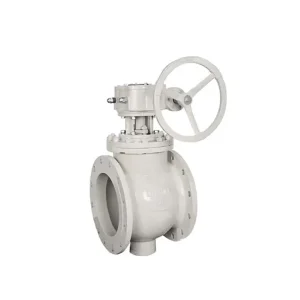
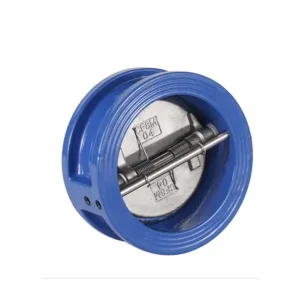
Complete product catalog showcasing resilient-lined, actuator-ready, ultra-thin fire-safe ball valves, and non-return check valve configurations manufactured for global infrastructure.