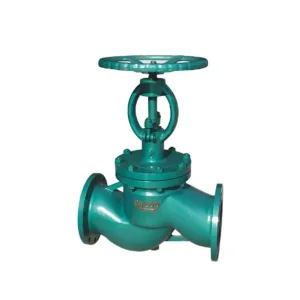
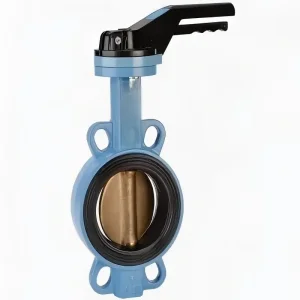
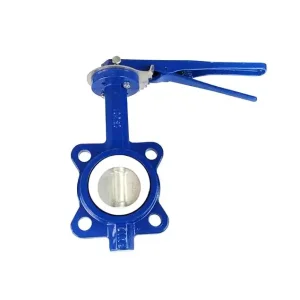
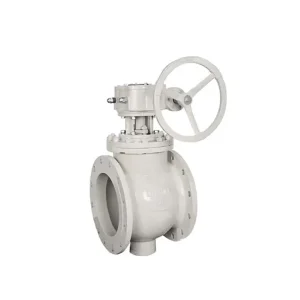
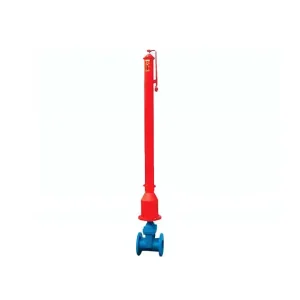
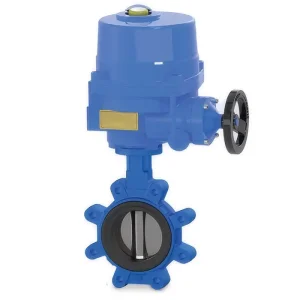
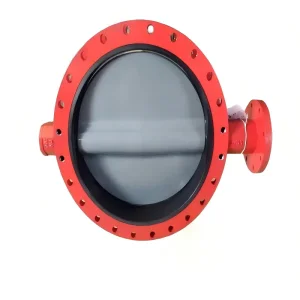
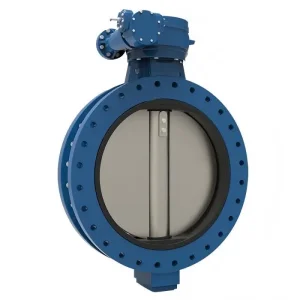
Featured Fluid Control Assemblies
High-integrity valves engineered with metallurgical precision, fugitive emission mitigation, and resilient seating for petrochemical processing lines.
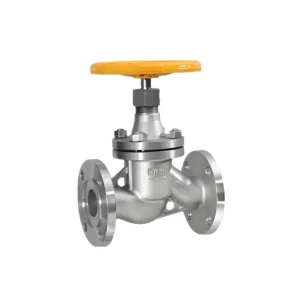
Engineering Blueprint: Chemical-Plant Globe Valve Integrity
Industrial chemical plants cannot tolerate compromise. Toxic, volatile, inflammable, and abrasive fluids impose strict structural criteria on globe valve construction.
Elimination of fugitive emissions is primary. We incorporate multi-ply hydroformed Hastelloy C-276 and Inconel 625 bellows seals, backed by secondary live-loaded die-formed graphite rings, compliant with strict ISO 15848-1 Class AH and API 641 specifications.
Severe drops across valve seats generate high fluid velocities. Our multi-stage tortuous path plugs, parabolic throttles, and ceramic/Stellite Gr.6 hardfacing mitigate erosive cavitation and prevent wire-drawing during micro-metering chemical dosing.
Poured in Group-owned foundries with induction degassing, castings utilize Super Duplex 2507, Monel 400, Titanium Gr.2, or Hastelloy. Shell wall thicknesses strictly align with ASME B16.34 Class 150 to Class 2500 with zero sub-surface gas porosity.
| Critical Parameter | Standard Petrochemical Spec | Tianjin Top Valve Chemical-Grade Globe Design | Procurement Advantage |
|---|---|---|---|
| Fugitive Stem Emission | ISO 15848-1 Class BH (≤100 ppmv) | ISO 15848-1 Class AH (≤10 ppmv) / API 641 Certified | Guaranteed zero-leakage compliance with EPA regulations |
| Disc/Seat Hardfacing | 13Cr / Base Metal Contact | Full Stellite 6 (CoCr-A) Weld Overlay / Solid Tungsten Carbide | Over 500% longer cycle life in slurry and cavitation environments |
| Pressure Retaining Shell | Commercial ASTM A216 WCB / CF8M | In-House Cast Duplex 2205 / Monel 400 / Hastelloy C276 with RT/UT NDT | Superior intergranular corrosion resistance under acidic duty |
| Stem Sealing System | Standard Braided PTFE / Carbon Fiber | Multi-Ply Hydroformed Bellows + Live-Loaded Belleville Springs | Maintenance-free sealing cycle exceeds 100,000 full strokes |
Macro-Industry Solutions for Hazardous Media
Engineered for operations across primary petrochemical infrastructure, chlor-alkali production, sulfuric acid synthesis, and ultra-pure fertilizer facilities.
Dry and wet chlorine gas cause catastrophic corrosion in baseline steel. We engineer chemical globe valves featuring Titanium Gr.2 or PVDF/Halar lined flow bores. Non-lubricated bellows and virgin PTFE/PCTFE soft inserts assure zero chlorine moisture reaction, eliminating pitting corrosion.
Sulfuric processes demand strict velocity restrictions to safeguard protective sulfate films. Our parabolic throttle globe trims with Alloy 20 (Carpenter 20) and high-silicon iron formulations guarantee uniform fluid dispersion, preventing erosion-corrosion at flow boundary interfaces.
Straight-through ammonia globe valves manage sudden temperature drops and phase changes. Utilizing Low-Temperature Carbon Steel (ASTM A352 LCB/LCC) with extended bonnet designs, heat leaks are minimized while guaranteeing gas-tight bubble isolation down to -46°C.
China Factory 4.0: Supply Chain Resilience & Foundry Control
From self-owned foundries established in 1987 to robotic machining lines, vertical integration ensures engineering fidelity and on-time global supply.
Operating Tianjin Donglian Valve Factory since 1996 and an in-house casting facility, we eliminate sub-tier delays while performing 100% direct chemical melt spectroscopy.
Tianjin Dongfang Rubber Factory (since 1987) compounds proprietary virgin EPDM, NBR, FKM, and PTFE seats in-house for complete batch-to-batch polymer stability.
Multi-axis horizontal machining cells guarantee tight tolerances for seat contact angles, stem concentricity, and flange face serrations per ASME B16.5.
Every single valve shell and seat undergoes hydrostatic and pneumatic leak testing per API 598/EN 12266-1 before entering protective export packaging.
Technology Roadmap & Sustainable Valve Horizon
Meeting the demands of modern chemical operations with intelligent monitoring, advanced additive components, and green hydrogen compatibility.
Embedding smart piezoresistive pressure, thermal, and high-frequency acoustic emission sensors into bellows chambers enables real-time transmission of micro-leakage anomalies to central DCS via wireless protocols, avoiding unplanned plant outages.
Transitioning to hybrid robotic laser cladding for internal flow paths, applying nickel-cobalt matrices with zero dilution into base materials. This yields extreme erosion resistance while reducing the embodied carbon footprint of the final cast shell.
Addressing hydrogen embrittlement in syngas and green ammonia manufacturing. Our metallurgy utilizes low-nickel-segregation austenitic alloys, electropolished finishes, and vacuum-leak testing under helium mass spectrometry down to 1x10⁻⁹ mbar·l/s.
Localization Support, Global Compliance & Traceability
Meeting rigorous engineering, safety, and operational standards for chemical plant installations across major regulatory markets.
Full CE certification and conformity assessment for high-pressure installations throughout Europe. Every chemical globe valve carries an individual CE marking, complete with full technical files and notified body audit verification.
Complete traceability from raw ingot melt to finished valve. Every serial-numbered chemical globe valve ships with heat-number-stamped chemical composition, Charpy V-notch impact tests, and mechanical yield reports.
Headquartered in Dongli District, Tianjin, we maintain high-speed logistic connections to Tianjin Port. We provide export shipping services, CIF/DDP terms, and dedicated on-site field engineering assistance across 50+ export destinations.
Frequently Asked Chemical Valve Questions
Straightforward guidance on selecting, specifying, and operating chemical-grade globe valves in demanding industrial installations.
Why specify globe valves over butterfly or ball valves for chemical service?
While butterfly and ball valves provide compact quarter-turn shut-off, globe valves remain the standard for precise flow throttling, high pressure drop handling, and zero stem leakage. Short disc travel reduces wear during frequent regulation, and tortuous body paths limit cavitation erosion during high-differential chemical dosing.
How does bellows sealing prevent chemical fugitive emissions?
A metallic bellows forms a flexible, sealed metallic barrier between the process media and the outside atmosphere, completely removing dynamic friction against stem packing. Backed up by secondary graphite gland packing, bellows configurations deliver zero-leakage compliance with ISO 15848-1 Class AH standards.
What materials are recommended for severe hydrochloric acid duty?
For concentrated hydrochloric acid (HCl), common stainless steels fail rapidly. We recommend ASTM B366 Hastelloy C-276, commercially pure Titanium, or fluoropolymer-lined bodies (PTFE, PFA) paired with full Stellite or ceramic seat trims to prevent localized pitting and stress crack failures.
Can Tianjin Top Valve supply Class 1500 and higher high-pressure valves?
Yes. In addition to standard PN16/PN40 and ASME Class 150/300 valves, our foundry and CNC machining lines manufacture forged and cast chemical globe valves up to ASME Class 2500, verified through full non-destructive testing (RT, UT, MT, PT) and hydrostatic testing per API 598.
Explore Specialized Process Piping Valves
From vacuum-rated isolation globe valves to abrasion-resistant gate units, review our complete manufacturing lineup ready for global project deployment.