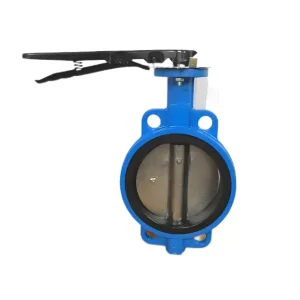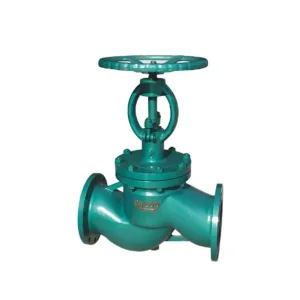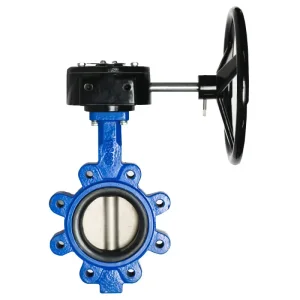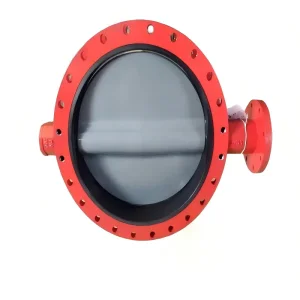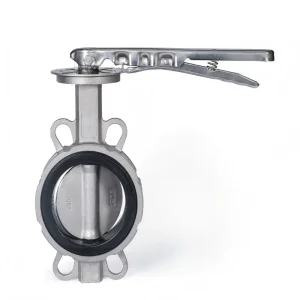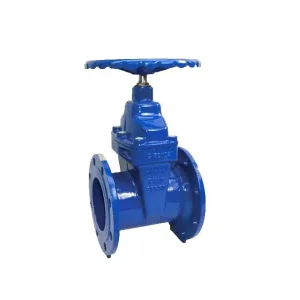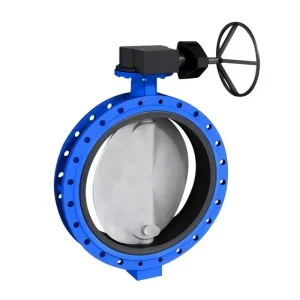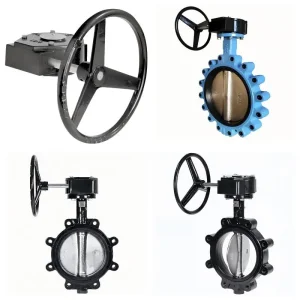
Direct-From-Foundry Portfolio
Featured Fluid Control & Isolation Assemblies
Precision-engineered flow isolation units backed by our fully unified foundry and rubber vulcanization campus operating in Tianjin, China since 1987.
Material Science & Structural Dynamics
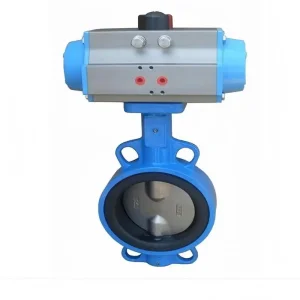
The Mechanics of High-Purity Actuated PTFE Lined Butterfly Valves in Water Operations
Comprehensive metallurgical, polymeric, and fluid mechanical criteria underpinning bidirectional bubble-tight isolation across severe aqueous media.
Isostatic Sintered Virgin PTFE & TFM1600
Conventional elastomer-lined valves succumb to accelerated polymer leaching, swelling, and ozone oxidation when handling ozonated potable water, reverse osmosis retentate, or demineralized boiler feed. Our actuator PTFE-lined butterfly valves incorporate high-molecular-weight virgin PTFE or modified TFM1600 liners compression-molded with a minimum 3.0mm thickness across all wetted areas. Sintering occurs under computer-monitored thermocycling, eliminating micro-porosity and providing ultra-low permeation coefficients against volatile organics and dissolved halides.
Dual-Dynamic Shaft Sealing Dynamics
Stem leakage remains the predominant cause of failure in municipal automated networks. Our valves utilize an engineered multi-stage labyrinth sealing structure. The primary seal is achieved through pre-compressed spherical mating surfaces between the disc hub and the body liner, supported by resilient silicone or FKM energizing cushions. The secondary stem packing integrates self-adjusting PTFE V-rings energized by Belleville disc springs (live-loaded configuration), preventing atmospheric fugitive emissions in compliance with ISO 15848-1 Class A.
Automated Actuation Interface (ISO 5211)
Accurate integration between the valve quarter-turn disc and the pneumatic or electric actuator requires strictly calculated breakaway, running, and reseat torques. Due to PTFE’s inherent self-lubricating non-stick characteristics (coefficient of friction µ = 0.04 to 0.10 against polished stainless steel), running torques remain exceptionally low over decades. Our CNC-machined top mounting flanges strictly follow ISO 5211 patterns, allowing direct mounting of pneumatic rack-and-pinion, scotch-yoke, and multi-turn modulating electric actuators without cantilever deflection.
>20,000 V
Dielectric Spark Testing
ISO 5208
Rate A Zero Leakage
500,000+
Full Actuation Cycles Tested
-40°C to +200°C
Thermal Operating Window
Global Deployments & Engineering Roadmaps
Localized Application Scenarios in Modern Water Infrastructure
From hyper-saline desalination brine to sub-ppb semiconductor ultrapure water loops, examine how specialized PTFE actuator valves solve critical flow challenges.
Seawater Reverse Osmosis (SWRO)
Desalination plants handling high chlorides and bromide ions suffer rapid galvanic and pitting corrosion on 316L and Super Duplex stainless steel. Fully lined PTFE disc and body butterfly valves completely isolate the metallic pressure boundary (ductile iron GGG40 or ASTM A216 WCB) from raw seawater, pre-treatment chemicals, and concentrated high-pressure brine streams, cutting plant capital expenditure by up to 60% compared to nickel-alloy valves.
Semiconductor Ultrapure Water (UPW)
Microelectronic sub-nanometer wafer fabrication facilities demand Toc levels < 0.5 ppb and ion leachability measured in parts per trillion. Virgin PTFE and high-purity PFA liners undergo proprietary high-temperature ultrasonic cleanroom passivation. Disc surfaces mirror-polished to Ra < 0.4 µm inhibit biofilm attachment and organic extraction, ensuring total compliance with SEMI F57 fluid contact specifications.
Municipal Ozone & Hypochlorite Disinfection
To eradicate waterborne pathogens, regional utility districts dose sodium hypochlorite, chlorine dioxide, and ozone gas. These strong oxidants rapidly embrittle standard EPDM, Nitrile, and polyurethane seats within 12–24 months. PTFE-lined actuators deliver absolute chemical inertness, safeguarding municipal asset lifetime warranties of over 25 years without seat erosion or elasticity loss.
Industrial Zero Liquid Discharge (ZLD)
Flue gas desulfurization (FGD) wastewater and heavy mining runoffs contain supersaturated calcium sulfate, chlorides, and abrasive crystallizing slurries. The anti-adhesive surface energy of PTFE prevents crystalline scaling and mineral incrustation, mitigating common actuator stalling caused by mineral build-up on traditional metallic butterfly discs.
Strategic Technology Roadmap (2025–2035): Next-generation PTFE-lined butterfly valve architectures are transitioning from reactive maintenance to AI-driven predictive lifecycle telemetry. Top Valve’s forward engineering includes integral piezoelectric torque transducers and embedded RFID liner thickness monitoring sensors that transmit real-time dielectric capacitance variations directly to supervisory SCADA control centers, alerting municipal operators before seal degradation compromises plant operations.
| Nominal Diameter (DN) | Working Pressure (PN) | Liner / Seat Polymer | Body Materials Available | Leakage Class (ISO 5208) | Actuator Compatibility |
|---|---|---|---|---|---|
| DN50 – DN150 (2" – 6") | PN10 / PN16 / Class 150 | Virgin PTFE / TFM1600 | Ductile Iron GGG40 / WCB / CF8M | Rate A (Bubble-Tight) | Direct Mount Pneumatic Rack & Pinion / Electric Modulating |
| DN200 – DN300 (8" – 12") | PN10 / PN16 / Class 150 | Conductive / Antistatic PTFE | Ductile Iron / Carbon Steel / CF8 | Rate A (Bubble-Tight) | High-Torque Scotch Yoke Pneumatic / Smart Electric Actuator |
| DN350 – DN600 (14" – 24") | PN10 / PN16 | Isostatic Molded Modified PTFE | Ductile Iron QT450-10 / WCB | Rate A (Bubble-Tight) | Multi-Turn Electric Actuator with Declutchable Manual Gearbox |
| DN700 – DN1200 (28" – 48") | PN6 / PN10 / PN16 | High-Purity Thick PFA / PTFE | Fabricated Steel / Ductile Iron | Rate A (Bubble-Tight) | Electro-Hydraulic Smart Fail-Safe / Dual Cylinder Pneumatic |
Industrial Ecosystem Resilience
China Factory Ecosystem: Vertical Integration, Foundry Control, & Traceability
How end-to-end metallurgical casting, in-house elastomer vulcanization, and advanced CNC machining centers create unprecedented lead-time certainty and technical rigor.
In-House Metallurgical Foundry
Unlike typical trading firms and assemblers relying on third-party scrap iron foundries, our industrial group possesses proprietary casting lines operating in Tianjin since 1996. We execute continuous optical emission spectroscopy (OES) melt analysis, certifying that all ductile iron bodies consistently achieve minimum 12% elongation and 450 MPa tensile strength. This structural integrity guarantees zero body fracturing under surge water-hammer pressures up to 40 bar.
Rubber & Polymer Compounding Since 1987
Through our historical group partner (Tianjin Dongfang Rubber Factory, established 1987), we possess deep formulation expertise in elastomer backings and fluoropolymer bonding. The dynamic memory of the underlying EPDM or silicone backup ring determines whether an actuated PTFE butterfly valve retains seat bubble-tightness after 100,000 thermal cycles. We manufacture our own precision backup energizers to guarantee uniform compression modulus and non-aging resiliency.
100% Quality Verification & Traceability
Every single actuator PTFE lined valve is subjected to hydrostatic shell testing at 1.5× PN, bi-directional seat leakage testing at 1.1× PN with dry compressed air/nitrogen, and a non-destructive 20kV high-voltage spark pore scan across 100% of the internal polymer surface to identify micro-voids. Material test reports (EN 10204 3.1) are permanently archived and QR-coded directly on stainless steel laser-etched valve identification nameplates.
Global Commercial Context: The Shift from Metallic to Lined Actuated Valves
Across the international engineering, procurement, and construction (EPC) landscape, facility managers and consulting engineers are fundamentally revisiting asset lifecycle costs. Historical practices of installing rubber-lined butterfly valves or costly exotic alloys (Hastelloy C276, Titanium Gr. 2, Monel) in treated water loops are proving commercially unsustainable. Unscheduled plant turnarounds driven by chloramine degradation of EPDM seats cost industrial facilities up to $250,000 per day in unplanned outages.
By specifying intelligent, automated PTFE-lined butterfly valves, industrial stakeholders achieve the high structural mechanical strength of carbon steel and ductile iron housings combined with the near-infinite chemical passivity of fluoropolymers. When paired with smart pneumatic actuators or industrial fieldbus (Modbus RTU, Profinet, HART) electric actuators, facilities slash overall Total Cost of Ownership (TCO) by over 45% over a 15-year operational lifecycle.
Engineering Governance
International Compliance, Certifications, & Technical Support
Auditable quality management aligned with the stringent jurisdictional codes of North American, European, and Middle Eastern utility authorities.
Potable Water & Hygiene Standards
Selected models hold verified WRAS approvals (Water Regulations Approval Scheme, UK), demonstrating compliance with BS 6920 for water contact materials. Our PTFE and PFA formulations are verified in third-party laboratories to meet FDA 21 CFR 177.1550 and European Regulation (EC) 1935/2004, guaranteeing that zero endocrine-disrupting chemicals, phthalates, or micro-particulates leach into public drinking water supplies.
Pressure Equipment Directive (CE/PED)
All valve body shells comply with European Pressure Equipment Directive 2014/68/EU Module H full quality assurance. Flange drilling, face-to-face dimensions, and pressure classes are fully interchangeable across EN 1092-1 PN10/PN16, ASME B16.5 Class 150, JIS B2239 10K, and AS 2129 Table E, ensuring friction-free global replacement in existing pipelines.
Engineering Support & CAD/BIM Services
Our project engineering team delivers full 24-hour turnaround on customized technical submittals, including STEP/IGES 3D models, complete dimensional CAD layouts, flow coefficient (Cv/Kv) curve calculations, actuator air-consumption sizing, and seismic/vibration calculation reports for nuclear and high-density municipal pumping installations.
Engineering Help Desk
Frequently Asked Technical & Procurement Questions
In-depth authoritative technical answers addressing common valve sizing, cold-flow mitigation, vacuum limitations, and automated sizing criteria.
Why is PTFE preferred over EPDM or NBR in automated industrial water isolation?
While EPDM performs adequately in neutral raw water at ambient temperatures, modern water treatment relies extensively on strong chemical disinfectants (such as free chlorine, chlorine dioxide, and ozone) as well as high-temperature deaeration processes. Elastomers undergo continuous cross-link degradation, swelling, and permanent hardening under oxidative stress. PTFE exhibits universal chemical inertness across the entire 0–14 pH scale, zero moisture absorption, and an ultra-low friction coefficient. In automated actuator service, PTFE prevents sticking ("breakaway torque spikes") after long periods of inactivity, preventing motor burnout and pneumatic stalling.
How do you prevent PTFE "cold flow" (creep) and liner collapse under vacuum conditions?
Pure PTFE is naturally susceptible to plastic deformation ("cold flow") under mechanical compressive load and negative pressure. To counter this, our engineering designs employ mechanically locked liners. The body incorporates dove-tail interlocking grooves into which the virgin PTFE or TFM1600 liner is compression molded or isostatically fused. For high-temperature vacuum services (such as power generation condenser loops), we utilize high-tensile PFA liners transfer-molded with internal metal bonding mesh anchors, providing vacuum resistance down to 0.01 bar absolute without liner ballooning or delamination.
What safety factor must be applied when sizing pneumatic and electric actuators for PTFE valves?
For standard clean water service, a minimum 25% safety margin above published breakout torque is customary. However, for PTFE lined valves operating in crystallizing brine, slurry-entrained wastewater, or dry gas service, our engineers mandate a minimum 30% to 40% safety margin. This compensates for media-induced dynamic friction increases, lower pneumatic supply pressures during plant air dropoffs, and static stiction after prolonged shut-in intervals.
Can your automated PTFE butterfly valves be utilized for throttling/modulating service?
Yes. While butterfly valves primarily serve as quarter-turn isolation devices, our PTFE-lined units deliver excellent throttling control between 20° and 70° disc opening angles with an equal-percentage or modified linear flow characteristic. For precise modulation, we assemble digital electro-pneumatic smart positioners (4–20 mA, HART, Profibus PA) featuring automated auto-tuning, tight shut-off zero-bleed functionality, and high-frequency resolution.
What is the lead time advantage of Tianjin Top Valve compared to European manufacturers?
Because our corporate group controls its own iron foundry (since 1996), rubber/elastomer manufacturing facility (since 1987), CNC machining bays, and testing laboratory within the Dongli District industrial cluster of Tianjin, we eliminate sub-tier procurement delays. Standard actuated valve assemblies are typically completed in 2 to 4 weeks, compared to 16 to 24 weeks for many European assemblers who outsource rough castings and liners overseas. Furthermore, our proximity to Tianjin Port provides instant multimodal maritime dispatch to all major global terminals.
Industrial Pipeline Range
Extended Valve Product Lines for Comprehensive Projects
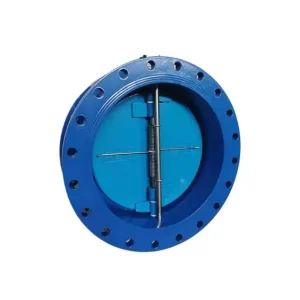
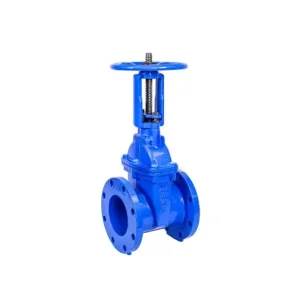
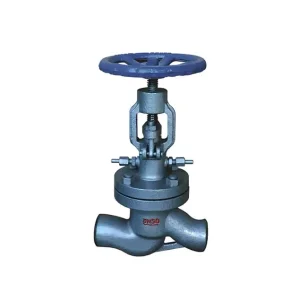
Explore our complementary engineered lines of check, globe, resilient gate, and specialized metallurgical butterfly valves for turnkey utility delivery.