
Industrial Grade High-Pressure & Severe Duty Valve Catalog
Explore our precision-machined isolation valves, dual check systems, and high-integrity butterfly valves engineered for zero-leakage performance under extreme thermal and pressure stress.
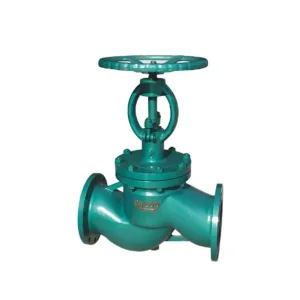
High-Quality High - Temperature - Vacuum Isolation Globe Valve for Vacuum Heat Suppliers, Factory
View Specification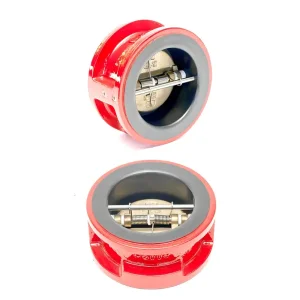
Wholesale Full Rubber Coated Check Valve Supplier, Factories
View Specification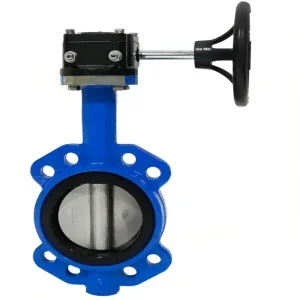
CE Certification Wafer Butterfly Valve,water usage butterfly valve Suppliers, Factories
View Specification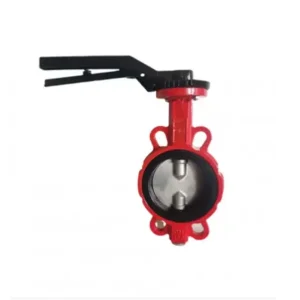
High-Quality Double Half Shaft Wafer Butterfly Valve Supplier, Manufacturer
View Specification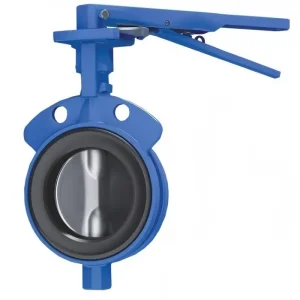
High-Quality EPDM Lining Butterfly Valve - Durable & Corrosion Resistant Suppliers, Manufacturers
View Specification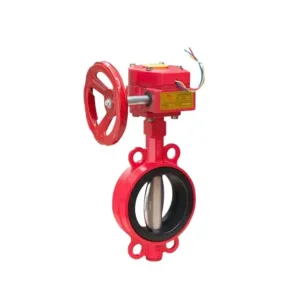
Wholesale Fire-Fighting Wafer Signal Butterfly Valve Supplier, Factory
View Specification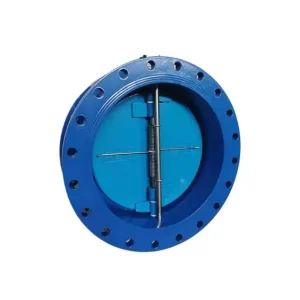
Wholesale Dual Plate Flange Type Check Valve Factories, Factory
View Specification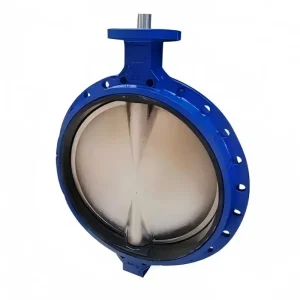
Wholesale Single Flange Butterfly Valve - Durable & Efficient Flow Control Supplier, Manufacturers
View SpecificationProcurement Criteria for High-Pressure Globe Valves in Enterprise EPC Projects
Technical risk mitigation, total lifecycle costing (LCC), and design integrity requirements for Class 600 through Class 2500 critical isolation valves.
Pressure-Seal Bonnet (PSB) Mechanics
For high-temperature, high-pressure duty (ASME Class 900+), traditional bolted bonnets suffer from relaxation creep. Our PSB technology employs system internal line pressure to compress a flexible graphite or pure silver-plated metal seal ring against the forged body wall, ensuring seal tightening as internal pressure increases.
Stellite Hard-Facing Metallurgy
Differential cavitation and wire-drawing rapidly destroy unhardened globe valve trim under throttling service. We utilize automated plasma transferred arc (PTA) welding to deposit Cobalt Alloy Stellite Gr. 6 and Gr. 21 overlays (minimum 2.5 mm finished thickness) on disc contours and body seats, achieving 40-45 HRC hardness at elevated temperatures.
CFD Optimized Flow Profiles
Traditional Z-body globe configurations inflict a substantial pressure drop penalty ($C_v$ impairment). Through 3D computational fluid dynamics (CFD), our engineers optimize the Y-pattern (inclined stem) flow path, straightening flow velocity vectors to lower acoustic emissions, suppress turbulence-induced vibration, and cut energy head loss by 35%.
Mission-Critical Severe Duty Solutions for Global Industrial Infrastructure
From supercritical thermal boilers to ultra-pure ammonia refrigeration lines and chemical synthesis loops.
Supercritical Power Plants & HP Steam Bypasses
Operating above the thermodynamic critical point of water (374°C, 22.06 MPa) necessitates body materials resistant to graphitization and hydrogen embrittlement. Tianjin Top Valve manufactures high-pressure globe valves in ASTM A182 F91 / F92 forged alloy steel, utilizing balanced disc trims with anti-vibration cages to damp destructive acoustic chatter in main steam drain and feedwater isolation lines.
High-Pressure Ammonia & Refrigeration Synthesis
Ammonia ($NH_3$) synthesis processes at 150 to 250 bar demand bubble-tight shut-off and absolute stem sealing integrity. We fabricate specialized straight-through ammonia globe valves equipped with extended bonnets, live-loaded PTFE chevron V-rings, and polished Hastelloy C-276 stems to eradicate toxic fugitive atmospheric escape in compliance with EN 378 and OSHA guidelines.
Vacuum-Heat Thermal & Cryogenic Isolation
In vacuum furnaces and semiconductor heat recovery headers, valves must maintain hermetic integrity against external atmospheric penetration down to $1\times 10^{-6}$ mbar·L/s. Our high-temperature vacuum isolation globe valves incorporate hydroformed multi-ply Inconel 625 bellows seals, secondary graphite backup packings, and double knife-edge metal seats.
Hydrocarbon Hydrocracking & High-Pressure Refining
High-pressure hydroprocessing in oil and gas refineries involves severe hydrogen sulfide ($H_2S$) and high-temperature hydrogen attack (HTHA). Valves are engineered to NACE MR0175 / ISO 15156 constraints with low-carbon ASTM A350 LF2 / ASTM A182 F316 forged bodies, full ultrasonic inspection, and micro-finished ground seats.
| Valve Type & Pattern | Pressure Class Rating | Body Material Grades | Sealing Trim Architecture | Governing Engineering Norms |
|---|---|---|---|---|
| Forged High-Pressure Globe (Y-Pattern) | ASME Class 900 to 2500 (PN160-PN420) | ASTM A105, A182 F22, F91, F316 | Stellite Gr.6 / Hard Chrome, Pressure Seal Bonnet | ASME B16.34, API 623, BS 1873 |
| Vacuum Isolation High-Temp Globe | Class 150 - 600 / Full Vacuum ($10^{-6}$ mbar) | AISI 304L, 316L, 1.4404 Stainless Steel | Inconel Multi-Ply Bellows + Metal Knife-Edge | EN 13709, PED 2014/68/EU Module H |
| Straight-Through Ammonia Globe | PN25, PN40, Class 300 - 800 | Forged Carbon Steel A350 LF2, WCB | BUNA-N / PTFE Composite, Live-Loaded V-Rings | DIN EN 12266-1, ISO 5208 Leakage Rate A |
| Power Station HP Feedwater Globe | Class 1500 to Class 4500 (PN250-PN760) | ASTM A182 F92, F11, WC9, Cr-Mo Alloy | Multi-Stage Cage Pressure Reduction Trim | EN 12516-1, ASME Section I / VIII, CE Marking |
Technological Roadmap: The Next Generation of High-Pressure Flow Control
Aligning mechanical fluid power with digital predictive maintenance and fugitive emission mitigation targets for Net-Zero industrial facilities.
Smart IoT Diagnostic Valve Positioners
Integration of HART 7, Foundation Fieldbus, and Profibus DP digital electro-pneumatic actuators with continuous acoustic leak sensors. The valve continuously streams live telemetry including stem friction profiles, cycle hysteresis, seating thrust load, and packing chamber pressure directly into central DCS/SCADA architectures.
Low-Emission Packing Technology (Fugitive Control)
Meeting European and American Clean Air mandates with dynamic die-formed flexible graphite rings encapsulated by braided carbon yarn anti-extrusion end rings. Certified to ISO 15848-1 Class AH and API 641 for 100,000 mechanical strokes under thermal cycle regimes from -29°C to 400°C.
Severe-Service Anti-Cavitation Trims
When high-pressure drops exceed the critical cavitation index ($\sigma$), liquid flashes into vapor bubbles that implode against metal surfaces. Our upcoming patented tortuous-path multi-step labyrinth trims systematically step down flow kinetic energy through discrete pressure drops, completely eliminating cavitation pitting.
CE Certification, PED 2014/68/EU Module H, & Global Traceability
Rigorous compliance verification ensuring unhindered importation and seamless operation across the European Economic Area (EEA), the Middle East, and North America.
PED 2014/68/EU Module H / H1
Full quality assurance certification by an EU Notified Body. Covers design examination, manufacturing, non-destructive testing (NDT), and hydrostatic shell testing for Category I through Category IV pressure equipment under CE conformity mark.
EN 10204 Type 3.1 & 3.2 MTRs
Every single valve heat charge is fully traceable back to the raw billet. We furnish full chemical spectrum analysis, Charpy V-notch impact testing at -46°C, intergranular corrosion tests (ASTM A262 Practice E), and mechanical yield documentation.
NDT & Ultrasonic Radiography
100% Non-Destructive Examination (NDE) options including Radiographic Testing (RT) per ASME Section V Art. 2, Ultrasonic Testing (UT) per ASTM A388, and Magnetic Particle Testing (MT) / Liquid Dye Penetrant (PT) across all pressure containment welds and seats.
SIL 3 Functional Safety
Certified in accordance with IEC 61508 / IEC 61511 for use in Emergency Shutdown (ESD) systems and High-Integrity Pressure Protection Systems (HIPPS), offering low Probability of Failure on Demand (PFD) values for severe service facilities.
In-House Metallurgy, Precision Machining & Hydrostatic Assurance
Operating from our 23,000 m² production campus in Tianjin, China, Tianjin Top Valve integrates 38 years of rubber compounding and 28 years of valve casting precision.
In-House Foundry & Billet Forge
Unlike assembly-only vendors, our group controls an independent foundry and forging plant established in 1996. Our physical and chemical laboratory performs real-time optical emission spectrometry before every ladle pour, ensuring precise chemical limits for carbon, nickel, chromium, and molybdenum.
Proprietary Elastomer Vulcanization
Originating from Tianjin Dongfang Rubber Factory (founded 1987), we compound, extrude, and vulcanize our own resilient seats (EPDM, NBR, Viton, and PTFE). This vertical integration provides absolute control over compression set, shore hardness, chemical swelling resistance, and WRAS drinking water purity standards.
100% Dual Hydrostatic Testing
Every unit undergoes high-pressure hydrostatic shell testing at 1.5× design pressure and high-pressure seat leakage testing at 1.1× design pressure per API 598 and ISO 5208 standards, supplemented by low-pressure pneumatic seat testing to ensure true Zero-Leakage (Rate A) performance prior to packing.
Frequently Asked Questions by EPC Buyers & Plant Operators
Comprehensive engineering insights regarding CE marking, materials selection, pressure ratings, and procurement lead times.
1. What technical scope is covered by your CE Certification under PED 2014/68/EU?
Our CE certification is issued by an accredited European Notified Body under Module H (Full Quality Assurance) and Module H1 (Full Quality Assurance with Design Examination). This allows us to manufacture and affix the CE mark to globe, butterfly, gate, and check valves classified under Categories I, II, III, and IV for both Group 1 (hazardous/flammable gases and liquids) and Group 2 (non-hazardous fluids). Comprehensive Technical Construction Files (TCF), material conformity declarations, and operating instructions are provided with every shipment.
2. When should an engineer specify a Pressure Seal Bonnet instead of a Bolted Bonnet for high-pressure globe valves?
Bolted bonnets rely on pre-stressed studs to compress the body-to-bonnet gasket. In high-temperature and high-pressure cyclic applications (typically ASME Class 900 and above, or temperatures exceeding 425°C), thermal expansion differential and bolt relaxation frequently cause gasket weeping. A Pressure-Seal Bonnet (PSB) utilizes the line pressure itself to energize a metal or flexible graphite wedge ring against a hardened thrust ring. Consequently, higher operational pressure directly tightens the seal, delivering superior long-term reliability and reducing valve body weight by up to 40%.
3. How does Tianjin Top Valve address the severe pressure drop typical of Z-pattern globe valves?
Standard T-body (Z-pattern) globe valves force fluid through two right-angle turns, generating significant turbulence and a high resistance coefficient ($K$-factor). To mitigate this in energy-intensive services like boiler feedwater and high-pressure steam distribution, we manufacture 45-degree inclined stem Y-pattern globe valves. This streamlined internal geometry straightens the fluid path, substantially reducing pressure loss, improving the flow coefficient ($C_v$), and suppressing erosion on the disc and seat faces.
4. What quality documentation and non-destructive examination (NDE) reports are provided?
Standard documentation included with every order comprises an EN 10204 Type 3.1 Material Test Report (MTR) covering chemical analysis and mechanical tensile/yield/elongation data. In addition, we supply hydrostatic shell and seat pressure test certificates per API 598 / ISO 5208, CE Declaration of Conformity (DoC), and dimensional inspection sheets. Upon project request, we provide EN 10204 3.2 third-party inspection (SGS, TUV, BV, DNV), 100% Radiographic Examination (RT), Ultrasonic Testing (UT), and Positive Material Identification (PMI) reports.
5. Can your valves be configured with electric, pneumatic, or hydraulic actuators?
Yes. All of our high-pressure globe valves and butterfly valves can be engineered with ISO 5210 / ISO 5211 top mounting flanges for direct actuator coupling without bracket flex. We regularly integrate intelligent electric actuators (Rotork, Auma) and pneumatic scotch-yoke or linear cylinder actuators complete with explosion-proof solenoid valves, smart digital positioners (4-20mA with HART), and inductive limit switch boxes tailored to your site specifications.
6. What is the typical lead time and packing standard for export orders?
Standard stock components allow us to assemble, test, and package standard sizes within 15 to 25 days. Engineered severe-service valves with exotic alloys (Inconel, Monel, Duplex, F91) typically require 35 to 55 days from drawing approval. All valves are thoroughly drained, dried, fitted with heavy-duty end flange protectors, vacuum-sealed in moisture-barrier film, and secured inside heat-treated, fumigated solid plywood export crates (ISPM 15 compliant) suitable for ocean or rail freight.
Heavy-Duty Rotary, Check & Resilient Flow Control Portfolio
Complete your pipeline engineering requirements with our certified lug-type, metal-seated, PTFE-lined, and automated valve series engineered to DIN, BS, ISO, and ASME standards.
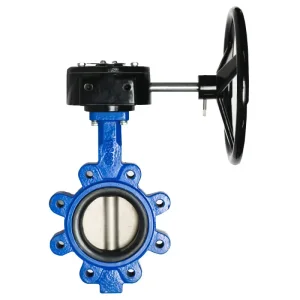
High-Quality Lug type Butterfly valve Suppliers, Manufacturers
View Specification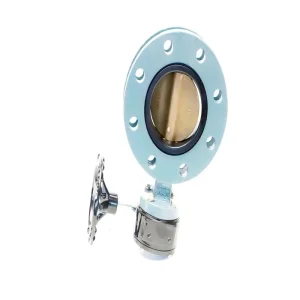
Wholesale CE/ISO/DIN/BS High Pressure Metal Seal Hard Seal Butterfly Valve Manufacturers, Manufacturer
View Specification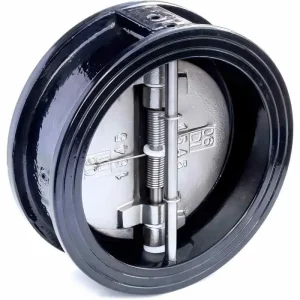
High-Quality High-Quality Wafer Check Valve for Secure Fluid Control Suppliers, Factories
View Specification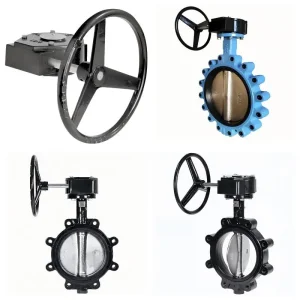
Wholesale WRAS Approved Lug Type Butterfly Valve 4325G Supplier, Factories
View Specification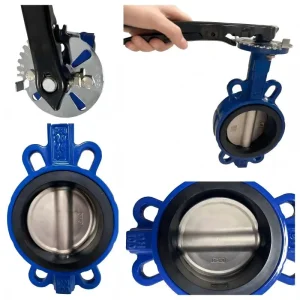
High-Quality WRAS Approved Butterfly Valve - High Performance & Durability 4020L Supplier, Manufacturers
View Specification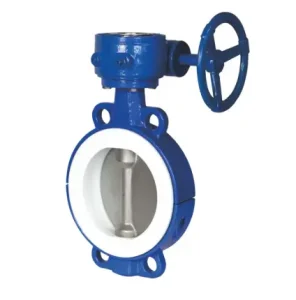
Wholesale PTFE Lined Butterfly Valve - Durable & Corrosion Resistant Manufacturers, Manufacturer
View Specification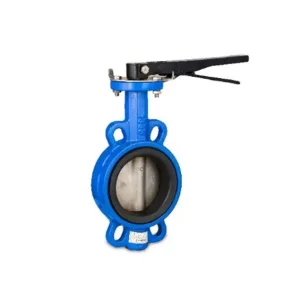
High-Quality Rubber Lined Pinless Butterfly Valve Supplier, Factories
View Specification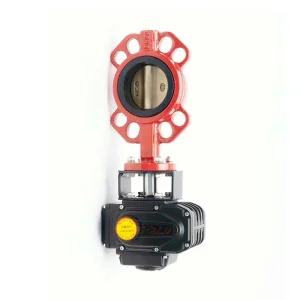
High-Quality Actuator Wafer Butterfly Valve Supplier, Manufacturers
View SpecificationRequest Certified Valve Datasheets, 3D STEP Models & Project Quotes
Collaborate directly with our senior application engineers in Tianjin to review medium compatibility, pressure class selection, and CE compliance documentation for your upcoming bids.
