
High-Performance Actuated & Severe Duty Valve Solutions
Explore precision industrial assemblies built under rigorous CE directives and EN 12266 pressure integrity testing, serving world-class automation and critical process infrastructures.
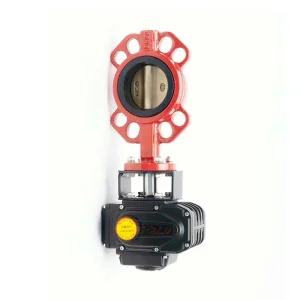
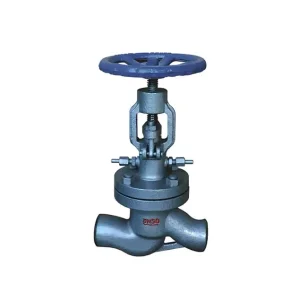
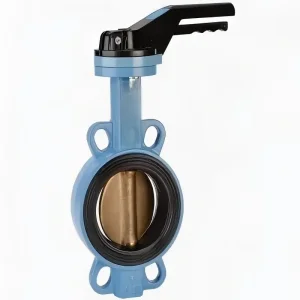
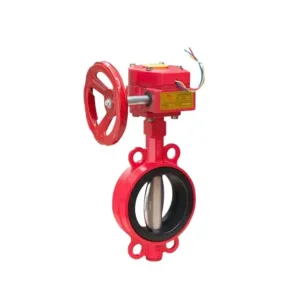
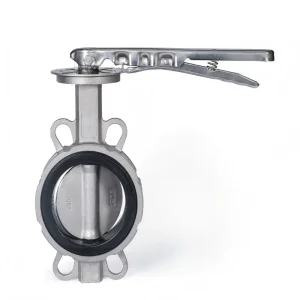
The Global Landscape of CE-Certified Pneumatic Globe Valves
A technical examination of macro-market drivers, modern flow loops, and international compliance architectures underpinning automated linear control.
Demanding Process Dynamics Require Uncompromising Mechanical Integrity
In modern industrial facilities worldwide, process optimization hinges upon exact flow modulation, repeatable shut-off velocities, and fail-safe automation. Pneumatically actuated globe valves represent the cornerstone of linear modulating control, providing superior throttling resolution, cavitation suppression, and high rangeability compared to rotary valve variants.
The global demand for automated globe valves with CE Certification under the Pressure Equipment Directive (PED 2014/68/EU Module H) is surging across the European Union, the Middle East, Southeast Asia, and the Americas. Regulatory compliance is no longer a mere administrative check; it is an uncompromising safety and liability benchmark required by tier-1 Engineering, Procurement, and Construction (EPC) consortiums, plant operators, and municipal utilities.
- Strict PED 2014/68/EU Category III & IV Compliance: Mandatory third-party notified body surveillance, pressure containment calculation verification per EN 12516, and EN 10204 3.1 chemical/mechanical mill test certification.
- Explosive Atmosphere Safety (ATEX 2014/34/EU): Mechanical spark-free actuator enclosures and intrinsically safe digital valve controllers (Ex ia/ib IIC T6) for volatile hydrocarbon and chemical vapor zones.
- Functional Safety SIL 2 / SIL 3 Capability: IEC 61508 / IEC 61511 compliance ensuring fail-open (FO) or fail-close (FC) emergency actuation reliability with documented Mean Time Between Failures (MTBF).
E-E-A-T Manufacturing Credentials
Tianjin Top Automation Equipment Co., Ltd. builds upon a proven industrial manufacturing heritage:
Operating in Dongli District, Tianjin, our group integrates the decades-long expertise of Tianjin Donglian Valve Factory (established 1996) and Tianjin Dongfang Rubber Factory (established 1987). Unlike pure assembly workshops or brokers, our 23,000 m² production complex encompasses an on-site casting foundry, synthetic elastomer formulation lab, high-precision CNC machining center, and comprehensive hydrostatic/gas testing bays.
Pneumatic Globe Valve Engineering Architecture
A breakdown of aerodynamic flow paths, trim hydrodynamics, actuator sizing dynamics, and smart positioner closed loops.
Severe Service Trim Hydrodynamics
Standard parabolic plugs struggle under high differential pressure drops (ΔP > 15 bar), suffering from localized acoustic cavitation, flashing, and vibration. Our CE-rated pneumatic globe valve line features multi-stage pressure reduction cage trims, micro-labyrinth paths, and hardened Stellite 6 / Colmonoy overlays to systematically stagger pressure drops below the fluid's vapor pressure margin.
Multi-Spring Diaphragm Actuation
Engineered with low-hysteresis rolling diaphragms and pre-compressed multi-spring packs, our linear actuators deliver balanced thrust up to 45 kN. Designed for quick-response modulation (<1.5 s stroke times), actuators utilize lightweight die-cast aluminum or heavy ductile iron domes coated in electro-deposited epoxy paint to resist corrosive marine salt spray and acidic plant emissions.
Smart Digital Positioner Integration
Equipped with microprocessor-based smart positioners (HART, Profibus PA, or Foundation Fieldbus), these assemblies enable non-contact Hall-effect stem displacement tracking. Plant automation managers gain remote diagnostic visibility into stem friction, supply air anomalies, valve signature travel degradation, and automated partial-stroke testing (PST) logs.
| Design Parameter | EN / DIN Standard Format | ASME / ANSI Standard Format | Material & Compliance Options |
|---|---|---|---|
| Nominal Size Range | DN15 to DN400 | 1/2" to 16" NPS | Full-bore or reduced-port tailored trims |
| Nominal Pressure Rating | PN16, PN25, PN40, PN63, PN100 | Class 150, 300, 600, 900, 1500 | Pressure containment verified to EN 12516 / ASME B16.34 |
| Body Metallurgy | 1.0619 (GS-C25), 1.4408 (GX5CrNiMo) | WCB, LCC, WC6, CF8M, Duplex F51 | NACE MR0175 sour gas compliance available |
| Stem Packing & Emissions | TA-Luft ISO 15848-1 Class AH | API 624 / API 641 Certified | Live-loaded chevron PTFE or die-formed pure graphite |
| Seat Leakage Class | EN 12266-1 Rate A / Rate B | ANSI / FCI 70-2 Class IV, V, VI | Metal-to-metal (Class IV/V) or soft PTFE/PEEK (Class VI) |
| Actuator Supply Pressure | 1.4 to 6.0 bar | 20 to 90 psig | Equipped with filter-regulator + solenoid overrides |
Localized Application Scenarios in Global Industry
Engineered configurations deployed across demanding localized processes, ensuring environmental containment and uninterrupted runtime.
Thermal Energy & Superheated Steam
District heating networks across Central & Northern Europe require robust globe valves capable of withstanding thermal cycling up to 450°C. Our water-sealed and high-temperature power station globe designs eliminate stem packing blowout and guarantee zero condensate loss through hardened alloy trims.
Chemical & Corrosive Refining
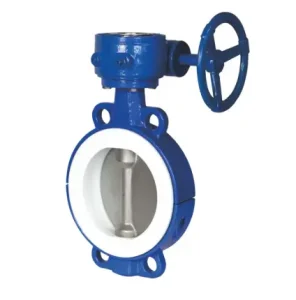
Petrochemical processing plants handling organic acids, chlorinated solvents, and aggressive chemicals utilize our virgin PTFE/PFA-lined butterfly and globe valve bodies. The pinless disc geometry and pure fluoropolymer encapsulation deliver total chemical isolation without metallic contamination.
Maritime & Desalination Systems
Naval ships, offshore platforms, and coastal RO desalination facilities combat extreme chloride pitting. Our aluminum bronze disc and body casting capabilities (C95800 / CuAl10Fe5Ni5) prevent biofouling and crevice corrosion under constant high-velocity seawater impingement.
Industrial Refrigeration & Ammonia
Cold-chain food logistics and commercial chilling units rely on our straight-through ammonia globe valves. Designed for leak-tight sub-zero integrity down to -50°C, with specialized non-embrittling bonnet fasteners and cryogenic elastomer seat rings compounded in-house.
China Factory Resilience & Vertical In-House Efficiency
Global project contractors frequently encounter project delays when dealing with assemblers who outsource critical components. At Tianjin Top Valve, our 23,000 m² production facility in Wuxia Industrial Park, Dongli District, Tianjin provides a fully integrated ecosystem:
- Foundry Control Since 1996: Our group pours ductile iron, carbon steel, CF8M stainless steel, and nickel-aluminum bronze directly, conducting spectrographic chemical analysis and X-ray non-destructive testing before machining begins.
- Elastomer Vulcanization Since 1987: Utilizing Tianjin Dongfang Rubber Factory’s polymer facility, we formulate and cure proprietary EPDM, NBR, and FKM seals with precise shore hardness and low compression-set characteristics, essential for bubble-tight Class VI shut-off.
- State-of-the-Art CNC Machining Center: Precision 5-axis horizontal and vertical machining bays guarantee dimensional repeatability of disc edges, stem packing bores, and flange sealing faces down to ±0.01 mm.
- Logistical Proximity to Tianjin Seaport: Located within minutes of major expressway arteries and Tianjin Port (one of the world's largest container hubs), orders move from crating to global sea freight without inland bottlenecks.
Vertical Manufacturing Timeline
Electric induction furnace casting, optical spectrometry charge verification, and thermal normalization annealing.
Elastomer mixing, rheometer cure curves, and hydraulic compression molding for potable water and chemical compatibility.
Fine-tolerance facing, linear bore honing, and computer-controlled stem burnishing for ultra-low packing wear.
Hydrostatic shell test at 1.5× PN, gas seat leakage testing per EN 12266-1, and pneumatic actuator calibration.
Technical Roadmap & Next-Generation Outlook
How cutting-edge automation, Industrial IoT, and decarbonization mandates are shaping valve manufacturing.
Ultra-Low Emission Packing Systems
Meeting ISO 15848-1 Class AH and TA-Luft compliance mandates through live-loaded Belleville disc springs and dual O-ring/die-formed graphite seals to eliminate fugitive VOC and methane leaks.
Edge AI Predictive Positioners
Integration of onboard microprocessors running embedded vibration and friction algorithms. Valves predict remaining seal service life, diaphragm rupture risks, and seat scour before failures occur.
Additive Manufacturing Cavitation Trim
Laser Powder Bed Fusion (LPBF) 3D printing of complex multi-tortuous anti-cavitation trim channels. Achieving noise reductions exceeding 30 dBA on high-pressure supercritical steam lines.
Localized Support & Compliance Safeguards
Ensuring absolute compliance with regional legal codes, standardizations, and on-site engineering requirements.
Full EN 10204 3.1 Traceability
Every pneumatic globe valve and butterfly assembly is supplied with complete documentation packages: chemical analysis, mechanical tensile/yield tests, Charpy impact tests, hydrostatic test charts, and third-party CE certificates.
24-Hour Engineering Response
Our dedicated project application engineering team provides fast-track Cv sizing calculations, actuator thrust analysis, 3D STEP models, and piping layout CAD drawings within 24 hours to accelerate tender submittals.
Heavy-Duty Seaworthy Export Packaging
Valves are vacuum-bagged, seat-protected with molded end covers, cushioned with multi-layer bubble wrap, and crated in fumigated solid timber cases to survive long-distance intermodal container shipping.
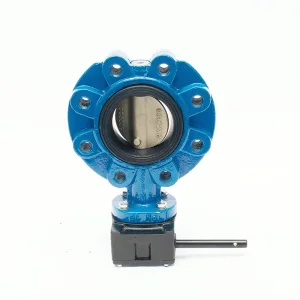
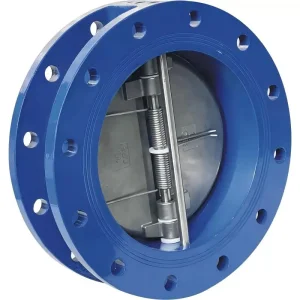
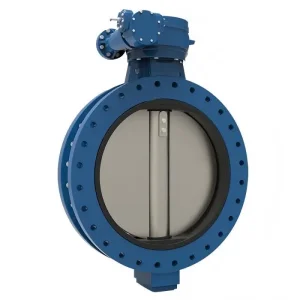
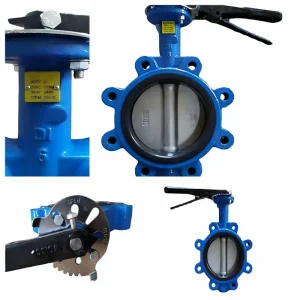
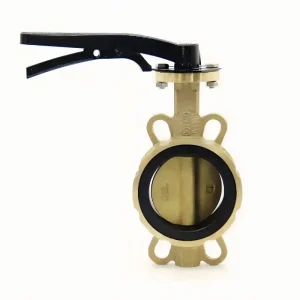
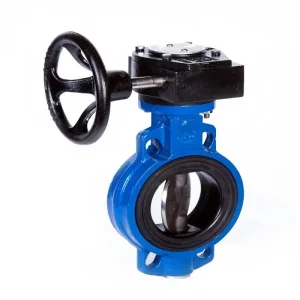
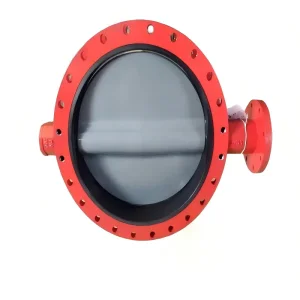
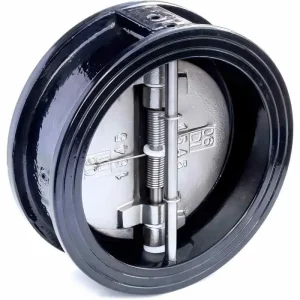
Industrial Check, Butterfly & Specialized Pipeline Valves
Engineered for low pressure drop, non-slam closure, potable drinking water certification, and abrasive slurry isolation.
Engineering & Procurement Inquiries
Comprehensive answers addressing PED compliance, actuator sizing, trim selection, and factory acceptance procedures.
What documentation certifies that a pneumatic globe valve meets European CE PED standards?
How does an engineer size a pneumatic diaphragm actuator to ensure fail-safe shut-off against high differential pressure?
When is a multi-hole balanced cage trim preferred over a traditional contoured parabolic plug?
What are the advantages of Tianjin Top Valve's in-house foundry and rubber manufacturing facilities?
Can you provide flange drills and face-to-face dimensions conforming to both European and American norms?
Consult Our Valve Engineering Specialists
Whether you require complete Cv sizing for a severe-service steam loop, WRAS-approved potable water butterfly valves, or custom-actuated CE-certified globe assemblies, our engineering department provides comprehensive technical tenders within 24 hours.
