
Featured Heavy-Duty Industrial Valves: Batch 1
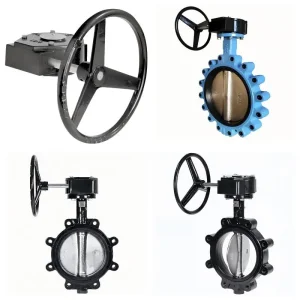
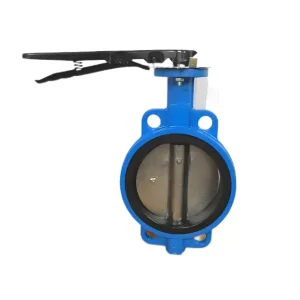
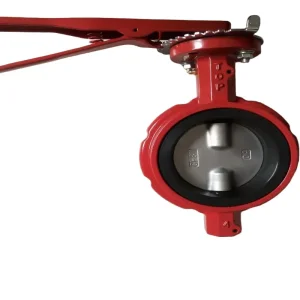
Our certified industrial valve inventory encompasses high-performance lug, wafer, and check solutions engineered for rigorous flow environments, verified under European and global engineering frameworks.
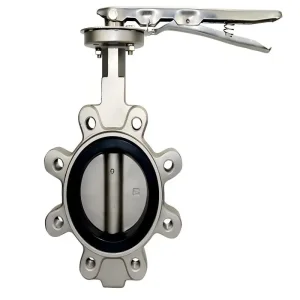
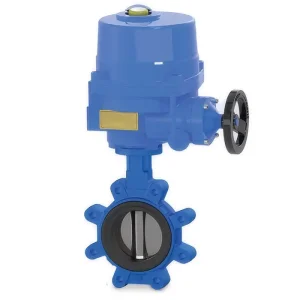
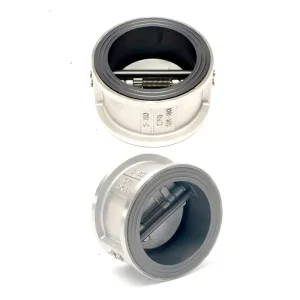
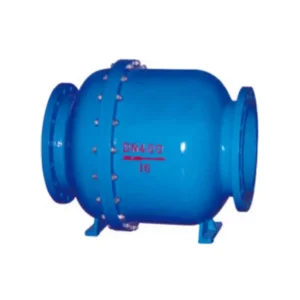
Macro Industry Solutions: Engineering Resilient Flow Control
In complex industrial pipelines, grooved butterfly valves serve as the linchpin for thermal contraction handling, vibration mitigation, and rapid structural assembly. Understanding their technical integration solves critical mechanical stress vulnerabilities.
HVAC District Energy & Chilled Water
Modern district cooling facilities demand low hydrodynamic drag coefficient ($C_v$) and bubble-tight isolation across seasonal glycol mixtures. Our grooved butterfly valves eliminate traditional flange alignment slippage, permitting controlled linear thermal deflection across long vertical chilled water risers up to PN25 working pressures without localized pipeline buckling.
NFPA-Aligned Fire Protection Sprinklers
Engineered with visual position indicators and supervisory tamper switch mounts, grooved butterfly valves are optimized for wet, dry, and deluge fire networks. Conforming strictly to EN 12259 and CE PED Category II protocols, they deliver immediate low-torque quarter-turn actuation while withstanding severe water hammer spikes up to 300 psi.
Desalination & Seawater Pre-treatment
Combating crevice corrosion under harsh halogen-rich environments requires advanced metallurgy. By marrying ductile iron (EN-GJS-450-10 or 500-7) bodies coated in fusion-bonded epoxy with nickel-aluminum bronze (C95800) or Duplex 2205 discs, our grooved valves maintain absolute passivity against high-velocity saline scour.
The Global Industrial Landscape: Grooved vs. Flanged Mechanics
Engineering procurement teams globally are pivoting from legacy flanged valves toward grooved ends. The combination of prefabricated spool designs, modular skid fabrication, and seismic compliance mandates has accelerated grooved coupling standardizations.
| Evaluation Parameter | Grooved-End Butterfly Valve | Wafer Type Butterfly Valve | Double-Flanged Butterfly Valve |
|---|---|---|---|
| Installation Labor & Speed | 70% faster installation; dual-bolt coupling clamp assembly | Requires multiple studs and careful flange cross-torquing | Highest labor intensity; dual flange bolt circles and gaskets |
| Seismic & Vibration Deflection | Allows 1° to 3° angular deflection and axial expansion | Rigid joint; prone to flange face seal rupture during shifts | Completely rigid; transmits bending moments into valve body |
| Weight & Envelope Efficiency | Ultralight cast profile; compact footprint | Ultra-compact face-to-face; moderate bolt-circle weight | Heaviest unit mass; extensive space envelope required |
| Direct Pipeline End Service | Fully supports dead-end pipeline isolation under pressure | Not rated for downstream dead-end service without blind flange | Permits dead-end service with independent flange bolting |
| Maintenance Downtime | Minutes; unlock 2 housing bolts to swing out valve body | Moderate; must loosen every tie rod across adjacent spools | High downtime; multiple rusted bolts require hot-work cutting |
Empirical Economic Factor: Total Cost of Ownership (TCO)
Lifecycle analyses conducted across multi-story hospital construction and semiconductor fabrication cleanrooms demonstrate that grooved-end piping configurations trim overall mechanical room assembly labor costs by 42% compared to Class 150/PN16 flanged valves. The elimination of torch welding, cold-work safety protocols, and post-weld radiography transforms project capital expenditure cycles.
In-House Metallurgical & Elastomer Foundation: Since 1987 & 1996
True valve dependability does not stem from third-party broker assembly. Operating through Tianjin Donglian Valve Factory (foundry roots since 1996) and Tianjin Dongfang Rubber Factory (elastomer polymer mastery since 1987), our vertical integration ensures every casting and vulcanized seat exceeds European baseline tolerances.
Spectrometric Nodular Iron Casting
Casting integrity dictates structural yield under water hammer. In our independent electric induction foundry, ductile iron melts are evaluated via direct-reading optical emission spectrometers. We maintain nodularity rates consistently above 90% (per ISO 1083), guaranteeing tensile strength $\ge 450 \text{ MPa}$ and elongation $\ge 10\%$ to eliminate brittle fracture risks under hydro-testing.
Proprietary In-House Rubber Vulcanization
The seat elastomer is the primary failure mode in soft-seated quarter-turn valves. Formulated in our rubber processing plant, our virgin synthetic EPDM compounds exhibit superior elastic memory with compression set $\le 15\%$ after 1,000 thermal cycles (-10°C to +120°C). WRAS-grade certifications guarantee total freedom from harmful polycyclic aromatic hydrocarbons (PAHs).
CNC Spherical Sealing Contours
Precision 4-axis multi-spindle CNC machining centers machine the 360-degree disc sealing periphery to an arithmetic average roughness of $Ra \le 0.4 \ \mu\text{m}$. This mirror profile dramatically lowers break-away operating torque, reduces elastomer seat shear wear, and extends seal operating life beyond 20,000 bi-directional cycle actions.
CE PED 2014/68/EU & Harmonized Quality Compliance
Legal compliance within the European Economic Area (EEA) and global EPC specifications requires strict adherence to pressurized equipment mandates. Our grooved butterfly valves carry documented technical construction files (TCF) backed by Notified Body certifications.
Pressure Equipment Directive (PED 2014/68/EU)
Classified under Category II and Category III (Module H full quality assurance), each valve shell undergoes structural thickness verification per EN 12516-2. Hydrostatic body strength testing is executed at $1.5 \times PN$, while low- and high-pressure resilient seat closure tests achieve EN 12266-1 Rate A (zero detectable bubble leakage).
- Harmonized Industrial Standard: EN 593
- Face-to-Face Grooved Dimensions: ISO 5752 Series 5 / MSS SP-67
- Coupling Interface: AWWA C606 / ISO 6182
Potable Water & Sanitary Approvals
Selected models are engineered to comply with WRAS (Water Regulations Advisory Scheme) for UK drinking water installations, as well as European DWGW and ACS potable certifications. Polymeric and metallic raw materials undergo extraction testing to confirm zero leaching of heavy metals, volatile organic compounds, or microbial stimulants.
- EPDM Formulation: Toxicologically certified
- Coating: Electrostatic Fusion Bonded Epoxy (FBE) ≥ 250 μm
- Passivity: Zero chlorine degradation in continuous chloramine water
Inspection Certification EN 10204 Type 3.1
Supply chain transparency is guaranteed through individual valve serial numbers cast directly into the housing. Every export consignment is accompanied by EN 10204 Type 3.1 inspection certificates, detailing real chemical composition heats, mechanical tensile testing, Charpy impact values, and hydrostatic inspection log sheets.
- Non-Destructive Testing (NDT): Radiographic & MPI batch options
- Factory Acceptance Testing (FAT) with third-party inspectors (SGS, TÜV, BV)
- Full traceability to original pig iron and raw polymer batches
Localized Engineering Application Scenarios
Field-proven across extreme environmental conditions, grooved butterfly valves resolve acute operational vulnerabilities in structural engineering, modular utility racks, and mission-critical data processing infrastructure.
High-Rise Seismic Utility Risers (Tokyo / Santiago)
Engineering Challenge: High-rise structures experience inter-story lateral drift and ground shock during seismic events. Rigid flanged joints concentrate bending moments directly at valve necks, causing casting shear fractures and rapid water loss.
Grooved Solution: Installing grooved butterfly valves alongside flexible couplings provides angular articulation and axial compensation. The elastomer cushion of the coupling combined with the valve's ductile cast iron matrix absorbs seismic energy without transmitting destructive torques to the central manifold.
Hyperscale Data Center Direct-to-Chip Cooling (Frankfurt)
Engineering Challenge: 24/7 uptime requirements mandate zero moisture egress and micro-particulate contamination in liquid cooling loops. Flange gasket degradation introduces fiber debris that clogs server cold-plate micro-channels.
Grooved Solution: Our factory-vulcanized EPDM grooved valves feature fully encapsulated disc edges that produce zero vulcanized shredding. Fast-disconnect grooved couplings allow whole-rack server loop isolation and valve replacement in under 12 minutes during scheduled continuous operations.
Prefabricated Modular Water Treatment Skids (Rotterdam)
Engineering Challenge: Off-site skid packaging demands millimeter-level precision within constrained sea container dimensions. Traditional flanged spools suffer from rotational bolt-hole misalignment during intermodal transit.
Grooved Solution: The 360-degree rotational flexibility of the grooved end coupling interface eliminates bolt-hole clocking mismatches entirely. Engineers secure perfect actuator orientation in field connections without cutting or re-welding on site.
Technology Roadmap & Next-Generation Outlook (2025–2030)
The valve sector is undergoing rapid transformation driven by digital predictive maintenance, decarbonization mandates, and autonomous flow balancing. Our R&D team in Tianjin is pioneering advanced valve technologies to stay ahead of international green building and Industry 4.0 directives.
Smart IoT Actuation Interfaces
Integration of ISO 5211 direct-mount high-precision flanges with embedded torque strain sensors and Modbus/BACnet IoT transmitters. Enables real-time seat friction monitoring and predictive anomaly detection before packing leakage occurs.
PFAS-Free Green Elastomers
Anticipating upcoming European REACH restrictions on fluorinated compounds, our rubber division is rolling out ultra-pure peroxide-cured EPDM formulations completely free of PFAS and BPA, delivering equivalent chemical resilience across aggressive hydronic systems.
BIM Level 3 & CFD Digital Twins
Complete geometric and hydraulic 3D models available for Revit and Navisworks. Engineers can simulate flow turbulence, localized cavitation indices, and head loss coefficients directly within virtual building models before breaking ground.
Electric Arc Low-Carbon Melting
Decarbonizing production lines through 100% scrap-recycled ductile iron smelting powered by renewable green grid energy. This drastically lowers embodied carbon metrics for projects pursuing LEED Platinum and BREEAM Outstanding certifications.
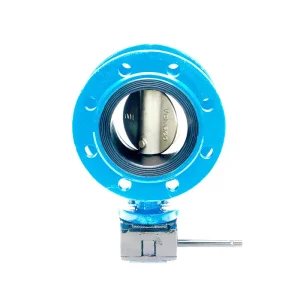
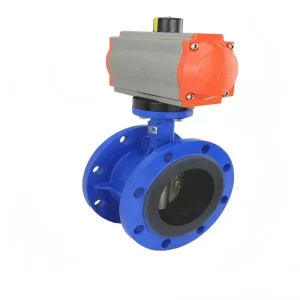
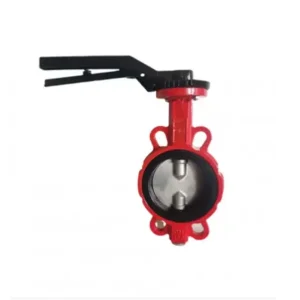
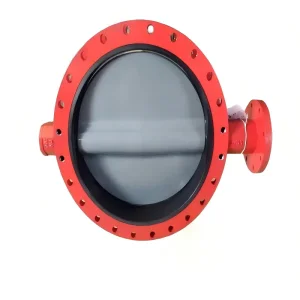
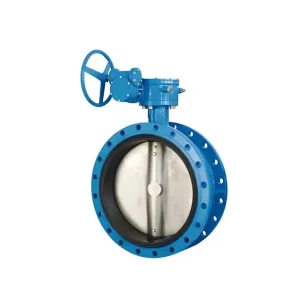
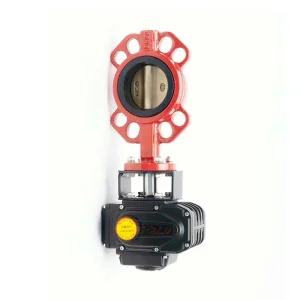
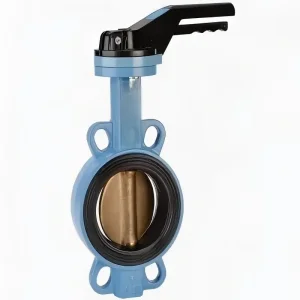
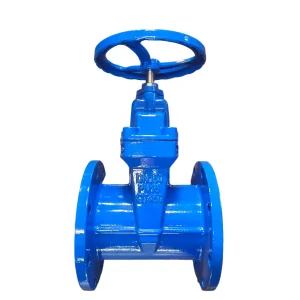
Featured Heavy-Duty Industrial Valves: Batch 2
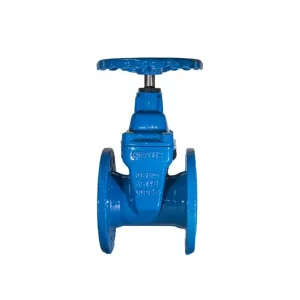
Explore additional manual, pneumatic, marine-grade, and resilient gate control valve variations manufactured with comprehensive casting and seat quality protocols.
Technical & Procurement FAQ: Grooved Butterfly Valves
Common engineering inquiries regarding dimensions, coupling profiles, CE certification, hydrostatic testing protocols, and sizing considerations handled directly by our senior technical staff.
What specific CE PED categories apply to grooved butterfly valves, and how are they classified?
Under the European Union Pressure Equipment Directive (PED 2014/68/EU), valves are categorized by nominal diameter ($DN$), maximum allowable working pressure ($PS$), and fluid group (Group 1 dangerous vs. Group 2 non-dangerous like clean water and standard HVAC fluids). Grooved butterfly valves for non-dangerous liquids (Table 9) exceeding $DN 25$ with $PS \cdot DN > 2000 \text{ bar}\cdot\text{mm}$ fall under Category I or Category II. Our facilities are audited under Module H (Full Quality Assurance), granting our engineers authorization to affix the CE Mark backed by comprehensive documentation, design verifications, and individual pressure logs.
Are your grooved end dimensions compatible with Victaulic, Grinnell, and global mechanical couplings?
Yes. All our grooved-end valves are precision machined strictly to AWWA C606 (Standard for Grooved and Shouldered Joints) and ISO 6182-1 specifications. The groove diameter ($C$), groove width ($A$), and cut-depth dimensions match universal roll-grooved and cut-grooved steel, ductile iron, and stainless pipe dimensions. This guarantees seamless fitment with Victaulic Style 77, Style 07, Grinnell, Tyco, or Anvil couplings across standard commercial diameters from DN50 (2") up to DN300 (12").
What are the advantages of in-house rubber compounding for resilient valve seats?
Most assembly factories source rubber seats from external commodity compounders, leading to inconsistent polymer density, varying vulcanization cures, and unpredictable compression set. Because our group has operated Tianjin Dongfang Rubber Factory since 1987, we formulate and vulcanize raw polymers in-house. We control plasticizer content, antiozonant ratios, and carbon black grades, ensuring zero swelling in water/glycol mixtures, long elasticity retention, and reduced operational torque throughout the valve lifecycle.
Can grooved butterfly valves be installed for bi-directional and dead-end pipeline isolation?
Yes. Our resilient seated grooved butterfly valves utilize a concentric, symmetrically balanced disc design that seals with equal bubble-tight performance in both flow directions up to full rated working pressure (16 bar or 25 bar). In addition, unlike wafer-style valves which require downstream piping to hold the disc in compression, the mechanical coupling clamp firmly anchors the grooved body, allowing safe full dead-end isolation service without downstream pipe presence.
What documentation and inspection certificates are included with commercial export shipments?
Standard documentation dispatched with each order includes: EN 10204 Type 3.1 Inspection Certificates with heat numbers, chemical spectral analyses, and mechanical test results; Hydrostatic and Pneumatic Test Reports per EN 12266-1; CE Declaration of Conformity referencing PED 2014/68/EU; WRAS material conformity declarations (for potable units); Coating thickness (dry film thickness) audit records; and detailed dimensional inspection protocols. Third-party inspection witness testing by agencies such as Bureau Veritas, SGS, or TÜV Rheinland can be arranged prior to palletizing.
