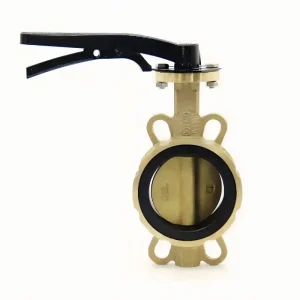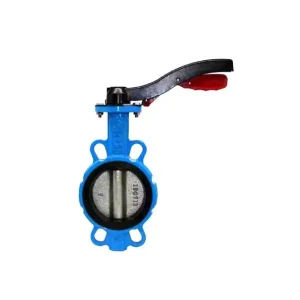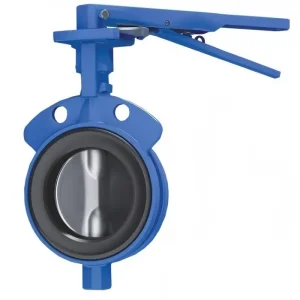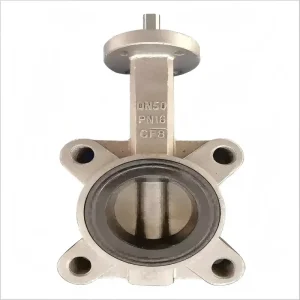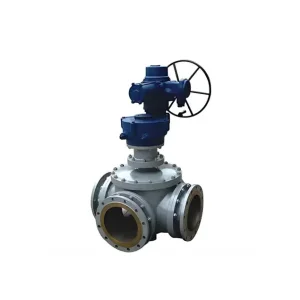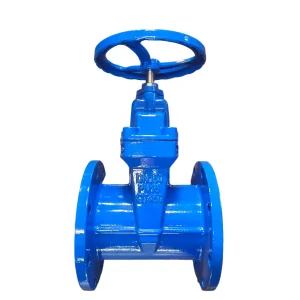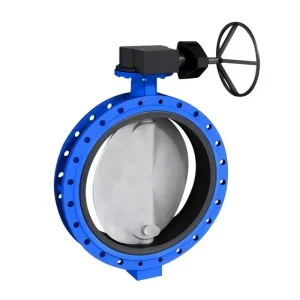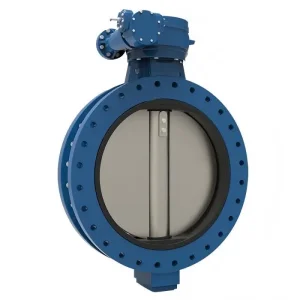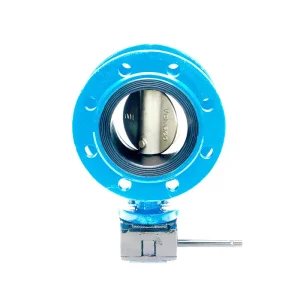
Marine Flange Type Manual Operated Butterfly Valve (India Seawater Lines)
View Product Specifications
Selected heavy-duty wafer, lug, and double-flanged patterns deployed widely across Indian coastal shipyards and oceanic fluid handling systems.
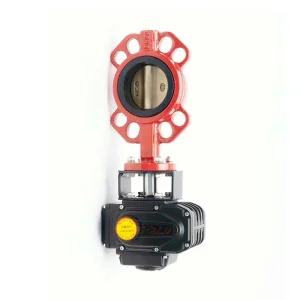
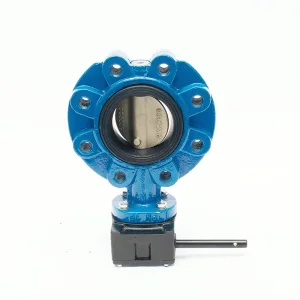
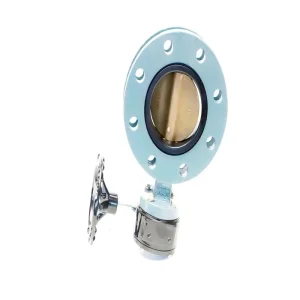
A comprehensive examination of Indian shipbuilding expansion, naval modernization, port logistics, and offshore energy infrastructure driving quarter-turn valve procurement.
India occupies a pivotal position astride major international sea lanes in the Indian Ocean, anchoring both regional transshipment and extensive commercial shipping. Under the flagship Sagarmala Mega-Programme and the Maritime India Vision 2030 (MIV 2030), the Government of India is infusing over USD 70 billion to modernize 12 major ports, enhance deep-water draft capacities, and radically escalate indigenous shipbuilding and vessel repair hubs.
Major state-owned and private yards—including Cochin Shipyard Limited (CSL) in Kochi, Mazagon Dock Shipbuilders Limited (MDL) in Mumbai, Garden Reach Shipbuilders & Engineers (GRSE) in Kolkata, Goa Shipyard Limited (GSL), and Larsen & Toubro (L&T) Shipbuilding at Kattupalli—are handling unprecedented order books. These projects encompass Next-Generation Offshore Patrol Vessels (NGOPVs), multi-purpose commercial bulk carriers, coastal chemical parcel tankers, and dredging vessels.
In every vessel platform, seawater systems represent the life-support architecture of machinery spaces. Marine butterfly valves serve as the standard workhorse for isolation and flow regulation due to their superior flow coefficient (Cv), compact structural face-to-face dimensions according to ISO 5752 series, and low weight profile compared to cumbersome gate or globe valves.
Tropical Arabian Sea and Bay of Bengal waters exhibit high salinity, elevated ambient seawater temperatures (exceeding 32°C in summer), and dense microbiologically influenced corrosion (MIC). Standard industrial valves degrade in months; marine service demands specialised materials.
Cast in accordance with ASTM B148 C95800 / EN 1982 CC333G. NAB forms a tenacious, self-healing copper oxide-aluminum film that resists high-velocity seawater impingement and bio-fouling.
With a Pitting Resistance Equivalent Number (PREN) ≥ 42, Duplex stainless steels (UNS S32750 / UNS S31803) resist aggressive pitting and chloride stress corrosion cracking common in warm coastal waters.
Sourced from our proprietary elastomer manufacturing unit (operating continuously since 1987). Vulcanised EPDM, hydrogenated NBR (HNBR), and Fluorocarbon (FKM/Viton) seats are precision bonded or replaceable.
| Material Configuration | Body Metallurgy | Disc Metallurgy | Seat Elastomer | Typical Indian Marine Application | Class Suitability |
|---|---|---|---|---|---|
| NAB High-Salinity Spec | ASTM B148 C95800 | Nickel Aluminum Bronze | Bonded Marine Grade NBR | Main Sea Chest, Seawater Intake, Ballast Main Lines | IRS / Lloyd's / DNV |
| Marine Ductile DI Spec | EN-GJS-400-18-LT | Al-Bronze / CF8M (316 SS) | High Resilience EPDM | Central Fresh Water Cooling, Deck Scupper, Bilge Systems | IACS General Class |
| Extreme Chemical / Scrubber | 1.4469 / Super Duplex | UNS S32750 / 2507 | Virgin PTFE / FKM (Viton) | SOx Exhaust Gas Cleaning (Scrubbers), Bilge Separator Lines | CE / Class Approved |
| Fire & High-Pressure Duty | ASTM A216 WCB / LCB | 316SS with Stellite Hardfacing | Metal-to-Metal / Inconel 625 | Firemain Distribution, Cargo Hold Inert Gas (IGS) | Fire-Safe API 607 |
Detailed performance benchmarks for specific onboard systems where valve failure compromises vessel safety, commercial chartering, or environmental compliance.
Indian ports enforce strict IMO D-2 Ballast Water Convention compliance overseen by the Directorate General of Shipping (DGS). Our centric and double-eccentric butterfly valves operate seamlessly under active substance electrolysis and UV neutralization systems.
Constructed with pinless Super Duplex discs and bonded chlorine-resistant rubber seats to prevent elastomer swelling under high oxidising biocide concentrations.
Offshore exploration in the Krishna Godavari basin and Mumbai High fields imposes violent wave-induced pipe strain and corrosive sea spray. Wafer and Lug butterfly valves are rated to Class 150/300 and PN16/25 with fire-safe certified stem packing.
Lug design allows downstream pipeline isolation and blanking while maintenance crews service pumps, strainers, or heat exchangers without depressurising the header.
With vessels calling at Indian ports adhering to Marpol Annex VI 0.50% sulphur caps, open-loop and hybrid scrubbers discharge low-pH (pH 2.5 - 4.0), high-temperature acidic washwater.
Our pure PTFE-lined bodies and Hastelloy / Super Duplex discs guarantee absolute chemical impermeability, preventing structural wall loss and hazardous acid leaks into machinery spaces.
Why Tier-1 Indian EPCs, shipyards, and technical ship managers eliminate intermediate traders by partnering directly with our integrated Tianjin manufacturing complex.
Tianjin stands as the preeminent global manufacturing hub for resilient seated butterfly valves. Our manufacturing enterprise, anchored by Tianjin Donglian Valve Factory (established 1996) and our dedicated Tianjin Dongfang Rubber Factory (operating since 1987), spans an expansive 23,000 m² production campus with 12,000 m² of modern covered workshops.
Most valve trading companies subcontract casting and elastomer compounding to fragmented third-party vendors. When issues arise—such as porosity in ductile iron or seat tearing under dry-dock cycling—accountability fractures. In contrast, we maintain end-to-end sovereignty over every manufacturing milestone:
Our manufacturing base sits within direct proximity of Tianjin Port (Xingang), the premier maritime shipping gateway of Northern China. Regular direct express container lines connect directly to Indian destination ports:
Marine valves installed on Indian-flagged vessels or operating under the Directorate General of Shipping must conform to stringent third-party inspection criteria.
Valves are engineered to satisfy the rigorous survey standards of the Indian Register of Shipping (IRS), alongside major IACS members including DNV, Lloyd’s Register (LR), American Bureau of Shipping (ABS), Bureau Veritas (BV), and RINA.
Every critical pressure boundary item is issued with complete Mill Test Certificates (MTC) according to EN 10204 Type 3.1, detailing chemical composition, tensile yield, elongation, and Charpy V-notch impact values at sub-zero temperatures.
Designed for critical engine room penetrations and tanker safety zones. Our metal-seated and high-performance butterfly valves meet ISO 10497 and API 607 fire-safe test standards.
Aligning with India's "Panchamrit" environmental goals and the IMO 2030 / 2050 greenhouse gas targets, marine valve architecture is experiencing rapid technological evolution.
Transition from traditional hydraulic control blocks to low-power, bus-networked (Modbus, Profibus, CANopen) electric and electro-hydraulic quarter-turn actuators with onboard self-diagnostics.
With Indian owners and international liners commissioning dual-fuel ships, valves must withstand ultra-cold temperatures and extreme chemical degradation associated with clean fuels.
Lightweighting naval vessels improves fuel economy and reduces topside overturning moments. Modern computational fluid dynamics (CFD) optimizes disc geometry to slash pressure drop (Delta-P).
Comprehensive engineering guidance answering the direct commercial, logistical, and technical questions raised during tender evaluation.
While Stainless Steel 316 (CF8M) performs well in fresh water and mild maritime duties, it is highly susceptible to crevice corrosion and pitting under stagnant, warm seawater conditions—a ubiquitous challenge in Indian ports such as Mumbai, Kandla, and Visakhapatnam where surface seawater temperatures frequently exceed 30°C. Stagnant seawater deprives stainless steel of oxygen, destabilising the passive chromium oxide layer.
Nickel Aluminum Bronze (ASTM B148 C95800), by contrast, develops a tough, self-repairing copper-nickel-aluminum oxide film. Crucially, NAB possesses natural anti-fouling resistance: the continuous microscopic leaching of copper ions prevents barnacles and marine flora from anchoring to the disc and seat interface. Furthermore, NAB exhibits exceptional resistance to cavitation erosion under high flow velocities (> 3.5 m/s) common in main seawater ballast and bilge discharge circuits.
Yes. Our marine butterfly valves are fully engineered in accordance with IACS Unified Requirements. We routinely accommodate project-specific IRS (Indian Register of Shipping) inspection, as well as joint surveys by DNV, Lloyd's Register (LR), Bureau Veritas (BV), and ABS. We supply complete 3.1 Material Test Certificates, certified hydrostatic pressure test logs, dimensional inspection reports, and Type Approval documentation required by Indian shipyard QA/QC departments.
Indian fleets frequently comprise vessels constructed across diverse international jurisdictions—ranging from Soviet-era naval designs to modern Japanese, Korean, and European commercial platforms. We manufacture our bodies with multi-standard universal wafer designs and custom-drilled lug patterns accommodating:
Over 80% of marine butterfly valve failures at sea originate from either casting porosity (which compromises pressure retention) or rubber seat delamination, tearing, or premature hardening. By operating our own foundry (Tianjin Donglian Valve Factory since 1996) and dedicated rubber manufacturing plant (Tianjin Dongfang Rubber Factory since 1987), we control the exact metallurgical chemistry and elastomer compounding under one QA system.
We do not purchase generic pre-vulcanised seats from unverified external vendors. Every batch of EPDM, NBR, and Viton is tested for tensile strength, elongation at break, and compression set. This guarantees bubble-tight bi-directional sealing over tens of thousands of operating cycles.
For standard stocked configurations (sizes DN50 through DN600 in ductile iron and NAB with wafer/lug connections), orders can be crated and loaded at Tianjin Port within 7 business days. Direct sea freight from Tianjin Port (Xingang) to Nhava Sheva (JNPA) or Cochin Port takes approximately 18 to 24 days. For urgent vessel-off-hire emergency repair situations, we dispatch expedited valve consignments via Beijing / Shanghai international air hubs directly to Mumbai (BOM) or Kochi (COK) in under 5 business days.
We strongly recommend our Pinless Splined / Double-D Internal Drive Design for engine room and pump discharge circuits subject to intense pulsation. Traditional taper pins penetrate through the disc and stem, introducing localized stress concentrations and creating potential leak paths into the stem journal. Under severe propeller and engine harmonics, taper pins can shear or fret.
Our precision-broached pinless connection completely shields the shaft from the process medium, eliminates pin shearing risks, and ensures balanced hydrodynamic torque transmission throughout the entire operating life of the valve.
Explore our full manufacturing range covering extreme corrosion resistance, high pressure isolation, potable water, and emergency rapid-diversion solutions.