
High-Integrity Valves for Critical Serbian Infrastructure Projects
Engineered to comply with European Directive PED 2014/68/EU Module H and harmonized EN standards, these flow control solutions deliver zero-leakage isolation across severe operational environments.
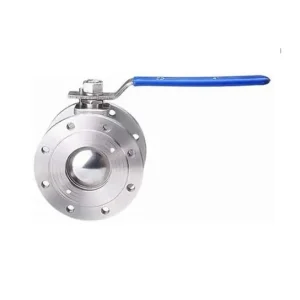
Stainless Steel Ultra-Thin Ball Valve for Compact Serbian Process Lines
Designed for compact pipe racks and skids across Belgrade and Vojvodina processing plants, featuring API 607 / ISO 10497 fire-safe anti-static stem sealing.
View Product Specs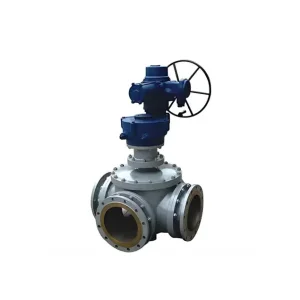
Quick-Opening Three-Way Flange Ball Valve for Serbian Emergency Diversion
CE-certified quick-acting L/T-port multiport configurations built for thermal fluid switching, cooling loops, and safety shutdown skids in thermal power utilities.
View Product Specs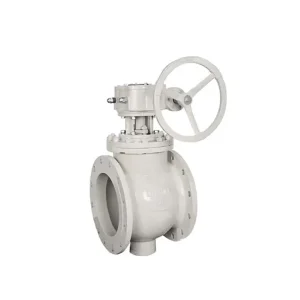
High-Pressure Eccentric Plug Valve Serving Serbian Petroleum Pipelines
Heavy-duty slurry and hydrocarbon isolation with non-rubbing eccentric closure, engineered specifically for NIS Pančevo refinery feedstocks and gas transmission.
View Product Specs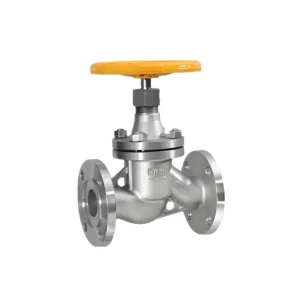
Straight-Through Ammonia Globe Valve for Serbian Industrial Cooling
Hermetically sealed bonnet and PTFE/lead-free stem packaging ideal for large-scale agricultural cold chains, breweries, and chemical synthesis installations in Serbia.
View Product SpecsSerbia’s Industrial Landscape: The Escalating Demand for CE-Marked Ball Valves
Strategic geographic positioning, expansive infrastructure revitalization, and European Union harmonization drive rigorous procurement requirements for flow control equipment across the Republic of Serbia.
Investments dedicated to gas interconnectors (Balkan Stream, Serbia-Bulgaria Interconnector), modernized refinery units, and thermal power desulfurization.
Strict alignment with EN 1092-1 flange drillings, ASME Class 150 to 2500, and PED Category II/III/IV conformity for high-pressure district networks.
Direct chemical and mechanical batch certification for sour hydrocarbon gas, high-temperature superheated steam, and corrosive chemical mediums.
Strategic Energy Transit & Downstream Petrochemical Refinement
The Republic of Serbia occupies a vital junction in Southeast European energy transmission. With the expansion of the Balkan Stream pipeline and the operational activation of the Serbia-Bulgaria Gas Interconnector (IBS), the national natural gas grid managed by Srbijagas requires continuous upgrades. High-pressure trunnion-mounted and floating ball valves engineered to API 6D and EN 14141 specifications are critical to safeguard continuous transmission.
Simultaneously, the NIS (Naftna Industrija Srbije) refinery in Pančevo maintains strict plant upgrade regimens to optimize deep conversion, hydrogen cracking, and Euro-6 compliant fuel production. In these high-temperature, sour-gas (H2S), and hydrocarbon environments, ball valves must guarantee NACE MR0175/ISO 15156 metallurgy, dual-block-and-bleed (DBB) capabilities, and rigorous fugitive emission prevention conforming to ISO 15848-1.
Heavy Metallurgy, Power Generation & Municipal Upgrades
Serbia’s industrial heartbeat extends through Eastern Serbia’s mining hubs, particularly the massive Čukaru Peki copper-gold mine and RTB Bor metallurgical complex operated by Zijin Mining. Fluid handling in these mineral processing operations involves aggressive slurries, abrasive tailings, acidic leachates, and high hydraulic pressures that rapidly degrade standard valves. Metal-seated ball valves with Tungsten Carbide (HVOF) or Stellite overlays provide the necessary surface hardness to resist severe abrasive wear.
Furthermore, major thermal power generation plants such as Nikola Tesla (TENT A & B) and Kostolac B are actively retrofitting Flue Gas Desulfurization (FGD) systems to satisfy European environmental mandates. Combined with the modernization of district heating networks across Belgrade (Beoelektrane), Novi Sad, and Niš, Serbian procurement engineers demand fully welded and flanged quarter-turn ball valves that withstand thermal expansion, prevent water hammer, and guarantee 30+ year maintenance-free design lifespans.
CE Marking & Technical Compliance Architecture for Serbian Imports
Understanding the statutory compliance benchmarks required for pressure equipment imported into the Western Balkans, aligning international engineering with EU and Serbian national standards.
| Directive / Standard | Scope of Engineering Harmonization | Critical Technical Requirement | Applicability to Serbian EPC Buyers |
|---|---|---|---|
| PED 2014/68/EU Module H / H1 |
Pressure Equipment Directive compliance mandatory across the European Economic Area and acknowledged under Serbian Rulebook on Pressure Equipment. | Comprehensive full quality assurance covering design, material sourcing, welding, assembly, non-destructive testing (NDT), and hydrostatic shell testing. | Essential for pipeline systems operating at PS > 0.5 bar, steam, toxic or inflammable fluids in thermal power and chemical refining. |
| EN 1983 / EN 12516 Valve Shell Design |
Harmonized European standards for industrial steel ball valves and shell wall thickness calculations. | Finite element analysis (FEA) verification of pressure-retaining bodies, casting radiographical inspection, and uniform face-to-face dimensions (EN 558). | Guarantees direct dimensional interchangeability in Serbian district heating plants and replacement of legacy European valve infrastructure. |
| API 607 / ISO 10497 Fire-Safe Certification |
Testing of valves under extreme thermal stress when exposed to direct fire exposure for 30 minutes up to 1000°C. | Secondary metal-to-metal sealing activates when soft seats (PTFE, RPTFE, PEEK) burn away, preventing hazardous blowout or external leakage. | Mandatory for NIS Pančevo petroleum refineries, fuel storage depots, and chemical synthesis installations throughout Serbia. |
| ISO 15848-1 Fugitive Emissions |
Measurement, testing, and qualification procedures for fugitive emissions from industrial valve packing and gasket interfaces. | Class AH, BH helium sniff testing ensuring emission rates remain well below 10-4 mg/(s·m), preventing volatile organic compound (VOC) release. | Protects operational safety and satisfies stringent Serbian environmental monitoring aligned with the European Green Deal. |
| EN 10204 Type 3.1 Material Traceability |
Metallic products inspection documents detailing exact chemical composition, tensile strength, yield, elongation, and Charpy impact values. | Issued by an independent quality department validated by the notified body; heat number permanently stamped onto the valve body casting. | Eliminates risk of counterfeit metallurgy in severe sour gas, sub-zero Balkan winter conditions, or high-temperature steam lines. |
Pressure Rating Harmonization: PN vs ASME Class
A frequent challenge encountered by procurement teams serving the Serbian market is managing the convergence of American (ASME) and European (EN/DIN) standards. While legacy regional infrastructure relies heavily on DIN standard dimensions (PN 16, PN 25, PN 40, PN 64, PN 100), new multinational EPC projects and upstream oil investments often specify ASME B16.34 (Class 150, 300, 600, 900, 1500). Our manufacturing lines produce dual-certified valves with custom flange machining that bridge this interface seamlessly, eliminating costly spool adapters.
Sub-Zero Impact Toughness for Balkan Winters
Winter operating conditions in continental Serbia regularly plunge pipeline surface temperatures to -20°C or lower. Carbon steel grades such as standard ASTM A216 WCB risk brittle fracture under high operating pressures at low temperatures. We systematically supply low-temperature carbon steels (ASTM A352 LCC / LCB or 1.0619 / 1.0460) with guaranteed Charpy V-notch impact testing at -46°C, ensuring absolute mechanical resilience against catastrophic line bursts in unburied or outdoor manifold setups.
China Industry 4.0: Supply Chain Resilience & Efficiency Advantages
How deep vertical integration, proprietary foundry control, automated CNC machining clusters, and multimodal Eurasian logistics give Serbian buyers unprecedented price-to-performance stability.
In-House Foundry & Metallurgy
Unlike assemblers relying on outsourced cast bodies, our parent corporate ecosystem integrates captive precision sand and investment foundries. This eliminates raw material porosity, controls grain refinement, and guarantees 100% optical emission spectrometry (OES) verification before machining begins.
CNC Multi-Axis Precision
Automated multi-axis machining centers finish ball spheres, trunnion shafts, and valve cavity seal pockets down to Ra 0.2 micrometer mirror finishes. Super-finishing minimizes rotational torque requirements, extending actuator life and reducing capital costs for Serbian automated pipeline grids.
Digital Automated Hydro-Testing
Every individual ball valve undergoes automated high-pressure hydrostatic shell and dual-directional seat leakage testing compliant with EN 12266-1 Rate A and API 598. Pressure-time curves are electronically captured and matched to digital serial numbers for permanent field traceability.
Optimized Logistics Corridors to Serbia: Bridging Factory to Jobsite
Securing specialized valves for fast-track EPC schedules demands resilient freight channels. Serving the Serbian market, we deploy streamlined multimodal shipping configurations:
- Maritime Express to Piraeus / Rijeka / Bar: Containerized valve shipments route via high-speed sea routes to the Port of Piraeus (Greece), Port of Rijeka (Croatia), or Port of Bar (Montenegro), connecting directly via electrified rail and motorway corridors to Belgrade customs clearance depots in 28 to 35 days.
- China-Europe Railway Express (Trans-Eurasia): For urgent outage repairs at thermal power plants or refinery shutdowns, direct rail container services connect hub terminals to Belgrade or Budapest within 16 to 20 days.
- Bespoke Anti-Corrosion Packaging: To counter maritime humidity and multi-handling transfer points, every valve is vacuum-sealed with desiccant packs, end-flanges capped with UV-resistant impact shields, and anchored inside heavy-duty fumigated ISPM-15 plywood crates.
Tailored Ball Valve Implementations Across Serbian Industries
Engineered solutions designed to address specific operating parameters, media chemistry, and maintenance regimes across key industrial clusters in Serbia.
Hydrocarbon Hydrotreating & Reforming Units
In desulfurization, naphtha hydrotreating, and catalytic reforming processes, hydrogen embrittlement and high sulfur crude oil present severe integrity risks. Our CE-marked ball valves are supplied in forged ASTM A182 F316/F316L or Hastelloy C276 with full NACE MR0175 compliance. Stems feature double O-rings plus fire-safe graphite packing and blowout-proof internal shoulders, guaranteeing bubble-tight zero leakage up to Class 1500 (PN 250).
Superheated Steam & FGD Slurry Isolation
Serbia’s reliance on domestic lignite power generation requires extensive Flue Gas Desulfurization (FGD) systems. The limestone-gypsum slurry media is both highly corrosive and abrasive. We engineer metal-seated ball valves coated with supersonic flame-sprayed Chromium Carbide or Tungsten Carbide, operating without seat deformation under cyclical thermal shock up to 450°C in boiler blowdown and steam header feeds.
Fully Welded Ball Valves for District Heating
Modernizing urban district heating networks in Belgrade, Novi Sad, and Kragujevac demands fully welded cylindrical ball valves that eliminate bolted body flanged joints prone to soil moisture corrosion when directly buried underground. Equipped with PTFE+C seats, stainless steel balls, and high-strength extension spindles, these valves deliver zero maintenance over 30-year operational cycles.
Tailings Slurry & Acid Extraction Pipelines
Copper froth flotation and solvent extraction plants in Bor generate heavy mineral slurries that erode conventional soft-seated valves within weeks. Our specialized eccentric plug valves and ceramic-seated ball valves feature alumina or silicon carbide trim that resists extreme scouring, solid cavitation, and concentrated sulfuric acid exposure during metal refining.
Engineering Decision Matrix: Floating vs Trunnion Mounted vs Metal Seated
Selecting the optimal ball valve configuration for Serbian projects requires balancing pipeline pressure, nominal diameter, particulate loading, and lifecycle maintenance targets.
| Valve Architecture | Nominal Size & Pressure Class | Seating & Sealing Technology | Operational Torque Profile | Primary Industrial Use-Case in Serbia |
|---|---|---|---|---|
| Floating Ball Valve Soft Seated |
DN15 to DN200 (1/2" - 8") PN16 to PN64 (Class 150-300) |
PTFE, RPTFE, Devlon, or PEEK with downstream sealing pressure energization. | Torque increases proportionately with differential line pressure. | General chemical skids, light hydrocarbon handling, and water distribution. |
| Trunnion Mounted Ball Valve Soft / Primary Seal |
DN50 to DN1200 (2" - 48") PN16 to PN420 (Class 150-2500) |
Independent spring-energized floating seats; Double Block and Bleed (DBB) design. | Lower operating torque; supported trunnion absorbs dynamic hydraulic line load. | Long-distance natural gas transmission (Balkan Stream), crude trunk lines, large compressor skids. |
| Metal-to-Metal Seated Ball Valve Hardfaced Trim |
DN25 to DN600 (1" - 24") PN25 to PN250 (Class 150-1500) |
HVOF Tungsten Carbide, Chrome Carbide, or Stellite laser clad; matched ball & seat lapping. | Stable torque characteristics across extreme thermal shifts (-50°C to 550°C). | Kostolac thermal boiler feeds, Zijin Bor abrasive slurry pipelines, high-temperature steam headers. |
| Fully Welded Body Ball Valve Buried Service |
DN50 to DN1000 (2" - 40") PN16 to PN40 (Class 150-300) |
Forged steel monoblock body with self-relieving cavity and stem sealant injection ports. | Constant low-torque operation; factory-lubricated for life-of-plant service. | Urban municipal district heating networks (Beoelektrane) and underground gas distribution. |
Frequently Asked Questions: Sourcing Ball Valves for Serbian Operations
Clear, engineering-grounded answers addressing statutory CE PED documentation, testing standards, Serbian customs compliance, and supply chain timelines.
What documentation accompanies CE-certified ball valves supplied to Serbian projects?
How do your valves meet both Serbian national standards and European EN/DIN standards?
What seat materials are recommended for severe service in Serbian district heating networks?
Can you supply ball valves certified for sour gas and NACE MR0175 compliance for NIS refinery applications?
What are typical production lead times and shipping schedules from your factory to Serbia?
How is quality verified prior to export shipment to ensure zero failure rates upon arrival in Serbia?
Complete Engineered Flow Control Solutions Serving the Serbian Market
From chemical corrosion isolation to municipal water networks and critical fire-protection skids, explore our full spectrum of CE-marked industrial valves.
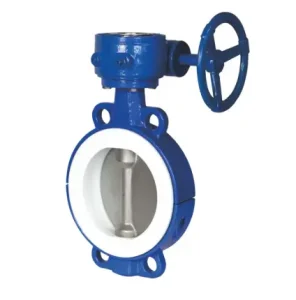
Wholesale PTFE Lined Butterfly Valve for Aggressive Serbian Chemical Service
Seamless virgin PTFE/PFA lining isolate aggressive acid, alkali, and chemical media from ductile iron bodies across Serbian industrial processing units.
View Product Specs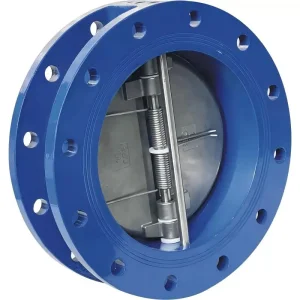
CE Certification Dual Plate Check Valve for Serbian Municipal Pumping
Spring-loaded dual plates deliver rapid non-slam closure to suppress hydraulic shock and water hammer in Serbian municipal and industrial water supplies.
View Product Specs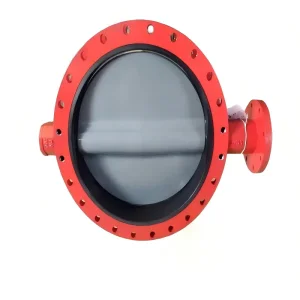
Wholesale Ceramic Disc Wafer Butterfly Valve Serving RTB Bor Mining
Structural ceramic disc trim engineered to withstand abrasive slurry cavitation, limestone grinding, and tailings handling in Serbian heavy mining.
View Product Specs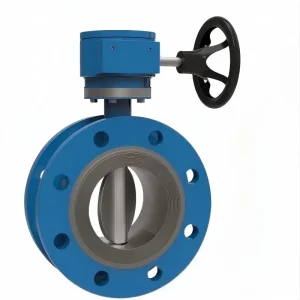
High-Quality Flange Type Butterfly Valve for Serbian Water Transmission
Double flanged connection complying with EN 1092-1 PN10/PN16 standards, ideal for cooling loops, intake canals, and municipal water distribution.
View Product Specs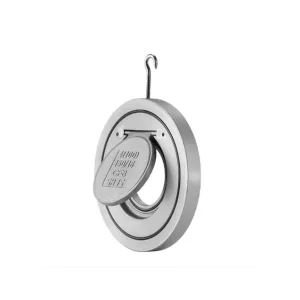
CE Stainless Steel Single Disc Wafer Check Valve for Serbian HVAC Lines
Ultra-compact face-to-face wafer profile designed for quick installation between EN flanges in district heating substations and building systems.
View Product Specs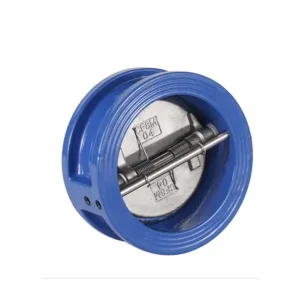
High-Performance Dual Plate Wafer Check Valve for Serbian High-Flow Mains
Hydrodynamically contoured design minimizing pressure loss across high-volume industrial pipelines and regional drainage discharge points in Serbia.
View Product Specs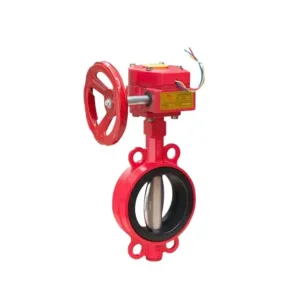
Fire-Fighting Wafer Signal Butterfly Valve for Serbian Commercial Projects
Integrated electrical supervisory switch providing real-time open/close status monitoring for automated industrial fire sprinkler and deluge installations.
View Product Specs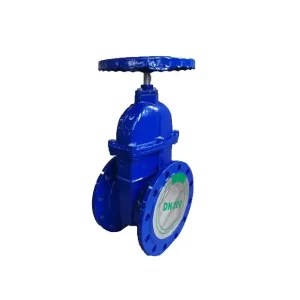
German Standard DIN Elastic Seat Gate Valve Serving Serbian Water Works
EPDM encapsulated resilient wedge gate valve manufactured strictly to DIN 3352 F4/F5 dimensions for zero-headloss potable water infrastructure across Serbia.
View Product SpecsPartner with a Direct CE Certified Ball Valve Manufacturer Serving Serbia
Whether you require tender-ready technical datasheets, full 3D CAD step files, or immediate commercial bids for upcoming projects in Belgrade, Pančevo, Bor, or Novi Sad, our bilingual engineering team delivers within 24 hours.
