
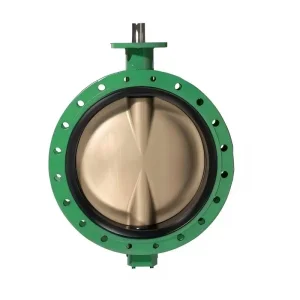
High-Quality Water Used Flanged Butterfly Valve - Durable & Efficient Manufacturer, Factories
Explore Specs & Request Quote
Direct supply from in-house foundry and rubber vulcanization plants, ensuring verifiable compliance with ANSI, EN 1092, and DIN manufacturing parameters.
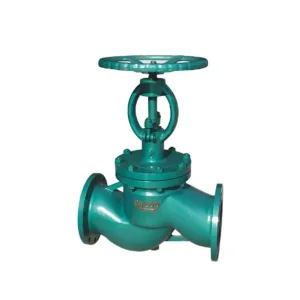
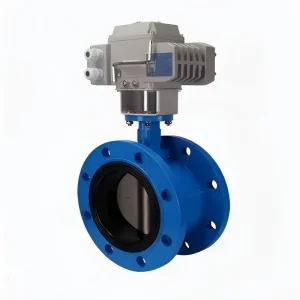
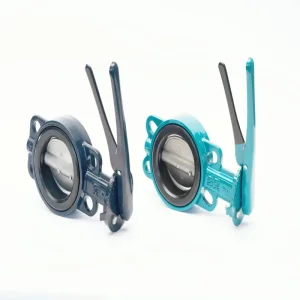
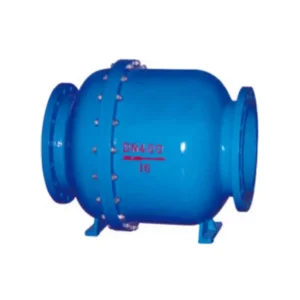
In-depth structural breakdown of non-return mechanics, transient pressure mitigation, and next-generation fluid dynamics.
Hydraulic non-return valves—commonly designated as check valves, hydraulic check manifolds, or clack assemblies—serve as the definitive defense mechanism within pressurized pipeline architectures. Uncontrolled reverse flow in hydraulic systems induces severe kinetic hammer transients, cavitation, pump rotor reversal, and catastrophic piping strain. Modern engineering demands a rigorous balance between ultra-low cracking pressures (the initial force required to unseat the sealing element) and lightning-fast closure dynamics prior to downstream fluid deceleration.
By leveraging computational fluid dynamics (CFD) modeling alongside high-precision metallurgy, leading manufacturers formulate valve profiles that reduce turbulent eddies and friction losses across high-velocity sections. This delivers an immediate reduction in total lifecycle energy expenditure across continuous-operation pump stations and hydraulic circuits.
Sudden hydraulic stoppage induces pressure spikes exceeding 400% of nominal pipeline ratings. Incorporating spring-assisted silent poppets and dual-plate wafer configurations ensures full mechanical closure at zero-velocity before the fluid column rebounds, neutralizing sonic shockwaves entirely.
Seat degradation remains the primary failure point in non-return valves. Formulations using peroxide-cured EPDM, hydrogenated NBR (HNBR), and reinforced virgin PTFE prevent explosive decompression under sudden hydraulic surges while maintaining zero-leakage sealing across broad thermal spectrums.
The roadmap toward Industry 4.0 integrates non-intrusive acoustic emission sensors and differential pressure transducer ports directly into the cast body. This facilitates live tracking of mechanical poppet chatter, internal disc flutter, and predictive seal degradation diagnostics.
Tailored fluid dynamics, specialized alloy selection, and structural resilience configured for complex process conditions.
For large-diameter potable networks and high-chloride reverse osmosis facilities, valves must resist aggressive pitting corrosion. We utilize nickel-aluminum bronze (C95800) and super duplex alloys (2507) matched with certified WRAS potable-safe liners to eliminate bacterial adhesion and chemical leaching.
Continuous chemical pipelines demand total isolation against aggressive media, abrasive slurries, and organic solvents. Our micro-resistance ball check and full rubber-lined check systems utilize solid ceramic internal discs and fluoropolymer encapsulates to withstand broad pH shifts without seat breakdown.
Offshore marine engineering mandates robust compact wafer profiles that resist saline atmospheres and mechanical stress. Single-disc swing check and dual-plate wafer check valves conform to DNV, ABS, and Lloyd’s Register rules, providing reliable anti-backflow protection in tight engine rooms.
| Check Valve Architecture | Cracking Pressure (Bar) | Dynamic Response Speed | Resistance to Cavitation | Recommended Working Medium |
|---|---|---|---|---|
| Silent Center-Guided Poppet | 0.05 – 0.15 Bar | Ultra-Rapid (< 0.15s) | Exceptional (Contoured Core) | High-rise HVAC, Clean Potable Water, Booster Lines |
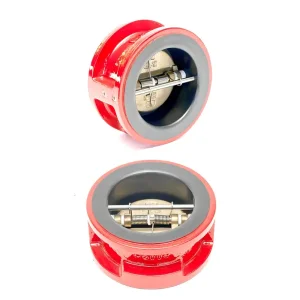
| Dual Plate Wafer Non-Return | 0.02 – 0.10 Bar | Rapid (Spring-Assisted) | High (Balanced Discs) | Large Bore Pipelines, Cooling Circuits, Petrochem |
| Micro-Resistance Ball Check | 0.01 – 0.05 Bar | Moderate (Gravity/Fluid) | Superior (Unobstructed Bore) | Municipal Wastewater, Industrial Sludge, Viscous Fluid |
| Single Disc Swing Check | 0.08 – 0.20 Bar | Standard (Gravity Swing) | Moderate (Prone to Slam) | Low-cycle Isolation Lines, General Water Feed |
Eliminating third-party subcontracting risks through unified metallurgy, automated machining, and rigorous testing on a single 23,000 m² campus.
A critical challenge confronting international procurement managers is quality degradation across multi-tiered subcontracting networks. When valve manufacturers outsource casting production or elastomer mixing to external vendors, wall thickness inconsistencies, sub-surface porosity, and vulcanization defects frequently slip past secondary spot-checks. Tianjin Top Automation Equipment Co., Ltd. eliminates these risks through direct vertical integration, uniting thirty-plus years of casting and rubber expertise under one roof.
Our dedicated group foundry, operating continuously since 1996, produces ductile iron (QT450-10, GGG40/50), cast steel (WCB), and stainless grades. Real-time direct-reading spectrometers confirm elemental carbon, manganese, and nickel compositions prior to every ladle pour.
Tracing roots back to Tianjin Dongfang Rubber Factory (founded in 1987), we compound, extrude, and vulcanize our own seat materials. Controlling the tensile strength, elasticity modulus, and compression set of EPDM and NBR liners guarantees thousands of tight sealing cycles without hardening.
Automated CNC horizontal and vertical turning centers process valve bodies, sealing faces, and hinge pin mounts with strict micrometer-level precision. This eliminates uneven seat compression, disc sticking, and localized wear across high-velocity throttling transitions.
Comprehensive international certification frameworks, documented mill material traceability, and dedicated logistics safeguarding balance-of-plant timelines.
Our non-return valves conform precisely to global standards including ASME B16.34, API 594, EN 1092 PN10/PN16/PN25, DIN 3202, and BS 5153. Custom face-to-face dimensions and universal dual-drilled flange designs allow seamless retrofits into existing legacy piping without costly refabrication.
Every production lot ships with certified mill test reports (MTR), chemical analysis, and mechanical tensile documentation. Hydrostatic shell tests (1.5x PN) and pneumatic resilient seat tests (1.1x PN) are executed on 100% of finished valves in strict adherence to ISO 5208 standards.
Positioned close to Tianjin Xingang Port, shipments benefit from streamlined ocean logistics. Valves feature protective end-flange caps, vapor corrosion inhibitor (VCI) bags, and reinforced heat-treated export crates to ensure pristine condition upon project site delivery.
Complete project-scale inventory ready for wholesale distribution, plant turnaround contracts, and global infrastructure projects.
Essential guidance on hydraulic check valve engineering, material selection, installation parameters, and factory auditing.
