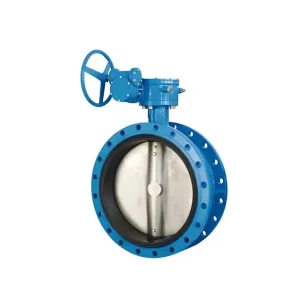
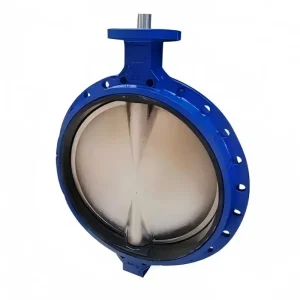
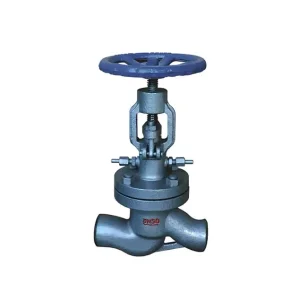
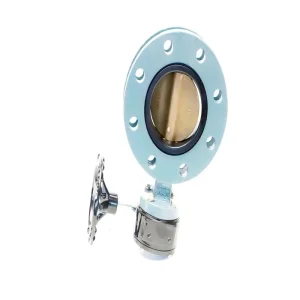
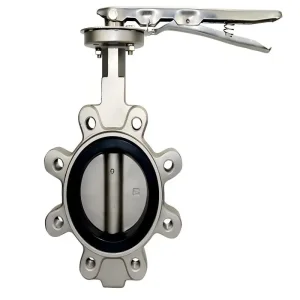
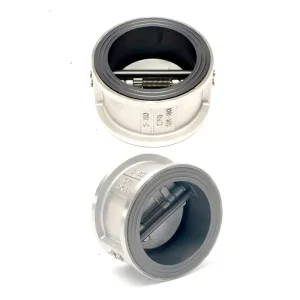
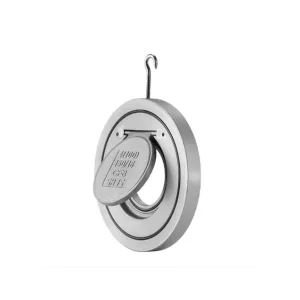
Featured Industrial Pipeline Flow Isolation Catalog (Part I)
Browse our high-flow, corrosion-resistant valve products certified for global water supply, HVAC, marine ballast, and heavy process infrastructure.
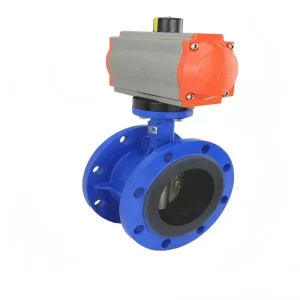
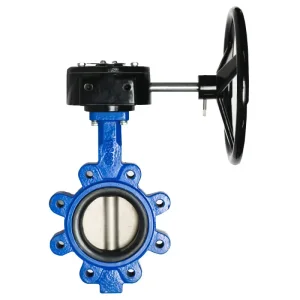
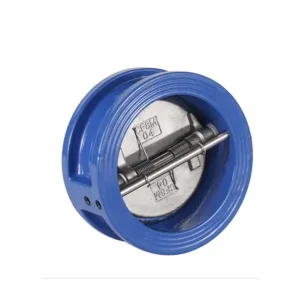
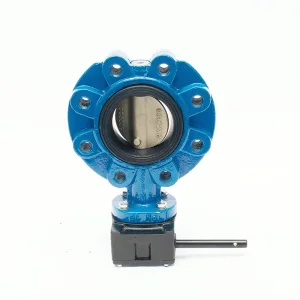
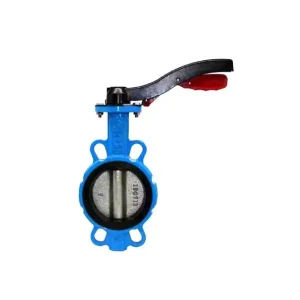
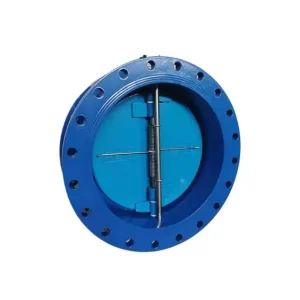
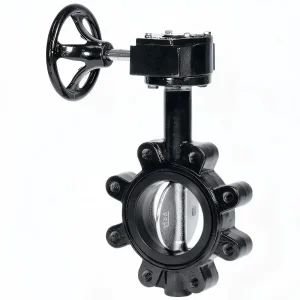
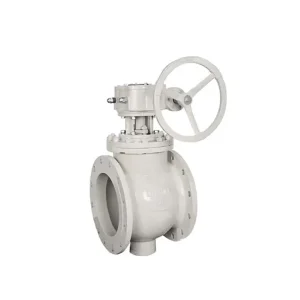
State of Underground Fluid Conduction: Buried Elastic Seat Gate Valves
Modern subterranean municipal infrastructure operates under punishing conditions: dynamic soil settlement, severe external ground loading, fluctuating groundwater tables, and aggressive chemical soil chemistry. In this rigorous operating theatre, the Buried Elastic Seat Gate Valve (Buried Resilient Seated Gate Valve) has superseded historic metal-to-metal seated valves as the premier engineering choice for potable water, municipal sewer force mains, and district cooling grids.
Cavity-Free Bottom Design
Traditional cast wedge valves possess an inverted recess in the valve body where mineral scale, gravel, and pipe debris accumulate, preventing total closure. Buried elastic seat gate valves utilize a dead-flat, full-bore passage equivalent to a straight pipeline, ensuring debris passes unrestricted during flushing without causing seat scoring or leakage.
Full Rubber Encapsulation
The core ductile iron (QT450-10 or QT500-7) wedge is entirely vulcanized with high-purity EPDM or NBR rubber through high-pressure injection molding. This delivers a resilient memory effect that produces zero-leakage (DIN EN 12266 Rate A) shut-off with significantly reduced operating torque, even under bi-directional 16 bar or 25 bar differential pressures.
Direct Burial & Telescopic Spindles
Engineered specifically for trenchless or pit-less installation, buried gate valves eliminate the capital expense of concrete access chambers. Combined with telescopic extension spindles, self-adjusting surface boxes (street boxes), and triple O-ring stem seals, operators adjust pipe isolation directly from the road surface safely and efficiently.
Critical Engineering Specification: Fusion Bonded Epoxy (FBE) Standards
In subterranean installations without cathodic protection, external coating integrity dictates pipeline design life. Leading manufacturing standards mandate electrostatic fluid-bed powder epoxy application conforming to DIN 30677-2 and GSK (Gütegemeinschaft Schwerer Korrosionsschutz) regulations. Minimum film thickness must exceed 250 µm with zero porosity (100% spark test tested at 3000V) to resist microbiological corrosion, soil acidity, and groundwater penetration.
Global Procurement Demand & Municipal Infrastructure Upgrades
Global investments in water resilience, non-revenue water (NRW) reduction, and urban smart grids are driving unprecedented technical demand for direct-buried pipeline isolation hardware.
Aging Pipe Rehabilitation
Across Western Europe, North America, and Japan, century-old cast iron mains are undergoing rapid replacement. Engineers are mandating maintenance-free buried valves to eliminate congested underground chamber maintenance in dense metropolitan districts.
Potable Water WRAS Compliance
Water companies are aggressively eliminating heavy-metal leaching and bacterial contamination risks. Demand has shifted decisively toward WRAS, DVGW, ACS, and NSF/ANSI 61 certified non-toxic EPDM compounds with mirror-smooth internal waterways.
Middle East & GCC Mega Projects
Massive regional desalination distribution networks in Saudi Arabia (NEOM, SWCC) and UAE demand high-tonnage deliveries of PN16 and PN25 rated buried valves capable of withstanding extreme ambient soil temperatures and saline coastal water tables.
Smart City & SCADA Actuation
Underground networks are integrating remote-monitoring buried gate valves with intelligent positioning sensors, portable torque wrench drive adapters, and battery-assisted smart actuators for real-time section isolation during burst pipe events.
China Factory 4.0: Vertically Integrated Foundry & Rubber Vulcanization
Why Tier-1 international contractors choose vertically integrated Chinese manufacturing hubs over fragmented assembly trading intermediaries.
Proprietary Rubber Compounding (Since 1987)
Through our heritage partner Tianjin Dongfang Rubber Factory (operating since 1987), we do not outsource valve elastomer seats. We compound, vulcanize, and laboratory-verify our proprietary EPDM and NBR formulations on-site. This eliminates delamination, bonding failure, and seat hardening under continuous pipeline compression set.
Dedicated Foundry & CNC Machining (Since 1996)
Backed by Tianjin Donglian Valve Factory (established in 1996), our automatic resin-sand casting and electric induction furnaces yield QT450/QT500 ductile iron without pinholes or blowholes. Multi-axis CNC centers machine the valve stem nut, thrust collar, and flange faces in a single clamping setup for micron-level concentricity.
Traceable In-House Metrology & 100% QA
Our Dongli District manufacturing facility maintains direct spectral chemical analyzers, tensile testing machines, metallurgical microscopes, and high-pressure hydrostatic test benches. Every single buried valve undergoes shell testing at 1.5x PN and dual-direction seat testing at 1.1x PN before protective wrapping and crating.
| Engineering Parameter | Standard Market Offering | Tianjin Top Valve Industry 4.0 Standard | Operational Value Delivered |
|---|---|---|---|
| Body & Bonnet Material | Grey Cast Iron (GG25) or Re-melt Scrap | Ductile Iron QT450-10 / EN-GJS-450-10 (GSK Standard) | Resists seismic displacement, frost heave, and crushing traffic loads |
| Wedge Rubber Vulcanization | Glued partial rubber shoe / Secondary OEM vendor | Integrated injection vulcanized 100% core EPDM (In-house since 1987) | Permanent elastomer-to-metal bonding prevents peeling and inner corrosion |
| Stem Sealing System | Single O-Ring + Gland Packing (Requires Chamber) | Maintenance-Free Triple O-Ring (NBR/EPDM) + Wiper Dust Seal Ring | Prevents subterranean mud and water ingress without maintenance chambers |
| Epoxy Coating Finish | Liquid spray epoxy <150 µm with holiday voids | Electrostatic fluidized bed FBE >250 µm (Tested @ 3kV holiday detector) | 50+ years subterranean life; impervious to aggressive alkaline soils |
| Stem Material | Carbon Steel with flash chrome / 2Cr13 | Duplex Stainless Steel (SS304 / SS316 / 1.4021 / 1.4462) cold rolled | Zero galling, high tensile torque tolerance, zero rust in humid soil |
Localized Application Scenarios & Civil Engineering Use Cases
Engineered across major international standard dimensions (EN 1171, DIN 3352 F4/F5, BS 5163, AWWA C509/C515, ISO 7259) to fit challenging project realities.
Municipal Urban Water Networks
Installed directly beneath high-traffic expressways, city sidewalks, and public squares without intrusive access pits. Outfitted with heavy-duty cast iron floating street boxes that absorb road settlement without applying axial load to the valve spindle or pipe joints.
Agricultural & Rural Irrigation Grids
Deep-buried in agricultural irrigation canals and rural gravity-fed water trunklines. The non-rising stem (NRS) design prevents agricultural machinery collisions and resists abrasive suspended sand particles thanks to the elastic wiping action of the rubber wedge.
Industrial Fire Hydrant Sub-Mains
Underground looped perimeter fire mains for petrochemical plants, LNG storage depots, and mega-warehouses. Full-bore unobstructed passageway delivers maximum Kv flow rates with zero pressure drop, keeping emergency water volumes at optimal hydraulic delivery.
Procurement Director's FAQ: Technical Specifications & Quality Control
Direct answers to the most stringent engineering and supply-chain inquiries submitted by international consulting engineers and EPC contractors.
What are the key technical differences between rising stem and buried elastic seat gate valves?
Why is vertical integration between rubber compounding and valve body casting vital for longevity?
What international testing standards and certifications govern your buried gate valves?
- Dimensional & Design Standards: DIN 3352 F4 / F5, BS 5163, EN 1074-1/2, EN 1171, AWWA C509/C515, ISO 7259.
- Flange Drilling Standards: EN 1092-2 (PN10, PN16, PN25), ASME/ANSI B16.1 Class 125/150, BS 10 Table D/E, JIS 10K.
- Pressure & Leakage Testing: ISO 5208 / EN 12266-1 (Rate A - zero leakage at 1.1x PN seat test and 1.5x PN shell test).
- Coatings & Hygienic Compliance: GSK / DIN 30677-2 internal/external fusion bonded epoxy; WRAS and CE compliance for potable water delivery.
How do telescopic extension spindles and surface boxes operate in buried environments?
What is the minimum order quantity (MOQ), production lead time, and shipping logistics from Tianjin?
Featured Industrial Pipeline Flow Isolation Catalog (Part II)
Explore our complementary range of high-pressure check valves, stainless steel butterfly valves, and precision flow regulators.